Sinningia can bloom twice a year, so why won't it bloom?
Sinningia, a common houseplant, has flowers shaped like lilies, with red blossoms that look especially beautiful set against the surrounding green leaves. However, during cultivation, many flower lovers find that their Sinningia won't bloom, so why won't Sinningia bloom? It is said that with proper care, Sinningia can bloom for a long time each year, so how many times a year does Sinningia bloom? Today the editor will solve this problem for everyone.
1. How many times a year does Sinningia bloom? 2 times
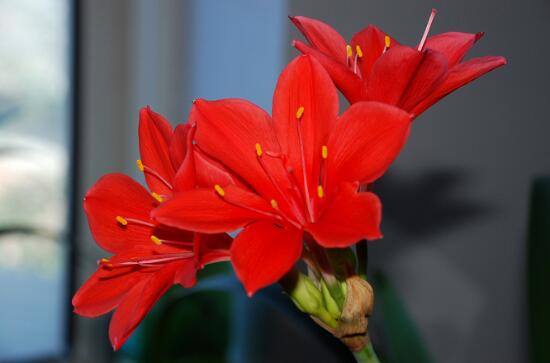
Generally speaking, Sinningia can only bloom once a year, but that is only for ordinary flower lovers. It is understood that if you are an old hand and then strictly follow the Sinningia cultivation method to care for it, Sinningia can bloom twice a year: the first bloom occurs in February to April, and the second bloom occurs in summer, in August to September.
2. Why won't Sinningia bloom? There are five reasons
Sinningia has good effects; it not only blooms beautifully, but can also beautify the home and purify the air. However, this depends on Sinningia blooming; once it doesn't bloom, all of this is for nothing. So why won't Sinningia bloom? For this, the editor summarized 5 reasons and attached solutions, as follows:
1. Unsuitable temperature
Sinningia likes a warm environment; it fears high temperatures and is not cold-tolerant, so once the temperature is too high or too low, it will cause Sinningia not to bloom.
Solution: If Sinningia not blooming is caused by temperature, it is very simple. Control the room temperature at 10-25°C, then care for it carefully for a period of time, and the flowers will slowly open.
2. Light too strong
Why won't Sinningia bloom? Besides temperature, the first thing everyone thinks of should be light. Sinningia blooming requires sufficient light, but it fears strong light. In summer, if Sinningia is exposed to the noon sun, it will cause damage to the leaf surface. In severe cases, it will affect the growth of Sinningia, and blooming is not even worth thinking about.
Solution: Move the plant to a ventilated shaded place, water an appropriate amount, and care for it carefully for a period of time. As long as it is within Sinningia's flowering period, it will still bloom.
3. Overwatering
Sinningia likes a moist environment, so it has requirements for water. But because many flower lovers who grow Sinningia are beginners, it is inevitable that they water too much. Once water accumulates in the pot, it will cause Sinningia root rot. Once the roots rot, the flowers naturally cannot bloom.
Solution: Take Sinningia out of the pot, cut off the rotten roots, replace with fresh culture soil, and then replant. Afterward, just keep Sinningia's potting soil slightly dry. After a period of time, Sinningia will bloom.
4. Unsuitable soil
If Sinningia not blooming is not a care problem, then everyone should look for the cause from the root, for example, check whether there is a problem with the soil. It is understood that when growing Sinningia, if flower lovers directly use garden soil, the plant will fail to bloom because it does not absorb enough nutrients.
Solution: When cultivating Sinningia, it is best to choose loose, fertile, well-drained soil rich in humus. Therefore, if Sinningia not blooming is caused by unsuitable soil, everyone just needs to replace it with the soil it likes.
5. Poor ventilation
Why won't Sinningia bloom? Besides the above points, everyone should also consider environmental problems. In daily care, Sinningia likes a ventilated environment. If it is placed in a place without ventilation, over time it will attract many insects, causing Sinningia to suffer pest damage, and as a result it naturally will not bloom.
Solution: It is very simple. Move Sinningia to a ventilated place, then spray the relevant insecticide, and afterward care for it carefully for a period of time. If the flowering period has not yet passed, Sinningia will bloom.
How to cultivate comfrey: comfrey growth habits
Comfrey (Symphytum officinale L.), also known as aiguocao, feiyangcao, youyicao, youyicao, zigenshao, kangfuli, wailai juhecao, ximenfeicao, zicaogen. A clumping perennial herb, 30-90 cm tall, with the whole plant covered in downward slightly curved bristles and short appressed hairs. It grows in mountain forest areas and is a typical mesophyte. It is native to the European part of the Soviet Union and the Caucasus. In 1973, Korea gave it to China as a precious gift, and it has been introduced and cultivated since then. Comfrey has wide adaptability, high yield, a long utilization period, and good palatability. It is a high-quality, high-yield forage crop for livestock and poultry. It also has relatively high nutritional value, can be used medicinally, and also has a certain ornamental value.
Morphological characteristics of comfrey
Root and stem
Comfrey is a clumping perennial herb, 30-90 cm tall, with the whole plant covered in downward slightly curved bristles and short appressed hairs. The roots are well developed; the main root is thick and strong, light purplish brown. There are several stems, erect or ascending, branched.
Leaves
The basal leaves of comfrey are usually 50-80, up to 200 at most, with long petioles; the leaf blades are strap-shaped lanceolate, ovate-lanceolate to ovate, 30-60 cm long and 10-20 cm wide, slightly fleshy, with acuminate tips; the leaves in the middle and upper parts of the stem are smaller, sessile, and decurrent at the base.
Flowers
The inflorescence of comfrey contains many flowers; the calyx is cleft nearly to the base, with lanceolate lobes and acuminate tips; the corolla is 14-15 mm long, light purple, purplish red to yellowish white, with triangular lobes and outwardly rolled tips, and the throat appendages are lanceolate, about 4 mm long, not extending beyond the corolla limb; the anthers are about 3.5 mm long, with a slightly protruding connective at the tip, and the filaments are about 3 mm long, nearly as wide as the anthers in the lower part; the ovary is usually sterile, and occasionally 1 nutlet matures within an individual flower.
Fruit
The nutlets of comfrey are crooked ovate, 3-4 mm long, black, smooth, and glossy.
The flowering period of comfrey is May to October.
Ecological habits of comfrey
Comfrey grows in mountain forest areas and is a typical mesophyte. It is suitable for a relatively wide range of regions; comfrey is both cold-tolerant and resistant to high temperatures, and is not limited by region; it also has no strict requirements for soil, and generally any land can be planted except saline-alkali land, barren land, and low-lying land with poor drainage. Large-scale farms can cultivate it on a large area in farmland or barren hills, and farm households can plant it in front of and behind houses, by riversides and roadsides, on barren slopes, and on other abandoned land.
Cultivation techniques of comfrey
Preparation before planting
Site selection and cultivation
It is most suitable to choose a plot with flat terrain, deep soil layers, abundant organic matter, good drainage, and irrigation conditions. Comfrey is a perennial plant with well-developed roots and strong regeneration ability, and it is generally not suitable for rotation with field crops.
Land preparation and fertilization
Before planting, deep plowing should be carried out, with a plowing depth of more than 25 cm, and after plowing, it should be harrowed level in time. Sufficient base fertilizer should be applied in combination with plowing, preferably half-decomposed pig, cattle, and sheep manure, at 2500-4000 kg per mu.
Cultivation methods
Comfrey blooms but does not set seed, or sets very little seed. In production, comfrey roots grown for more than 1 year (mother roots) are often used as seed stock for planting. Generally, planting is done in spring and autumn. Seedlings raised in seedbeds can be transplanted from April to October, but transplanting in March to April and September to October is better. When planting, it is suitable when the seedlings are 15-20 cm tall and have 5-6 leaves, and it is best to choose cloudy and rainy days. Digging roots, cutting roots, and planting are best done as continuous operations to improve the survival rate. The planting row spacing is 50-60 cm, and the plant spacing is 40-50 cm. Commonly used planting methods include the root-cutting method and the division method.
Root-cutting method
The fleshy roots of comfrey have a very strong ability to produce adventitious buds and adventitious roots. Any root with a diameter of more than 0-3 cm can be cut and planted. For root segments planted on a large area, the root length is 3-5 cm, and the root thickness is not less than 0.5 cm. Roots thicker than 1 cm can be cut straight into two halves, and thicker ones can be cut longitudinally into 3-4 pieces. Generally, the thicker the root, the longer the root segment, and the faster the sprouting and growth. When raising seedlings, place the root segments horizontally in the soil and cover with 2-3 cm of soil. When the temperature is above 18°C, seedlings can emerge in 30-40 days.
Division method
After digging up robust plants with their roots, leave a stubble of 5-6 cm, cut off the upper stems and leaves, and cut vertically from the root crown (the skin must be kept). Each division should carry 1-2 buds. After cutting, they can be directly planted in the field, and new leaves can grow in 5-6 days. This method results in fast survival after planting, rapid growth, and high yield in the year of planting, but the propagation coefficient is low. Each plant can be divided into 10-20 plants. This method can be used when seed roots are sufficient.
Growing environment
Strong stress resistance
Heat tolerance: It can still grow normally when the temperature is above 40°C and under strong light.
Cold resistance: At minus 40°C, its robust underground parts can overwinter safely in the open field.
Weed tolerance: After the second year of cultivation. It turns green early and closes the rows quickly, and its broad leaves cover the ground surface, making it difficult for weeds to grow and reproduce.
Long utilization period
Comfrey is a perennial root plant with extremely strong vitality. Once planted, it can be used for about 10 years. Compared with forage plants that can only be used for one year after one planting, it achieves twice the result with half the effort.
Temperature
It grows fastest at 22°C-28°C. In autumn and winter, when it is below 7°C, growth slows down; when it is below 0°C, growth stops; in early spring, it begins to sprout at 0°C-7°C.
Light
Comfrey likes sunlight and is also shade-tolerant. During the vegetative growth period, it needs sufficient light, but it is also very shade-tolerant. When interplanted in orchards or under forests, it can also grow well.
Water
The plant is relatively sensitive to water. When seedlings are dug out of the ground, they suddenly wilt, and watering makes them fresh again; when soil water-holding capacity drops to 30%, growth slows down and wilting occurs. But after one night, especially after a long drought followed by rain, it can resume growth; when the temperature is above 20°C and the soil water-holding capacity is 70%-80%, it grows fastest, with an average daily increase of 2-3 cm.
Comfrey management and care
Intertillage and weeding
After planting and survival, carry out the first intertillage and weeding. Before row closure or ridge closure, carry out the second and third intertillage, weeding, and hilling. After each harvest, carry out one intertillage and weeding in combination with fertilization, so as to loosen the soil, maintain soil moisture, improve soil aeration conditions, and facilitate regeneration.
Topdressing and irrigation
Comfrey has large plants and dense leaves, grows rapidly, is harvested many times, and has high yield, so it needs more fertilizer than ordinary plants. After planting and before turning green each year, topdressing should be applied once. After each harvest, apply quick-acting nitrogen fertilizer once in combination with intertillage and weeding, applying 10-15 kg of ammonium sulfate or 750-1000 kg of decomposed manure and urine per 667 sq m. Topdressing should be applied beside the plants, not splashed on the leaves or roots. In dry seasons, irrigate once after each harvest and topdressing. Flood irrigation is not suitable; after furrow irrigation, splash irrigation can be used to prevent root rot and plant death. In rainy seasons, open ditches for drainage.
Harvesting
The forage parts of comfrey are the leaves and stems. It can be cut 4-5 times each year, and in the year of planting it can be cut 1-2 times. The cutting period also differs according to different utilization purposes. When used as green feed, comfrey has high yield and rich nutrition from budding to flowering, which is the suitable harvest period. When used for silage or making hay, it should be cut at full bloom when the dry matter content is relatively high. If harvested too late, the stems and leaves turn yellow and the stalks become old, and both yield and quality decline. It also affects the growth of comfrey and the yield of the next cutting, and reduces the number of cuttings. If harvested too early, the yield is low, the nutrient content is low, the total dry matter yield is low, and the nutrients accumulated in the roots are few, affecting its regeneration ability. Cutting green feed should also depend on the feeding target; cattle, sheep, and pigs are better fed older forage, while chickens, ducks, geese, rabbits, and ostriches are better fed tender forage. The stubble height left when harvesting comfrey has a relatively large impact on growth, development, and yield.
Although cutting close to the ground gives high yield, it turns green slowly and the later cuttings have low yield. If the stubble is too high, losses and waste are serious. Generally, the stubble height is 5-6 cm. The last harvest should be completed 30 days before growth stops, so as to have enough regeneration period, accumulate sufficient nutrients, help the overwintering buds form well, and overwinter safely.
Disease control of comfrey
Disease control
Brown spot and damping-off
Under high-temperature and high-humidity environments, comfrey is prone to brown spot and damping-off. Diseased plants should be dug out early and burned or buried deeply. At the same time, use 80% carbendazim 500-times solution or 80% mancozeb 800-times solution to drench the soil and spray neighboring plants.
Pest control
Cutworms and white grubs
In the seedling stage of comfrey, there are underground pests such as cutworms and white grubs, which can be controlled by drenching roots with 90% trichlorfon 1000-1500-times solution. During the growing period, the main damage is from striped flea beetles. When they occur, use 1:400 DDT juvenile hormone emulsion mixed with 1:1500 dichlorvos for spraying. If whiteflies suck leaf sap, use 3% beta-cypermethrin·imidacloprid 600-700-times solution to spray and kill the insects.
Distribution area of comfrey
Comfrey is native to the European part of the Soviet Union and the Caucasus.
Comfrey is also distributed in Jiangsu Province, Fujian Province, Hubei Province, Sichuan Province, and other parts of China.
After reading the above introduction on how to cultivate comfrey, do you have a better understanding of comfrey cultivation? If you want to know more about comfrey, please continue to follow.