How to grow potted ginger lily? Master five cultivation tips and it will fill the pot
Ginger lily not only has beautiful flowers, it also has high edible and medicinal value. Many flower lovers choose to grow it precisely because ginger lily has so many benefits and uses. However, before growing it, you need to have some understanding of its cultivation techniques. So how do you grow potted ginger lily? Let's take a look at the cultivation methods for ginger lily.
How to grow potted ginger lily
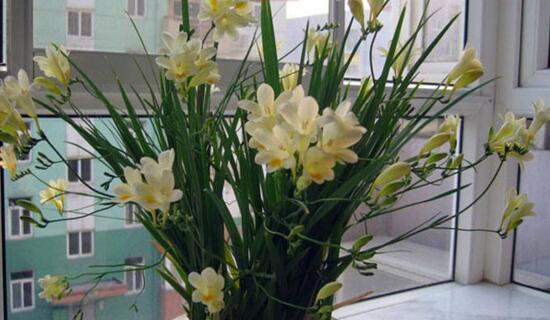
To grow ginger lily well, you need to create a good environment and carry out daily care and management. So what kind of growing environment does ginger lily like? The answer is that it likes high temperatures and high humidity. Its requirements for soil are fertile, slightly acidic soil, and the temperature needs to be above 10 degrees. Light, water and nutrients must all be sufficient but not excessive.
Cultivation methods for ginger lily
1. Soil
The soil for growing ginger lily should meet one condition as much as possible: fertile, loose, well-drained and slightly acidic. Therefore, commonly used soils include garden soil, leaf mold, peat soil and so on. In addition, some fine sand, organic fertilizer and so on can be added to ensure it is fertile and breathable.
2. Temperature
Ginger lily comes from the tropical regions of Asia and likes high temperatures, so it grows more vigorously in summer. When growing it, flower lovers should ensure the temperature is above 10 degrees, otherwise its above-ground parts will quickly wither, and the underground parts will also enter a dormant state.
3. Watering
In terms of watering, how do you grow potted ginger lily? The answer is to try to keep the soil moist but not waterlogged. Do not water frequently when the soil is already moist, to avoid root growth being hindered by excessive moisture. When summer temperatures are high, you can sprinkle some water on the leaves, otherwise ginger lily will turn yellow because it is not drought-tolerant.
4. Fertilizing
The most suitable fertilizer is microbial bacterial fertilizer, combined with fermented organic fertilizer, which works better than traditional fertilizing methods. In the whole cultivation method for ginger lily, two main types are used: base fertilizer and top dressing. The base fertilizer is applied when potting, dividing or transplanting, while top dressing is applied flexibly according to the growth situation.
5. Propagation
Ginger lily can be propagated both asexually and sexually. The method generally used is division, which is fast and does not affect flowering. Propagation is usually done in February to March, and ideally it blooms in July to August. Flower lovers can flexibly choose the time according to the local climate, and should ensure the temperature during propagation is preferably 20-25 degrees.
Notes on growing ginger lily
1. Disease and pest prevention
Ginger lily is susceptible to anthracnose, aphids and so on. When growing it, you need to do a good job of preventing diseases and pests. The main thing is to have a suitable environment: ensure sufficient light without lack of light, enough water without waterlogging, moderate temperature that is not too low, and a ventilated environment that is not closed off, and then simply disinfect the soil and plants.
2. Do not over-apply fertilizer or water
Whether fertilizing or watering, one principle should be followed during operation: it is better to water several times than to pour too much at once. The same applies to fertilizing. Ginger lily needs a process to absorb nutrients and water. If fertilizer or water is excessive, it is instead unfavorable for its absorption.
Cultivation methods for potted ginger lily
1. Temperature
Ginger lily is a subtropical plant and likes high temperatures and high humidity, so potted cultivation has relatively high temperature requirements. Generally speaking, the indoor temperature in winter must reach above 10°C.
2. Soil
Ginger lily likes moisture, but it also needs soil with good drainage, otherwise the roots are prone to rot. At the same time, the soil must contain enough nutrients to support the growth of ginger lily.
3. Water
Ginger lily is a plant that is very intolerant of cold, so the soil must be kept moist at all times. Especially in summer, not only should the soil be kept moist, but water should also be sprayed on the leaves.
4. Fertilizing
When planting ginger lily, base fertilizer should be applied. You can choose biological bacterial fertilizer or phosphate fertilizer. Top dressing should be applied about once every 10 days to ensure the supply of nutrients. Secondly, on cloudy and rainy days, foliar fertilizer should be sprayed on the leaves.
5. Preventing and controlling diseases and pests
Potted ginger lily is prone to leaf virus disease and anthracnose. Spraying the leaves with a 600-800 times dilution of 3.95% Bingdu Bike can prevent and control them.
How to grow potted ginger lily: cultivation methods and notes for ginger lily
As everyone's living standards improve, people like to grow some flowers and plants in their spare time to decorate their rooms, and at the same time it can also cultivate the mind. Ginger lily is a relatively common flower, generally seen more often outdoors, but ginger lily is so beautiful that many people want to grow it as a potted plant indoors. So how should ginger lily be cared for as a potted plant?
How to grow potted ginger lily
Ginger lily is native to Indonesia, and a large amount of wild ginger grows in the plateau regions of western China. It likes high temperatures, high humidity and semi-shaded environments, and is averse to drought and frost. It likes loose, fertile, slightly acidic soil rich in humus. It is generally grown in the ground, but can also be grown in pots. The suitable growth temperature is 18-28 degrees, and the above-ground parts die in winter. During the peak growing season, apply rotted barnyard manure and liquid fertilizer 2-3 times. Nutrient consumption must ensure the robust growth of the rhizome. After frost, the stems and leaves gradually wither, and they should be cut off and the soil earthed up to leave the plant in the ground over winter. It is mainly propagated by root division, often carried out in spring. Cut the underground rhizome into sections, each section needing to carry 1-2 terminal buds, and pot them separately. After planting, there is no need to water immediately; just keep the potting soil moist, and water again after the rhizome sprouts new shoots.
Cultivation methods for ginger lily
Ginger lily is a freshwater herbaceous plant. Its flowers are not only fresh and beautiful, but also have a light, elegant fragrance. It is a natural air freshener and also a plant with great ornamental value. Ginger lily likes a high-temperature, high-humidity growing environment, is not cold-tolerant, and fears freezing.
1. Temperature and soil
Because ginger lily itself likes high-temperature and high-humidity environments, the temperature of the growing environment must be ensured. Generally, the winter temperature only needs to be kept above 10°C. Ginger lily's requirement for soil is to choose loose, well-drained, fertile sandy soil to ensure the nutrients needed for its growth.
2. Water
Ginger lily is a plant that is not drought-tolerant, so during dry and hot summers it is necessary to maintain a moist environment, keep the soil moist, and also frequently spray water on the leaves to maintain leaf humidity.
3. Fertilizing
When planting ginger lily, base fertilizer should be applied. At this time, fertilizers such as biological bacterial fertilizer, organic fertilizer and phosphate fertilizer can be chosen as base fertilizer and applied into the pot. During the growing period, top dressing should be carried out appropriately, about once every 10 days. Foliar fertilizer should also often be sprayed on the leaves on cloudy and rainy days.
Notes on growing ginger lily
1. First is the winter temperature. In winter, be careful to keep the temperature above 10°C to avoid frost damage. Usually, high temperature and high humidity should also be ensured.
2. Second is sunlight. Ginger lily likes warmth, so during the growing period sufficient light can be maintained to allow ginger lily to grow better.
3. Fertilizing notes. Pay attention to the timing and frequency of fertilizing. During the growing period, fertilizing generally only needs to be done once every 10 days.
Whether ginger lily is suitable for indoor growing
Ginger lily is a flower distributed in southern and southwestern China. It is also known as wild ginger lily and butterfly ginger, and is 1-2 m tall. Its flowers are mostly white. All medicine has some toxicity; after all, it is a medicinal plant, so this flower contains certain toxic components.
In ordinary households, it does not prevent us from enjoying it, but after all, some people are allergic to its flower toxin and will experience symptoms such as dizziness and nausea. Its fresh, simple and elegant flowers are fragrant. It likes to grow in high-temperature, shaded environments, and prefers acidic sandy soil. When winter comes and the temperature drops, the parts above ground wither, while the underground parts go dormant to overwinter.
Its fragrance spreads all around, so it is very suitable to buy a bunch and put it indoors. As long as there are no allergic symptoms, it can be grown for a long time. Its faint, delicate fragrance is truly refreshing. It can absorb harmful dust and chemical gases in the air, filtering the air and making the room cleaner and fresher. The petals of ginger lily contain certain volatile essential oils, which can be boiled with water into a tea drink to help us resist wind-cold.
As mentioned above, in fact, there are thousands upon thousands of beautiful flowers in our lives. Although some flowers have many benefits when grown in a room, there are also some flowers that are not suitable for growing indoors, so everyone should pay attention too!