How to prune and pinch back petunias? An illustrated guide to removing the growing tip at the right spot
Petunias have a long flowering period and high ornamental value, so they are often regarded as the king of herbaceous flowers. To have a petunia with lush foliage that is also beautiful, besides the correct petunia planting method, you also need to pinch it back at the right time. So how do you pinch back a petunia? Let's look at the illustrated guide to pinching back petunias.
How to pinch back petunias
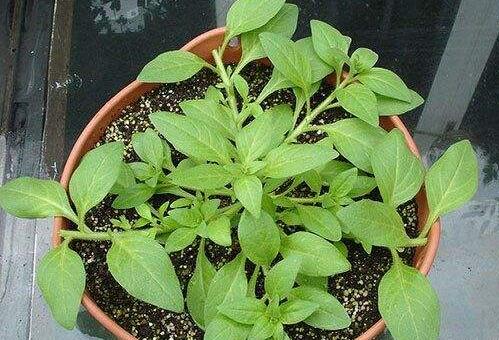
Pinching back means removing part of the leaves at the top of the plant, and the exact number depends on the plant's growth condition. Generally, more than 2 leaves should be kept on the branch so that it can grow normally and sprout more branches.
Based on the experience of flower growers, the editor suggests keeping 3-4 leaves when pinching back in spring and summer, and keeping 4-5 leaves in autumn and winter. Letting a petunia send out too many branches at once is bad for balanced growth, and sending out 3-4 branches each time is more suitable.
Illustrated guide to pinching back petunias
1. Remove the growing tip
Pinching back is generally done several times during the seedling stage and the growth stage. In the seedling stage, when the plant has grown more than 5 leaves, remove its growing tip and leave 3-5 leaves, then wait until new branches grow out and prune again in the same way.
2. Pinching position
In the illustrated guide to pinching back petunias, there are generally two standards for choosing the position. The first is the density of the nodes: first cut off branches that have grown too long. The second standard is the density and position of the branches: the direction and density of the branches sent out by the remaining leaves should be even, and you must not remove leaves on only one side, otherwise it will affect the beauty of the plant's shape.
Pruning petunias
Flower growers may encounter a petunia that looks fairly lush and produces many flowers the first time it blooms, but fewer afterward. This is because the branches and leaves at the bottom do not get enough light, and only the branches at the top form buds. So when pinching back, we can also combine it with thinning, cutting away some of the denser leaves so that the young buds at the bottom can enjoy plenty of sunlight.
In principle, thinning means cutting off the leaves that block branches and young buds, and the first thinning is done after the first branches have grown out. If the large old leaves on the main stem block the branches below, they should also be removed in time, then keep a suitable temperature, and when the flowering season comes there will be a large number of flowers.
High-yield soybeans: why should soybeans have their growing tips removed?
[Common questions] Why should soybeans have their growing tips removed? What methods are there for removing the growing tips? What should be noted?
Expert answer
The growing tips of organic soybeans have strong growth vigor and consume a lot of nutrients. Removing the growing tips of soybeans transfers nutrients to the pods, which helps increase yield. Especially for organic soybeans with higher soil fertility and vigorous growth, removing the growing tips in time makes the yield increase even more noticeable. Below is an introduction to the new technique for increasing organic soybean yield by removing the growing tips:
The method for removing the growing tips of organic soybeans is: at the early flowering stage of the soybean growth peak, remove the 2-3 cm tender tip at the top of the main stem, so that top growth is inhibited, nutrients are concentrated to supply reproductive growth, more flowers and more pods are promoted, and the plant is helped to become short and sturdy with stronger stress resistance.
Removing the growing tips of organic soybeans should follow the "three suitable" and "three unsuitable" rules: it is better early than late, and it should be done before full bloom; do not remove the tips after flowering. It is suitable for fertile plants and not for lean ones: plants with good water and fertilizer, high fertility and vigorous growth can have their tips removed, otherwise not. It is suitable for sparse planting and not for dense planting: do not remove the tips of densely growing plants, while for sparsely planted organic soybeans and vigorously growing plants, the growing tips should be removed in time, which helps increase yield.
When organic soybeans are flowering, spraying 0.05%-0.1% organic fertilizer at the right time and in the right amount has a clear yield-increasing effect.
How to prune a rubber tree (Ficus elastica): illustrated pruning methods
How do you remove the top of a rubber tree no matter how tall it gets? For how to remove the top, Xiao Qi suggests pruning. To let it grow better, the rubber tree needs to be pruned often. So how do you prune a rubber tree? Let's learn about the pruning methods for rubber trees.
Pruning methods for rubber trees
1. Pinching:The principle is that the growing tip of the main branch is removed, apical dominance is eliminated, and the lateral buds are able to sprout and grow. The specific method is: when the rubber tree has grown to a suitable height, generally 30-50 cm tall, pinching can change its upright growth and prompt lateral buds to sprout. Generally the 2-3 lateral buds near the top of the branch sprout very easily; after the lateral branches grow out, the tree shape becomes cup-shaped or Y-shaped. For pruning a rubber tree, pinching is relatively easy.
2. Heading back:This means cutting off 1/3 or 1/2 of the upper part of the whole main branch to prompt the trunk to sprout lateral branches. The principle is that by cutting off the top branches, apical dominance is eliminated so that the lateral buds below the cut sprout and grow. Because this method removes too much at one time from the rubber tree, it easily cuts away more of the branches and leaves cared for earlier. For at least half a year to a year, the ornamental value is poor because there are fewer branches and leaves, but it is extremely favorable for later shaping.
3. Notching:Making a cut on the bare part of the main branch to prompt the buds below the cut to sprout and form lateral branches is called notching. The principle is that the cut blocks the transport of nutrients and water, generally inhibiting the growth of the part above the cut and strengthening the growth of the part below the cut.
4. Branch bending:Branch bending means changing the direction in which a branch extends in space through external force. The principle is that by bending the branch, the polarity of the branch is changed, that is, the apical dominance of the growing tip is weakened or eliminated. The larger the bending angle, the more strongly the apical dominance is weakened; if it is bent to a horizontal position, its apical dominance is completely eliminated. The specific operation is: bend the bud-promoting spot into an arc so that the bud-promoting spot is in the position of apical dominance. If branch bending is done in spring, lateral branches can be prompted to form that same year.
5. Notes:In the actual operation of pruning a rubber tree, an appropriate spot should be chosen for notching according to the shaping needs. When notching causes the branch angle to become too large, the branch-propping method can be used to bring the branch to a suitable angle. Notching is mainly used on strong branches and thick branches; it is generally not used on thin, weak branches.
6. Shaping and pruning techniques to prompt lateral branches:The rubber tree has strong apical dominance, and its lateral buds generally do not sprout easily. If it is not shaped, it very easily grows straight upward, forming an upright shape. When it grows to a certain height, first, it is too tall to be conveniently placed indoors; second, after the lower leaves fall off, it easily becomes a top-heavy shape with lush branches and leaves on top and a bare bottom, losing its ornamental value. Here are several simple and easy methods to inhibit its height growth, prompt lateral branches, and change its shape.
7. Pruning season for rubber trees:Pruning a rubber tree should pay attention to "prune branches in winter, control lateral branches in summer." That is, in winter, prune strong trees heavily and weak trees lightly, focusing on removing upright, strong competing branches from the base. For rubber tree pruning in summer, strongly control vigorous branches, control the strong and keep the weak, adjust the tree vigor to a balanced state, and grasp the principles of cutting back strong lateral branches, heavily pruning strong branches, lightly pruning weak branches, and keeping more small branches, so as to achieve the pruning goal of highlighting the main trunk and promoting faster tree growth.
The above is an introduction to rubber tree pruning methods. To help the rubber tree grow better and improve its ornamental value, prune it regularly.