How to fertilize petunias? Mainly use dilute fertilizer; it is better for fertilizer to be weak than strong
Fellow flower lovers all know that petunias have a very long flowering period, and they grow quite vigorously and easily fill a pot. Among these factors, fertilization has a very large impact on growth. Not only must you pay attention to replenishing fertilizer in time, but you must also ensure that the fertilizer applied contains the nutrients petunias need. So how do you fertilize petunias? Let us look at the petunia fertilization method together.
How to fertilize petunias
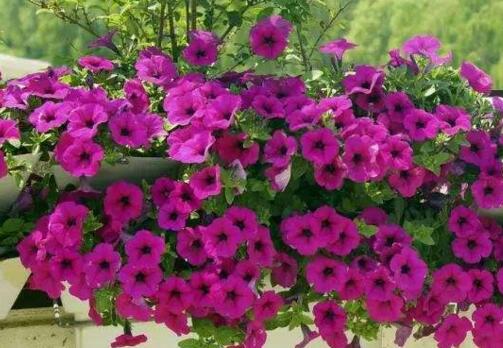
At different growth stages, petunias need different nutrients. For example, during the growth period they mainly develop branches and leaves, so at this time nitrogen fertilizer should be the main type; before the flowering period arrives, phosphorus and potassium fertilizer need to be increased, which can ensure the flower color is more vivid and can also extend the flowering period. Below are the fertilization techniques for each growth stage.
Petunia fertilization methods
1. Seedling cultivation stage
For newly planted petunias, after new buds and cotyledons grow, fertilization can begin. At this time it is still far from the flowering season, so the fertilizer is generally mainly nitrogen fertilizer. Make sure the fertilizer contains elements such as iron, which can prevent the leaves from turning yellow. Because the roots and stems are relatively thin at the seedling stage, they do not need much fertilizer, so be careful to apply dilute fertilizer.
2. Growth period
After passing through the seedling stage, petunias enter a vigorous growth period. At this time, how do you fertilize petunias? Generally, organic fertilizer is the main type, as it can ensure relatively comprehensive nutrition. Farmyard manure, cake fertilizer, and so on can also be used. Be sure to use thoroughly decomposed fertilizer to avoid applying raw fertilizer and causing pest problems.
3. Before the flowering period
If the petunia planting method is correct, it will enter the flowering period when the temperature is suitable. At this time, the amount of phosphorus and potassium fertilizer applied needs to be increased, which can promote flower bud formation and produce more flowers. However, the fertilizer must not be excessive, otherwise the concentration will be too high and the roots will heat up from fermentation and be burned.
Precautions for fertilizing petunias
1. Apply sufficient base fertilizer when planting: To allow the seedlings to enter the growth period faster after planting, sufficient base fertilizer needs to be applied at planting. Common base fertilizers include organic fertilizer, chicken manure fertilizer, cake fertilizer, bone meal, and so on. A relatively long fertilizer effect is required, so that the soil's fertilizer effect can last longer.
2. During the flowering period, mainly use water-soluble fertilizer: During the flowering period, fertilization should mainly use water-soluble fertilizer. The method is to mix the fertilizer with water in a certain proportion and then pour it into the soil. The amount used can refer to the product instructions. This allows the roots to quickly absorb nutrients and thus sprout more flower buds.
How to fertilize petunias, the fertilization method for petunias
Everyone is very familiar with petunias. Everyone may not pay much attention to morning glories, because morning glories grow together with weeds, so people mistakenly think they are weeds, and people may not even glance at them a few more times. But when morning glories bloom, they are full of vitality, with many flower colors, making people notice them at once. Their flowers are like little lamas, as if telling people that I too can be dazzling. They are really very lovable, and many people grow them. So how do you fertilize petunias? Below is an introduction to the petunia fertilization method.
How to fertilize petunias
Petunias are also fertilizer-loving plants. They need sufficient fertilizer to maintain long-term, abundant flowering. For the daily fertilization method for petunias, mix a large amount of chicken manure into the medium at about the bottom 1/4 as base fertilizer, then cover it with a layer of slow-release fertilizer such as Aolu. During ordinary watering, mix in about 2000 times diluted liquid fertilizer each time. If encountering cloudy and rainy days, adopt the method of reducing the concentration and spraying directly on the leaf surface to fertilize, but be sure to note that after fertilizing, avoid direct strong light causing fertilizer burn, and avoid the leaves still not being dry after the sun sets (which easily causes disease).
Petunia fertilization methods
To make the plant's root system robust and the branches and leaves lush, fertilization is very important. Use compound fertilizer (20-5-30) and fertilizer containing calcium and magnesium (13-2-13-6Ca-3Mg) alternately. Keep the substrate EC value at 110-112. For vine petunia varieties, the fertilization amount should be larger. Increase the fertilization concentration from 100-150 mg/kg for ordinary varieties to 200 mg/kg. The medium EC value can also be 1.2-1.5. If strip-shaped yellowing appears on the leaves, it is often caused by boron and calcium deficiency. It can be remedied with boron at 40-60 mg/kg or calcium compound fertilizer.
How to fertilize petunias, the fertilization method for petunias
How to fertilize petunias? Have you all mastered the petunia fertilization method? Next, the editor will introduce the petunia fertilization method for you in detail.
Petunia fertilization methods:
1. Seedling stage
Sowing does not require any fertilizer. Having fertilizer may instead affect the germination rate. After sprouting, once the cotyledons unfold, dilute fertilizer can be applied. Dilute with more than double the amount of water stated in the product instructions. At this stage, use fertilizer containing iron, because seedlings easily turn yellow from iron deficiency. Seedlings must receive dilute fertilizer; their fertilizer requirement is very small and their roots are tender, so remember this.
2. Rapid growth period
After the seedling box or plug tray is full, they can be transplanted into a temporary pot. A small amount of base fertilizer should be added to the temporary potting medium, either organic fertilizer or chemical fertilizer, and relatively comprehensive nutrition is better. Organic fertilizers include farmyard manure, cake fertilizer, chicken manure, kitchen waste composted fertilizer, and so on. Note that it must be thoroughly composted, otherwise it will continue to ferment and generate heat, burning the roots, and it easily breeds insects. For chemical fertilizers, use compound fertilizer or slow-release fertilizer, controlled-release fertilizer; the latter two are better.
After final planting, they enter the rapid growth period. The base fertilizer must be sufficient to meet the needs of seedling growth and the needs of the flowering period. Of course, additional fertilizer can also be applied. The base fertilizer is still organic fertilizer and inorganic fertilizer. Chicken manure fertilizer, cake fertilizer, bone meal, and other commercially sold organic fertilizers, plus slow-release fertilizer, are more comprehensive. In theory, using only organic fertilizer or slow-release fertilizer is also possible; add according to the fertilizer content of the medium you each choose.
3. Flowering period
Shape a pot-filling plant form through pinching, and when the temperature is suitable you can enjoy the flowers. From this period, increase the amount of phosphorus fertilizer to promote flower bud formation and opening. Because petunias have an extremely large flower quantity, supplementing enough fertilizer is especially important.
During the flowering period, fertilization should mainly be supplemented with water-soluble fertilizer. For the use of water-soluble fertilizer, I personally prefer mixing it into water when watering and pouring it into the soil, letting the roots absorb it. Wet leaves easily breed bacteria and so on, especially during the flowering period; if flowers get fertilizer water on them, they also easily develop spots.
The principle of fertilization is to supplement according to the needs of the plant's growth stage. Better dilute than concentrated; apply dilute fertilizer frequently. Of course, you do not need to add fertilizer every time you water, especially for agricultural fertilizer with low purity. After fertilizing, on the next day or the next time watering is due, use clear water to wash away waste material, which is better. Too much fertilizer will burn the roots, or cause the root system to age faster, so use an appropriate amount.