Is Cleome spinosa poisonous? It has mild toxicity but is suitable for indoor growing
Cleome spinosa is an excellent nectar plant, well known worldwide, and also highly ornamental, which is why many people want to grow one at home. However, many plants carry some degree of toxicity, so this is something we need to be clear about when growing them. Is Cleome spinosa poisonous? Is Cleome spinosa suitable for indoor growing? Let's take a look below.
1. Is Cleome spinosa poisonous? It has mild toxicity
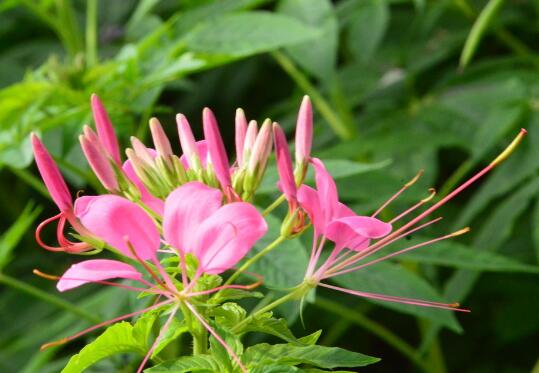
As for whether Cleome spinosa is poisonous, the answer is yes; this plant has a slight toxicity, and if accidentally eaten it can cause some adverse reactions in the human body. However, as long as we do not eat it, there is generally no problem. This plant also has good medicinal value; used properly, even poison can become a remedy.
2. Is Cleome spinosa suitable for indoor growing? Yes
Cleome spinosa is a plant variety very well suited to being grown indoors. Although it has a slight toxicity, as long as we do not eat it, poisoning generally will not occur. Growing this plant indoors also brings many benefits; the details are described below, and those interested can take a look.
3. Benefits of growing Cleome spinosa indoors
1. Beautifying the indoor environment
When people mention the effects and benefits of Cleome spinosa, they first think of its ornamental value. The petals of this plant are light and graceful, and when they open they look like butterflies dancing, very pleasing to the eye, which is why it is loved by many people. If grown indoors, it also has the effect of beautifying the indoor environment.
2. Purifying indoor air
Cleome spinosa is a flowering plant with a very strong resistance to pollution. It is highly resistant to sulfur dioxide and chlorine, and can absorb 90 percent of harmful substances in the air, making the surrounding environment fresher. If we grow it indoors, it can greatly improve the indoor environment, making people's living environment healthier.
3. Used as decoration
The flower stalks of Cleome spinosa are long and sturdy, and the raceme forms an abundant ball of flowers, with red and white colors complementing each other, well balanced in depth. When Cleome spinosa blooms, the petals slowly open, and the long claws go from curved to popping out of the flower; the process is like a movie played in slow motion. Whether planted by a courtyard wall, under a tree, or displayed on a windowsill or desk, it is a very good choice.
Is Cleome spinosa poisonous? Can Cleome spinosa be placed in a family bedroom?
Cleome spinosa is a common herbaceous plant. Its original place of origin is not in our country; it was widely cultivated after being introduced into China. Cleome spinosa is mainly grown for its flowers, which have many petals and some long tendrils, very beautiful. Regarding whether it is poisonous, many people have different views.
Is Cleome spinosa poisonous?
Cleome spinosa has some toxicity, and care is needed when eating it. As an ornamental, it has certain medicinal properties and air-purifying effects. Cleome spinosa is not only a high-quality nectar source; the whole plant can also be used as medicine. Cleome spinosa whole plant: pungent, astringent, neutral. Slightly toxic. Dispels wind and dispels cold, kills insects and relieves itching. It is said that the fruit of Cleome spinosa has also been tried among the people for liver cancer.
Can Cleome spinosa be placed in a family bedroom?
Cleome spinosa can be grown in a family bedroom. Cleome spinosa opens in the evening and withers the next day, so it is also called the flower of summer nights; its brief life gives people a feeling of illusory impermanence. This Cleome spinosa is native to the tropical regions of South America and is a very good pollution-resistant flower, highly resistant to sulfur dioxide and chlorine. It can beautify the environment and is a very good pollution-resistant flower, and can also grow well in heavily polluted factories and mines. Cleome spinosa is also an excellent nectar plant and can extract high-quality essential oil.
How to grow Cleome spinosa
1. Soil. Cleome spinosa is a plant that is easy to care for and does not need special soil. The best is well-drained sandy soil containing humus. Cleome spinosa has a relatively developed root system, so the pot used should be somewhat deeper and larger, with a pot diameter of 20 cm to 30 cm being good. Except for poor growth in alkaline soil, it can grow in sandy soil and clay soil, and grows best in slightly acidic sandy loam. An equal mix of leaf mold and vegetable garden soil can be used as the growing medium. The soil must be loose and well drained.
2. Light and temperature. It likes sunlight and warmth, tolerates heat, slightly tolerates semi-shade, and does not tolerate cold. Summer is the growing period; the plant dies when frost occurs. The suitable temperature for growth is 20-32°C.
3. Watering: It can tolerate drought, but grows better with greater air humidity. In midsummer, water every day, and water thoroughly. It likes relatively high air humidity; if the air humidity is too low, individual flowers will wither faster. It also fears rain, and the leaves need to stay dry at night. The most suitable relative air humidity is 65-75%.
4. Fertilizing: Like other herbaceous flowers, Cleome spinosa has relatively high requirements for fertilizer and water, but the fertilizing (watering) principle of “light fertilizer applied frequently, small amounts more often, complete nutrition” should be followed, and after fertilizing, the leaves and flowers should be kept dry at night. For those grown in pots, during the bud stage, apply 2-3 times of dilute compound liquid fertilizer, and it can bloom during the Spring Festival.
Notes on growing Cleome spinosa at home
1. Potting or transplanting. When potting seedlings, first place 2-2 cm of coarse-grained substrate or ceramsite at the bottom of the pot as a drainage layer, sprinkle a layer of fully decomposed organic fertilizer on top as base fertilizer, about 1-2 cm thick, then cover with a layer of substrate about 1-2 cm thick, and then place the plant in, so as to separate the fertilizer from the root system and avoid burning the roots. After potting, water once thoroughly and place in a slightly shaded environment for one week of care.
2. Pinching. Before flowering, generally pinch twice to encourage more flowering branches: one to two weeks after potting, or when the seedlings are 6-10 cm tall and have more than six leaves, remove the top shoot and keep the lower 3-4 leaves to encourage branching. Three to five weeks after the first pinching, or when the side branches grow to 6-8 cm long, carry out the second pinching, that is, remove the top shoots of the side branches and keep the 4 leaves below the side branches. After two pinchings, the plant shape will be more ideal and the number of flowers will also be greater. When planting in flower beds, remove spent flowers promptly so that they do not set seed, thereby extending the flowering period.
Although Cleome spinosa is poisonous, as long as you do not casually eat it, there is still no problem, and it can even purify the air. So it is very suitable for growing at home, and even growing it in the bedroom is no problem. When growing Cleome spinosa, be sure to pay attention to temperature and fertilizer and water; only in this way can it grow well.
Wallflower Cheiranthus cheiri L. Wallflower illustrated guide: how to grow wallflower / how to propagate wallflower
Wallflower profileWallflower Cheiranthus cheiri L.
Wallflower growing methods and precautions, introduction to wallflower
Wallflower is also known as yellow violet, fragrant violet, and walflower. The raceme is terminal, the flowers are large, and the flower color is orange-yellow and yellow-brown. Strongly fragrant. There are double-flowered varieties. Flowering period April to June. Wallflower blooms early, has orange-yellow flowers, and is fragrant; it is a relatively common herbaceous flower cultivated in spring courtyards, and can also be used as a cut flower. Native to southern Europe. Likes sunlight, tolerates cold, but fears severe summer heat.
Distribution area of wallflower
Native to southern Europe; commonly cultivated in gardens and nurseries throughout China.
Related plants: There are about 10 species in the same genus. A commonly cultivated one is C. alionii, a biennial or perennial herbaceous flower, with a plant height of 30-40 cm. Leaves alternate, lanceolate. Terminal raceme, flowers bright yellow. Flowering period May.
Morphological characteristics of wallflower
Native to southern Europe, now commonly cultivated in various places. Perennial herbaceous flower, often grown as a biennial, plant height 35-50 cm. Stems upright, much branched, base semi-lignified. Leaves alternate, lanceolate, entire. Raceme terminal, petals 4, with long claws, flower color orange-yellow or yellow-brown, mixed in two colors, fragrant. Flowering period April-June. Fruit is a silique. There are about 10 species in the same genus. A commonly cultivated one is C. alionii, a biennial or perennial herbaceous flower, with a plant height of 30-40 cm. Leaves alternate, lanceolate. Terminal raceme, flowers bright yellow. Flowering period May.
Fruit is a silique. Cold tolerant. Likes sunny sites, cool and dry climate, and well-drained, loose and fertile soil. Fears waterlogging and hates heat; growth is poor with excessive rain. Propagated by sowing or cuttings.
Ecological habits of wallflower
Cold tolerant. Likes sunny sites, cool and dry climate, and well-drained, loose and fertile soil. Fears waterlogging and hates heat; growth is poor with excessive rain. Propagated by sowing or cuttings. In the Yangtze River basin it can overwinter in the open field; in the north it needs a greenhouse or cold frame to overwinter.
Wallflower cultivation and management are relatively extensive. Generally after planting, keep the soil moist frequently, and apply a dilute liquid fertilizer about once every 3 weeks. After flowering in early spring, cut off the spent flower branches and promptly apply 1-2 times of quick-acting liquid fertilizer, water frequently, and promote rapid growth, so that it can bloom again by September to October. It can also be sown in spring and summer, potted before winter and moved indoors for cultivation, and then it can bloom in early winter.
There are about 10 species in the same genus. A commonly cultivated one is C. alionii, a biennial or perennial herbaceous flower, with a plant height of 30-40 cm. Leaves alternate, lanceolate. Terminal raceme, flowers bright yellow. Flowering period May.
Cultivation techniques for wallflower
Wallflower likes abundant sunlight and a cool climate, is slightly cold tolerant, fears waterlogging and hates severe summer heat. South of the Yangtze River basin it can overwinter in the open field; in East China it can overwinter with shelter from the wind and slight insulation measures in a sunny cold frame. It is suitable for loose and fertile, well-drained soil, and can tolerate mildly saline-alkaline soil. In order for wallflower to grow robustly, with long inflorescences and bright colors, it is best to choose a plot with abundant sunlight, where no other cruciferous plants have been grown, and with loose soil and good drainage. In midsummer it needs shading. Because wallflower has very few fibrous roots, it must be transplanted with native soil. Planting should not be too dense, so as to avoid affecting ventilation and light penetration. It has no strict requirements for soil and can tolerate mild alkalinity, but grows poorly in acidic soil.
Seed collection and insulation in cold regions
In cold regions, it cannot overwinter in the open field in winter and needs a shed covered with plastic film, or the seedlings must be lifted before winter and stored in a cold room to overwinter. When spring warms and before new roots emerge, move them to the open field, but in all cases they must be moved with their original soil, otherwise the roots are easily damaged and the survival rate is affected. When the siliques turn yellow, the seeds can be harvested in batches, dried, threshed, and stored. Seeds can be stored for 5-6 years.
Fertilizing and watering
When the weather turns warm, wallflower grows relatively quickly, so a dilute liquid fertilizer should be applied once every 15-20 days, and attention should be paid to watering. During the flowering period, moisture should be controlled and no fertilizing is needed. In the rainy season, guard against waterlogging and drain promptly after rain.
Pinching and pruning
In order to increase the number of flowers, attention should be paid to pinching when the seedlings are strong, to increase the sprouting of side branches. After flowering, in order for wallflower to bloom again, promptly cut off the spent flower branches, apply quick-acting fertilizer, pay attention to watering, and cool down in summer; in this way it can bloom again in September to October. With high humidity, high temperature, and poor ventilation, pests and diseases such as black spot, aphids, and red spiders are likely to occur, so wallflower should be controlled promptly. Reference pesticides include 40% omethoate, 50% carbendazim, etc.
Transplanting
Double-flowered varieties can be propagated by cuttings. In autumn, take stem sections about 6 cm long from the stem tips and insert them in sand; they will soon take root. In the Yangtze River basin it can overwinter in the open field; in the north it needs a greenhouse or cold frame to overwinter. When lifting seedlings, the seedlings must be kept with soil. During cultivation, moisture should be controlled, pruning should be appropriate, and fertilizer should be applied. After flowering, cut off the flower branches, apply fertilizer, water once a day, and it can bloom again by September. For overwintering at the seedling stage, straw should be spread over the roots.
Key cultivation points
In the north it is generally grown as a biennial. The sowing period is in early September. First sow in an open-field seedbed. Because the seedlings do not tolerate transplanting, the seedlings should be lifted before winter and stored in a cold frame with cold protection equipment to overwinter. Spring planting should be as early as possible to prevent the seedlings from sending out new roots in the cold frame after temperatures rise, as transplanting at that time easily damages the roots and affects survival. After the flowers fade, cut off the inflorescence branches. In October, after heavy pruning, dig up the perennial roots and store them. In early spring of the following year, divide and plant the stored perennial roots, which can save the trouble of sowing every year. Wallflower cultivation and management are relatively extensive. Generally after planting, keep the soil moist frequently, and apply a dilute liquid fertilizer about once every 3 weeks. After flowering in early spring, cut off the spent flower branches and promptly apply 1-2 times of quick-acting liquid fertilizer, water frequently, and promote rapid growth, so that it can bloom again by September to October. It can also be sown in spring and summer, potted before winter and moved indoors for cultivation, and then it can bloom in early winter.
Propagation methods of wallflower
1. Seed propagation
Autumn sowing is preferable, generally carried out in September. Seedlings emerge after about one week, and after passing through the low temperatures of winter, they will bloom abundantly in spring of the following year.
2. Cutting propagation
Cuttings are mostly used for propagating double-flowered varieties. The cutting time is early summer or autumn. Take vigorous young shoots with firm current-year tips, with a cutting length of 5-6 cm, and insert them in a sand bed. Pay attention to proper shading and moisture retention. They root easily and have a high survival rate.
Medicinal or dietary therapy value of wallflower
The medical information and healthy dietary therapy information on Huahu.com are for reference only and cannot be used as a basis for diagnosis or medical treatment. Any health problems should be consulted with professional medical personnel, and treatment of any disease should follow medical advice.
Ultimate flower-protecting task: to love yourself, start from reality and strictly follow medical advice. For illness, do not be careless, do not delay, do not give up hope; face it bravely, warm the silent world with love, and care for the flower field in your heart with your heart.
Fresh shrimp with wallflower bamboo shootsThe sweetness and tenderness of the bamboo shoots and the freshness of the shrimp taste refreshing without being greasy.
Ingredients: 6 wallflower bamboo shoot segments, 150 grams of shrimp, a little shredded ginger and shredded scallion, 1 tablespoon of salad oil.
Seasonings: 1/2 teaspoon cornstarch, a little salt, pepper, sesame oil, chopped scallion, bay soy sauce, sugar, 100 cc water.
Preparation: Wash the shrimp, pound into shrimp paste with the back of a knife, add the seasonings and mix well into shrimp paste, put into a plastic bag and set aside.
Squeeze the shrimp paste: Spread cornstarch on the inner side of the wallflower bamboo shoot segments, cut a small hole in the bottom end of the plastic bag containing the shrimp paste, and squeeze out the shrimp paste to fill the bamboo shoot segments.
Steam until cooked: After filling with shrimp paste, put into a pot and steam until cooked.
Add aroma: Bring the seasonings to a boil and pour over the bamboo shoot segments, top with shredded ginger and shredded scallion, then pour hot oil over.
Wallflower medicinal useSource: the flowers of the cruciferous plant Cheiranthus cheiri of the genus Cheiranthus
Chemical composition
The flowers contain quercetin, rhamnetin, isorhamnetin, isorhamnetin-3-arabino-7-rhamnoside, isorhamnetin-3-gluco-7-rhamnoside, quercetin-7-rhmnoside and other flavonoid compounds, and also contain 3-methylthiopropylisothiocyanate.
The seeds contain cheiroside, cheirotoxin, alliside, desglucocheirotoxin, erysimoside, glucoalliside, erysimoside, glucoalliside, helveticoside, helveticosol, erysimosol, strophanthidin, glucoerysimoside, glucobipindogulomethyloside, sinapine. They also contain volatile methylisothiocyanate and isopropylisothiocyanate.
Effects: invigorates blood and promotes menstruation, purgative
Indications: treats irregular menstruation, amenorrhea, constipation
Nature, flavor, and meridian entry: bitter, pungent, neutral. Enters the large intestine, kidney, and liver meridians. This species is a toxic plant included in the Chinese plant atlas database, and its toxicity is that the seeds are toxic.
Usage and dosage: oral administration: decocted in water, 9-15 grams
Textual research: first recorded in "Names of Seed Plants"
Harvesting and processing of wallflower
Seeds are alive, and the strength of their vitality and the length of seed lifespan are closely related to storage conditions. Seeds under warm, humid, and well-ventilated conditions have strong life activities, the nutrients in the seeds are quickly consumed, and the seed lifespan becomes shorter; seeds that have lost viability cannot be used for sowing and raising seedlings. Seeds under low-temperature, dry, and slowly ventilated conditions have slow life activities, and seed lifespan can be relatively extended.
1. Clean and select the seeds well
After the seeds are harvested, they must be cleaned. If the whole plant is pulled up and brought back, it should be dried and then threshed; if harvested together with the fruit, the peel, flesh, and various attachments should be removed. Flower seeds are small in grain size and light in weight, and some seed coats have down or short thorns, so they easily adhere to or mix with viable impurities such as sclerotia, insect galls, insect eggs, and weed seeds, as well as nonviable impurities such as residual leaves and sand.
2. Reasonable drying
If herbaceous flower seeds need to be dried after harvest, they must be dried together with the fruit shells. Do not place the seeds on a cement drying yard or in a metal container to dry in the sun, otherwise the vitality of the seeds will be affected. The seeds can be placed on canvas, reed mats, or bamboo mats to dry. Some seeds are afraid of light, so natural air drying can be used, that is, placing the seeds indoors in a ventilated, rain-sheltered place to dry naturally. Generally, the safe moisture content of herbaceous flower seeds is below 7 percent.
Storage techniques for wallflower
1. Choose the correct packaging method
Flower seeds are generally small in quantity, short-lived, and expensive. In most cases, polyethylene aluminum foil composite film bags are used, with a paper seed bag on the outside. Flower seeds containing aromatic oils should be stored in metal cans, wooden boxes, or colored glass bottles. Cans and aluminum foil bags can also be vacuumed or semi-vacuumed when sealed to reduce the amount of oxygen in the container. The outside of the seed bag should correctly indicate the seed name, the year, month, and day of harvest, and the service life.
2. Low-temperature moisture-proof storage
Seeds that have been cleaned and dried to a safe moisture content and packaged in aluminum foil bags or metal cans should be stored under dry, sealed, low-temperature (2-5°C) conditions. Seed bags or cans should be placed on shelves or platforms about 50 cm above the ground. Never let seed bags directly touch the ground, to prevent moisture. A small amount of seeds can be stored in a desiccator. The desiccator can use glass bottles, small-mouthed covered jars, plastic buckets, etc., with quicklime, silica gel, dry plant ash, charcoal, etc. placed at the bottom as desiccants, and seed bags placed on top, then sealed and placed in a low-temperature, dry place.
3. Storage period of herbaceous flower seeds
The strength of seed vitality and the length of seed lifespan are closely related to storage conditions. Seeds under warm, humid, and well-ventilated conditions have strong life activities, the nutrients in the seeds are quickly consumed, and the seed lifespan becomes shorter; seeds under low-temperature, dry, and slowly ventilated conditions have slow life activities, and seed lifespan can be relatively extended. Therefore, seeds of 1-2 year herbaceous flowers should be stored under low-temperature, dry, and sealed conditions. Those with a storage period of 1 year include phlox, Kochia scoparia, and primrose; those with a storage period of 2-3 years include Cleome spinosa, California poppy, pansy, marigold, verbena, China aster, daisy, nasturtium, sweet pea, corn poppy, Cleome spinosa, scarlet sage, strawflower, snapdragon, and cornflower; those with a storage period of 4-5 years include purslane, zinnia, wallflower, Coreopsis tinctoria, stock, petunia, Amaranthus tricolor, cockscomb, and pot marigold.
4. Storage management measures
Clearing the warehouse and disinfecting.
Remove garbage as well as chemical fertilizers and pesticides from the warehouse, and lay felt paper etc. inside the warehouse as a moisture-proof layer to reduce ground moisture being absorbed by the seeds. Dilute 80% dichlorvos emulsifiable concentrate and spray it, keep doors and windows closed for 48-72 hours, then ventilate for 24 hours. Do not fumigate the warehouse.
Reasonable stacking.
There are many varieties of flower seeds with different grades, but generally the quantity of seeds is not large. In the warehouse, they should be placed on shelves about 50 cm from the wall and 50 cm above the ground, with labels indicating their position, quantity, packaging, etc., to prevent mixing.
Timely ventilation.
Seed respiration produces a great deal of heat, and timely ventilation can lower temperature and disperse moisture. Generally, the principle is “ventilate on clear days, close on rainy days, do not ventilate on snowy days, ventilate when it is freezing cold, open early and open late and open less at noon, do not open when there is fog at night.” Natural ventilation is mostly used, and mechanical ventilation can be used where conditions permit.
Check frequently.
The warehouse should be inspected promptly. After the seeds pass through summer or winter, the seed moisture content and germination rate should be tested. Temperature and humidity meters should be set up at multiple points in different parts of the warehouse, with designated people measuring at fixed times and keeping records. The low-temperature and low-humidity environment for flower seed storage must be maintained to prevent seeds from molding or the germination rate from decreasing.
Flower language of wallflower
April-May. Guizhixiang is mostly used for environmental decoration for festivals such as Women's Day, Labor Day, and Mother's Day, and is also often used for various celebrations during the April period and for beautifying the environment of living spaces. Maintain chastity in adversity, sincerity.
Wallflower pictures