Can Variegated Spider Plant Remove Formaldehyde and Also Treat Illness? A Detailed Look at Its Benefits and Effects
Gardeners are probably familiar with the Variegated Spider Plant. It has an elegant form, with slender, drooping leaves, and is deeply loved by a wide range of people. In daily life, many people grow Variegated Spider Plants, some for its beauty, and others for its ability to absorb formaldehyde. But can the Variegated Spider Plant remove formaldehyde? To clear up everyone's doubts, let's take a look together at the benefits and effects of the Variegated Spider Plant.
1. Can the Variegated Spider Plant Remove Formaldehyde? Yes, It Can
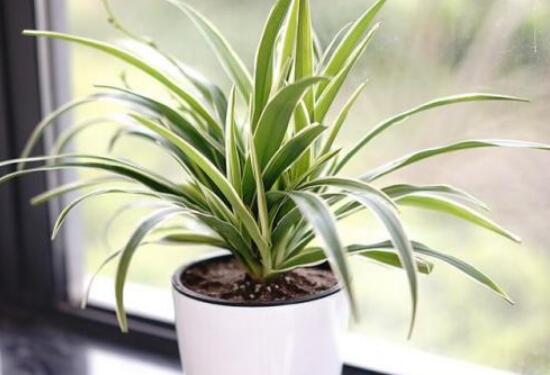
According to research, spider plants have excellent air-purifying effects and can absorb formaldehyde, making them natural air purifiers. The Variegated Spider Plant is a variety of spider plant, so can it remove formaldehyde? Clearly, it can. Besides absorbing formaldehyde, the Variegated Spider Plant has many other benefits and effects, and we'll look at the specifics below.
2. Benefits and Effects of the Variegated Spider Plant
1. Ornamental Value
When it comes to the benefits and effects of the Variegated Spider Plant, the first thing everyone thinks of is naturally its ornamental value. As shown in the picture above, the Variegated Spider Plant is a green foliage plant. It stays green all year round, and its slender, soft leaves droop down from the edge of the pot, spreading and trailing gracefully. It looks absolutely beautiful! Keeping a pot of Variegated Spider Plant in the house brings greenery and vitality, and it is a pleasure to look at, lifting one's spirits.
2. Beautifying the Home
The beauty of the Variegated Spider Plant should leave a deep impression on anyone who has seen it. It can be enjoyed all year round. Placing it indoors not only beautifies the environment but also pleases body and mind, and it adds a rich touch of nature to the interior, making home life more comfortable. For a home that never changes, adding a pot of Variegated Spider Plant is a great choice.
3. Absorbing Formaldehyde and Purifying the Air
The Variegated Spider Plant is very good at purifying the air. Research shows that it can carry out photosynthesis in weak light and can absorb more than 80% of indoor harmful gases, and its ability to absorb formaldehyde in particular is truly very strong. A single pot of Variegated Spider Plant in a room of 8-10 square meters is equivalent to an air purifier. So for a newly renovated house, growing two pots of Variegated Spider Plant is definitely a choice that gives you the best of both worlds.
4. Economic Value
As a common indoor potted plant, the Variegated Spider Plant is very easy to grow, and its slender, evergreen leaves can be used to create all kinds of bonsai for viewing. Such a plant is naturally in demand by the public, and where there is demand there is a market, so growing Variegated Spider Plants on a large scale can make money. Thus, economic value is also one of the benefits and effects of the Variegated Spider Plant.
5. Cultivating Character
Growing a Variegated Spider Plant indoors can also cultivate our character and refine our temperament. Not only that, but keeping one for a long time can also regulate mood, relieve stress and increase vitality. It can be said that growing a Variegated Spider Plant keeps the environment from becoming too dull, which helps extend the lifespan of the grower.
6. Medicinal Value
Besides the points above, the benefits and effects of the Variegated Spider Plant are also reflected in its medicinal value. It is understood that the whole plant of the Variegated Spider Plant can be used as medicine, with effects of clearing heat and detoxifying, nourishing yin and moistening the lungs, and reducing swelling and dispersing blood stasis. It can also be used to treat coughs, hoarseness, bruises and injuries, toothache and other conditions.
Overall, the Variegated Spider Plant is very beautiful. Placing it indoors is not only attractive but also brings many benefits to people. So if you are tempted, why not grow a pot at home, and once its leaves have grown out, you can enjoy its beauty to the fullest. That's all for the benefits and effects of the Variegated Spider Plant. We hope it has been helpful.
Benefits and Effects of the Green Spider Plant: Fresh Green Leaves with Strong Ornamental Appeal, Absorbs Formaldehyde and Can Also Treat Illness
The Green Spider Plant (Chlorophytum comosum) is one of the spider plant family. Although its leaves do not have the golden markings of the Variegated Spider Plant or the Golden Heart Spider Plant, its fresh green leaf color is still stunningly beautiful. In daily life, many people grow Green Spider Plants, some for its beauty, and others for its ability to absorb formaldehyde. Overall, the Green Spider Plant has many benefits and effects, and we'll look at them below.
Benefits and Effects of the Green Spider Plant
1. Ornamental Value
When it comes to the benefits and effects of the Green Spider Plant, the first thing everyone thinks of is naturally its ornamental value. As shown in the picture above, the Green Spider Plant is a green foliage plant. Its leaf color is fresh green, its leaf shape is like that of an orchid, and it spreads out to both sides from the edge of the pot, looking fresh and elegant. Looking at a lush Green Spider Plant in the morning clears the mind considerably.
2. Beautifying the Home
The beauty of the Green Spider Plant also works well for decorating the home. It can be enjoyed all year round. Placing it indoors not only beautifies the environment but also pleases body and mind, and it adds a rich touch of nature to the interior, making home life more comfortable. Keeping a pot of Green Spider Plant in the house brings greenery and vitality, and it is a pleasure to look at, lifting one's spirits.
3. Absorbing Formaldehyde
Because it is a foliage plant, the Green Spider Plant is also very good at purifying the air, especially when it comes to absorbing formaldehyde, where its ability is off the charts! Research shows that a single pot of Green Spider Plant in a room of 8-10 square meters is equivalent to an air purifier. So for a newly renovated house, growing two pots of Green Spider Plant is definitely a choice that gives you the best of both worlds.
4. Economic Value
As a common indoor potted plant, the Green Spider Plant is very easy to grow, and its slender, evergreen leaves can be used to create all kinds of bonsai for viewing. Such a plant is naturally in demand by the public, and where there is demand there is a market, so growing Green Spider Plants on a large scale can make money. Thus, economic value is also one of the benefits and effects of the Green Spider Plant.
5. Cultivating Character
Growing a Green Spider Plant indoors can also cultivate our character and refine our temperament. Not only that, but keeping one for a long time can also regulate mood, relieve stress and increase vitality. It can be said that growing a Green Spider Plant keeps the environment from becoming too dull, which helps extend the lifespan of the grower.
6. Medicinal Value
Besides the points above, the benefits and effects of the Green Spider Plant are also reflected in its medicinal value. It is understood that the whole plant of the Green Spider Plant can be used as medicine, with effects of clearing heat and detoxifying, nourishing yin and moistening the lungs, and reducing swelling and dispersing blood stasis. It can also be used to treat coughs, hoarseness, bruises and injuries, toothache and other conditions.
Overall, the Green Spider Plant is very beautiful. Placing it indoors is not only attractive but also brings many benefits to people. So if you are tempted, why not grow a pot at home, and once its leaves have grown out, you can enjoy its beauty to the fullest. That's all for the benefits and effects of the Green Spider Plant. We hope it has been helpful.
The Medicinal Uses of Flowers
Flower culture is an inevitable product of the development of human civilization. China is the birthplace of flower culture; as early as the oracle bone inscriptions more than 3,000 years ago, there were records about flowers, which is why China has long been known as the "Mother of Gardens." The dazzling array of rare and exotic flowers not only beautifies people's lives and cultivates their character, but also has considerable medicinal value. A large amount of clinical data and medical experiments show that many flowers have reliable therapeutic effects on common and frequently occurring human diseases. According to statistics, among known plants and flowers, 77% can be used directly as medicine, and another 3% can also be used as medicine after processing.In traditional Chinese medicine, the medical effects of flowers are divided into several major functions such as relieving the exterior, clearing heat, regulating blood and tonifying. In fact, after years of dedicated research, quite a few experts in traditional Chinese medicine have found that the medical effects of flowers go far beyond these, and they even have good therapeutic effects on cancer, such as Catharanthus roseus and cactus. Below are introductions to some common flowers and their medicinal value.
Plum blossom: A deciduous tree with many varieties, cold-resistant, with oval leaves. It blooms in early spring, with five petals, in colors such as pink, white and red, and is fragrant. The fruit is spherical, green when unripe and yellow when mature, with a sour taste.
Plum blossom mainly contains volatile oil, benzaldehyde, isoeugenol and benzoic acid. Dark plum mainly contains citric acid and sitosterol, and after ripening contains hydrocyanic acid. The decoction has an inhibitory effect on Staphylococcus aureus, Bacillus coli, typhoid, paratyphoid, dysentery and tuberculosis bacilli, and skin fungi, and can also reduce the occurrence of protein anaphylactic shock death in guinea pigs. In addition, plum blossom also has the functions of soothing the liver and relieving depression, and stimulating appetite and promoting fluid production. It mainly treats conditions such as liver qi stagnation, chest and rib distension, and abdominal pain.
Orchid: A perennial herbaceous plant, a herbaceous perennial. The flowers are borne singly at the top of the flower stem or in racemes, mostly greenish-white or pale yellow, with a delicate fragrance. The flowering period varies by variety.
Because there are so many varieties of orchids, the medicinal functions of different varieties also differ. For example, Arundina graminifolia, whose whole plant can be used as medicine, has the effects of clearing heat and detoxifying, dispelling wind-dampness, and reducing inflammation and promoting urination; Bletilla striata, whose pseudobulbs are used as medicine, can reduce swelling, stop bleeding, tonify the lungs, promote tissue regeneration and relieve pain; and Calanthe fimbriata can clear heat and detoxify, and strengthen sinews and bones. In addition, most orchid varieties such as Calanthe tricarinata, Calanthe chloroleuca, Black-node Grass and Dendrobium are excellent Chinese herbal medicines and have certain therapeutic effects on some diseases.
Chrysanthemum: A perennial herbaceous plant with capitula borne terminally or in clusters. Common colors include white, yellow, purple, red and green, with a slight fragrance, blooming in autumn.
There are more than a thousand varieties of chrysanthemum. The flower mainly contains chrysanthemum glycoside, adenine and amino acid choline, and has an inhibitory effect on many pathogenic microorganisms. Chrysanthemum has high medicinal value. The Compendium of Materia Medica records that "there are a hundred kinds of chrysanthemum, and the roots, stems and leaves are rarely the same, and the medicinal colors and varieties differ." Chrysanthemum tastes bitter and is a cooling, wind-heat-dispersing medicine. It functions to disperse wind-heat, clear the head and eyes, reduce fire and detoxify. It mainly treats headache, dizziness, high blood pressure, nervous headache and other conditions, and also has the effect of benefiting the liver and brightening the eyes.
Tree peony: A perennial deciduous shrub with stalked leaves, pinnately compound, with ovate or oblong leaflets, and large, solitary flowers, usually dark red, pink and white. The flowers, roots and bark can all be used as medicine. It blooms at the turn of spring and summer.
Tree peony bark contains paeonol, benzoic acid, plant sterols, tannins and so on. It is bitter and pungent in taste, slightly cold in nature, and enters the heart, liver and kidney meridians. It has the effects of clearing heat and cooling blood, and invigorating blood and dispersing stasis. Tree peony flowers are bitter and bland in taste, neutral in nature, and have the effect of regulating menstruation and invigorating blood. Tree peony bark has strong antibacterial effects on typhoid bacilli, Escherichia coli, Staphylococcus aureus, hemolytic streptococci, pneumococci and so on. In addition, tree peony bark can also be compounded with other Chinese herbal medicines and has a wide range of uses in medical treatment.
Rose (Rosa multiflora): A deciduous shrub with prickly stems. The leaves are alternate and odd-pinnately compound. The inflorescence is a paniculate corymb, with dense flowers, mostly white with a slight red tinge, and fragrant. It blooms in summer.
Rosa multiflora flowers mainly contain astragalin and rose oil, have a cholagogic effect, and can also clear antimony poisoning. Rosa multiflora flowers are sweet and warm in taste, cool in nature. They have the functions of clearing summer heat and harmonizing the stomach, and stopping bleeding. They have certain therapeutic effects on dysentery, chest tightness and heatstroke, and are also a good medicine for treating anorexia and mouth ulcers. Rosa multiflora roots have the effects of clearing heat and detoxifying, and dispelling wind and invigorating blood. They mainly treat vomiting of blood, blood in the stool, bruises and injuries, burns and other conditions, and also have certain therapeutic effects on gynecological diseases such as dysmenorrhea and excessive vaginal discharge.
Rose (Rosa rugosa): A deciduous shrub with densely prickly stems. The leaves are pinnately compound, elliptical or elliptically obovate, with wrinkles on the upper surface. The flowers are solitary, purple-red or white, and fragrant. It blooms in summer.
Rosa rugosa flowers mainly contain rose oil, whose main components are citronellol, quercitrin and bitter principles. Rosa rugosa flowers are sweet in taste and warm in nature, with the effects of soothing the liver and regulating qi, and invigorating blood and regulating menstruation. They mainly treat conditions such as distending pain in the stomach and ribs, coughing or vomiting blood, and toothache, and also have a good analgesic effect.
Narcissus: A perennial herb with bulbs. The leaves are flat, broadly linear, with blunt tips. In winter it sends up flower stems, with a membranous bract near the top; after the bract opens, several flowers emerge, arranged in an umbel, white and fragrant. It blooms in spring. Narcissus flowers mainly contain volatile oil, which contains eugenol, benzaldehyde, benzyl alcohol, cinnamyl alcohol and other components. The bulbs are rich in alkaloids. Narcissus is bitter in taste, cold in nature, and toxic. It has the effects of clearing heat and detoxifying, dispersing nodules and reducing swelling, and discharging pus and dispelling wind. It mainly treats conditions such as carbuncles and sores, mumps, mastitis and snake venom. In addition, it also has a certain anti-cancer effect.
Azalea: A semi-evergreen or deciduous shrub. The leaves are alternate and ovate-elliptical. The corolla is broadly funnel-shaped, red, with several flowers clustered at the branch tips. It blooms in spring.
The inflorescence, leaves and roots of the azalea can all be used as medicine. They mainly contain coumarin, triterpenoids, amino acids, sterols, tannins and cardiac glycosides. They are sour in taste, neutral in nature, and slightly toxic. They can invigorate blood and dispel wind-dampness. The leaves can relieve cough and resolve phlegm, and clear heat and detoxify. They mainly treat vomiting of blood, nosebleed, rheumatic pain, urticaria and other diseases, and have therapeutic effects on gynecological diseases such as irregular menstruation, amenorrhea and abnormal uterine bleeding.
Chinese rose: A deciduous shrub, prickly, or nearly thornless. The leaves are odd-pinnately compound. Several flowers grow together, occasionally solitary, dark red to pale red, and also white or yellow. It blooms in summer.
Chinese rose flowers contain volatile oil, quercitrin, tannins, vitamin C and so on. They are sweet in taste and warm in nature. They have the effects of invigorating blood and regulating menstruation, and reducing swelling and detoxifying. They mainly treat conditions such as irregular menstruation, dysmenorrhea, bruises and injuries, and carbuncles and boils.
Peony (Paeonia lactiflora): A perennial herb with cylindrical or spindle-shaped tuberous roots underground. The leaves are bipinnately trifoliolate, the flowers are terminal, and the stamens are numerous. The flowers are large and beautiful, white or red, and also other colors. It blooms in early summer.
Paeonia lactiflora has two types: white peony and red peony. White peony mainly contains paeoniflorin, benzoic acid, tannins, paeonol, paeonine, volatile oil, sodium salts of fatty acids and other active ingredients; red peony contains triterpenoids in addition to the above substances. The tuberous roots are used as medicine. For cultivated peony, the roots are dug up, the outer skin scraped off and then processed, and this is called "white peony." It is slightly cold in nature and bitter and sour in taste, functions to regulate the liver and spleen and harmonize the nutritive blood, and mainly treats blood deficiency abdominal pain, rib pain, dysentery, irregular menstruation, abnormal uterine bleeding and other conditions. Wild peony roots, once dug up, become "red peony." It is slightly cold in nature and bitter in taste, and functions to cool blood, disperse stasis and stagnation, and treat amenorrhea, rib pain, red dysentery, carbuncles and other conditions.
Gardenia: An evergreen shrub. The leaves are opposite, leathery, broadly lanceolate or obovate, with blunt tips and bases, entire margins, and a glossy surface. It blooms white flowers in spring and summer, terminal or axillary, with short stalks, and extremely fragrant. In traditional Chinese medicine, the fruit is used as medicine.
Gardenia mainly contains flavonoids, and also crocetin, crocin, ursolic acid and other active ingredients. The pigment in the fruit is mainly geniposide. Gardenia is bitter in taste and cold in nature. It has the effects of clearing heat and promoting diuresis, and cooling blood and detoxifying, and also has good cholagogic effects and effects of lowering blood bilirubin and blood pressure. It mainly treats conditions such as fever with restlessness, red eyes, jaundice, vomiting of blood, nosebleed, and heat-toxin sores and ulcers.
Cactus: A shrubby succulent plant. The joints are flat, green, ovate or oblong, with yellow or dark brown spines. The flowers are yellow.
Cactus mainly contains malic acid, glycosides and other active ingredients. It is bitter in taste and cold in nature. It has the effects of reducing swelling and detoxifying, and stopping diarrhea. It mainly treats mumps, carbuncles, boils and toxins, stomach pain, hemorrhoids and fistula, and also has good therapeutic effects on burns and scalds and snake bites. Recently, domestic reports have indicated that the active ingredients in cactus have anti-cancer effects, especially with obvious effects on lung cancer.
Firethorn: An evergreen shrub. The branches have thorns, and the leaves are alternate, leathery, oblong or lanceolate, with blunt tips, bristles at the apex, and rounded serrations along the margins, green on the surface. It blooms in spring and summer, with white flowers in corymbs. The fruit ripens in autumn, orange-red or fire-red, and remains on the plant for a long time without falling.
The fruit, roots and leaves of firethorn can all be used as medicine. The roots mainly contain sterols, saponins, phenols, organic acids, tannins and other chemical components. They are sweet and sour in taste and neutral in nature. The roots have the function of clearing heat and cooling blood, the fruit has the effects of reducing food stagnation and stopping dysentery, and invigorating blood and stopping bleeding, and the leaves have the effect of clearing heat and detoxifying. Therefore, they all have good therapeutic effects on indigestion, consumptive disease with bone-steaming, bruises and injuries, and irregular menstruation.
Catharanthus roseus: An annual erect herb. The leaves are opposite and oblong. It blooms in summer and autumn, with pale red or white flowers, and a salverform corolla, solitary or opposite in the leaf axils.
The whole plant of Catharanthus roseus is used as medicine, mainly containing vinblastine, vincristine and various other alkaloids. It is bitter in taste, cold in nature, and toxic. It has the effects of cooling blood and calming the liver, and clearing heat and detoxifying. It mainly treats dizziness caused by liver yang rising and liver-kidney yin deficiency. It is used externally for sores, carbuncles and swellings, burns and other conditions. In addition, it has certain effects on treating cancer and lowering high blood pressure.
Spider plant: A perennial evergreen herb. The leaves are clustered, linear, with a yellow banded stripe in the middle. From the leaf cluster, slender, pliable, drooping stems are often sent out, and tender leaves and aerial roots sprout at the tips or nodes. It blooms in summer, with white flowers in loose racemes.
Spider plant contains dendrobine, dendramine and other active ingredients. It is sweet and pungent in taste and neutral in nature. Dendramine can stimulate gastric acid secretion and promote digestion; dendrobine has analgesic and heat-clearing effects. It mainly treats conditions such as high fever in children, cough caused by lung heat, and bruises and injuries. The Variegated Spider Plant is sweet and bitter in taste and cool in nature, with the effects of relieving cough and resolving phlegm, clearing heat and detoxifying, and invigorating blood and resolving stasis. Therefore, it is suitable for conditions such as cough due to lung heat, boils and swellings, and burns and fractures.
The Shennong Bencao Jing is an early pharmacopoeia of Chinese medicine in our country, containing a total of 365 medicines, and it played an immeasurable role in the treatment of diseases in our country's traditional Chinese medicine. Since then, successive dynasties' medical literature has recorded a great many ornamental medicinal flowers, forming a system. The 15 common flowers introduced above are all used as single remedies on their own; if used in combination with other medicines, they can treat a hundred diseases, with even better effects. Therefore, it is suggested that flower lovers, while growing and enjoying flowers, not forget the medicinal value of rare and exotic flowers, so that flowers can make a greater contribution to humanity.