Detailed Explanation of Basil Pest and Disease Control Methods and Techniques
Pest and Disease Control
In terms of insect pests, the main ones are aphids, Japanese beetles, thrips, leaf miners, snails and slugs. In organic cultivation, you can use water sprays to drive away aphids, and hand-pick Japanese beetles and drop them into soapy water. As for slugs and snails, you can use small beer containers to trap and kill them, or tie copper strips at 5 cm from the base of the plant (10 cm is even better); because the copper reacts with the slugs' mucus, the invading insects are repelled.
In terms of diseases, sweet basil varieties are highly susceptible to fungal wilt (fusarium oxysporum). The pathogen invades through the vascular bundles of the roots, hindering plant growth and causing leaf wilt. The pathogen can lie dormant in the soil for many years. For general field cultivation, you can choose fungal-resistant F1 hybrid varieties such as nufar, while ocimum americanum and clove basil (Ocimum gratissimum) are resistant to fungal wilt. In addition, high humidity and poor drainage also make plants more prone to fungal leaf spot.
Interplanting basil with asparagus, peppers, tomatoes and most vegetables can increase the growth and flavor of these crops, but it must not be interplanted with cabbage or beans. It should also be kept away from plants of the Rutaceae family. Because of its distinctive scent, it can repel whiteflies and hawk moth larvae. Slugs also do not particularly like the smell of basil. In organic cultivation in Taiwan, China, basil is also used as a repellent crop to reduce pest damage.
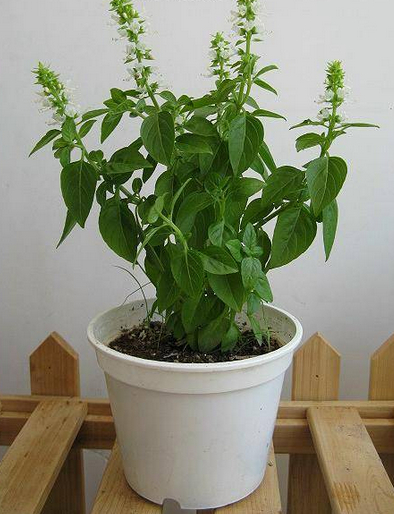
Herbs contain distinctive scents, and these scents themselves have a repellent effect on certain pests, but some pests will still eat the leaves; for example, certain basil varieties may be attacked by cutworms, in which case it is better to spend a little effort hand-picking them, or to cover the plants with insect-proof netting for isolation. For disease control, prevention is better than cure: do not use previously cultivated old soil to grow herbs, because the pathogens hidden inside can become a source of infection; also, grow herbs in a suitable environment or season, so that the plants are strong and can naturally resist disease attack. Remember that fresh herbs are eaten raw or only briefly heated, so if they contain pesticide residues it will have adverse effects on health. Alternatively, use diluted detergent.
Pest and Disease Control for Clove Basil
1. Yellow ants bite and eat seeds or young shoots, causing sparse emergence or missing plants in the seedbed. Control method: spray with 90% trichlorfon 1000x solution or 80% dichlorvos 1000x solution.
2. Aphids harm thetender branchesand young leaves of clove basil. Control method: spray with 25% phosmet 1000x solution. Do not spray dimethoate, otherwise it easily causes early leaf drop.
3. Scarab beetles harm the tender branches and young leaves of clove basil. Control method: spray with 25% phosmet 1000x solution.
Basil Pests and Diseases and Their Control
Basil Diseases and Their Control
Basil can be attacked by diseases such as fungal wilt. When basil breaks out with fungal wilt, the pathogen invades through the vascular bundles of the basil, causing poor plant growth and withered, fallen leaves. These pathogens can usually lie dormant in the soil for many years, so for disease prevention it is necessary to change the soil regularly, or disinfect and sterilize the soil, to reduce the chance of disease outbreaks. In addition, if basil is grown in an environment with excessively high air humidity, poor ventilation, or poor soil drainage, it will also allow fungi and bacteria to breed, causing various diseases and affecting growth.
Usually pay attention to providing more ventilation, ensure the soil does not become waterlogged, and minimize the chances of basil developing diseases. Do not use pesticides frequently. Basil is an edible and medicinal plant, and pesticides will leave certain residues that can harm human health, so use biological control or safe, green control methods as much as possible.
Basil Pests and Their Control
Basil is actually not prone to pest outbreaks, because basil itself carries a special scent, and these scents drive certain pests away from basil, preventing basil from being harmed. However, basil still cannot avoid some pests causing damage.
Basil sometimes suffers from pests such as aphids, cutworms, thrips, Japanese beetles, snails, leaf miners and slugs. These pests all have adverse effects, to varying degrees, on the growth of basil plants.
When basil breaks out with these pests, use manual methods or safe homemade insecticides to kill the pests. For example, install insect-proof netting and use various materials to trap and kill pests. Reduce the use of pesticides to avoid pesticide pollution.