Differences Between Bougainvillea spectabilis and Bougainvillea glabra in Appearance, Blooming Period and Propagation Methods
Bougainvillea spectabilis and Bougainvillea glabra are two different plants, but because they belong to the same plant family and are also fairly similar in appearance, they are often confused by people. In fact, there are still certain differences between the two. So what exactly are the differences between Bougainvillea spectabilis and Bougainvillea glabra? Below, the editor will walk you through them.
Differences Between Bougainvillea spectabilis and Bougainvillea glabra
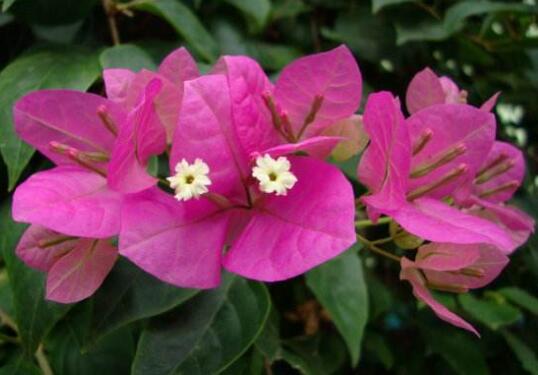
1. Differences in Stems
The stems of Bougainvillea spectabilis bear curved thorns that bend downward, and its stems also produce many dense fine hairs. Although the stems of Bougainvillea glabra also bear curved thorns, 5-15mm long, its stems have no fine hairs or few fine hairs, so we can use this point to distinguish them.
2. Differences in Leaves
The leaves of Bougainvillea spectabilis are ovate and covered with relatively thick fine hairs, and their tips are not especially pointed. Bougainvillea glabra is different: its leaves are ovate or ovate-lanceolate, have no fine hairs on the upper surface, and have sparse fine hairs on the lower surface, and the tips are also somewhat more pointed than those of Bougainvillea spectabilis.
3. Differences in Flowers
When it comes to the differences between Bougainvillea spectabilis and Bougainvillea glabra, they can also be seen from the flowers. The flowers of Bougainvillea spectabilis generally grow rather small and are usually clustered together in groups of three, and the bracts are generally mostly red. The flowers of Bougainvillea glabra are generally 2.5-3.5cm long and about 2cm wide, and the bracts are mostly purple or magenta.
4. Differences in Propagation Methods
In terms of propagation methods, Bougainvillea spectabilis and Bougainvillea glabra also differ to a certain extent. Bougainvillea glabra is generally propagated mainly by cuttings, and the best time for cuttings is April-May. Bougainvillea spectabilis is propagated mainly by layering, and the best time for layering is from early May to mid-June.
5. Differences in Blooming Period
From the flowering time we can also see the differences between Bougainvillea spectabilis and Bougainvillea glabra. The blooming period of Bougainvillea glabra is generally from March to July each year, lasting 5 months, while the blooming period of Bougainvillea spectabilis is generally between winter and spring.
The Complete Guide to Orchid Cultivation Techniques
"Three parts planting, seven parts care" - this is the ancients' experience in growing orchids. Whether the care is good or bad determines whether the orchids flourish and whether they can bloom, so the fact that predecessors attached great importance to this makes sense. Below is a detailed introduction to the methods of caring for and managing orchids.I. Location
The location where orchids are placed is very important; it directly affects the growth and development of the orchids. Orchids are generally placed outdoors in spring, summer and autumn (in summer, in a shaded outdoor spot), and indoors in winter. Outdoors, it is best to have open space on all sides and humid air. Indoors, there should be ample light, preferably facing south. This is beneficial to orchid growth. Orchid pots are best placed on wooden stands or tables, not on the ground.
II. Shading
Most orchids belong to semi-shade-loving plants, and most species are afraid of direct sunlight, so appropriate shading is needed. In early to mid-April, orchids can get more sunlight to promote their growth. After late April, appropriate shading is needed. Among summer orchids and autumn orchids, varieties with upright leaves are best placed on the south side of a shaded area so they receive a suitable amount of sunlight; autumn orchids and spring orchids with drooping leaves do best with two hours of light per day. From the beginning of June to September, shading should be started earlier each day; if reed blinds are used, dense blinds or two layers of sparse blinds can be used. After October, when the weather turns cool and sunlight is weaker, shading can be delayed, but around noon, attention should still be paid to providing shade.
III. Rain Protection
Orchids can be exposed to light rain, but must be protected from plum rain, showers or continuous rain. During the plum rain season, rain protection work must be done especially well. From late June to mid-September, there are often showers. If the rain is short in duration and light in amount, more water should be given in the evening to let the hot air in the pot escape; otherwise the orchids will be damaged, or even have their roots rot and die. If a shower is followed by sunshine, shade should be provided in time to prevent heat rising from the ground from affecting orchid growth. The rainy season coincides with the stage when orchids are sending out leaf buds; if the potting soil is too warm, it will cause poor leaf bud growth or invite disease. At this time, a small amount of plant ash can be sprinkled to regulate the moisture of the potting soil.
IV. Watering
A flower proverb says: "Dry orchids, wet chrysanthemums," and there is some truth to this. Generally speaking, orchids do best with eight parts dry and two parts wet. If too wet, the flowers are prone to root rot and death. The principle of watering should be: water when dry, stop when wet, and lean appropriately toward dry. In practice, generally note the following: during the growing period (May to the end of June), water appropriately more; during the leaf bud stage (about March-April) and the flowering period (about March-April), water appropriately less; during the dormant period (winter), water even less or not at all. If the pot is large and the orchid plant is small, water less; if the pot is small and the plant is large, water more. In hot, dry weather, water appropriately more; in cold, damp conditions (such as the plum rain season), water less or not at all. For orchids newly dug from the mountains, if the root system is sparse or many roots are broken, water less and keep the potting soil a bit dry; this way the roots will not rot and new leaves will be encouraged to emerge. The ancients' experience that "do not let them dry in autumn, do not keep them wet in winter" is a very good summary of how to water spring orchids and summer orchids. However, in some northern regions, because the climate in winter and early spring is too dry, orchids should not be allowed to become too dry either. Watering time: in summer and autumn, it is best to water after sunset so the orchid leaf surfaces dry before nightfall, or water in the early morning; in winter and spring, it is best to water around sunrise. Do not suddenly water with cold water after scorching sun exposure, lest the soil temperature drop, affecting root water uptake and disturbing the physiological balance. The amount of water should not be too large, to help suppress the occurrence of disease.
Watering method: water should be poured in from the edge of the pot, and must not be poured into the flower buds, to avoid causing rot.
Predecessors had very good summarized experience on watering orchids. For example, in "Record of Orchid Cultivation in the Capital", Yu Zhao proposed different watering methods according to the twenty-four solar terms within a year. The following is an excerpt for reference. But two points should be noted: first, "Record of Orchid Cultivation in the Capital" uses Beijing's climate as the standard; second, the months in the text refer to the lunar calendar rather than the Gregorian calendar, for example "the first month" is actually February in the Gregorian calendar.
1. Start of Spring and Rain Water: spring orchids have already set flowers, and the soil should not be too dry; moisten slightly along the edge of the pot; if the potting soil of autumn orchids has not dried all the way to the bottom, do not water.
2. Awakening of Insects: when the potting soil of spring orchids is dry to half the pot (empty above, solid below), you may moisten with water, but it should not be much; autumn orchids are the same as above.
3. Spring Equinox: spring orchids have finished flowering and should avoid dampness; when the pot is half dry, you may moisten with water.
4. Pure Brightness and Grain Rain: do not let the potting soil become too dry; moisten with water every 5 days.
5. Start of Summer: orchids begin to be brought out of the room, and it is suitable to water thoroughly once.
6. Grain Full: the potting soil should not be too dry or too wet. If spots appear on the leaves, it is too wet; if the tips of new shoots wither, it is too dry. Water one sheng every 4 days (about one dry teacup), so that the lower 2/3 of the potting soil from bottom to top is moist.
7. Grain in Ear: the climate is dry, so even more attention should be paid to avoiding both excessive dryness and excessive wetness.
8. Summer Solstice: the potting soil must not be too dry. If there is heavy rain, it can only endure one day; if there are consecutive overcast and rainy days, the pot needs to be moved to a ventilated place.
9. Minor Heat: at this time the air is too humid, and the potting soil must not be too wet. The pot should be placed in a ventilated place. If it is hot and dry with little rain, water one sheng every 2 days. After heavy rain or one heavy wetting, you must wait until 2/3 of the potting soil is dry; otherwise it should not be watered again.
10. Major Heat: the potting soil easily dries all the way through, so note that only one heavy rain or one heavy wetting per day is suitable.
11. Start of Autumn: orchids need water at this time; water 2 sheng every 3 days, and they should also be sheltered from wind.
12. End of Heat: water once every 5 days; except during consecutive days of hazy rain, they can be allowed to receive rain and dew.
13. White Dew: autumn orchids need frequent watering even more than spring orchids, but after being wet they must dry out greatly before they can be wetted again.
14. Autumn Equinox: if autumn orchids have already produced flowers, watering should be slightly less; if they have not produced flowers, watering should be slightly increased.
15. Cold Dew: autumn orchids should be watered thoroughly, while spring orchids should not be watered thoroughly but only moistened.
16. Frost's Descent: orchids should be moved into the room, and the watering time should be changed to midday; after watering, they need to be placed in the midday sun for 1-2 hours.
17. Start of Winter: only moistening with water is suitable, about half a sheng every 5 days.
18. Minor Snow: the flower room should avoid warmth and should not be too damp. If too damp, it can cause root rot, leaf spots and even withering. If the potting soil has not dried to the bottom, only slightly moisten the surface of the soil.
19. Major Snow: autumn orchids do not need water; spring orchids should be slightly moistened.
20. Winter Solstice: neither should be irrigated.
21. Minor Cold: watering should be avoided for both.
22. Major Cold: autumn orchids still do not need water; spring orchids may be slightly moistened with water.
V. Fertilizing
Whether to fertilize orchids should be decided according to their growth conditions. Those that grow luxuriantly and have no disease can be fertilized; those that grow poorly should not be fertilized or should be fertilized only lightly. For orchids newly dug from the mountains, before new roots have developed, fertilizer must absolutely not be used; they need 1-2 years of cultivation, and only when the new roots are vigorous can fertilizer be applied; otherwise they are prone to withering and dying.
Generally speaking, in June-July, when orchid leaf buds have extended to about 1.5 cm, 1-2 applications of thin, well-rotted liquid fertilizer may be given (chemical fertilizers are not suitable), but fertilizer should not be applied in high-temperature seasons. In August-September, apply 1-2 more applications of rotted, thin liquid fertilizer. For plain-hearted orchid varieties, 1-2 applications of plant ash extract can be used, with very good results. Fertilizing in the evening is best, and the next morning water once with clear water.
A relatively simple way to judge whether orchids need fertilizer is to look at the depth of leaf color. If the leaves appear yellow and thin, they lack fertilizer and should be top-dressed; if the leaves are blackish and the leaf tips are scorched, too much fertilizer has been applied and fertilization should be stopped.
For fertilizer, the various methods introduced above can be used to make homemade fertilizer. When applying these fertilizers, they need to be diluted with 8-9 times water, and must absolutely not be too concentrated. When fertilizing, apply it to the root zone of the plant, and never apply it to the leaf surface. The main fertilization times and dates for orchids: Number of applications, Date, Category, First time, Second time, Third time, Fourth time, Notes
Spring orchid group: late June, mid-July, mid-August, early September; the fourth application should be especially thin.
Summer orchid group: late June, mid-July, mid-August, early September; the fourth application should be especially thin.
Autumn orchid group: early June, late June, late July, mid-August; the fourth application should be especially thin.
VI. Pruning
During orchid cultivation, pruning must be carried out continuously. When old leaves turn yellow and wither, they should be cut off in time to improve ventilation, and some leaves whose tips have dried should also be cut off. In particular, leaves harmed by pests and diseases need to be removed promptly to prevent spread. When cutting off leaves with viral disease, the scissors used should not then be used to cut healthy leaves, to prevent the spread of the virus. If the same pair of scissors is used, it must be disinfected. For precious orchids, after flower buds emerge from the soil, if there are too many flower buds, the strong buds should be kept and the remaining thin, small flower buds removed; it is suitable to keep 1-2 flower buds per pot. If there are too many flower buds, it will not only make that year's flowers bloom poorly, but also consume too much of the mother plant's nutrients and affect next year's flowering. Generally, orchid flower buds may not be cut off. The flowers of spring orchids bloom for about half a month, after which the flowers should be cut off; the flowers of summer orchids should also have the inflorescence cut off when the last flower on the inflorescence has been open for one week. Precious varieties should not be allowed to pollinate and set seed, otherwise next year's flowering will be affected. If they are used for hybrid breeding, then they need extra careful cultivation to make the fruit plump and ripe.
VII. Cold Protection
Autumn orchids should have cold protection work done early; for example, when the temperature is 2-3°C, they can be moved indoors. Cymbidium kanran, growing in the south, even more needs early cold protection. Spring and summer orchids have relatively strong cold resistance, but if freezing occurs they must also be moved indoors in time. If the room temperature can be kept at 1-2°C, they can overwinter. If a severe cold wave strikes and the room temperature drops below zero, heating must be done in time; generally it is enough to keep the room from freezing. Indoors, autumn orchids should be placed on the south-facing side, and spring and summer orchids on the other side. Around noon, the south-facing and southeast-facing sides should have windows opened for ventilation (for autumn orchids on overcast days at 1-2°C, windows must not be opened, to prevent cold wind from blowing in and freezing the leaves). Autumn orchids like to be somewhat dry in winter; the potting soil of the remaining orchids should be kept moist.
VIII. Flower Removal
For orchids that grow poorly, with few leaves per clump, or with poor roots, flowers should be removed. For better varieties, spring orchids may appropriately have 1-2 flower buds removed; for summer orchids, when the flower buds have extended, keep 1-2 flower buds and remove the rest. This way the flowers can last longer, more new leaves can be sent out, and the old leaves are less likely to wither and die. Precious spring orchid flowers should be removed after 3-5 days of blooming, so that the leaf buds grow robustly; when the topmost flower of a summer orchid has opened, it can also be cut off at a point centimeters above the pot surface.
IX. Flood Prevention
If the cultivation site is open on all sides and the terrain is relatively high, then when strong winds or typhoons pass through in summer, wind protection work must be done well, to prevent the leaves of summer orchids or Cymbidium kanran from being broken and damaged.
X. Misting
In dry seasons, spray mist every evening on the balcony where the potted flowers are placed, mainly to make the ground moist and increase air humidity. The surface of the orchid pots should also be misted. When misting, spray upward so that the mist droplets fall finely and evenly and the leaf surfaces become moist; this can promote good orchid growth and give the leaves a glossy appearance.
XII. Pest and Disease Control
Sterilization treatment should be carried out (exposure under the hot sun is sufficient) to prevent disease. Orchids are most prone to southern blight in rainy, high-temperature seasons; it can be prevented by spraying with 800x thiophanate-methyl solution or Bordeaux mixture. If the disease is severe, 500-750x diluted thiophanate-methyl can be used, sprayed once every 7-10 days. Among pests, scale insects occur most; this insect attaches to the base of the leaves. If scale insects are found, they should be removed promptly. To avoid scale insect infestation, starting in April, 2000x "1059" solution can be used for control. In order to suppress the occurrence of orchid diseases, in addition to properly controlling the dry and wet degree of the potting soil at ordinary times, when choosing flower pots, clay pots should be used as much as possible and glazed pots used less. In particular, poorly growing orchids newly dug from the mountains must be planted in clay pots. Doing so makes the potting soil dry easily, can promote orchid growth, and reduces disease occurrence.
How should orchids be grown well?
1. Potting soil requirements: A neutral to slightly acidic soil containing plenty of humus, loose and with good drainage is best, with a pH generally around 5.5 to 6.5. In Sichuan, Emei Xiantu and "Xinghong brand" refined orchid potting medium are often used, and more commonly "bamboo root soil" and leaf mold from broad-leaved forests in mountainous areas are used to cultivate orchids.
2. Placement location: In spring, summer and autumn, orchids can be grown outdoors and on balconies; choose a place with good ventilation, humid air and no environmental pollution. Being near ponds or riversides is naturally good, but at least there should be tall trees or bamboo groves and shade netting to reduce sunlight exposure and lower the temperature. Orchid pots are best placed on wooden stands (or steel stands); if placed on the ground, bricks should be used underneath. For home balconies, a small water tank made of galvanized iron sheet can also be used to store water, with bricks placed on top for growing, to increase humidity.
3. Appropriate shading: Most orchids belong to semi-shade-loving plants, and most species are afraid of direct sunlight, so appropriate shading is needed. In early to mid-April, orchids can have the net removed and windows opened to get more sunlight and promote growth. In May, apart from the midday sun, they can get 6 hours of light; from the beginning of June, shade all day; after October, apart from midday, they can be kept fully open. Remember the proverb: "More shade, better leaves; more sun, better flowers."
4. Reasonable fertilizing: Orchids are naturally "vegetarian," and fertilizing should depend on the chosen potting soil and growth conditions. Those that grow luxuriantly and have no disease can be fertilized; those that grow poorly should not be fertilized or should be fertilized only lightly. For newly planted orchids in pots whose roots have not fully developed, fertilizer can only be applied after 1-2 years. Generally, in June-July, when orchid leaf buds have extended to about 1.5 cm, apply a rotted liquid fertilizer once every three weeks (a thin concentration of 10% is suitable). Chemical fertilizers are taboo; if high-temperature seasons occur, fertilizer should not be applied. In August-September, apply diluted liquid fertilizer once every two to three weeks. Orchid fertilizing should be done in the evening each time, and in the morning water with clear water, called "return water."
5. Appropriate watering: Rainwater and spring water are best for watering orchids; tap water or rice-washing water needs to be left overnight before use. When watering, pour from the edge of the pot, and do not pour into the flower buds. The amount of water should be determined according to air temperature, the dry and wet degree of the potting soil, and the growth conditions of the orchid. Water more when leaves are large, and less when leaves are fine. In April-May, when new shoots have not yet emerged from the soil, the potting soil should be a bit dry; if too wet, new shoots rot easily; June-September is the growth period of new orchid shoots, and the amount of water should be increased, watering once each morning on sunny days or once daily, and absolutely avoid watering under the scorching midday sun. In autumn, reduce the amount of water as appropriate, and leaf-surface misting can be used to keep the potting soil moist; in winter, control the amount of water even more, keeping it at "eight parts dry, two parts wet" as suitable.
6. Evening misting: Orchids originally grow in a humid environment, so in dry seasons, in addition to shading, evening misting is also necessary to increase air humidity and lower the temperature; water can also be poured on the ground (table surface) where the potted orchids are placed; "one cold and one hot" can even more stimulate orchid growth.
7. Wind and rain protection: "February ghost wind" causing old leaves to turn yellow and fall is a normal phenomenon; dead branches and withered leaves can be cut off. Orchids can be exposed to light rain, but must avoid plum rain, heavy rain or continuous rain, otherwise the heart and leaves rot easily. In rainy seasons, a small amount of plant ash may be sprinkled as appropriate.
8. Pruning and flower removal: During orchid cultivation, withered, yellow, broken leaves and diseased leaves should be cut off frequently to improve ventilation. For precious orchids, if there are too many flower buds, keep only the strong buds, with 1-2 flower buds per pot as suitable. Spring orchid flowers should be removed after half a month of blooming, and precious orchid flowers should be removed after 7 days, so that the spring orchid leaf buds grow robustly and bloom better the following year. When the last flower on a summer orchid inflorescence has been open for one week, cut it off 3 cm above the pot surface.
9. Cold protection and warmth: Because orchid varieties differ and their places of origin vary, their cold resistance also differs, so the time for moving them into the room in winter and the position where they are placed indoors are also different. Cymbidium kanran, autumn orchids and Cymbidium sinense grow in the south, and should be moved indoors (or have windows closed and nets drawn) when the temperature is 5°C, and placed as far as possible in a sunny south-facing spot. Spring and summer orchids have strong cold resistance and can be moved indoors only when the temperature reaches 0°C, placed on the northeast side. Around noon on clear, windless days, the south-facing or southeast-facing side should have windows opened and nets drawn for ventilation. Autumn orchids must not have windows opened on clear days at 1-2°C. Of course, if there is a greenhouse, electric lighting can be used for heating.
10. Disease and pest control: The potting soil should generally be sterilized (exposure under the hot sun also works) to prevent disease. Orchids are most prone to southern blight in rainy, high-temperature seasons; for a small amount, it can be brushed off with a damp cloth, and for many pots, 500-800x Bordeaux mixture or thiophanate-methyl can be used, sprayed once every 7-10 days. Among pests, scale insects (commonly called "orchid lice") occur most; during the hatching period, use 1% omethoate and 25% phosmet emulsifiable concentrate at 1000x solution, sprayed once a week. To treat the symptoms one must treat the root cause: pots should be spaced appropriately, placed high and low, to increase air permeability and ventilation and reduce disease occurrence.
(II) Ecological Habits of Orchid Cultivation
Orchids originate in China. They like warmth and humidity, and especially ideal conditions are warm winters and cool summers; high temperatures and dryness must be avoided. In winter, it is best if they do not freeze, and keeping 3C-7C is most suitable; in summer, 25C-28C is suitable. In their natural distribution, orchid habitats are near streams and gullies, receiving rain and dew year-round, and the annual rainfall requirement is above 1000 mm. They require deep topsoil, rich in humus, dark brown, loose and fertile, with good water permeability and water retention, slightly acidic soil, pH5-pH6.5, and they must avoid waterlogging.
Orchids like shade and require short sunlight duration. In their natural distribution it is shown that spring orchids require tree shade density of 0.7-0.95; Cymbidium faberi requires 0.5-0.8, with a slightly longer light duration than spring orchids; Cymbidium ensifolium, Cymbidium sinense and Cymbidium kanran also require large shade density for shading. Cymbidium plants have a dormant habit in their places of origin, which depends on the rainy season and the dry season. Usually the dry season is in winter, which is the dormant period for orchids, and the rainy season is in spring and summer, which is the growing period for orchids, when they can continuously send out buds and bloom.
(III) Propagation Methods for Orchid Cultivation Orchids are commonly propagated by division, sowing and tissue culture.
1. Division: This can be done in both spring and autumn, generally once every three years. Any plant that grows robustly and has dense pseudobulbs can be divided. After division, each clump must retain at least 5 interconnected pseudobulbs. Before division, reduce watering to make the potting soil relatively dry. When potting after division, first cover the drainage hole at the bottom of the pot with broken tile pieces, then spread coarse gravel, occupying 1/5 to 1/4 of the pot depth, then place coarse-grained soil and a small amount of fine soil, and then plant with sandy loam rich in humus. The planting depth should be such that the pseudobulbs are just barely buried in the soil, leave a 2 cm rim at the edge of the pot, spread Selaginella uncinata or fine gravel on top, and finally water thoroughly, place in a shaded place for 10-15 days, keep the soil moist, gradually reduce watering, and carry out normal care.
2. Seed propagation: Orchid seeds are extremely fine, and inside the seed there is only one incompletely developed embryo, with very low germination capacity. In addition, the seed coat does not easily absorb water, so sowing by conventional methods cannot germinate; therefore orchid fungi or artificial culture medium are needed to supply nutrients before germination can occur. For sowing, it is best to select fruit that has not yet split; after sterilizing the surface with 75% alcohol, take out the seeds, soak them in 10% sodium hypochlorite for 5-10 minutes, take them out, rinse them 3 times with sterile water, and then sow them in culture bottles containing medium, then place them in a dark culture room, keeping the temperature at about 25C; after they begin to sprout, move them into the light and they can form protocorms. From sowing to transplanting takes half a year to one year. Tissue culture has already been successfully achieved, and where conditions permit, this method can be used for propagation.
(IV) Orchid Cultivation Techniques
1. Site selection: It requires open space on all sides, good ventilation, proximity to water, humid air, and no coal smoke pollution. On the southwest side of the site, evergreen broad-leaved trees can be planted, with shade density of about 0.7; this can reduce afternoon sunlight exposure and regulate humidity and temperature.
2. Watering: Rainwater or spring water is suitable; water containing salt and alkali should not be used. If tap water is used, it should be left standing for several days before use. Watering should depend on the temperature. In spring, the amount of watering should be less, and in summer more; the plum rain season coincides with orchids sending out leaf buds, so the potting soil should be slightly dry; after autumn when the weather turns cool, the amount of watering should be reduced as appropriate, keeping it moist. In winter indoors it should be dry, reducing the frequency of watering, and it is suitable to water at noon. Orchids can be exposed to light rain, but continuous rain or heavy rain easily causes heart rot and leaf rot, so attention must be paid to rain protection.
3. Fertilizing: For growing orchids, cake fertilizer is suitable. Mix 4 parts plant ash, 10 parts bean cake and 10 parts bone meal evenly, place in a vat, add water several times until the bean cake is soaked and swollen, then cover and seal, let it rot for one year, and then make it into dry granules. When using, place it on the pot surface. If whole manure is used, it should also be rotted for one year, diluted with water, and the residue filtered out before use. Generally, fertilizing starts in May and stops at the Start of Autumn, with the principle of thin fertilizer applied frequently. Fertilizing should be done in the evening, and the next morning water once with clear water.
4. Shading and cold protection: Except in early spring and winter, they should all be placed under open-air sheds. The shade shed requires good ventilation. When orchids have just been brought out of the room in March-April, they can get more sun, and afterward the shading time gradually increases. In winter, orchids must be moved indoors for cold protection, and room temperature kept at 1C-2C is sufficient. In addition, after orchids are brought out in spring and before they are moved in in autumn, attention should also be paid to frost protection.
5. Pest and disease control: The main pests and diseases of orchids are:
(1) Southern blight: Mostly occurs in the plum rain season. Attention should be paid to ventilation and light transmission, and good drainage of the potting soil for prevention. After onset, the infected potting soil can be removed and quintozene powder or lime sprinkled on.
(2) Anthracnose: Occurs throughout the year, and is even more rampant in high-temperature, rainy seasons. In addition to improving environmental conditions, control methods can first use 50% thiophanate-methyl wettable powder at 800-1500x solution for spraying during the onset period, once every 7-10 days, and then supplement with 1% equal-amount Bordeaux mixture, once every half month.
(3) Scale insects: They reproduce fastest under high temperature, high humidity and poor air circulation. Use conventional methods for control.
In summary, to grow orchids well, one must master their natural growth environment conditions, adopt reasonable measures, and strengthen care and management. According to "Orchid Cultivation Formulas," it is recorded: "Do not bring them out in spring, do not expose them to sun in summer, do not let them dry in autumn, do not keep them wet in winter." This is a summary of China's orchid-growing experience.
A Brief Discussion of Rational Pesticide Use for Orchids
Fungicides are agents for preventing and controlling crop diseases. When we normally prevent and control orchid diseases, we should choose according to the different properties and modes of action of different categories of fungicides. One category is protective fungicides, whose role is to treat plants or the environment in which plants are located before pathogens invade. They need to be used before the plant comes into contact with pathogens or before disease occurs in order to be effective, such as Bordeaux mixture, lime sulfur mixture, mancozeb, zineb, etc. There is also another category, therapeutic fungicides. We often come into contact with this kind of fungicide; its characteristic is that it is systemic. The use of this kind of fungicide is after the pathogen has invaded the plant body or the plant has already become diseased; at this time it is applied to reduce or eliminate plant disease. Applying the medicine in the early stage of plant disease will give better results.
The initial and peak stages of disease for different pathogens also differ, and are greatly influenced by the external environment, especially by the growth and development status of the infected crop and by temperature and humidity (therefore, we must grow strong orchid seedlings). When preventing and controlling diseases, it would be better if everyone could be familiar with the living habits and epidemic patterns of the pathogenic bacteria, and could carry out disease control according to different seasons and temperature environments; this plays a huge role in the effective exertion of pesticide efficacy. Crop diseases caused by various pathogens are different, and the disease symptoms are also obviously different, so when choosing fungicide medicines, it is required to suit the medicine to the disease. Moreover, the efficacy should be significant and lasting, and one should not blindly pursue high efficiency, broad spectrum, or even "universal" agents, as if no matter what the disease, I treat it with only one medicine. This is definitely not acceptable. When using medicine, attention should be paid to preventing the development of pathogen resistance, that is, the same fungicide cannot be used continuously, nor can the same category of fungicide be used continuously several times in one growing period. In particular, the number of uses of systemic agents should be limited; for example, in production, systemic agents can be used in combination or rotation with chlorothalonil, mancozeb, etc.
In our daily pesticide use, we should follow the infection patterns of pathogens and adopt corresponding control measures. When using fungicides to spray orchid plants directly, attention should be paid to the influence of natural conditions to prevent loss of efficacy or pesticide damage. When temperature and humidity are relatively high, the concentration of the pesticide used can be appropriately reduced; for agents that easily decompose or volatilize under strong light, application should be carried out on cloudy days or in the evening. Different pesticides all have a certain scope of use; only by understanding them deeply and mastering their use characteristics can one correctly select pesticides and achieve twice the result with half the effort. Carbendazim is a systemic fungicide commonly used by everyone, and can prevent and control dozens of fungal diseases. Ascomycetes and deuteromycetes are especially sensitive to this medicine, but it is ineffective against bacteria and diseases caused by oomycetes among fungi. Therefore, when it is confirmed that a plant is infected with a fungal disease and repeated use of carbendazim is ineffective, consideration should be given to switching to phenylamide pesticides (such as metalaxyl). This type of medicine is mainly used for downy mildew, phytophthora disease and pythium disease caused by oomycetes, while its effect on diseases caused by other fungi and bacteria is very poor. Chlorothalonil is a non-systemic broad-spectrum fungicide with a preventive effect on many plant fungal diseases. It can prevent pathogen spores from germinating, hinder mycelial development and spore formation, and can also control diseases that have developed resistance to carbendazim, but its control effect on diseases caused by soil-borne Pythium is poor. Therefore, frequently change fungicides, (Huakang is said to be able to kill all diseases; I do not know whether this is true. When I use it, I do not dare to be careless and still mix it with other fungicides) and strive for the greatest possible protection of orchid plants, so that they are spared the torment of disease. When orchids grow healthily, orchid friends are happy too.Figure 1 Ring spot disease + anthracnose (Colletotrichum)
Ring spot disease + anthracnose (Colletotrichum) routine preventive pesticide use:
Pesticide name: 77% Kocide wettable powder; mode of action: broad-spectrum protective fungicide; use method: 1000x solution / 3-4 times / interval 7 days, spray / underside of leaves, upper surface of leaves; can also prevent: brown spot disease, anthracnose, leaf spot disease, ring spot disease, bacterial brown spot disease;
Pesticide name: 25% Sportak emulsifiable concentrate; mode of action: broad-spectrum fungicide; use method: 1500x / 2-3 times / interval 8 days, spray / underside of leaves, upper surface of leaves; can also prevent: anthracnose, leaf spot disease, sooty mold, black spot disease, round spot disease, ring spot disease;
Pesticide name: 80% mancozeb wettable powder; mode of action: broad-spectrum protective fungicide; use method: 800x / 3-4 times / interval 6 days, spray / underside of leaves, upper surface of leaves; can also prevent: anthracnose, leaf spot disease, sooty mold, black spot disease, round spot disease, ring spot disease;
Ring spot disease + anthracnose (Colletotrichum) supplementary notes:
1. Because most of the control prescriptions for anthracnose are emulsifiable concentrates or mancozeb-type products, when using them you must pay attention to weather temperature and UV index.
2. When the temperature exceeds 30 degrees, avoid using emulsifiable concentrates and copper preparations as much as possible; when the weather UV index is too high, try to choose to apply the medicine before 5 a.m. or after 6 p.m.
3. It is recommended that during normal pesticide use, two formulations of fungicides can be selected for mixed use; this allows for treatment and defense in multiple aspects.Figure 2 Ring spot disease + leaf spot disease
Ring spot disease + leaf spot disease routine preventive pesticide use
Pesticide name: 80% mancozeb wettable powder; mode of action: broad-spectrum protective fungicide; use method: 800x / 3-4 times / interval 6 days, spray / underside of leaves, upper surface of leaves; can also prevent: anthracnose, leaf spot disease, sooty mold, black spot disease, round spot disease, ring spot disease;
Pesticide name: 77% Kocide wettable powder; mode of action: broad-spectrum protective fungicide; use method: 1000x solution / 3-4 times / interval 7 days, spray / underside of leaves, upper surface of leaves; can also prevent: brown spot disease, anthracnose, leaf spot disease, ring spot disease, bacterial
Ring spot disease + leaf spot disease supplementary notes: Before the leaves of diseased orchids dry up and wither, if not looked at carefully, ring spot disease is often mistaken for ordinary leaf spot disease or something else. Treatment is... [original text unclear] ... also considered a relatively easily controlled disease.
2. It is recommended that during normal pesticide use, two formulations of fungicides can be selected for mixed use; this allows for treatment and defense in multiple aspects.Figure 3 Mild nutrient deficiency disease (zinc, magnesium, iron)
Mild nutrient deficiency disease (zinc, magnesium, iron) routine preventive pesticide use: although this is a diseased state, it is not contagious. At ordinary times, fertilize to supplement some trace elements and fertilizers containing zinc, magnesium, iron and calcium. Mild nutrient deficiency disease (zinc, magnesium, iron) supplementary notes: at ordinary times, fertilize to supplement some trace elements and fertilizers containing zinc, magnesium, iron and calcium.Figure 4 Soft rot + black spot disease
Pesticide name: 72% agricultural streptomycin sulfate wettable powder; mode of action: antibiotic fungicide; use method: 800x / 2-3 times / interval 7 days, spray, root drench; can also prevent: bacterial brown spot disease, soft rot;
Soft rot + black spot disease supplementary notes: Because this is a condition in which fungi and bacteria occur at the same time, two different fungicides must be mixed for use. Because the two fungicides each have their own concentration dilution when mixed, this often causes confusion for beginner orchid friends. Here is a supplementary explanation: ratio: if 100 jin of water is needed, use the bacterial streptomycin sulfate at 500x mixed with the fungal carbendazim at 1000x.
1. For 100 jin of water, streptomycin sulfate at 500x means 100 grams of streptomycin sulfate needs to be added.
2. For 100 jin of water with carbendazim at 1000 times dilution, the amount of carbendazim needed is 50 grams.
3. That is, using 100 grams of streptomycin sulfate equal to "500 times" plus 50 grams of carbendazim equal to "1000 times" put together into 100 jin of water and mixed for use, only then is it considered a correct pesticide dosage preparation.Image 5: Leaf tip anthracnose + leaf blight
Routine preventive spraying for leaf tip anthracnose + leaf blight
Pesticide name: 25% propiconazole emulsifiable concentrate; Characteristics of action: broad-spectrum systemic fungicide; Method of use: 1500 times / 2-3 times / interval of 8 days, spray / leaf underside, leaf surface; Also can prevent: brown spot disease, round spot disease, anthracnose, leaf spot disease, leaf tip blight;
Pesticide name: 10% Score water-dispersible granules; Characteristics of action: broad-spectrum systemic fungicide; Method of use: 3000 times / 2-3 times / interval of 8 days, spray / leaf underside, leaf surface; Also can prevent: brown spot disease, leaf spot disease, black spot disease, round spot disease, leaf blight, ring spot disease, leaf tip blight, sooty mold;
Supplementary explanation for leaf tip anthracnose + leaf blight: Because it is a cross symbiotic infection of two pathogens, it is recommended to use two fungicides for relatively simple control. The mixing method of the two fungicides is repeated here once more. When two disease conditions occur at the same time, two different fungicides must be mixed for use. Because the mixing of the two fungicides each has its own concentration and dilution factor, which often troubles beginner orchid growers, a new supplementary explanation is added here: Ratio: 100 jin of water is needed, using streptomycin sulfate for bacteria at 500 times mixed with carbendazim for fungi at 1000 times.
1. For 100 jin of water with streptomycin sulfate at 500 times, the amount of streptomycin sulfate needed is 100 grams.
2. For 100 jin of water with carbendazim at 1000 times, the amount of carbendazim needed is 50 grams.
3. That is, using 100 grams of streptomycin sulfate equal to "500 times" + 50 grams of carbendazim equal to "1000 times" put together into 100 jin of water and mixed for use, only then is it considered a correct pesticide dosage preparation.Image 6: Leaf margin black spot disease
Routine preventive spraying for leaf margin black spot disease
Pesticide name: 80% mancozeb wettable powder; Characteristics of action: broad-spectrum protective fungicide; Method of use: 800 times / 3-4 times / interval of 6 days, spray / leaf underside, leaf surface; Also can prevent: anthracnose, leaf spot disease, sooty mold, black spot disease, round spot disease, ring spot disease.
Pesticide name: 10% Score water-dispersible granules; Characteristics of action: broad-spectrum systemic fungicide; Method of use: 3000 times / 2-3 times / interval of 8 days, spray / leaf underside, leaf surface; Also can prevent: brown spot disease, leaf spot disease, black spot disease, round spot disease, leaf blight, ring spot disease, leaf tip blight, sooty mold;
Pesticide name: 25% Sportak emulsifiable concentrate; Characteristics of action: broad-spectrum fungicide; Method of use: 1500 times / 2-3 times / interval of 8 days, spray / leaf underside, leaf surface; Also can prevent: anthracnose, leaf spot disease, sooty mold, black spot disease, round spot disease, ring spot disease;
Pesticide name: 50% Sporgon wettable powder; Characteristics of action: broad-spectrum fungicide; Method of use: 2000 times / 2-3 times / interval of 8 days, spray / leaf underside, leaf surface; Also can prevent: anthracnose, leaf spot disease, sooty mold, black spot disease, round spot disease, ring spot disease;
Supplementary explanation for leaf margin black spot disease: Actually, many of the fungicides used for orchid leaf diseases have similar properties, but as our professional introduction, we have no choice but to present all the disease conditions for orchid growers to understand. In general, when choosing fungicides, broad-spectrum and systemic pesticides of the two types are the best.
Experience-sharing reminder: In my experience, the key task when buying pesticides is to choose the manufacturer's reputation and clearly labeled ingredients, so as to avoid gaining only psychological comfort from having a fungicide, only to end up with fake ingredients, causing the disease to go uncontrolled and missing the golden time for treatment.
Experience-sharing reminder: The second cause of harm is: thinking that these pesticides may have insufficient active ingredients, so instead increasing the concentration and dilution factor. Who knew that this time real medicine had been bought, and as a result, once the dilution factor was increased, it caused serious pesticide damage. Haha! One can only look to heaven speechlessly.Image 7: Stem rot
Routine preventive spraying for stem rot
Pesticide name: 72% Curzate wettable powder; Characteristics of action: systemic fungicide; Method of use: 1500 times solution / 2-3 times / interval of 10 days, drench roots and stems; Also can prevent: stem rot
Pesticide name: 50% Anchor wettable powder; Characteristics of action: systemic fungicide; Method of use: 12500 times / 2-3 times / interval of 10 days, drench roots and stems; Also can prevent: stem rot
Supplementary explanation for treating stem rot after infection:
1. At the peak of disease incidence, continuous preventive medication must be used. Having understood the characteristics of stem rot, we can only use targeted fungicides.
2. 72% agricultural streptomycin sulfate soluble powder at 800 times solution, 77% Kocide powder at 1000 times solution, spray leaf underside, leaf surface, and crown
3. Mifenan (emulsifiable concentrate) 1500 times + tetracycline (powder) 2000 times + dimethomorph (powder) 2000 times solution, spray leaf underside, leaf surface, and crown
4. Antaisheng 500 times + Mifenan 1500 times + streptomycin sulfate 500 times solution, spray leaf underside, leaf surface, and crown. When applying fertilizer or pesticide, it must be sprayed on the leaf underside, because plants absorb through the stomata on the leaf underside.
5. Every 20 days or so, use Dexon 800 times + tetracycline 3000 times solution to thoroughly drench the roots.
6. Fungicides must be alternated and rotated so as not to produce resistance and delay treatment of the disease.Basic Principles of Orchid Cultivation and Management Techniques - Orchid Cultivation Techniques
1. Preparation of growing medium. Planting orchids requires a specially made growing medium, also called orchid mud. The growing medium for orchids should preferably be loose and breathable, well aerated, with an appropriate amount of fertilizer, and free of hidden pests and diseases. The composition of the growing medium is made from one or several basic components (substrates). These basic components include soil, fertilizer, and other materials, with quite many types. Some components may seem unrelated to soil, but they are all substrates on which orchids rely for stabilizing the plant and for growth and development.
(1) Formula of the growing medium.
In East China, orchid growers generally prefer orchid mud from places such as Shaoxing and Yuyao. In recent years, Mount Emei Hewang brand fairy soil has also become popular, but these growing media are limited in quantity and expensive, and can only be used for repotting. Large-scale field planting requires hundreds or thousands of tons of growing medium, so local materials must be used. After many years of practice and repeated screening, we determined that the best formula is: four parts yellow sandy soil, four parts sawdust, two parts river sand; if using yellow loam, then one part river sand, one part sawdust, one part yellow loam. All are thoroughly mixed. The prepared growing medium should have a pH value between 6.5-6.8, be loose and breathable, have excellent water retention and air permeability, and be comprehensive in nutrients. River sand and sawdust serve to conduct water and air; sawdust is decomposed by bacteria and can slowly release nitrogen, phosphorus, potassium, and so on. Yellow loam also contains a variety of trace elements. After many years of observation, this formula is very suitable for orchid growth. It is especially suitable as a substrate for domesticating and cultivating wild orchids. It is suitable for Cymbidium goeringii and Cymbidium faberi, and is also very ideal for Cymbidium ensifolium and Cymbidium kanran. Whether in flowering rate or stress resistance, it shows a significant increase.
(2) Bamboo root soil.
This refers to the soil at the base of bamboo clumps that have been planted for many years. Because of the spreading growth of bamboo rhizomes and bamboo roots, as well as the rotting of bamboo leaves and shoot sheaths, this soil becomes loose in structure, well drained, and has a certain fertility without being excessively fertile, making it suitable for orchid growth. The quality of bamboo root soil depends on three factors: first, the original soil quality, which is the predecessor and foundation of the bamboo root soil, with sandy loam being the best; second, the number of years the bamboo clump has been planted, as the longer the time, the more fully the effects of bamboo roots, bamboo leaves, and bamboo rhizomes; third, the distance from the bamboo stump, as the closer the soil is to the bamboo stump, the better.
(3) Vetch bran soil.
Vetch bran is made by harvesting, sun-drying, and crushing the plants of green manure (Chinese milk vetch). Mix vetch bran with bamboo root soil or ordinary sandy loam, pile it up, and decompose it to make vetch bran soil. The preparation method is: choose a rain-sheltered site, spread one layer of soil, then one layer of vetch bran, and pour one round of *manure water, piling up layer by layer in this way; after the pile is finished, sprinkle water on the surface to moisten it, then cover it with thin mud to seal it. After piling and fermenting for half a year, it can be used.
When using, mix it into other growing media in proportion.
(4) Leaf mold.
Made by piling fallen leaves or green grass and tall stalks, watering or applying fertilizer, covering with thin mud to seal, and then decomposing and sieving. It is best to use green grass that has not yet set seed and to fully decompose it to kill pests, diseases, and weed seeds; otherwise, there will be many weeds in the orchid pots later.
(5) Mountain soil.
This is the forest soil where wild orchids originally grew. It is formed by dead branches and fallen leaves accumulating and rotting over many years and mixing with the soil. Naturally formed leaf mold contains rich humus, is loose and breathable, and is very suitable for orchid growth. When transportation is convenient, digging up mountain soil in large quantities to plant orchids is relatively simple and economical, and it is even better for domesticating raw orchids. Humus soil under broadleaf forests, especially leaf mold under chestnut trees, is an extremely ideal soil for orchids.
(6) Pond mud.
When repairing ponds and fish ponds in winter, dig out the mud, dry it, and then crush it into fine particles. It can be used to cultivate all flowers, including orchids.
(7) Field soil.
That is, choose loose topsoil from fields, mix in a little sandy soil or a small amount of rice husk ash, and then add some decomposed compost or fermented and decomposed organic fertilizers such as soybean cake and rapeseed cake, to improve soil structure and enhance fertilizer efficacy. After turning and mixing the pile evenly several times, sieve it. This kind of soil is nearly neutral and not as good as humus soil. Therefore, it is only used reluctantly when there is no suitable humus soil or mountain forest sandy loam, and it is mostly used for cultivating common orchid varieties.
(8) Cow dung soil.
Crush and grind fermented dry cow dung into fine particles, and mix it into sandy soil or field topsoil at a ratio of 1:3. It is best to choose cow dung from cattle fed dry feed in winter, because after the dry forage is ruminated in the cow's stomach, although the fibers are finely broken, they still retain elasticity and are plant fibers containing certain nutrients. This cow dung soil is soft and rich in fertilizer, and is extremely suitable for the air-loving orchid roots. In Taiwan, China's orchid circles, people often use this cow dung soil as a filling material for cultivating terrestrial orchids, with very good results. Abroad, for cultivating terrestrial orchids, generally 5 parts humus soil or leaf mold plus 1 part sand is used; or 3 parts peat soil plus 1 part river sand, mixed with crushed dry cow dung and fully blended before use. The cultivation substrate for epiphytic orchids is mainly moss and ferns, with a small amount of tree leaves, small pieces of charcoal, and crushed dry cow dung added. Before using soil to plant orchids, expose the soil to sunlight for disinfection and sterilization. In summer, spread the soil out and let it sun-expose for more than 3 days, which can kill the pathogens and insect eggs within. Before use, the growing medium should be tested and adjusted for pH value. For overly acidic soil, lime can be used to adjust it. For overly alkaline soil, superphosphate, ferrous sulfate, and so on can be mixed into the soil. In short, it is advisable to control soil pH at neutral to slightly acidic (that is, pH 5.5-7). Using organic fertilizers, such as green grass and tree leaves composted into fertilizer, and adding them to the soil to change soil acidity and alkalinity is a better method. In addition, before planting orchids, the nutrient soil should be sieved and graded, separating large particles from small particles.
When planting orchids, place the large particles at the bottom of the pot to facilitate drainage. At the same time, the degree of soil dryness and wetness should also be adjusted well, neither too wet nor too dry. It is best to squeeze the soil in the hand with force, and the soil can form a clump; loosen the hand and shake it a little, and the soil disperses again into granular form. This degree of dryness and wetness is suitable.
2. Preparation of the orchid-growing site. 1. Productive field planting. The original environment for terrestrial orchids is growing among mountain forests and secluded valleys, with high and cool terrain, shaded by trees, forming a moist microclimate. The temperature difference is small, and the air is clean.
When introducing and domesticating them, their wild environment should first be simulated so that they can be grown with abundant flowers and lush leaves. At present, with industrial development and urban modernization, greening work cannot keep up correspondingly for the time being, and they are affected by pollution from factories and transportation. Therefore, orchids cultivated in cities are not as robust as those grown in the suburbs. There is a gap from the native environment of wild orchids, and the meteorological factors differ greatly from the native places of Cymbidium kanran and Cymbidium ensifolium. Therefore, careful design was made for the domestication and orchid-growing site, and practical and feasible arrangements were made for regulating environmental factors.
The orchid nursery covers an area of about 1.5 sq m and is rectangular. There is a rectangular pond in the nursery for storing rainwater. Every 2.5 m or so in the nursery, a 2.5 m high moso bamboo pole is fixed, and bamboo poles are tied horizontally above to form a frame for laying the first layer of shade net. About 20 cm below the first layer of shade net, another horizontal thin bamboo pole is placed for laying the second layer of movable shade net. The first layer of shade net is basically fixed from spring to autumn, while the second layer can be retracted or spread as needed. Carefully regulate light and temperature. The seedbed width is 1.2 m, the length is 12-16 m (depending on terrain), and the height is about 30-40 cm (5-7 bricks high). The seedbeds are spaced 50 cm apart, and the passage is 130 cm wide. This facilitates daily management. In winter, a plastic greenhouse is tied over every two beds for warmth. On snowy days, pay attention to clearing snow to avoid excessive snow crushing the plastic greenhouse. For about each mu (1 mu is about 667 sq m), build two water tanks with a storage capacity of 1 cubic meter to treat tap water. In winter, 100-150 watt light bulbs are placed about 4 m apart inside the plastic greenhouse, mainly for heating.
2. Open-field cultivation
(1) Field planting of cymbidiums in tree shade.
This is for ornamental purposes, using sparse tree shade in front of houses, corners of walls, or scenic areas for appropriate planting in the ground, but the original poor clay soil must be dug out and replaced with loose humus soil or good field topsoil.
When winter arrives, spread some rice straw over the soil surface around the roots to prevent freezing injury to the orchid roots. If there is severe cold, straw curtains or other soft coverings should also be laid over the leaf clusters to prevent frost damage. Except for strengthening management and protection during the hottest midsummer, this kind of field-grown orchid can generally be managed extensively and allowed to grow naturally. Orchids planted in the open field are all common varieties without petal-type classification. In the following spring, after the weather turns warm, the cold-protection coverings can be removed. After years of growth, as long as they are watered and fertilized in a timely manner, their adaptability is still relatively strong. They can bloom abundantly every year, with delicate fragrance drifting far, making them a fine item for embellishing the countryside.
However, when arranging field-grown orchids, in addition to considering the quietness of the layout
(2) Pot cultivation of orchids.
This refers to growing orchids under a shade shed.
Whenever orchids are grown in pots, it is best to use clay pots, that is, unglazed tile pots. They have good air permeability, can filter water, and are cheap. They are economical and practical utensils for orchid cultivation. But tile pots are rather rough and not attractive, and are unsuitable for exhibitions. Porcelain pots or glazed pots are attractive in appearance, but their air permeability and water filtration are very poor. If used for long-term orchid cultivation, they easily cause root rot and make it difficult for orchids to grow vigorously. Therefore, when using porcelain or glazed pots to grow orchids, more drainage tiles or fillers such as clam shells must be placed at the bottom of the pot; moreover, watering must be controlled and not excessive. If orchids are grown in clay tile pots, they can be placed inside larger porcelain or glazed pots when participating in exhibitions. Yixing purple clay pots are attractive and elegant in appearance and also have a certain degree of air permeability, making them relatively suitable for orchid cultivation. Newly bought orchid pots must be soaked in water for several days. Especially newly kilned tile pots must be allowed to absorb enough water to completely eliminate their fiery dryness. In general orchid cultivation, newly planted orchids mostly use new pots, while repotting mostly uses old pots. Whenever orchids are grown in pots, it is best not to place them directly on the ground, because they are easily disturbed by pests and weeds. Especially in hot summer, the blazing sun is intense, ground temperature rises, and harms the orchid plants; during thunderstorms and plum rain seasons, humid heat rises even more, easily steaming the orchid roots; moreover, being close to the ground, ventilation is poor. This is beneficial for aerial root growth. To reduce the above effects, orchid pots can be placed on orchid stands built from cement boards, facilitating vertical convection, continuously supplying fresh air, promoting orchid respiration, enhancing metabolic function, accumulating nutrients and energy production, making orchids grow robustly, and also avoiding damage to orchid roots by ants, slugs, and so on. If limited by conditions, an empty clay pot can be inverted on the ground, and then the potted orchid placed on top.
3. Orchid room cultivation. The orchid room is mainly for overwintering terrestrial orchids.
Different types of orchids have different ecological habits, so the time for moving them indoors for winter and the room temperature requirements are also different. For terrestrial orchids, as long as the temperature is not lower than 7°C-8°C, most can be cultivated outdoors. In Jiangsu and Zhejiang, it is customary after the Start of Winter to move Cymbidium ensifolium, Cymbidium kanran, and Cymbidium sinense, which require slightly higher temperatures, indoors for cultivation, and to move some Cymbidium goeringii and Cymbidium faberi with flower buds under the eaves or to cold-protected places to avoid attack by early frost, which affects flower bud development. After Light Snow, potted orchids raised from pseudobulbs and weak small plants, especially orchids of the pure-color petal type, are gradually moved indoors and placed on orchid shelves near windows so as to receive sunlight. After Heavy Snow, all potted orchids are moved indoors for maintenance. Before orchids are moved into the orchid room, first wash the area around the orchid pots clean, which can prevent mud from contaminating insect eggs, mold, and so on, and also looks clean and elegant. When placing orchid pots, pay attention to reasonable arrangement, which is convenient for sunlight penetration and also conducive to ventilation. When terrestrial orchids overwinter indoors, the key is to master temperature and humidity well. Generally, room temperature should be maintained above 7°C-8°C. For Cymbidium sinense, it is most ideal to maintain 10°C-15°C. After orchid pots are moved indoors, if the weather is not yet severely cold and freezing, open the south-facing windows around noon and open a small vent on the north side to facilitate indoor air circulation. In the evening, if the indoor temperature is still above 5°C, the small vents on the south and north sides can be slightly opened; if below 5°C, all windows should be closed. In deep winter, only around noon on windless sunny days should the windows be slightly half-opened for a little ventilation. Once the sun begins to slant, doors and windows should be closed, and in the evening straw curtains or cotton cloth curtains should be hung. If the temperature continuously drops below 3°C-5°C, a coal stove with a chimney pipe can be used for heating. After the Beginning of Spring, the climate gradually turns warm. Around noon on clear days, all doors and windows of the orchid room can be opened, but attention should be paid to temperature changes; in the afternoon, as the temperature gradually drops, the south windows should be half-opened and half-closed; before nightfall, all should still be closed properly.
During this period, the temperature in the orchid room should preferably be kept at around 10°C. If the temperature is on the high side, it will cause early-flowering varieties of Cymbidium goeringii to bloom earlier, and the flowers will also wither easily. In early spring, it is even more necessary to prevent late spring cold, which affects flower bud growth and may even freeze the orchid roots.
After Awakening of Insects, all Cymbidium goeringii and Cymbidium faberi without flower buds can be moved out of the room and placed on open-air stands, with reed curtains added over the stands at night to prevent frost damage. All kinds of orchids with flower buds should still remain in the orchid room for maintenance, and only after Qingming can they be moved outdoors for cultivation; but at night, attention should still be paid to preventing late frost. During the period of indoor orchid cultivation, especially in severe cold seasons, special attention must be paid to the dryness and wetness of potted orchids. The pot soil should be dry. When watering is needed can be judged by looking at the pot surface: if the surface soil is in a powdery, loose state while the soil below is still slightly moist, do not wait until the pot soil is completely dry before watering. When watering, first move the potted orchid down and place it on the ground, and water along the water groove at the rim of the pot. Never let water soak into the leaf clusters. The orchid pot can also be placed in a water vat for shallow soaking for a few minutes, with the water limited to reaching the middle of the pot. When watering, if water soaks into the leaf sheaths, promptly wipe away the water marks with a dry cloth, or let sunlight dry them before moving them back indoors. Because orchids are kept indoors for a long time, many dust particles often adhere to the leaf surface, hindering metabolism. On clear and warm days, around noon, move the pots outdoors into sunlight and use a fine-hole spray pot to spray and clean the leaf surface, washing away dust and dirt. After the water marks dry, move them back indoors. If the water marks are not dry, the wet parts of the orchid leaves easily turn black and wither. When growing orchids indoors, during heating periods, the indoor air temperature is often on the high side, the leaf clusters appear dry, the soil surface in the pot is dry and loose, or the moss on the pot surface looks withered. Then water should be sprayed promptly on the passages and walls to allow evaporation, so as to regulate temperature. In short, when growing orchids indoors, whether the orchid plants in the pot or the moss on the pot surface should remain green and lush. If you are an amateur orchid grower, due to limited conditions, you can use a south-facing sunny spot along a wall outdoors, leaning one side against the wall and using bricks to build a single-slope ground box on the other three sides. The size can be determined by the number of pots. On the sloped surface of the ground box, install wooden-framed glass windows or plastic film windows that can be opened and closed as needed. For orchids with long and tall leaves, place them in a higher position near the wall, on inverted empty flower pots, or on stacked bricks, wooden strips, or cement boards at suitable heights. Low orchid pots are arranged row by row toward the front, and all leaf tips or the tops of ring-shaped leaves must not touch the glass or plastic film of the window surface. In severe cold seasons, whenever the temperature is too low or on snowy and windy days, the sloped windows must be covered with enough straw curtains or other coverings to prevent cold air from entering. When the weather is clear and mild, especially after the Beginning of Spring, when sunlight shines, the cold-protection straw curtains can be removed; around noon when sunlight is strong and the temperature is slightly higher, the covered windows can be lifted to leave a gap to regulate fresh air. After the sunlight slants, the covered windows should be closed immediately. In daily care, great attention should be paid to preventing excessive water droplets from condensing on the covered window glass, to prevent them from dripping into the leaf clusters. The wet parts often turn black and rot, and may even die.
3. Planting orchids. 1. Planting timing. Whether repotting or newly planting, the choice of timing has a great influence on the survival, growth vigor, and development of orchids. Therefore, it is very important. Generally, the relatively suitable time is the orchid dormancy period, that is, March-April, before new buds have emerged from the soil; in terms of seasonal timing, it is between the Spring Equinox and Qingming. If after new buds have emerged, operation is very inconvenient, and if one is not careful, the new buds may be broken or injured. When the orchid dormancy period is about to end and new buds and new roots are at the stage of being about to grow but not yet grown, planting at this time is best. Shortly after planting, they can root and sprout and resume normal growth. If planting is too early, orchids are not easy to recover after planting, and if low temperatures, cold waves, late frost, or spring thunder occur, freezing injury is often caused. In the Yangtze River basin, orchid rooms are seldom heated in winter. Winter is very cold, so division in severe winter is not advocated. To make operation convenient when dividing, the soil can be allowed to dry appropriately before division. This makes the roots turn white and produce inconspicuous shrinkage, making the originally brittle and easily broken fleshy roots soft and pliable, so that when dividing and potting, not too many roots are broken. In larger orchid nurseries, the planting workload is large and takes a long time from beginning to end. Precious varieties should be arranged for planting at the best time. Ordinary varieties can be postponed or advanced as appropriate.
2. Using orchid seedlings for propagation. For propagation, orchid seedlings that grow well and are free of pests and diseases should be selected.
After orchids have been planted for 2-3 years, the soil or pots must be changed, and at this time division propagation should be combined with it. When repotting, support the bottom of the flower pot with the left palm, carefully extend the fingers of the right hand into the orchid leaf cluster to block the pot soil, then lay the orchid pot down, tilt the pot body sideways facing the person, and let the lower edge of the pot mouth touch the ground. At this time, lift the pot slightly upward with both hands, let the lower edge of the pot gently knock against the ground, loosen the pot soil, rotate the pot body, change the contact point where the lower edge of the pot mouth knocks the ground, and let the pot soil gradually loosen evenly and separate from the flower pot. Support the orchid plant with the right hand, and remove the flower pot with the left hand. If the orchid plant is too tall, it is better to knock the lower edge of the pot mouth against the edge of a wooden chair or cement platform, so that the orchid leaves hang in the air and are not injured or broken. After the orchid pot soil separates from the pot, lay the orchid seedlings and pot soil flat, so that the soil ball does not suddenly loosen and crack, causing the orchid root system to break. Then carefully pat the soil ball gently to loosen it, and gradually shake off the old pot soil. Carefully grasp the pseudobulbs to avoid injuring leaves and tender buds, and especially protect the root tips. Cut off yellowed leaves, decayed bract leaves on the pseudobulbs, and rotten, dry, hollow old roots. However, for pseudobulbs with new buds, the leaves should be retained as much as possible to promote good growth of the new buds. For larger clumps that have been selected and cleaned, find the natural gap where two pseudobulbs are relatively far apart and easily loosened when shaken by hand, and cut the two pseudobulbs apart. The ancients called this "opening the road." Then hold the bases of the two clumps with both hands, gently shake and slowly pull along the "road" to divide them into two clumps. Properly prune the separated orchid clumps, then soak them in a 800-times water-diluted thiophanate solution for 10-15 minutes. Only the roots should be soaked, not the leaves; a 1000-times potassium permanganate solution can also be used for disinfection. Be careful to disinfect only the wounded parts, then air-dry the orchids in a cool, ventilated place. When the orchid roots become soft and easy to bend, they can be planted. Generally, in clear weather, air-drying for half a day is enough; of course, they must not be dried too much.
3. Planting procedure. For separated orchid clumps, do not divide them too scattered. Each clump should have at least 3-5 seedlings, and it is best to keep one-year-old plants, two-year-old plants, and three-year-old plants in the same clump.
(1) Pot padding.
Cover the drainage hole at the bottom of the pot with a piece of tile, then gradually fill with bricks, tiles, or shells, with large gaps filled with mud particles or bean-sized stones, generally about 1/2-1/3 of the pot height. The remaining clear height above is about 10-15 cm, reserved as the growing medium layer. The specific height should be determined according to the type of orchid, the length of the orchid roots, and the height of the pot. The padding should not be filled too densely or too solidly; a little porosity should be retained. Practice has proved that some new roots can grow well in the gaps of the padding layer.
(2) Planting.
On the padding layer, first fill in 2-3 cm of growing medium, press slightly with the hand, then place the orchid upright on it. According to the size of the plant and the flower pot, several single plants, 2 clumps, 3 clumps, or more clumps can be planted in one pot. Three clumps should be planted in a tripod arrangement. Four clumps can be planted in a square. Five clumps should be arranged in a plum blossom shape. The orchid roots should spread naturally, and the leaves should spread in all directions. Slowly place the orchid roots into the pot so that the orchid roots spread naturally and, as much as possible, do not scrape against the inner wall of the pot. After the orchid plant is put into the pot, gradually fix the posture of the orchid plant. When planting one clump per pot, the old pseudobulbs should be placed to one side so that new buds have room to develop. When planting multiple clumps per pot, the old pseudobulbs of each clump should be relatively gathered toward the middle of the pot, so that new roots and new buds developing outward each have enough space.
(3) Filling soil.
When planting, hold the leaves with one hand and add nutrient soil with the other. Hold the base of the orchid plant and lift it slightly upward to spread the root system, while shaking the orchid pot. Let the growing medium penetrate deep into the root zone; continue adding soil, and shake the orchid pot to adjust the position and height of the orchid plant. Press with the hand along the edge of the pot, but do not press too hard and injure the roots. Continue adding soil and pressing until the pot surface soil is 2-3 cm above the pot rim, slightly in a steamed bun shape. The growing medium should cover all orchid roots, up to the base of the pseudobulbs. As for the depth of soil filling, tradition holds that Cymbidium goeringii should be planted shallowly and Cymbidium faberi deeply, but generally the leaf bases on the pseudobulbs should not be buried. When newly collected orchids grow in the wild, the plants retain obvious markers above and below the soil surface, and these markers can be used as the standard. The size of the flower pot should also match the size and number of the plants; do not use a large pot for small and few plants, nor a small pot for large and many plants. Generally, the number of plants should be based on the principle that after 2-3 years they will just fill the pot. The size of the plants should match the height of the pot. This is beneficial for growth and also meets ornamental requirements.
(4) Topdressing the surface.
After planting is completed, a layer of small stone particles or green moss can be spread on the surface of the pot soil. It is best to use high-quality moss from under the forest. It is not only attractive but can also regulate moisture, and can also protect the leaf surface from being polluted by muddy water. New buds will also not rot at the core due to infection by pathogens in the soil; in addition, it can reduce the washing effect of rainwater on the pot soil and keep the pot soil loose.
(5) Watering.
After planting is completed, water for the first time immediately. The pot soil must be thoroughly wet. The water droplets should be small, and the impact force should not be strong. If placing it in a water basin to soak, never soak it too long. Once the pot soil is soaked wet, immediately take the orchid pot out, then move it to a shaded place for maintenance.
4. Post-planting care and management. Mastering orchid planting techniques is certainly very important, but managing and caring for orchids well is even more difficult, hence the saying "three parts planting, seven parts care." The care of orchids requires understanding the environment, accumulating care experience, and patience and carefulness. The most important thing is to master the laws of orchid growth and development: when they sprout, when they grow leaves, when they bloom, and when they dormancy. Then carry out care and management from aspects such as temperature, humidity, watering, fertilizing, ventilation, plant protection, cherishing leaves, and protecting flowers. In this way, orchids can certainly be grown well.
1. Cherishing leaves. Orchid leaves are soft and graceful but not weak, upright and straight but not stiff.
Orchids are moving and lovely, but good flowers do not bloom often, and there is nothing to be done when flowers fall; whereas orchid leaves remain green through the four seasons, forever full of vitality, giving people year-round enjoyment. The elegance of orchids is shown both in the flowers and entrusted to the leaves.
And lush leaves are also the prerequisite for good flowers. If the leaves are healthy and lush, the plant itself manufactures abundant nutrients, so the flowers are numerous and beautiful. If the leaves are damaged while the flowers are many, it is merely a sign of rapid decline. The key to cherishing leaves is first to control shade density, air humidity, appropriate water and fertilizer, and maintain good ventilation. Make the orchid leaves lush and healthy, green and glossy. Also strengthen pest and disease control, and prevent wind, rain attack, and mechanical damage. In addition, preserve the leaf tips. The ends of orchid leaves are like sword tips, brush tips, and eyebrows, able to convey meaning and spirit. Losing the leaf tip makes them appear abrupt and dull. The key to preserving leaf tips is to ensure that the orchids have sufficient water and nutrients, and that the pot soil is loose and breathable, so the root system is well developed and intact, the plant grows vigorously, and no scorched tips occur. Some people say that the sign of growing orchids well is that the leaf tip can pass through the eye of a needle, which means the leaf tip is intact and the tip is undamaged. The leaf tip shapes of different orchid types differ: some are acuminate, some obtuse and rounded, some emarginate, and some upturned; as for leaf color, some orchid varieties have golden tips or silver tips (that is, the leaf tip is yellow or white) and thereby show their preciousness and rarity. This is another layer of interest in leaf appreciation regarding leaf tips. In daily care, attention should be paid to protecting orchid leaves. During operation, be light and careful, do not bump the orchid leaves, and maintain their natural posture.
For contaminated leaves, carefully clean them, and spray water must not accumulate in the center of the leaf cluster. For withered yellow old leaves and diseased leaves, cut them off promptly. For partial cutting of orchid leaves, cut at a slant at an appropriate place, and the resulting pointed angle should be less than 30 degrees. Some also cut twice, but they must not be cut into a flat top.
2. Protecting flowers. After flower buds emerge from the soil, if there are too many, they consume excessive nutrients from the mother plant and hinder the formation and robust growth of leaf buds. Excess small and weak flower buds should be removed as early as possible. For each orchid seedling, keeping one flower bud z is enough.
Each pot should preferably retain 3-5 flower buds. Retain flower buds appropriately according to the orchid variety, the size of the pot, and the number of seedlings. In order to protect and develop precious varieties, all flower buds can also be removed to let them multiply luxuriantly. During the period from flower bud elongation to flowering, maintain moderate light so that the flower color is bright and full, rich in luster and full of fragrance. If light is too weak, the flower color is pale and lacks luster. Flowers that remain open too long consume nutrients and hinder sprouting and leaf growth as well as flowering the following year. The flowers of Cymbidium goeringii bloom for about half a month. After they fade, the flower scapes should be cut off promptly. For Cymbidium faberi flowers, when the last flower of the inflorescence has been open for 1 week, cut off the inflorescence. When breaking off flower scapes, stabilize the leaf base with one hand and press the flower scape down to one side with the other, so that it breaks off from the base and can be pulled out; it can also be cut off. The removed flower stems can be placed in a vase and enjoyed for many more days. Generally, orchids are not allowed to be pollinated and set seed after flowering, especially not the less robust and precious varieties, otherwise flowering the next year will be affected. If hybrid breeding is to be carried out, artificial pollination should be done at the appropriate time. And the mother plant should be carefully managed so that the seeds are full and mature.
3. Temperature. Most regions of our country are in the temperate and subtropical zones, while orchids generally come from places with mild and humid climates, relatively high average annual temperatures, and long frost-free periods. In Northeast and Northwest China, orchids are rarely cultivated, mainly due to temperature constraints. The northernmost distributed Cymbidium plants in our country are Cymbidium goeringii and Cymbidium faberi. On their distribution line, there is frost or short-term snow accumulation in winter, and relatively high temperatures in summer. However, because orchids mostly grow in mixed broadleaf and coniferous forests or in bamboo forests, the trees both block the summer sun and resist the winter cold wind; even in places covered with snow, the impact on orchids is not great, because snow actually protects orchids through winter, and the ground temperature under snow is generally not lower than 0°C. In our introduction and domestication of Cymbidium ensifolium and Cymbidium kanran, we have moved them 600-1000 km north from their original production areas, and on a large scale of field planting. It can be seen that the survival ability and adaptability of orchids are still relatively strong. In most areas of Northeast, Northwest, and North China, winters are too cold, and outdoor orchid cultivation is unsuitable. From mid-to-late October to late April of the following year, about half a year, orchids all need to be moved indoors or into greenhouses for cultivation. In the lower Yangtze region, orchids also need to be kept indoors in winter or heated in sheds. In provinces and regions such as Fujian, Guangdong, Guangxi, Yunnan, Sichuan, and Taiwan, China, Cymbidium kanran and Cymbidium ensifolium generally do not need indoor overwintering in winter. In Jiangxi, Hunan, and parts of Sichuan, certain measures are still needed in winter to protect orchids.
Temperature requirements of orchids: The germination temperature of orchid seeds is: 21°C-25°C during the day, 15°C-18°C at night. The temperature required for grown plants of terrestrial orchids is 20°C-22°C during the day and 13°C-0°C at night.
During the winter dormancy period of orchids, the temperature can be lowered. For example, Cymbidium goeringii and Cymbidium faberi require a minimum winter night temperature of 4°C-6°C, and dropping to 0°C is also acceptable. The plant leaves can even tolerate -2°C to -3°C under dry conditions. Orchid flowers develop from flower buds, and flower bud differentiation is closely related to temperature and light. Previous generations did much research on orchid flower bud differentiation, and the conclusion is that a low temperature of 12°C-13°C is enough for flower bud differentiation, and the relationship with day length is not very great. But the more light the orchids receive, the more obvious the effect of low temperature on flower bud formation. Therefore, from late spring to autumn, placing orchids outdoors for cultivation is better for growth and development than indoors. The purpose of regulating temperature mainly has 3 aspects, namely: preventing cold in winter, preventing summer heat, and changing the flowering period. When winter temperature is below 0°C, orchid leaves and flower buds are prone to freezing injury, with water-soaked black spots appearing on the leaves and flower buds wilting. If the temperature drops suddenly and sharply or there is an especially severe frost, the damage is even greater. But winter temperature being too high is also not good, because orchids are in a dormant state in winter, and too high a temperature will disturb dormancy. In summer, if the temperature is too high, orchids suffer from summer heat, the leaves turn yellow, become rough and lusterless, and are easily attacked by diseases; often the base of the leaves begins to rot. The flowering period of orchids is very obviously affected by temperature. Under general conditions, appropriately raising the temperature can make them bloom earlier. For example, under cultivation conditions in plains and cities, the flowering period of orchids is often 15-30 days earlier than under the original wild conditions. Using this biological characteristic, temperature can be appropriately regulated to advance the flowering period by half a month to one month. Especially for species that bloom in spring, flower buds are generally already formed in July-September of the previous year. Once they pass through the dormancy stage, appropriately raising the temperature can make them bloom earlier, in time for the Spring Festival holiday. But it must be pointed out that raising the temperature must be done step by step. Experiments show that rapid temperature increase instead produces an inhibitory effect and delays the flowering period.
Methods of regulating temperature:
Temperature has an enormous influence on orchid growth and development. If the temperature is too high, respiration speeds up and nutrient consumption increases; if too low, enzyme activity decreases, synthesis is reduced, and growth and development slow down. What is important is that diurnal temperature difference and seasonal temperature difference must be formed, so that sprouting and flowering can occur. In temperature regulation for domestication and cultivation, we adopt the principle of approximating the original orchid production area. In summer, double-layer shade nets are used to shade the orchid nursery, and the cooling effect is obvious. When the air temperature is as high as 35°C, the temperature in the orchid nursery is only 31°C-32°C. In winter, plastic greenhouses are used for warmth. When the air temperature is as low as 0°C, the inside of the plastic greenhouse can still remain at 6°C-8°C. The winter temperature difference is smaller than in the open field, which is beneficial for nutrient storage and also prevents freezing injury. In addition to building soil orchid sheds and orchid rooms, temperature regulation can also be achieved by planting trees, shrubs, vines, and lawns around the orchid nursery. In summer, they can absorb part of the solar radiant heat, and in winter they can reduce the loss of heat from the ground and air. Taking lawn as an example, according to measurements, in winter the air temperature in a grassy environment is higher than on bare ground, with a maximum daytime difference of up to 4.4°C, which helps avoid freezing injury; while in summer the air temperature in a grassy environment is much lower than on concrete ground, which helps prevent summer heat and lower temperature. In summer, it is advisable to spray or sprinkle clear water in the air, on the ground, on flower stands, and on orchid leaves. Because water absorbs part of the heat when evaporating, it can play a role in cooling and preventing summer heat; similarly, expanding water surfaces nearby also has this effect, such as ponds, storage tanks, ditches, and water vats. In greenhouses, curtains should be hung on the glass to block light and prevent heat. In hot weather, even more attention should be paid to ventilation and strengthening air convection for heat dissipation, partially lifting the coverings on the shed; in the orchid room, open doors and windows to avoid accumulation of hot air. In temperature regulation, in addition to air temperature, soil temperature should also be noted. Orchid roots grow in the soil, and the temperature of the pot soil has a direct impact on their physiological functions. Under general conditions, soil temperature and air temperature are positively correlated. When air temperature is high, pot soil temperature also rises, but the change process is relatively slow. First, prevent direct sunlight from shining on the flower pot and heating the soil and pot, which would scorch the orchid roots close to the pot wall; also note that when watering, the water temperature should be close to the soil temperature and not too different. There is another issue worth discussing, namely the relationship between artificial protection and the orchid's own adaptive capacity. Like all plants, orchids also have adaptability to the external environment. They are not inherently delicate. Therefore, when orchid growers protect orchids from heat and cold, their measures should be moderate. Covering too densely and for too long will inevitably weaken their stress resistance. In our orchid nursery, the Cymbidium kanran and Cymbidium ensifolium introduced and domesticated from 600-1000 km away in the south, in addition to protective measures, are also gradually made to strengthen their stress resistance and gradually adapt to the new environment.
4. Humidity. Humidity generally refers to relative humidity, commonly expressed as a percentage.
Orchids have no fibrous roots and even no root hairs, so their water-absorbing surface is small; on the contrary, orchid leaves grow in clusters. Leaf transpiration is relatively large, and only when the air is moist can the balance between water absorption and transpiration be maintained. In the original growing areas of orchids, during the growing season rainfall is abundant and the air is humid, with relative humidity above 80%; especially Cymbidium sinense grows beside streams, where water mist is often pervading, and relative humidity is around 90%. The reason why growing orchids in the north is difficult is that dry air is one of the important reasons. In general urban households and balconies, growing orchids is not easy to succeed, and insufficient humidity is also a main factor. When air humidity is low, orchid leaves are rough, dim, and lusterless; when air humidity is suitable, the leaf surface is moist and green. Usually, the humidity required during the orchid growing period should not be lower than 70%, and during winter dormancy it is about 50%; air humidity at night should be a bit higher than during the day. Humidity and ventilation are two relatively contradictory factors. Too much ventilation lowers humidity. In the winter and spring in the north, dry winds blow frequently and humidity cannot be maintained, which is unfavorable for orchid growth, so ventilation should be appropriately reduced.
Methods of regulating and increasing air humidity:
Plant many trees, bamboo, and grass around the orchid nursery. The root systems of these plants can absorb large amounts of water from underground, then release it through transpiration from the aboveground leaf parts. They can also retain surface water, gradually transpire it, and increase the content of water molecules in the air, thereby increasing air humidity. When the ground is dry, sprinkling water on the ground, stands, and walls also has the effect of lowering temperature. Spraying or sprinkling water can also be done in the air space of the orchid-growing site or on the leaf surface. However, spraying or sprinkling water on the leaf surface should not be done at night. If water needs to be sprinkled on the leaf surface in the evening, it must be ensured that the leaf surface can dry again by night. In southern China, there are sometimes continuous rainy days, especially during the plum rain season when humidity is too high, so doors, windows, and coverings should be opened for ventilation. Orchids like warmth and moisture. When humidity is high and ventilation is good, orchids grow robustly; but when the temperature is low and there is no ventilation, water vapor will condense into droplets, which is harmful to new buds and easily causes disease, so low temperature and high humidity should be avoided. In our large-area field-planted orchid seedling beds, bricks are laid around, and green moss is planted on top. Bricks and green moss have very strong water absorption and moisture retention capacity. This economical and convenient natural humidification measure is very effective.
5. Watering. When watering, attention should be paid to issues such as water volume, water quality, water temperature, watering time, and watering method.
In the classification of xerophytes, hydrophytes, and mesophytes, orchids belong to the mesophytes and do not require excessive water, so the potting soil should not be too wet. This is determined by the structural characteristics of orchid rhizomes. Orchid pseudobulbs are plump, with a cuticle on their surface, and the epidermal cells are thickened to form stone cells, with vascular bundles scattered throughout the stem. The pseudobulbs can store nutrients and water and do not readily evaporate it. Orchid roots are mostly fleshy, with the outermost layer being velamen tissue, whose cells are elongated and polygonal. When the velamen tissue cells mature, the protoplasm disintegrates and the cell walls develop thickened stripes. The function of the velamen tissue is to protect the cortex, absorb water, and reduce and protect against the loss of water from within the cortex. Therefore, orchids should not be watered too frequently, and the potting soil should not be too wet, so as to avoid root rot. In addition, judging from the places of origin of orchids, they mostly grow on hillsides, on both sides of mountain ridges, and in rock crevices. These places have good drainage and no risk of accumulated moisture or waterlogging. It is precisely by adapting to such an environment that the orchid rhizome structure is suited to storing and retaining water and nutrients.
Principles of watering orchids:
The following conditions must be taken as the basis:
(1) The species of orchid.
Epiphytic orchids and those with aerial roots can be watered less. For example, Cymbidium hookerianum has aerial roots and can absorb moisture from the air, so it need not be watered too much. In addition, orchids with thick cuticles on their leaves should be watered less. For example, the leaves of Cymbidium ensifolium 'Tiegu Su' have a thick cuticle, so water evaporation is low, and watering must be strictly controlled.
(2) The growing season of the orchid.
In spring, as temperatures gradually rise, it is the season for new buds to sprout, so watering should be timely. Water once a day or every other day to keep the potting soil moist. If water is lacking during this period, flowering will be delayed and buds will not be strong. In summer, temperatures are high and water evaporation is great; this is the period of leaf expansion, root emergence, and root and leaf elongation. Water once every morning, and in the evening, if the potting soil is dry, add a little water to moisten the potting soil, thoroughly moisten the leaves, lower the temperature, reduce nutrient consumption, and thereby benefit growth and development. Entering autumn, temperatures gradually drop and orchid growth slows. Observe the dryness or moisture of the potting soil every day: water when dry, and leave it alone when moist. In winter, orchids enter dormancy. The potting soil should be slightly dry, and watering should be reduced or omitted, but attention must be paid to the potting soil to prevent it from losing so much water that it instead draws water out of the roots. At the turn of winter and spring, after Cymbidium goeringii buds and flower buds begin to elongate, the potting soil should also maintain a certain humidity. If the potting soil is too wet in winter, the water content of the orchid plant increases, making it prone to cold damage.
(3) The growth condition of the orchid.
If the orchid is growing strongly and the roots are good, it can be watered more; conversely, reduce watering as appropriate, and for diseased plants water must be controlled even more. When orchids are sprouting and growing, water can be increased somewhat; after sprouting, it can be gradually reduced. When the new buds gradually mature, water should again be somewhat reduced; when flower buds appear, slightly more water may be given; but during flowering, water should not be excessive, so as to prolong the flowering period. After the flowers fade, watering should be stopped for several days so that the potting soil becomes slightly dry and the orchid enters a brief dormancy, and then watering can resume.
(4) The condition of the flowerpot and the plant.
That is, water according to the texture and size of the flowerpot: water more for clay pots and large pots, and less for porcelain pots and glazed pots. Water more when there are many potted plants or when ground-planted orchids are densely planted.
(5) The dry or wet condition of the potting soil.
The bases for watering, such as season, plant, weather, flowerpot, and soil quality, can all be comprehensively reflected by the degree of dryness or moisture of the potting soil, so the dryness or moisture of the potting soil is the direct and intuitive basis for watering.
It can be judged by observation and touch. If the potting soil becomes hard, its color becomes lighter, and the moss on the pot surface is dry and wilted, it indicates that the soil is dry. It should be watered immediately. If the potting soil is dark in color, has moisture, and the moss grows mold, this indicates that the soil is too wet and should not be watered. Generally, a soil moisture content of 15%-20% is appropriate.
(6) Watering time.
Generally speaking, in spring and autumn it is best to water in the morning; during the intense heat of midsummer, it is best around sunrise and sunset; in early winter and early spring, water after the sun is directly overhead and the temperature has warmed slightly. During the period of being brought indoors to overwinter, watering must be done at noon on clear days. However, care should be taken to avoid wetting the leaf surface or letting water seep into the leaf sheaths. Among the people there are some very valuable experiences regarding orchid watering. For example, for Cymbidium goeringii and Cymbidium faberi, there is the experience of "not dry in autumn, not wet in winter," "liking moisture in spring, liking slight dampness in summer and autumn, and needing moisture with some dryness in winter." This shows that orchids have different water requirements at each stage of growth and development, and management should be adapted to local conditions and handled flexibly. Generally, after the Beginning of Spring, the climate gradually warms, the flower buds swell, and the soil should be kept moist, with spraying once every 2-5 days. After Awakening of Insects, for flowerless Cymbidium goeringii and Cymbidium faberi, when cultivated in the open, wind and sun make the pot water dry easily, so daily watering should be frequent, but the amount should not be too much; water once every 2-3 days or a small amount once a day. After the Beginning of Summer, for all orchids that have finished flowering (including Cymbidium kanran and Cymbidium sinense), the soil should be somewhat drier, because after flowering most have a brief dormant period, grow slowly, and evaporate less water from the leaves. From June onward, the weather gradually becomes hot and the daughter plants (that is, young buds) grow faster, so more attention should be paid to soil moisture, and clear water should often be sprinkled on orchid leaves and orchid benches to create a moist microclimate, which is beneficial for the daughter plants to elongate and produce leaves. During the plum rain season, watering should be controlled to reduce the occurrence of diseases; leaf-variegated types and some petal-type seedlings are even more prone to disease, so even more attention should be paid. During the three fu periods the climate is hot; in addition to strengthening shading, soil moisture must also be carefully maintained, and clear water should be sprinkled on the leaves and pot surface around sunrise every day. After White Dew, it gradually turns cool in autumn, and there is also nighttime dew to nourish them; the growth of new plants pauses, and orchid buds break through the soil and grow slowly, so irrigation can be reduced; but when the potting soil is found to be dry, it must be watered until moist. In late autumn, the new plants have changed from new green and tender green to deeper and darker shades. The flower buds and their sheaths are all visible, so prolonged rain and excessive moisture must be prevented to reduce sheath rot (that is, decay of the bud sheaths); measures should be taken to shelter them from rain and let them receive more sunlight.
(7) The water quality and water temperature for watering.
For watering orchids, it is best to use stored rainwater, which is the cleanest and also neutral; river water is next; well water contains minerals and is mostly alkaline, so it is relatively poor; tap water contains disinfectants, making it the least suitable for orchids. If tap water must be used, it should be stored in a reservoir for more than 24 hours, and exposure to sunlight is even better; after the disinfectant has settled out or decomposed, take the clear water from above to water the orchids. Besides this storage treatment, there is also an activation treatment, which is to keep fish, algae, chlorella, rhodophyta, and other aquatic organisms in the reservoir where tap water is stored, in order to improve water quality. But attention should be paid to whether the fish have diseases, to prevent contamination of the water quality. The temperature of the potting soil can directly affect the water-absorbing function of orchid roots. Therefore, the temperature of the irrigation water should be very close to the potting soil temperature and the air temperature. In hot summer, after flowerpots and soil have been heated by direct sunlight, if cold water is suddenly poured on them, the temperature difference between the two is too great, which will disrupt the normal absorption function of the root system and affect physiological balance. Therefore, in summer, orchids should be watered in the morning and evening, when the water temperature is close to the soil temperature. It is best if the reservoir or water tank is half buried in the soil, and with shading added, the water temperature in summer will not become too high.
(8) Watering methods.
The commonly used methods of watering orchids include watering, spraying, and soaking. Usually a watering can, ladle, or hose is used for watering. When watering, pour slowly from the edge of the pot, so that the water gradually seeps downward and toward the center; never pour it abruptly into the center of the leaf cluster, and do not let the water splash up the potting soil and soil the leaves. Spraying should moisten the entire pot, and must not be half-measure watering, that is, with water only on the surface layer while the lower layer gets none. If half-measure watering is done for a long time, the surface will be wet while the interior is dry, causing some orchid roots to be unable to absorb water for a long time and to shrivel, while the upper orchid roots reverse direction and grow upward, sprawling and curling in the surface soil. To save effort and trouble, many people connect a rubber hose directly to a tap and irrigate the orchid pots. This is very harmful: first, the tap water has not been treated, and the bleaching agent is harmful to orchids; second, the water temperature and soil temperature differ greatly; third, watering cannot be differentiated according to different situations. The spraying method is to spray water on the leaf surface with a spray can, which can both increase air humidity and soil moisture and wash away dirt on the leaf surface. This method is often used during the orchid growing season. Do not spray too much each time; the standard is that the leaf surface is wet but does not drip. If too much water is poured into the leaf center and remains for a long time, it will rot the new shoots. The nozzle holes of the spray can should be fine and dense, and the water droplets fine and even. The soaking method is also called seep watering, that is, placing the bottom of the orchid pot into shallow water and letting the water gradually moisten the potting soil. The soaking time must not be too long; as soon as the surface soil is seen to be moist, take the orchid pot out immediately. This method can keep orchid leaves clean. In dry seasons, the orchid pot can also be placed in a shallow water tray; the flowerpot absorbs the accumulated water in the tray and then moistens the potting soil, thus maintaining relatively stable soil moisture. The disadvantage is that the bottom hole of the flowerpot is blocked by water, and air permeability is affected to a certain extent.
6. Light and sunshine. Light refers to the quality and quantity of sunlight, including wavelength, spectral composition, and light intensity. Sunshine refers to the duration of sunlight; generally, more than 14 hours of irradiation is long-day, and less than 14 hours is short-day. Among plants, those that require long days to flower are called long-day plants; conversely, those that require short days to flower are called short-day plants. Light and sunshine have a close relationship with the growth and development of orchids.
Orchids' requirements for light:
There is a floral proverb: "Camellias like shade, peonies like sun, and four-season orchids like half shade and half sun." This shows that different flowers and trees have different requirements for sunshine, and orchids need half-shade and half-sun light conditions. The effect of light on leaf color -- Orchids have long grown in mountain forests and have developed a shade-tolerant habit, disliking direct strong light. When light is too strong, the leaf color becomes light green; if suddenly exposed to strong light, the leaf color quickly turns yellow, the leaf surface becomes rough, and the leaves may even scorch. With moderate light, the leaves are green, fine in texture, and glossy; with too weak light, the leaf color is dark green and loses its luster. The effect of light on sprouting -- The strength of light has a direct impact on the number of leaf buds and flower buds, the time they emerge from the soil, and their growth condition. With too weak light, orchids produce more leaf buds and fewer flower buds, and their growth is poor. Therefore, appropriately increasing light for a period before flower bud formation can promote flower bud differentiation and achieve the goal of more flowering. The effect of light on flower color and flowering -- The flower color of orchids is mainly determined by flower pigments, and the violet light and ultraviolet light in light are the main light energy for forming orchid pigments. Therefore, when light is strong, the flower color is deeper and more brilliant; when light is excessively weak, the flower color is extremely pale, and compared with normal flowers it may be mistaken for another variety. For example, in ancient times Ningbo in Zhejiang had a type called Snow Orchid, which was produced on shaded north-facing mountain slopes. If planted in a pot and exposed to a little sunlight, it would turn green, and so it was regarded as rare and precious. Today it is often encountered during collection in the wild, and it can also be obtained through artificial cultivation. Some people use this to commit fraud, passing it off as a new variety, and the inexperienced are often deceived. If other conditions are the same, then orchid pots placed in positions with stronger light bloom first; this is because the accumulated illumination and accumulated temperature first reach a certain value. Some people have experimented and found that extending the light period to 14-16 hours can promote earlier flowering in medium-sized plants and small seedlings; but for mature orchid plants, a light period of no more than 8 hours can promote flowering. For orchids that bloom in winter, short days, long nights, and low temperatures must be provided to promote flowering. For orchids that bloom in summer, long days, short nights, and high temperatures are required to promote flowering. For orchids with flower buds, to promote earlier flowering, the light period and temperature can be appropriately increased. Using a 100-watt light bulb in a small room can raise the room temperature by 3°C-5°C, which can promote earlier flowering. The relationship between light and leaf variegation -- Leaf variegation refers to the cultivation technique in which lines or spots appear on the leaves. Leaf variegation is related to light. Changes in light can be used to promote changes in leaf variegation. The method is to use robust growing orchid seedlings, with more than three plants connected together; before 9 o'clock in summer and before 10 o'clock in winter, expose the orchid pot to sunlight, insert a thermometer into the pot, and when it reaches 30°C move it into the shade. When it drops to 25°C, move it out into the sunlight again. Repeat this over the long term. One shade and one sun, one cold and one hot, are beneficial to the appearance of variable factors within the leaves. Over months and years, hard work pays off, and variegated leaves may appear. But this must be premised on the existence of recessive variegation factors within the orchid leaves; the change in sunlight merely promotes their manifestation.
Bases and methods for regulating orchid light:
Liking half-shade and half-sun light is a common trait of most Cymbidium plants, but there are also differences among orchid species. Spring-blooming species, such as Cymbidium goeringii, Cymbidium goeringii var. longibracteatum, and Cymbidium cyperifolium, need relatively weaker light, and the shade degree should be controlled between 70%-80%. Summer- and autumn-blooming species, such as Cymbidium faberi and autumn plain varieties, need slightly stronger light, and their shade degree should be controlled between 60%-70%; Cymbidium sinense needs about 85%. The light duration and intensity of the four seasons, spring, summer, autumn, and winter, are all different and should be treated separately, with the shade degree adjusted well. Within a single day, morning and evening sunlight can be allowed to shine on them, but the harsh midday sun must be blocked and regulated, and on cloudy days the shade degree should be reduced. It is worth noting that after a summer rainstorm, or when it first clears after long rain, orchid pots must absolutely not be exposed to the sun. Previous generations' experience: if exposed to the sun right after rain, the water in the pot becomes hot, which scalds the leaves and injures the roots. Although orchids are relatively shade-tolerant, they also have phototropism. In the same cultivation site, the flowers and leaves on the sunny side are always somewhat more luxuriant. Over time, the growth of flowers and leaves becomes uneven and they lean to one side. For symmetry and beauty, the direction of the orchid pot should be rotated and adjusted at intervals. If it is for the special needs of shaping or composition, in order to express a specific poetic and pictorial mood, the position of the light source can also be used to strengthen the tendency of flowers and leaves, achieving the beauty of dynamic balance and satisfying appreciation needs. To regulate the shade degree and light duration, there are usually the following methods: Buildings -- Build greenhouses, orchid pavilions, waterside pavilions, and orchid corridors to place orchids, and use the light-transmitting and sun-shading properties of such buildings to regulate light. As long as the orchid pots are placed appropriately, the expected effect can be achieved; in the sunny areas of these buildings, bamboo blinds or shade nets can be hung for regulation. For potted orchids kept on balconies, light is regulated by carrying them in and out. Although it is hard work, it also cultivates enjoyment; combining flower growing with fitness brings joy within it. Building sheds -- A shade shed can be built with bamboo, wood, angle steel, and the like as a frame, covered with bamboo blinds, plastic film, shade nets, and so on. Our method of regulating light intensity is to use bamboo to build frames within the orchid nursery, on which a double layer of shade nets with a 50%-70% shading rate is installed. The upper layer is relatively fixed and is only rolled up in winter, while the lower layer can be put down or rolled up. In midsummer, use the double layer; in spring and autumn, use a single layer; at noon on clear days in summer and autumn, use the double layer, and on cloudy and rainy days, use a single layer. In winter, it depends on the situation: on clear days, lower the lower layer, and on cloudy days, roll up the lower layer, because in winter the light changes inside the plastic greenhouse cannot be too great; if too great, temperature and humidity will also change accordingly, which is unfavorable for orchid dormancy. In addition, before orchid flower buds are ready to bloom, they must receive moderate scattered sunlight; otherwise the flower color will be dull and not beautiful. Building trellises -- On the orchid cultivation site, build bamboo frames, wooden frames, or reinforced concrete frames, and let vines such as grapes, honeysuckle, morning glory, Chinese trumpet creeper, and cypress vine climb and spread over them. This can both provide shade and be beautiful and practical. Deciduous vines provide shade in summer and let light through in winter, which is a natural regulation. Planting trees -- Around the orchid nursery, select and plant evergreen trees, deciduous trees, and bamboos of different heights in combination to regulate light intensity.7. Fertilization. Orchid roots have no fibrous roots, and within the roots there are symbiotic bacteria.
The root fungi absorb mineral nutrients from the outside and supply them to the orchid, while the orchid root cells provide water and organic nutrients to the root fungi, forming a mutually beneficial and coexisting symbiotic relationship. But a stable balance must be maintained between them for luxuriant growth. Preparing suitable nutrient soil and fertilizing appropriately to maintain the balance between the two can promote vigorous orchid growth. Previously, some people thought that because orchids grow in the mountains and are naturally elegant and pure, clear water and fresh air alone could sustain them. Others loved orchids too deeply and were too impatient, often applying heavy fertilizers with high potency and high concentration, producing results contrary to their wishes. Therefore, we must seriously explore scientific and rational fertilization.
(1) Types of fertilizers.
Fertilizers can be distinguished by their effective components, fertilizer properties, and fertilizer usage. By effective components, they are mainly nitrogen fertilizers, phosphorus fertilizers, and potassium fertilizers. Nitrogen is a major component of cell nuclei and proteins, and is also an indispensable element in forming chlorophyll. Nitrogen fertilizer can make orchid leaves luxuriant and robust; otherwise the leaves droop and soften, sprouting is difficult, and the reproduction rate is low. Commonly used nitrogen fertilizers include compost, human and animal urine, urea, green manure, ammonium sulfate, and ammonium nitrate. Phosphorus is also a major component of cell nuclei and directly affects cell division, chlorophyll formation, and protein synthesis and transformation within plant cells. It can promote flower bud differentiation and growth and bring about large flowers, bright color, and strong fragrance. Commonly used phosphorus fertilizers include superphosphate, monopotassium phosphate, phosphate rock powder, bone meal, and rice-washing water. Potassium directly participates in photosynthesis, can make cell physiology normal, and is also related to the synthesis of carbohydrates, proteins, and fats. Potassium fertilizer can make orchid stems, leaves, and roots grow robustly, make leaves tough and not easily broken, and enhance cold resistance and disease resistance, and can also increase the fragrance of flowers. Commonly used potassium fertilizers include plant ash and potassium sulfate; monopotassium phosphate is also a fertilizer containing relatively much potassium. Besides the three main elements nitrogen, phosphorus, and potassium, orchids also need various trace elements such as calcium, magnesium, iron, boron, and zinc. These can be satisfied in the prepared culture soil and generally need not be added separately. The demand for nitrogen, phosphorus, and potassium is relatively large and must be addressed through fertilization, repotting, and soil replacement. By fertilizer properties, they can generally be divided into organic and inorganic fertilizers. Organic fertilizers include compost, green manure, barnyard manure, and cake fertilizer. Before use, organic fertilizers must be fully fermented, and the fermentation time must be at least more than one month. Organic fertilizers can improve soil structure, increase soil humus, make the soil's air permeability and water-holding capacity good, and their fertilizer effect is also long-lasting, continuously decomposing long-acting nutrients for orchids to absorb. Inorganic fertilizers, also called chemical fertilizers, have high nutrient content, are clean and odorless, do not need fermentation, and can be diluted and used immediately. They are convenient and fast-acting, but their effect does not last long, and long-term use can degrade soil structure. Generally, orchid growers oppose the use of chemical fertilizers. In fact, if orchids are mainly given organic fertilizers and chemical fertilizers are used in combination, the effect is still very good. By fertilizer usage, they can be divided into base fertilizers and top-dressing fertilizers. Base fertilizer is the fertilizer added to the soil when preparing culture soil or before planting, such as leaf mold, grass compost, and chaff soil, which are both cultivation media for orchids and base fertilizers. Silkworm droppings, human and animal manure, cow manure, bone meal, hair, and cake fertilizer can all be used as base fertilizer added to the bottom of the pot or turned under the soil as base fertilizer, but chicken manure and human feces are taboo.
(2) Top-dressing is fertilizer applied during the growing season after orchids have been planted.
Generally, orchids are only repotted and have their soil changed 2-3 years after planting, and nutrients must be supplemented in the interim, so top-dressing should be applied.
Time of fertilization:
During the spring and summer growing periods of orchids, to make orchids grow robustly and vigorously, more nitrogen fertilizer can be applied. If it is a leaf-variegated variety, then apply less or no nitrogen fertilizer, because dark green leaf color will affect the appreciation of leaf variegation. Do not fertilize when the summer temperature is above 30°C, because the potting soil temperature is relatively high, water evaporates too quickly, and the concentration of residual fertilizer increases, which is harmful to growth. If fertilized too frequently in summer, it easily stimulates autumn buds, and the plants that grow later will be short and weak, and the next year's spring buds will be inhibited as a result. Do not fertilize when the temperature is below 10°C, because at this time orchids are in a semi-dormant state and do not absorb nutrients. Fertilizer should only be applied when sunlight and temperature are suitable and photosynthesis is vigorous. In winter, orchids are in a dormant state, so there is even less need to fertilize. For orchid new buds, before the pseudobulb grows to half maturity, the period before and after leaf buds emerge from the soil and their elongation period is the vegetative growth stage of the orchid, and somewhat more nitrogen fertilizer should be applied, while phosphorus and potassium fertilizers should be less. After vegetative growth comes reproductive growth; the nutrients produced by photosynthesis are stored in the pseudobulbs and leaves for use in flowering or new bud growth. At this time, more phosphorus and potassium fertilizers are needed; applying appropriate phosphorus and potassium fertilizers can promote plump and mature pseudobulbs and promote budding and flowering. If orchid leaves are pale and yellow and the plant is weak, it is mostly caused by fertilizer deficiency, and top-dressing should be applied in time. But sometimes leaves also turn yellow due to overly strong sunlight. Diseased plants should not be fertilized; fertilize only after the disease has been cured and the plant has recovered. Robust orchid seedlings given more fertilizer can be helped to grow.
Ancient orchid growers had experience:
Never suddenly fertilize a thin orchid. Never leave a fat orchid thin for long. This means that a thin orchid that has never been fertilized cannot suddenly be given strong fertilizer, for it cannot absorb it and it will be harmful. For orchids that are regularly fertilized, one also cannot go a long time without fertilizing. In short, uneven fatness and thinness is not beneficial to orchids. Usually Cymbidium goeringii, Cymbidium faberi, and Cymbidium ensifolium begin fertilization in early May. In summer during the three fu periods, and in winter from December to early February of the following year, do not fertilize. From May onward, apply light fertilizer once every 2-3 weeks until the end of September. In early September, apply light fertilizer once to Cymbidium goeringii, and in late September fertilize Cymbidium ensifolium once. After each fertilization, clear water must be added the next morning, which facilitates orchid absorption and also prevents root injury from improper concentration. Generally, fertilization is not suitable before and after flowering.
(3) Fertilization methods.
Fertilization must mainly use organic fertilizers, which can make the soil loose and well structured, benefiting orchid growth. Also, apply thin fertilizer frequently, that is, the previous generations' experience of "frequent and light, never sudden and heavy," which is what people today mean by "small amounts, many meals." When applying, dilute the water and fertilizer appropriately, then use a watering can to pour it into the root zone, and do not contaminate the orchid leaves. If chemical fertilizers are used, the concentration must be even lower. During the orchid growing season, a water solution of 2‰ urea and 2‰ monopotassium phosphate can be used as top-dressing 2-3 times.
8. Ventilation.
Ventilation is also very important in orchid cultivation and management, but it is often overlooked by people. 146 Zhuhong Xinsu (Beijing). Good ventilation and a continuous supply of sufficient fresh air to orchids can promote photosynthesis, increase nutrient production, promote metabolism, and make orchids luxuriant. Ventilation in orchid rooms and shade sheds can regulate their temperature and humidity, making them beneficial to orchid growth, and can also reduce the occurrence of pests and diseases. Orchid brown spot disease and southern blight mostly occur in poorly ventilated environments. The orchid planting site must be open, the terrain should be slightly high, the flower benches should not be too low, and attention should always be paid to ventilation. Orchids like gentle and mild breezes but dislike strong winds, and excessively cold or strong winds should be avoided by all means. Orchid pots should be placed sparsely rather than densely, and sufficient distance should be kept between pots to prevent leaves from rubbing against each other in the wind and being damaged. If the site is small, the flower benches can be built in stepped form, which is good for ventilation and convenient for management and viewing. Each orchid pot should not contain too many or too densely packed plants. If the plants multiply too densely, they should be repotted and divided in time. Regularly clear weeds, diseased leaves, fallen tree leaves, and other debris from the orchid pots to facilitate ventilation within the pot. Daily work for ground-planted orchids throughout the four seasons: In spring, around Qingming, remove the plastic film from the greenhouse, then water thoroughly once; several days later, apply once a 15-20 times diluted duck feather water or fertilizer water fermented from cake fertilizer. At the same time, spray once with 1‰ omethoate (containing 40% effective ingredient) to kill insects. From May to July, apply once a month a fertilizer water made from 5% duck feather water or cake fertilizer. In August, apply once 3‰-5‰ compound fertilizer. After autumn begins, do not fertilize again. Autumn management is extremely important, and we summarize it in two words: autumn hardening. That is, after autumn begins, orchids are no longer fertilized, water is controlled, and light is increased to promote early maturity. Generally, potted orchids should follow the golden rules of orchid growing: do not take them out in spring, do not expose them to the sun in summer, do not let them dry in autumn, and do not let them stay wet in winter. But ground-planted orchids are not entirely like this; in autumn they should be dry rather than wet. The reasons are: although the air is dry in autumn, ground vapor still rises from the soil, so severe water shortage will not occur; moreover, drought can temper the orchid's cold resistance and prepare it for overwintering. Autumn hardening can promote the concentration of nutrients into the pseudobulbs, increase the protoplasm concentration of the pseudobulbs, lower the freezing point, and prevent cold damage. If orchid seedlings grow vigorously in autumn, then when a cold wave arrives and the temperature drops sharply, they will inevitably suffer cold damage. Ground-planted orchids cannot be moved indoors before severe winter arrives, so only through autumn hardening can they survive. November is a relatively busy season in the orchid nursery; the main work is to prepare for the orchids' overwintering. First, remove the upper shade net, then install the plastic greenhouse. The two ends of the greenhouse are initially left open, and are closed only when the temperature drops markedly; on clear days, open them at noon for ventilation. This month, spray once with 1:1 Bordeaux mixture. Entering the severe winter season, first, one must not water easily; second, moderately increase light. "Moderately" means that in winter some clear days have relatively high temperatures, especially with the warming winter phenomenon in recent years; at such times, the lower shade net should be lowered so that the temperature inside the greenhouse does not rise or fall abruptly. If the shade net is not lowered and the temperature inside the greenhouse reaches 18°C-22°C for several consecutive days, some new buds will begin to sprout, and once a cold wave arrives and the temperature drops sharply, they will certainly be frostbitten. Therefore, in winter a dormant environment must be created for orchids, and dormancy must not be easily broken. In early spring, cold and warm air masses move frequently over the land, so management must be even more careful; otherwise orchid seedlings that have consumed nutrients over the winter are very likely to wither and yellow. Light should be gradually and moderately increased, and the plastic film must not be removed too early; only after the weather stabilizes and clears in early April can it be removed.
1. Potting soil requirements: It is best to use neutral to slightly acidic soil containing large amounts of humus, loose and well drained, with a pH generally around 5.5 to 6.5. Sichuan mostly uses Emei Xiantu and "Xinghong Brand" refined orchid growing medium; more commonly, "bamboo root mud" and leaf mold from moist forests in mountainous areas are used to cultivate orchids.
2. Placement site: In spring, summer, and autumn, orchids can be cultivated outdoors and on balconies. Choose a place with good ventilation, moist air, and no environmental pollution. Being near a pond or riverside is of course good, but at least there should be tall trees or bamboo groves and shade nets to reduce sunlight exposure and lower the temperature. Orchid pots are best placed on wooden racks (or steel racks). If placed on the ground, bricks should be used as a pad. For home balconies, a small water jar made of galvanized iron sheet can also be used to store water, with bricks placed on top for cultivation, to increase humidity.
3. Appropriate shading: Most orchids belong to semi-shade plants, and most species fear direct sunlight, so appropriate shading is needed. In early to mid-April, orchids can have the nets removed and windows opened to receive more sunlight to promote growth. In May, aside from the midday sun, they can receive 6 hours of sunlight; starting in June, shade all day; after October, aside from the midday sun, they can be kept fully open. Remember the proverb: "More shade, better leaves; more sun, better flowers."
4. Rational fertilization: Orchids are naturally "vegetarian," and fertilization should depend on the selected potting soil and growth condition. Those growing luxuriantly and free of disease can be fertilized; those growing poorly should not be fertilized or should be fertilized only lightly. Newly planted orchids whose roots have not fully developed should only be fertilized after 1-2 years. Generally, in June-July, when orchid leaf buds have elongated to about 1.5 cm, apply a decomposed liquid fertilizer once every three weeks (a dilute concentration of about 10% is suitable). Avoid chemical fertilizers. In high-temperature seasons, fertilization is not suitable. In August-September, apply a diluted liquid fertilizer once every two to three weeks. Each fertilization of orchids is best done in the evening, with clear water poured in the morning, called "return water."
5. Appropriate watering: For watering orchids, rainwater and spring water are best; tap water or rice-washing water should be left overnight before use. When watering, pour from the edge of the pot, and do not pour into the flower buds. The amount of water should be determined according to air temperature, the degree of dryness or moisture of the potting soil, and the growth condition of the orchid. Water more when there are many leaves, and less when the leaves are fine. In April-May, when new buds have not yet emerged from the soil, the potting soil should be somewhat dry; if too wet, new buds rot easily. From June to September, which is the growth period of new orchid buds, the amount of watering should be increased; on clear days, water once every morning or once a day, and never water under the harsh midday sun. In autumn, reduce the amount of water as appropriate; leaf-surface misting can be used, and keeping the potting soil moist is best. In winter, water should be controlled even more, maintaining "80% dry, 20% moist" as suitable.
6. Evening misting: Orchids originally grow in environments with moist air, so in dry seasons, in addition to shading, evening misting is also necessary to increase air humidity and lower temperature; water can also be poured onto the ground (bench surface) where the potted orchids are kept. "One cold and one hot" can even more stimulate orchid growth.
7. Wind and rain protection: The "February ghost wind" causing old leaves to yellow and fall is a normal phenomenon, and withered branches and fallen leaves can be cut away. Orchids can be exposed to light rain, but must avoid moldy rain, torrential rain, or continuous rain, otherwise the heart and leaves rot easily. In rainy seasons, a small amount of plant ash can be appropriately sprinkled.
8. Pruning and flower removal: During orchid cultivation, withered yellow broken leaves and diseased leaves should often be cut away to facilitate ventilation. For precious orchids, if there are too many flower buds, keep only the strong buds, with 1-2 flower buds per pot being suitable. For Cymbidium goeringii, remove the flowers half a month after flowering; for precious orchids, remove them after 7 days, so that the spring leaf buds grow robustly and produce better flowers the following year. For summer orchids, when the last flower on the inflorescence has been open for one week, cut it off 3 cm from the pot surface.
9. Cold protection and warmth: Because orchid varieties differ and their places of origin vary, their cold resistance also differs, so the time to bring them indoors in winter and the positions to place them indoors are also different. Cymbidium kanran, autumn orchids, and Cymbidium sinense grow in the south and should be brought indoors (or have windows closed and nets drawn around them) when the temperature is 5°C, and placed as much as possible in a sunny spot facing south. Spring and summer orchids have strong cold resistance and can be brought indoors only when the temperature reaches 0°C, and can be placed facing northeast. Around noon on clear, windless days, windows facing south or southeast should be opened and nets drawn for ventilation. Autumn orchids should not have windows opened on clear days at 1-2°C. Of course, if there is a greenhouse, electric light can be used for heating.
10. Disease and pest control: The potting soil should generally be sterilized (exposure to strong sunlight also works) to prevent disease. Orchids are most prone to southern blight in rainy, high-temperature seasons. For a small amount, it can be brushed off with a damp cloth; when there are many pots, 500-800 times Bordeaux mixture or thiophanate can be used, sprayed once every 7-10 days. Among pests, scale insects (commonly known as "orchid lice") occur most; during the hatching period, use 1% omethoate and 25% phosmet EC 1000 times solution, sprayed once a week. To treat the symptoms one must treat the root cause: pots should be arranged with appropriate spacing, placed high and low, to increase air circulation and reduce the occurrence of disease.
However, different orchids have different cultivation methods.
Several aspects to note in orchid cultivation
Our country has a long history of orchid cultivation, and our predecessors have accumulated rich experience in orchid growing for us. We should thoroughly understand the experience of our predecessors, absorb its essence, and deeply recognize that: cultivation environment, growing medium, watering, fertilization, and prevention and control of pests and diseases are the five major links in orchid cultivation and management.
1. The choice of environment is relatively important. Cymbidium faberi mainly grows under shrubs in subtropical mountain forests, developing the orchid's growth habits of liking half shade and half sun and liking moisture and ventilation. As long as one grasps the growth patterns of orchids and provides or creates environmental conditions close to those of orchids, all parts of the country are suitable for cultivating Cymbidium goeringii and Cymbidium faberi.
2. Use of growing medium. According to cultivation experience in various places, as long as it is slightly acidic, no matter what growing medium is used (including soilless culture), orchids can be well cultivated; the issue is that different growing media should be managed by different methods. Flowerpots are best made of clay pots or Yixing clay pots, because orchids are aerial-root plants and pot air permeability is very beneficial to orchid growth.
3. Rational watering is the key to growing orchids well. The water used for watering orchids must be clean and slightly acidic, and water contaminated with pathogens must never be used. The watering method should differ according to the plant. Loose mountain soil contains sufficient water; granular soil plus pumice and volcanic rock also absorbs water relatively fully but does not accumulate water. With different growing media, after one thorough watering, when the pot surface is seen to be dry and about one centimeter of the growing medium has turned white, to increase air humidity, the pot surface can be sprayed to increase the moisture of the upper layer of potting medium so that the orchid plant and pseudobulbs remain somewhat moist, and only when the entire pot has not dried through from top to bottom should heavy watering and thorough watering be done again.
4. Fertilization: On the basis of mastering watering well, in order to promote better growth of the orchid plant, fertilization becomes even more important. Organic fertilizer, that is, farmyard manure, should be dilute and can be applied once every ten or more days; other inorganic fertilizers (chemical fertilizers) should be used according to the instructions. During the orchid growing season, foliar fertilizer can be applied as a top-dressing outside the roots. Base fertilizer is also very important. When repotting and changing soil, an appropriate amount of base fertilizer can be added as long as the fertilizer does not contact the orchid roots. Too much fertilizer easily burns orchid roots and produces black spots. If fertilization is done properly, it can produce strong seedlings and good flowers. The general requirement for fertilizing orchids is small amount, clear and dilute, truly achieving thin fertilizer applied frequently.
5. Pest and disease control: Insect pests are easy to prevent, but fungal diseases are hard to cure. If scale insects and other pests are found on orchid plants, omethoate or Decis can be sprayed according to the instructions; it is best to use them in combination, 2-4 times a year. General fungal diseases such as black spot can also be treated; fungicides such as copper hydroxide, thiophanate-methyl, and chlorothalonil can be used according to the instructions, with regular alternating treatment and preventive spraying every 15-20 days during the growing season. If virus-like soft rot (rot coccus disease) is found, it is an incurable disease among orchids and cannot be cured by any means; once found, remove it promptly. Therefore, when purchasing orchid plants, one must pay attention and absolutely not buy lower-priced diseased plants home, thereby affecting other precious orchid plants.
Different orchid species have different temperature requirements. The most suitable temperature for the vegetative growth of Chinese orchids is 20-30 degrees, the adaptable temperature is 5-35 degrees, and the temperature for the reproductive period is generally between 5-15 degrees. At night it is 3-5 degrees lower than during the day. When the summer temperature is above 30 degrees, the higher the temperature, the more orchid growth is inhibited. But Chinese orchids under ventilated conditions are not harmed by short periods of temperatures as high as 35-42 degrees. When the temperature is below 12 degrees, growth is slow. When the temperature is below 12 degrees, Chinese orchids shift to reproductive growth. Cymbidium sinense originally grows in subtropical mountain forests. In summer, the daytime temperature can reach about 32 degrees, while at night it is relatively cool, with the temperature generally not exceeding 20 degrees, and the winter temperature does not drop below 10 degrees. Cymbidium kanran and Cymbidium ensifolium originally grow in mountain forests transitional to the subtropics. Cymbidium goeringii and Cymbidium faberi mostly grow in temperate mountain forests. In temperate regions, the summer temperature reaches about 38 degrees, but in shaded mountain forests the daytime temperature does not exceed 30 degrees, and at night it is about 18 degrees. In winter, under short-term snow cover, the surface temperature is still above 5 degrees, and flowering is not affected. Indoors, they can also overwinter at about 0 degrees. The suitable growth temperature for Cymbidium goeringii var. longibracteatum is 18-28°C, not exceeding 35°C in summer, not lower than minus 2°C in winter, and the reproductive growth temperature is 8-18°C. The temperature requirements for Cymbidium tortisepalum are generally not lower than -12°C in winter; in the reproductive period in spring and autumn, the temperature should not be lower than 12°C; in the summer growing period, the temperature is mostly suitable between 15°C-32°C, with above 35°C being the critical line for growth; beyond this limit, growth stops again.
The driving force of orchid life -- light
"All things grow relying on the sun." This sentence highly summarizes the enormous role of light in the growth, development, and continuation of generations of organisms, especially plants. Orchid plants themselves rely on the photosynthesis of green leaves to obtain energy to maintain and continue life and to carry on the family line. Sunlight is the driving force of orchid life. But for orchids, which require half-shade and half-sun habits, overly strong light is also harmful to orchid growth. It is necessary to regulate and control light suitable for orchids according to the temperature and humidity of different seasons and the growth habits formed under the ecological environments of various orchid plants, so as to satisfy and benefit the survival and growth of orchids. Below, regarding the close relationship between light and orchid plants, I will offer a somewhat immature view for discussion with fellow orchid enthusiasts, which may be of some use for growing orchids well:
The following discussion is from five aspects:
1. The relationship between light and orchid plant growth.
2. The effects of light on orchid leaves, buds, and flowers:
3. The role of light in fertilizing and sterilizing orchid plants.
4. The light intensity for orchids.
5. Artificial regulation of light.
1. The relationship between light and orchid plant growth.
Suitable light can promote normal orchid growth: orchid growth relies on the photosynthesis of green leaves to obtain energy to maintain and continue life. Light's effect on photosynthesis in Cymbidium plants is accomplished through light quantity and light quality.
① "Light quantity." That is, light intensity. Plant photosynthesis changes with changes in light intensity, and photosynthetic intensity is directly proportional to light intensity. That is, when light intensity doubles or is halved, photosynthetic intensity also doubles or is halved. Through the chemical action of chlorophyll in orchid leaves, light absorbs carbon dioxide and releases oxygen to increase the nutrients needed by the orchid body. The corms and roots carry out digestion and decomposition at night, converting carbon dioxide into sugar, then forming various needed proteins, and by the flow and pressure of water and air, transporting them to all parts of the plant, so that potted orchids can grow shoots and bloom. Photosynthesis has a heat limit and a cold limit, namely the maximum temperature and minimum temperature, also called the critical points of photosynthesis. Too much and too strong sunlight, exceeding the critical point, will cause leaves to become dwarfed and yellowed, and even age prematurely without growing grass, gradually declining and dying. Conversely, if light is insufficient, although the plant still grows, the nutrients produced are not enough, which is likewise unfavorable to the healthy growth of orchids. Therefore, the levels of the plant's light compensation point and light saturation point directly affect the accumulation of organic matter and healthy growth of orchid plants. To make crops grow well, attention should be paid to lowering the light compensation point and raising the light saturation point. The usual measures are: sun plants should be reasonably densely planted, with population development controlled, ensuring the plants have enough light; if natural light is insufficient, increase artificial light. Shade plants should be moderately shaded on the premise of satisfying their photosynthetic intensity as much as possible. It is beneficial to let orchids have relatively abundant light of sufficient duration.
② "Light quality." The regulation of light should consider not only light quantity but also light quality. The intensity of plant photosynthesis varies with light quality. Sunlight contains seven kinds of visible light as well as invisible light such as ultraviolet light. Orchid leaves respond only to red, orange, yellow, and blue-violet series of light. Different colors of sunlight produce differences in the intensity of plant photosynthesis. Red light and blue-violet light are more efficient, while yellow-green light is less efficient. Not only does the intensity of photosynthesis differ, but the photosynthetic products are also not entirely the same. For example, when plants grow under blue-violet light, the amount of protein and fat in their photosynthetic products increases, while under red light more carbohydrates are formed. Infrared light irradiation is beneficial to plant cell division, manifested in plants as thickening; far-infrared light irradiation is beneficial to plant cell elongation, manifested in plants as growing taller; ultraviolet light irradiation is beneficial to shortening orchid nodes, manifested in plants as dwarfing. Therefore, orchid supplemental lighting should set different light qualities according to the specific conditions and requirements of orchid seedling growth. (Ordinary incandescent lamps have less blue-violet light and more infrared light than the sun; fluorescent lamps have more blue-violet and green light and less red light; the visible light portion of xenon lamps is similar to sunlight, but ultraviolet and infrared light are greater than in sunlight.) Orchid cultivation generally uses red light and blue-violet light more. Experts suggest that supplemental lighting for Chinese orchid cultivation should use more red light. Of course, if conditions permit, choosing plant lamps specially designed for orchid supplemental lighting is even better.
In short, one should comprehensively consider and make up for deficiencies based on the types of photosynthetic products needed as mentioned above, choose suitable light sources, and promote the normal growth of orchids.
2. The effects of light on orchid leaves, buds, and flowers:
1. The effect of light on orchid leaves.
① Orchid leaves under different light: Orchids have long grown in mountain forests and developed the habit of half shade and half sun, liking scattered light and disliking direct strong light. When light is too strong, orchid leaves tend to be shorter, thicker, and stiffer, with a rough leaf surface, and the leaf color becomes light green. If suddenly exposed to strong light, the leaf color quickly turns yellow, the leaf surface becomes rough, and the leaves may even scorch. With moderate light, the leaves are green, fine in texture, glossy, and grow robustly. With too weak light, the leaf color is emerald green, and the leaf texture is thin and long without luster. In short, the stronger the light, the yellower the leaf color; the weaker the light, the deeper the green. Both too strong and too weak light will affect the perfect growth of orchid plants.
(2) Changes in light can promote the manifestation of leaf variegation. Plants with the potential for variegation can be given a longer photoperiod; for line-variegated orchids, sunlight from 6 to 9 in the morning is best. Someone did an experiment as follows: before 9 o'clock in summer and before 10 o'clock in winter, place the orchid pot in the sunlight, insert a thermometer into the pot, and when it reaches 30°C, move it into the shade. When the temperature drops to 25°C, move it back out into the sunlight. Repeat this over the long term. One shade and one sun, one cold and one hot, is beneficial to the appearance of variable factors within the leaves; over the years, variegated leaves may appear. But this must be premised on the existence of recessive variegation factors within the orchid leaves; the change in sunlight merely promotes their manifestation, and there is no inevitable connection. White-spotting cells are the decisive factor and play the decisive role in changes in orchid line variegation.
2. The effect of light on sprouting. Light can increase the sprouting rate of orchids. Orchid sprouting cannot rely solely on water and fertilizer management; appropriately increasing light is crucial. The sprouting rate is generally high under strong sunlight; strengthening light can not only increase the sprouting rate but also make new shoots stronger.
(1) Shallow planting of orchids produces more sprouts. Orchid growers generally believe that "deep planting is not as good as shallow planting" for orchids, because when orchids are planted deep, the pseudobulbs are buried deep and receive little light; under the same fertilizer and water and management conditions, deeply buried pseudobulbs are small and produce few sprouts in spring. With shallow planting (with half the pseudobulb exposed above the soil), the pseudobulbs are large and produce many sprouts in spring. This is closely related to the spectrum and the length of the photoperiod. It also demonstrates the principle that light can increase the sprouting rate of orchids.
(2) Light can promote flower bud differentiation, achieving the goal of more blooms. This is because light is the source of nutrients for flower bud differentiation and growth. The strength of light has a direct impact on the number of leaf buds and flower buds, the time they emerge from the soil, and their growth status. Orchids with sufficient light produce more nutrients through photosynthesis, have more flower bud differentiation, bloom more, have deeper flower colors, and have large, good flower shapes. Conversely, although orchid plants under too-weak light grow luxuriantly, they do not produce enough nutrients, and grow more leaf buds and fewer flower buds. Even if they bloom, the flower color is paler, the flower shape is poorer, and the growth vigor is poor. Therefore, starting some time before flower bud formation, appropriately increasing light can promote flower bud differentiation and achieve the goal of more blooms.
3. The effect of light on flowering:
(1) Light intensity and changes in flower color. Sunlight is the fundamental source of color for all things in the world. The seven colors of the rainbow can change in countless ways, and the original colors of orchids are composed of ever-changing primal light. Violet light and ultraviolet light in light are the main light energy that forms orchid pigments. Therefore, sunlight has a direct influence on the colored flowers of orchids. Strong light makes flower colors deeper and more vivid; excessively weak light makes flower colors extremely pale. For example, to make the flower color of the red-flowered series beautiful, sunlight can be slightly strengthened; to make the blue-green series produce beautiful flowers, sunlight should be reduced. Colored flowers should be appropriately shaded during the flowering season, because red light and green light are not absorbed under sunlight, while petal-shaped flowers should be exposed to more sun to thicken the petals. When growing colored flowers, paying attention to and controlling light during cultivation can make the flower color more beautiful. Green and white flowers need reduced light; red, yellow, pink, and purple need increased light. For example, Cymbidium goeringii (spring orchid) that opens under cloudy conditions has better flower quality and color than one that opens in sun (except for colored flowers), and the flower stalk is also longer. For Cymbidium faberi (Huilan) and Cymbidium ensifolium (Jianlan), stronger light is beneficial to flowering, giving large flowers, good color, and fragrant scent. Therefore, controlling and regulating reasonable light is a maintenance technique that must be mastered to fully bring out the best flower color.
(2) The effect of light on orchid opening.
For orchids with flower buds, to promote early or delayed flowering, this can be achieved by regulating the length of the photoperiod. Appropriately extend light and increase temperature. For example, using a 100-watt bulb or infrared lamp in a small room to raise the room temperature by 3°C-5°C can promote earlier flowering. Likewise, orchids with flower buds placed in a location with weak light and low temperature can also delay flowering. For orchids that have already formed flower buds, appropriately extending sunlight and raising the temperature, or using a 100-watt bulb or infrared lamp in a small room to raise the room temperature by 3°C-5°C, can accelerate the flowering period and make them bloom earlier. Conversely, reducing light in a low-temperature environment can delay the flowering period, because raising or lowering the temperature can accelerate or slow the physiological activities within the plant. Using this biological characteristic, some people have experimented: extending the photoperiod to 14-16 hours can promote earlier flowering in medium-sized plants and small seedlings; but for mature orchid plants, a photoperiod of no more than 8 hours can promote flowering. Appropriately adjusting light intensity can make orchids bloom at the right time, especially for species that bloom in spring, which generally have already formed flower buds by July-September of the previous year; after they pass through the winter dormancy stage, appropriately increasing light and raising the temperature can make them bloom earlier, in time for the Spring Festival holiday. Conversely, appropriately reducing light and lowering the temperature can also delay flowering, in time for orchid shows. In short, regulating light intensity can make orchids bloom at the right time.
III. The role of light in fertilizing and sterilizing orchids.
1. The relationship between light and fertilization. Generally, everyone pays attention to how to shade and supplement light for various orchids in different seasons and at each growth stage so that the orchids receive suitable light intensity. However, in the process of orchid cultivation, the question of how to correctly handle the relationship between fertilization and light is not necessarily taken seriously. In fact, this is equally important for the vegetative growth of orchids. Strong or weak light will lead to strong or weak assimilation. If the light is too weak, the assimilation of the leaves will be insufficient. This leads to poor digestion of nitrogen fertilizer during the day, with little accumulation of sugars and starch, and therefore little decrease at night. Over time, the leaves will be very long while the roots will be very short. If the light is too strong, the assimilation of the leaves will be too strong. The respiration of the orchid increases, consuming excessive nitrogen fertilizer, causing the leaves to become short, small, and yellowed. At the same time, sufficient sugars and amino acids cause excessive growth of the pseudobulbs and roots. The causes of these two poor growth conditions may be many, and light is not the only factor (for example, long-term dryness of the orchid pot, excessive ammonium fertilizer, high-carbon growth, small day-night temperature difference, and nitrogen deficiency can also produce these problems). However, failing to correctly handle the relationship between fertilization and light is also one of the important reasons, and must be paid attention to. The maintenance measures for such situations are: when the orchid shows a state of "long leaves and short roots," the light intensity must be gradually strengthened, organic nitrogen must be supplied continuously, and water supply must be reduced. After new roots grow out, it will slowly return to normal. When the orchid shows a phenomenon of "small leaves and strong roots," light should be reduced, and sufficient inorganic nitrogen should be supplied continuously. This can both lower the sugar content and promote protein synthesis, and the new growth will then return to normal.
Practice has proven that only under conditions of sufficient light can orchids absorb nutrients, so when fertilizing orchids there must be moderate sunlight, and the best time to fertilize is on a morning with good weather. When applying chemical fertilizer, the light intensity selected should be relatively high; when applying organic fertilizer, it should be relatively low.
2. Sunlight is a good weapon for sterilizing orchids and preventing disease. Light can not only raise temperature, but the ultraviolet rays in the spectrum can kill and prevent the breeding of fungi, pathogens, and viruses. Pathogenic bacteria generally find it very difficult to survive under the blazing sun. Therefore, exposure to the sun can sterilize and disinfect pots and potting media. But for the sterilization and disinfection of orchids, the use of sunlight must be timed; for example, sun the orchids in winter, letting the whole orchid plant bathe in sufficient sunlight, while in summer one must avoid the blazing sun at noon and in the west-facing sun. Light can also close the stomata of orchid leaves, blocking pathogenic fungi that easily invade through the stomata. We have found that orchid plants with good lighting have strong disease resistance, while orchid plants with poor lighting, because their stomata are often open, are easily infected by invading pathogens. Orchid plants with insufficient light are prone to pests and diseases. Using sunlight for sterilization and disinfection has long been advocated by orchid growers. The photosynthesis of orchids, like other biochemical processes, cannot exist in isolation, and at the same time is constrained and influenced by external environmental conditions. These external factors are: light intensity, concentrations of carbon dioxide and oxygen, wind speed, temperature, water supply, inorganic nutrients, and pollutants in the atmosphere and soil, and so on. In addition, photosynthesis is also affected by the plant's own internal factors, such as chlorophyll content, degree of stomatal opening, and the physiological state and structure of the leaves themselves. By improving the above internal and external factors, the goal of increasing the plant's photosynthetic efficiency can be achieved, promoting the healthy development, growth, and flowering of orchids. In summary, according to the growth habits of orchids, giving appropriate light can improve fertilization efficiency, enhance disease resistance, and benefit the healthy growth of orchids. For this reason, orchids with weak plants, no flowering, and susceptibility to pests and diseases must have their light strengthened.
IV. The light intensity for orchids.
1. Orchids grow in mountain forest areas, and their ecological environment has cultivated a need for semi-shade, semi-sun light conditions. There is a folk flower proverb: "Shade for camellia, sun for peony, semi-shade and semi-sun for four-season orchids." This shows that orchids have a semi-shade, semi-sun light habit, and the growth of all kinds of orchids cannot be separated from light. This is also a "common characteristic" of orchid plants.
2. The light requirements of various orchids are not entirely the same. Because of differences in ecological environments, various orchids differ in strong or weak light requirements. Generally speaking, Cymbidium faberi (Huilan) and Cymbidium ensifolium (Jianlan) need more light for growth and can be shaded less. But in the vigorously growing summer and early autumn, strong direct light will still scorch some leaves, causing the leaves to turn brown, and even making the leaves scorched yellow and withered; at this time shading is necessary, blocking 70%-80% of sunlight. Cymbidium kanran (Hanlan) and Cymbidium sinense (Molan) relatively need less light, and in summer should be shaded from 80%-85% of sunlight. For newly potted plants, diseased and weak seedling plants, old plants, particularly delicate plants, and plants that have not been hardened and have long been kept in semi-shade and semi-sun, shading must be provided during the growth period. For edge-variegated plants, striped plants, and crystal plants, if they are transparent bodies, etc., they cannot receive relatively strong direct light. They must be shaded when sunlight is strong. The amount of shading is also a rough estimate, because different varieties under the same species do not have absolutely identical light requirements; for example, within the same species, variegated plants, colored flowers, and strong versus weak plants all differ in their light requirements. This is the "individuality" of orchid plants, and growers need to observe carefully to correctly master the appropriate light for each kind of orchid.
3. Orchids can be roughly divided into three categories: sun-loving, semi-shade, and shade types. As well as long-day and short-day types. Long-day orchids bloom as the days gradually lengthen and the nights gradually shorten; for example, Cymbidium ensifolium (Jianlan) and summer Cymbidium kanran (Hanlan), which bloom in late spring and summer. Short-day orchids are the opposite, blooming as the days gradually shorten and the nights gradually lengthen, such as Cymbidium goeringii (Chunlan), Cymbidium goeringii var. longibracteatum (Chunjian), Cymbidium faberi (Huilan), and Cymbidium sinense (Molan), which bloom in late autumn and winter.
4. Reference values for the optimal sunlight intensity for various orchids (unit: LUX)
Orchid species Sunlight range Optimal light intensity Variegated plant light intensity
Four-season orchid 10000-14000 **** 10000
Huilan 9000-13000 11000 9000
Chunlan 8000-**** 10000 8000
Chunjian 8000-**** 10000 8000
Lianbilan 8000-**** 10000 8000
Hanlan 8000-**** 10000 8000
Molan 4000-****5000 4000
"Fairburn and Prue point out: no one can propose the best light quality and light quantity for orchid growth and development, because this is a complex factor involving light, temperature, different times, carbon dioxide concentration, day length, nutritional conditions, humidity, and the day-night temperature difference, and so on." ---- Excerpted from Wu Yingxiang, "Chinese Orchids." Therefore, the sunlight intensity above is only a reference value.
5. The light intensity for orchids changes with the seasons: orchids should see more sunlight in winter and spring, and basically can go without shading; in summer and autumn, the sunlight before 8-9 in the morning should be enjoyed more, while the west-facing sun in the afternoon must be avoided, otherwise orchids are prone to disease. Sunlight and temperature have a great influence on orchid reproduction. For example, if there is no sunlight for a long time in winter and the temperature is relatively low, it will affect the gestation of winter buds, leading to few and poor-quality seedlings in spring and affecting the year's increase in growth rate.
6. Orchids like light in a cool environment. Generally, shading begins when spring gives way to summer and ends only after late autumn. In summer, shade 40-50%; in late autumn, winter, and spring, it is suitable to receive sufficient light. Generally speaking: at 20-25°C, under direct sunlight, the chlorophyll in orchid leaves reacts quickly with light, and the plants grow vigorously. Above 30°C, the chlorophyll in the leaves automatically decreases, the leaf color becomes lighter, and a gray visible film gradually forms to reflect sunlight and prevent scorching. This condition can only be maintained for a relatively short time; if it lasts long, it starts from the tip of the orchid leaf first, and the whole plant gradually dies, especially old plants which first turn yellow and then scorch and wither. Therefore, the length of time orchids receive light changes with high and low temperatures, in an inverse relationship.
7. Orchids like morning sunlight. When the morning sun first rises, the sunlight angle is low, and the orchid receives a large area of light. Also, because the morning sunlight is blocked by morning mist, the light is relatively soft, and direct exposure will not scorch orchid leaves. After orchids accumulate nutrients at night, their photosynthetic capacity is strongest in the morning.
V. Artificial regulation of light.
Light that is too strong or too weak is unfavorable to orchid growth, and the light for orchids varies greatly with differences in season, weather, region, environment, and so on. If the light is too strong because of this, artificial shading must be adopted, the shade density adjusted well, and the orchid's light reduced. If because of this the light is insufficient and affects the healthy growth of the orchid, artificial lighting must also be adopted to appropriately supplement light for the orchid, giving it relatively abundant light of sufficient duration. In short, to give orchids appropriate light, it must be regulated artificially.
1. The basis for adjusting orchid light:
(1) Adjust the appropriate light for each kind of orchid according to differences in light requirements among orchid species. Different orchid varieties differ in photosynthesis and optimal temperature. For example, different orchid species and variegation types differ at different times and in different regions. On blazing sunny days in midsummer and golden autumn, regarding shading requirements, Cymbidium ensifolium (Jianlan) has a shade density of 60%-70%; Cymbidium goeringii (Chunlan) and Cymbidium faberi (Huilan) require 70%-80 shading in summer, while Cymbidium sinense (Molan) needs about 80-85%. Ordinary line-variegated orchids can be at about 80%, while high-grade line-variegated orchids, crystal variegated orchids, and patterned variegated orchids should be at about 90%. Flower-type orchids and ordinary line-variegated orchids can receive full light before 9 a.m. and after 4 p.m. on sunny days; high-grade line-variegated orchids, crystal variegated orchids, and patterned variegated orchids should be half-shaded. In high-temperature "furnace" regions, the shade density should be increased by more than 5% accordingly. In winter and spring, appropriately increasing the light amount by 20% is more favorable to orchid growth.
(2) Adjust the shade density well according to the photoperiod and light intensity of different seasons. From late spring to summer and autumn, shade 40%-50%; in winter and early spring, 10%-20% light; insufficient light will make orchid leaves soft and darker in color, and make the leaves at the rhizome fold downward or outward. Especially during the leaf-emergence period, it makes the leaves grow rapidly. Conversely, too much light makes the leaves yellow or destroys chlorophyll, causing cell death, and too much light makes the leaves shorter and thicker and open too early or fold outward. Therefore, aside from early winter and midsummer, move the orchids outside in the morning until 9-10 o'clock, so that they get sufficient light. As the angle at which sunlight shines on the earth shifts, the photoperiod, light intensity, and so on all change. In the winter and spring seasons with short and weak light, except that high-grade line-variegated orchids, crystal variegated orchids, and patterned variegated orchids need 60%-70% shading, all other orchids can receive full light, or be half-shaded daily from 10 to 14 o'clock on sunny days. In the summer and autumn seasons with long and strong light, the shading time and density for orchids must also be adjusted accordingly.
(3) According to changes in weather. With ever-changing weather such as sunny, partly cloudy, cloudy, overcast, and rainy or snowy days, the light also changes frequently and correspondingly. Therefore, the shading degree must be appropriately adjusted as the weather changes and the light strengthens or weakens. In particular, high-grade line-variegated orchids, crystal variegated orchids, and patterned variegated orchids cannot tolerate strong light; if the shading degree is not adjusted in time, it often leads to sunburn damage. In addition, if a fixed shade density is always maintained regardless of light strength, the sprouting rate and flowering rate of the orchid plants will naturally not be as good as with timely adjustment.
(4) According to the daily changes in sunlight, such as clear turning cloudy, cloudy turning clear, clear turning rainy, and clearing after rain, the morning and evening light can be allowed to shine freely, but the blazing noon sun must be blocked and regulated, and on cloudy days the shade density should be reduced. It is worth noting that after a summer rainstorm, or when it first clears after a long rain, the orchid pot must absolutely not be exposed to the sun. The experience of predecessors: "If it is sunned right after rain, the water in the pot is hot, and it will scald the leaves and damage the roots."
(5) Regulate specifically according to differences in climate, light intensity, and so on in different regions. China is vast, and the cold and heat of the climate and the intensity of light differ, with relatively large differences; however, the standards and requirements for strong, weak, and appropriate light for orchid growth are still unified, and specific regulation can be carried out according to the local climate.
(6) Regulate according to the level of temperature. The photosynthesis of orchids is closely related to temperature. Generally speaking, Chinese orchids carry out normal photosynthesis at 5-36°C, with an optimal temperature of 18-28°C; when the temperature is as low as 0°C and as high as 40°C, these are the limits, and orchid photosynthesis is inhibited. Starting from the low limit, photosynthesis strengthens as temperature rises. Beyond the optimal point, photosynthesis declines; above 36°C photosynthesis is very weak, and when it reaches the limit of 40°C photosynthesis also stops. When the temperature is high, use shading to cool down; when the temperature is low, heating equipment can be used to raise the temperature, so as to reach a relatively suitable temperature, promote orchid photosynthesis, and ensure the healthy and rapid growth of orchids.
(7) According to the phototropism of orchids. Orchids have phototropism, so the direction of the orchid pot should be rotated and adjusted at intervals, to avoid the leaves leaning to one side. In particular, the side with new growth should face the direction with sufficient light during the sprouting period, to facilitate sprouting and the healthy growth of the shoots. If it is for the special needs of shaping or composition, in order to express a specific poetic and pictorial sense, the position of the light source can also be used to strengthen the tendency of the flowers and leaves, achieving the beauty of dynamic balance, and satisfying the needs of appreciation.
(8) Regulate according to the growth vigor of the orchid. Generally speaking, if the leaf color is light green and the orchid leaves are thin and leggy, then the light is too strong; if they are yellowish-white or even scorched yellow and withered, then it shows that the light has exceeded what the orchid plant can tolerate. Conversely, if the color is dark green or deep green without luster, it shows that the light is too weak. Regulate the shading well according to the growth vigor of the orchid. In addition, if the stems and leaves are relatively dense and soft, and there are many leaf buds and few flower buds, then the light is insufficient; conversely, if the stems and leaves are sparse and firm, and there are few leaf buds and many flower buds, then the light is too strong. Neither is normal, and they need to be adjusted in time.
(9) Regulate light according to the growth period of the orchid; during the growth period the light supplementation time should be a bit longer, and during the dormancy period a bit less.
(10) According to professional testing. (Excerpt)
(1) The light intensity for well-growing orchids is 4000-5000 Lux (lux, the unit of light intensity), and their sprouting rate, flowering rate, leaves, and leaf color are all excellent.
(2) From the practice of professional testing, it has been found that orchids have a saturation point for light requirements. After light reaches the saturation point, even better sunlight is harmful rather than beneficial to orchids.
(3) Plants most easily absorb red and blue light, and a balanced combination of the two, red and blue light, is especially important for photosynthesis. Experiments have proven that red light can promote orchid growth, while blue light is indispensable for thickening leaves, accelerating plant development, and regulating stomatal opening. Green light also cannot be ignored; it can promote the growth of oxygen, thereby helping orchids better accumulate nutrients.
(4) A certain intensity of long-wave ultraviolet light is also indispensable; it helps form anthocyanins and inhibit the elongation of branches and leaves.
2. Methods for adjusting orchid light:
First, shading. In nature, orchids mostly grow in cool mountain forest environments with scattered sunlight, and semi-shade and shade types account for more than four-fifths of all orchid family plants. Therefore, when the light is too strong, shading must be used to weaken the light.
(1) Plant shading. Imitating the natural environment, using plants for shade is one of the more ideal methods. The method is: on the orchid cultivation site, set up bamboo frames, wooden frames, or reinforced concrete frames, and let vines such as grapes, honeysuckle, morning glory, Chinese trumpet creeper, and cypress vine climb and spread over them, which both shades and is attractive. Deciduous vines shade in summer and let light through in winter, which is a kind of natural regulation. Trees can also be planted around the orchid garden, selecting evergreen trees of different heights, deciduous trees, and bamboos, etc., planted in combination, to regulate light intensity.
(2) Shade net shading. The shade shed can be built into a frame with bamboo, wood, angle steel, etc., covered with bamboo blinds, plastic film, shade nets, and so on. On it, set a double layer of shade net with a 50%-70% shading rate; the upper layer is relatively fixed and only rolled up in winter, while the lower layer can be put down or rolled up. Use double layers in midsummer, a single layer in spring and autumn; use double layers at noon on sunny days in summer and autumn, and a single layer on cloudy and rainy days. In winter, it depends on the situation: put down the lower layer on sunny days and roll up the lower layer on cloudy days. In addition, before the orchid flower buds are about to open, there must be appropriate scattered sunlight, otherwise the flower color will be dim and not show its prettiness. It is best to install the shade net as a movable type, so that the shade density can be increased or decreased as needed. The shade net should as much as possible not be pressed tightly against the plastic film or glass on the top of the shed, and there should also be a gap of about 30 cm between the net layers. The shade net should be set outside the plastic film or glass, so that the shading effect is good. If it is set inside the shed, its shading effect will be greatly reduced. When growing orchids on a balcony, during the midday period when direct sunlight is strong, and because the wall has reflected light and radiant heat, and ventilation is also poorer than in a courtyard or orchid site, so in the high-temperature season, a 50% shade net should be hung outside the security grille for 3-4 hours around noon to prevent scorching the orchid, and when the sunlight slants and the temperature has also dropped, it should be rolled up in time to facilitate ventilation. Orchid shading requires a certain regularity. Generally speaking: large-leaved types require more than small-leaved types, and low-altitude types require more than high-altitude types. More shade is needed in summer and less in winter; more shade at noon and less in the morning and evening; more shade at high temperatures and less when cool, and so on.
Second, "light supplementation." Regulating light in an orchid-growing site is not only about shading; when natural light is insufficient, artificial light also needs to be added to appropriately supplement light for the orchid. This is especially true for indoor orchid growing and for the short photoperiod after the start of winter, which has a certain impact on orchid growth. Only by supplementing light to meet the orchid's light requirements can the orchid plant develop soundly, have sturdy stems, and grow and bloom.
(1) Basis for light supplementation. How to supplement light appropriately, and what kind of light to supplement? There must be a scientific basis. Sunlight is a collection of continuous bands of light from red to violet, and artificially simulating the plant's growth environment should also start from this. In addition to considering the light quality and light intensity necessary for orchid growth, artificial light supplementation also needs to consider the physiological radiation characteristics of the light source. (Light waves that match the characteristic curve of plant chlorophyll synthesis are called physiological radiation light sources, that is, photosynthetic light waves.) Under different light qualities, not only is the intensity of photosynthesis different, but the photosynthetic products are also not entirely the same. For example: plants absorb red light most strongly, followed by blue light. When plants grow under blue-violet light, the amount of protein and fat in their photosynthetic products increases, which is effective for thickening stems and leaves, accelerating plant development, and regulating stomatal opening. Under red light, more carbohydrates are formed, which can promote orchid growth. Violet light and ultraviolet light mainly form anthocyanins and inhibit the elongation of branches and leaves (ultraviolet light must not be too strong, as it will scorch orchid leaves). Green light also cannot be ignored; it can promote the growth of oxygen, thereby helping orchids better accumulate nutrients. In addition, a certain intensity of long-wave ultraviolet light is also indispensable; it helps form anthocyanins and inhibit the elongation of branches and leaves. Light supplementation must select a suitable light source based on the effects of the above spectrum and the growth status of the orchid.
(2) Light source selection. Because light quality has a clear impact on the composition of photosynthetic products, people should select a suitable light source according to the type of photosynthetic product needed. Ordinary incandescent lamps have less blue-violet light and more infrared light than the sun; fluorescent lamps have more blue-violet light and green light and less red light. Generally speaking, orchid cultivation can use a mixed light of red, blue, and white tubes to supplement the lack of light. A complete combination of red and blue spectra can give orchids the best growth. Philips' tri-phosphor 6400K fluorescent lamp can basically meet the growth requirements of orchids, and the price is cheap. Of course, if conditions permit, it is best to choose a plant lamp specially designed for orchid light supplementation; it is a bit more expensive, but the effect is better. Using LED lighting, the plant's growth rate and photosynthetic rate both increase by more than 20%. LED lamps have particularly strong durability compared with ordinary lamps and also save electricity, reducing operating costs. When choosing a light source, one must consider not only light quality and light quantity, but also low power consumption, economy, durability, and ease of use.
(3) Light supplementation time. After installing artificial lighting equipment in the orchid room, the light supplementation time should be determined according to the actual light conditions of the orchid-growing site, the seasonal changes in light, changes in weather, and the orchid's growth period. The light supplementation time also differs according to the different growth periods of the orchid and the orchid-growing environment. Indoor orchid growing with light that is not strong but can let in scattered sunlight should have no less than 5 hours of light supplementation; balconies should have no less than 4 hours of artificial light supplementation; basements and indoor spaces that see no sunlight should have no less than 10 hours of artificial light supplementation. During the orchid's growth period the light supplementation time should be a bit longer, and during dormancy a bit less; on cloudy, rainy, and foggy days there should be no less than about 10 hours of artificial light supplementation. Light supplementation time involves many factors and needs to be tested in practice to arrive at a relatively correct light supplementation time.
(4) Light distance. Light intensity is inversely proportional to the distance from the light source to the leaf surface, that is, the closer the distance, the stronger the light, so the height and distance of the light tubes can be adjusted to regulate light intensity, to adapt to the appropriate light requirements of different orchid species. How to choose the light distance: the installation distance of the supplemental light should be set according to the power of the lamp and the height of the orchid. The closer the lamp is to the orchid, the higher the light utilization, but care should be taken to avoid the lamp being too close to the orchid and the temperature being too high, which will cause harm to the orchid. Fluorescent lamps and special plant light sources (40W) should be at a distance of 20-40 cm; the installation height of incandescent lamps (100W) should be a certain height from the plant, because the large amount of infrared radiation from incandescent lamps converts into heat energy, so it is better to be above 70 cm; the installation height of high-pressure sodium lamps (120W-400W) is more suitable at a vertical distance of 1 m-1.5 m from the plant. For LED supplemental light sources, because LEDs produce very little heat energy, they can illuminate at close range, and 10 cm is best.
(5) Light direction. To ensure the light supplementation intensity for orchids, the lamps should as much as possible be placed directly above the orchids. Benefits: first, because of the plant's phototropism, with more top light, the orchid leaves grown have stronger uprightness, which meets the aesthetic requirements of orchid lovers; second, if the angle of the light is consistent with the growth angle of the plant's stems and leaves, the light intensity received per unit area is higher, which is beneficial to improving light energy utilization efficiency.
(6) Precautions for light supplementation.
(1) It is best not to supplement light at night, because orchid growth requires a certain period of darkness to regulate the respiratory function within the orchid plant and to carry out the transformation and synthesis of dry matter within the plant.
(2) Pay attention to ventilation. Most supplemental lights generate heat energy, especially in summer, which will raise the temperature of the orchid room or orchid shed and cause orchid diseases. Ventilation can reduce the heat.
(3) Comprehensive configuration of light sources. To obtain a better light supplementation effect, the light fixtures of different light sources need to be comprehensively configured, such as using a combined configuration of fluorescent lamps and incandescent lamps, and matching low-pressure sodium lamps with incandescent lamps, to meet the orchid's needs for various spectra during growth.
(4) Pay attention to the installation safety of the supplemental lighting fixtures to prevent accidents.
The above briefly describes the role of artificial light supplementation for orchids and some specific issues. In short, by appropriately supplementing light for orchids and ensuring that orchids have relatively sufficient light, it can not only improve the cold resistance of orchids during overwintering, but also ensure the vigorous growth and abundant flowering of orchids in the coming year.
Third, "hardening the orchid." Orchids have a relatively strong adaptability to light, and this is also related to the number of generations of light intensity received. They will gradually change and adapt. For orchids that have always been grown in shade, if the plant's light conditions are artificially changed, after a period of time, the structure and function of their chloroplasts will undergo a certain degree of change to adapt to the new light conditions. For example, under weaker light conditions, the structure and function of plant leaves will develop in the direction of shade tolerance, enabling them to maintain relatively high photosynthetic efficiency under weaker light; conversely, under stronger light conditions, plants can also adapt to a certain extent, effectively using sufficient sunlight for photosynthesis. The folk so-called "hardening the orchid" roughly means this - letting orchids adapt to different environments - including light, temperature, and so on. Through "hardening the orchid," they can be cultivated to be stronger generation by generation.
Fourth, display. In the display of potted orchids, according to the habits of each kind of orchid, those with large light requirements should be displayed in places that receive the most light. Those with small light requirements should be displayed in positions with little light. In addition, orchids have phototropism, so it is best to adjust the pot direction once or twice a month, to avoid the leaves leaning to one side. In particular, the side with new growth should face the direction with sufficient light during the sprouting period, to facilitate sprouting and the healthy growth of the shoots.
In summary, light plays a vital role in the growth, development, flowering, and reproduction of orchid plants. Although orchids like shade, if all things in heaven and earth had no sunlight, they could not carry out photosynthesis to make nutrients. And thus they could not survive. Therefore, light is the driving force of orchid life. Photosynthesis is also a rather complex issue; the photosynthesis of orchids, like other biochemical processes, cannot exist in isolation, and at the same time is constrained and influenced by external environmental conditions. These external factors are: light intensity, concentrations of carbon dioxide and oxygen, wind speed, temperature, water supply, inorganic nutrients, and pollutants in the atmosphere and soil, and so on. At the same time, light is also affected by the plant's own internal factors: for example, different orchid family plants have certain differences in photoperiod, intensity, and requirements for light. Another example is the influence of chlorophyll content, degree of stomatal opening, and the physiological state and structure of the leaves themselves. Only by improving the above internal and external factors can the goal of increasing the plant's photosynthetic efficiency be achieved, promoting the healthy development, growth, and flowering of orchids.
What potted plants are good to place (grow) on an office desk?
Placing a small potted green plant in a corner of the office desk can regulate a person's psychological state and relieve the monotony and fatigue brought by work. When choosing a green plant, its size, color, and plant shape should be good; the general principle is that it should have a dignified, spreading plant shape and be mainly warm-colored. So what plants are good to place on an office desk? Let's take a look together below!
Cactus
Cactus is a plant of the genus Opuntia, also known as Xianbazhang, Guanyinzhang, Bawang, Huozhang, etc. It often grows in dry environments such as deserts and is called the “desert hero flower.” It is a type of succulent plant. Its respiration mostly takes place at night when it is relatively cool and humid; when respiring, it takes in carbon dioxide and releases oxygen. Placing a cactus indoors, especially a hydroponic cactus (because hydroponic cacti are cleaner and more environmentally friendly), can play a role in purifying the environment.
Ball cactus
Ball cactus is the general name for cactus family plants with a spherical appearance. There are many varieties. Their native habitats are mostly desert areas, and they like high temperatures and arid climates. They generally bloom in the early morning or evening, lasting from a few hours to a day. The stems, leaves, and flowers all have relatively high ornamental value, and they are also artistic masterpieces among hydroponic flowers. Ball cacti have the effect of absorbing electromagnetic radiation, are also natural air fresheners, and also have the effect of absorbing dust and purifying the air.
Spider plant
Spider plant, also known as Chuipencao, Guilan, Diaolan, Lancao, Zhehelan, etc., is a perennial evergreen herbaceous plant of the genus Chlorophytum in the Liliaceae family. Its branches are slender and drooping. It blooms small white flowers in summer or when temperatures are high in other seasons; the flowers are concentrated at the ends of the drooping branches, the stamens are yellow, and the small tender inner leaves are sometimes purple. It can be grown in pots for ornament. It is easy to cultivate and highly adaptable, and is one of the most traditional hanging plants for rooms.
Aloe
Aloe is a perennial evergreen herbaceous plant of the genus Aloe in the Liliaceae family, native to the Mediterranean and Africa. Because it is easy to grow and is an ornamental plant with both flowers and leaves, it is quite popular among the public. It is a rising star among plants, combining food, medicinal, cosmetic, and ornamental uses. Its exudate (whose main active ingredients are anthraquinone substances such as aloin) has been widely used in medicine and daily chemicals. In Chinese folk tradition it has been used as a natural medicine for beauty, hair care, and treating skin diseases. Aloe gel has a certain anti-itch effect on mosquito bites.
Cast iron plant
Cast iron plant, also known as Zhizhubaodan, Dayewannianqing, Zhuyepan, Jiulongpan, Zhujieshenjin, etc., is a perennial evergreen root herbaceous plant of the genus Aspidistra in the Liliaceae family. Its leaf shape is upright and neat, its leaf color is deep green and glossy, its growth is robust, its adaptability is strong, and it is extremely shade-tolerant. It is an excellent shade-loving foliage plant for indoor greening and decoration, suitable for arrangement and placement in homes and offices. It can be appreciated alone or arranged together with other flowering plants, and is also a foliage material for modern flower arrangements.
Ti plant
Ti plant is a shrub plant of the genus Cordyline in the Agavaceae family. Its underground part has well-developed creeping rhizomes and is prone to producing suckers. The main stem is upright, with a stem height of 1-3 m, unbranched or few-branched. The flowers are pale red to blue-purple, occasionally pale yellow. It is distributed in the tropical regions of southern China and is mostly cultivated in gardens as a foliage plant. The ti plant has a beautiful plant shape and a magnificent, elegant color, with good ornamental value. It is also a medicinal plant; its flowers, leaves, and roots can all be used as medicine. In Chinese folk tradition in Guangxi, it was once used to treat hemoptysis, hematuria, bacillary dysentery, and other conditions.
Pothos
Pothos belongs to the genus Epipremnum in the Araceae family and is a large evergreen vine. It grows in tropical regions and often climbs and grows on rocks and tree trunks in rainforests. It has strong twining ability and well-developed aerial roots and can be grown hydroponically. It has an extremely strong air-purifying function and is known as a green purifier. It can convert formaldehyde into substances such as sugar or amino acids during metabolism, and can also decompose benzene emitted by copiers and printers, and can also absorb it.
Snake plant
Snake plant, also known as Hupilan, Jinlan, Qiansuilian, Huweizhang, Huangweilan, Yuemushe, etc., is a perennial herbaceous foliage plant of the genus Sansevieria in the Liliaceae family. There are many varieties, with relatively large variations in plant shape and leaf color, and strong adaptability to the environment. The main varieties include golden-edge snake plant, silver-striped snake plant, and so on. It is suitable for decorating and arranging studies, living rooms, and office spaces, and can be appreciated for a relatively long time.
Asparagus fern
Asparagus fern, also called Yunpiansong, Citiandong, Yunzhu, etc., can reach several meters in height. It is native to South Africa and distributed in central China, the northwest, the Yangtze River basin, and various places in the south. It likes warm, humid, semi-shade, and ventilated environments. It is not tolerant of severe cold in winter or drought, and avoids direct sunlight in summer. Asparagus fern is a highly ornamental plant and can be placed in living rooms and studies; while purifying the air, it also adds a scholarly atmosphere. Its roots are used as medicine and can treat acute bronchitis, with the function of moistening the lungs and relieving cough.
Chinese rose
The Chinese rose is called the queen of flowers, also known as Yueyuehong. It is a semi-evergreen low shrub of the genus Rosa in the Rosaceae family. It blooms in all four seasons, generally red, or pink, occasionally white and yellow. It can be used as an ornamental plant and also as a medicinal plant. China is one of the places of origin of the Chinese rose. Its flowers are elegant and beautiful, with diverse colors, blooming in all four seasons, and are deeply loved by people. 52 cities in China have selected it as their city flower. In May 1985, the Chinese rose was rated fifth among China's top ten famous flowers.
Agave
Agave, also known as Longshezhang, Fanma, etc., is a perennial evergreen large herbaceous plant of the genus Agave in the Agavaceae family. Its leaves are firm and remain evergreen in all four seasons. Its flowers are yellow-green, and after flowering very few bulbils form on the inflorescence. In its place of origin it generally takes decades to bloom, and after blooming the mother plant dies. It can only set seed through cross-pollination. It likes well-drained, fertile, and moist sandy loam. It is native to tropical America, and is often introduced and cultivated in the southern and southwestern provinces and regions of China.
Ivy
Ivy is a perennial evergreen climbing shrub of the genus Hedera in the Araliaceae family. Its leaf shape is beautiful and it remains evergreen in all four seasons. In various places in the south it is often used for vertical greening, mostly planted beside rockeries and at the base of walls, letting it naturally attach and grow vertically or cover the ground, achieving the effect of decorating and beautifying the environment. When potted, it is mainly grown in small and medium pots and can be shaped in many ways for indoor display. It can also be used to cover the walls of an indoor garden, making the indoor garden landscape more natural and beautiful.
Peyote
Peyote is a small, spineless cactus native to southwestern Texas in the United States to Mexico, mainly growing in the Chihuahuan Desert, Tamaulipas, and San Luis Potosi. Its flesh is soft and its form is peculiar, with very high ornamental value. Placing peyote at home is the best choice. It likes warmth, dryness, and sufficient sunlight, fears waterlogging, tolerates drought and semi-shade, and requires a relatively large day-night temperature difference. It can help you better regulate the air.
Bishop's cap cactus
Bishop's cap cactus is a succulent plant of the genus Astrophytum in the Cactaceae family, native to the central Mexican plateau. It has relatively high horticultural value and also relatively high ornamental value, and is a treasure eagerly collected by botanical gardens and succulent plant enthusiasts. Because this type of plant has a very low propagation coefficient and relatively large variability, preserving various horticultural varieties is very difficult. Using tissue culture may be an effective way to solve the propagation and germplasm preservation of various horticultural varieties of Astrophytum and bishop's cap cactus, and it also has the significance of protecting endangered plants.
Mimosa
Mimosa is a perennial herb or subshrub of the Fabaceae family. Because its leaves react to heat and light and close immediately when touched by an external force, it is named mimosa. Its flowers, leaves, and pods all have relatively good ornamental effects, and it is relatively easy to keep alive. It is suitable as a potted flower on balconies and indoors (if people eat it or come into excessive contact with mimosa, it can also cause hair loss). It can also be planted in courtyards and other places.
Red camel's foot tree
Red camel's foot tree, also known as Honghua Zijing or Honghua Yangtijia, is a tree of the genus Bauhinia in the Caesalpiniaceae family. Its crown is elegant, its flowers are large and gorgeous, and its leaf shape is like the hoof of an ox or sheep, which is extremely peculiar. It is an excellent tropical and subtropical ornamental tree species, suitable as a street tree or shade and landscape tree. A single flower lasts 4-5 days, and the entire plant's flowering period lasts nearly half a year. It is widely cultivated as a street tree in Hong Kong, China, and has five major characteristics: long flowering period, large flowers, beautiful flower shape, bright flower color, and strong fragrance. It has become a symbol of Hong Kong, China.
Zhuangyuan Hong
Zhuangyuan Hong is a famous osmanthus variety. It is an evergreen shrub or small tree of the genus Osmanthus in the Oleaceae family. Its crown is dense, its shape is good, its branching ability is strong, its growth amount is large, its flower diameter is large, its flower quantity is abundant, and its flower color is bright red. Its ornamental value is extremely high, making it very suitable for planting in parks, scenic spots, and residential courtyards. It is also a good material for potted cultivation in northern regions.
Chinese azalea
Chinese azalea, also known as Huangzhizhu, Huangdujuan, Yangbushicao, Naoyanghua, Jingyanghua, Laohuhua, Yuzhi, etc., is a deciduous shrub of the genus Rhododendron in the Ericaceae family. It grows on hillside grasslands at an altitude of 1000 m or in shrublands or mixed forests on mountain ridges in hilly areas. It is produced in Jiangsu, Anhui, Zhejiang, Jiangxi, Fujian, Henan, Hubei, Hunan, Guangdong, Guangxi, Sichuan, Guizhou, and Yunnan in China, with one subspecies produced in Japan. Its flowers are beautiful and brightly colored, and it also has relatively high traditional Chinese medicinal value. It is one of the famous poisonous plants.
Tulip
Tulip, also known as foreign lotus, grass musk, tulip fragrance, Dutch flower, etc., is a herbaceous plant of the genus Tulipa in the lily family. It is a world-famous bulbous flower and also an excellent cut flower variety. The flowers are firm and upright, the leaves are elegantly plain and beautiful, and the lotus-like flowers are dignified and moving, making them much loved. In Europe and America they are regarded as a symbol of victory and beauty, and many countries such as the Netherlands, Iran and Turkey treasure them as their national flower.
Haworthia truncata
Haworthia truncata, also known as truncate twelve, belongs to the genus Haworthia in the lily family and is a succulent plant. The plant has no stem, and its fleshy leaves are arranged in two rows in a fan shape. The leaves are upright, slightly curved inward, and slightly sunken at the top. The surface is rough, green to dark green-brown, with small wart-like protrusions. The cross-section of new leaves is transparent and grayish-white. It is robust in habit, and its root system is relatively thick and strong. Some varieties also have grayish-white transparent patterns on the leaf cross-section. Its horticultural variety Haworthia truncata 'Variegata' has yellow or pink markings on the leaves, making it even more beautiful.
Clove pink
Clove pink, also known as clove peony, dragon-boat flower, etc., is an evergreen tree of the genus Syringa in the olive family. Its leaves are green and shaped like peach leaves. Its flowers are mostly pinkish-white and open layer by layer, with a deep and fragrant scent. According to observation, if its fragrant odor is smelled indoors for a long time, it can make people listless and short of breath and weak, so clove pink should not be placed indoors for viewing, and even less should it be placed in the bedroom at night.
Oleander
Oleander is an evergreen upright large shrub of the genus Nerium in the dogbane family. It is cultivated in various provinces and regions of China, especially in southern China, and is often cultivated in parks, scenic areas, roadsides, or around rivers and lakes. When cultivated north of the Yangtze River, it must overwinter in a greenhouse. It grows wild in Iran, India and Nepal, and is now widely planted in tropical regions around the world. Its flowers are large, showy, and long-lasting in bloom, and it is often used for ornamental purposes. The fiber from its stem bark is an excellent blended textile material. Its leaves, bark, roots, flowers and seeds all contain a variety of glycosides and are highly toxic; accidental ingestion by humans or livestock can be fatal.
Poinsettia
Poinsettia, also known as ivory red, old-lady charming, Christmas flower, Christmas red, gorilla wood, etc., is native to Central America and is widely cultivated in tropical and subtropical regions. It is cultivated in most provinces, regions and municipalities in China, commonly seen in parks, botanical gardens and greenhouses for ornamental purposes. Its stems and leaves can be used as medicine and have a swelling-reducing effect, and can treat bruises and injuries.
Night-blooming jessamine
Night-blooming jessamine is a perennial twining herbaceous vine. Its flowers are fragrant, especially stronger at night, and are extremely harmful to human health, so one should not linger in front of night-blooming jessamine flowers at night. It is often cultivated for ornamental purposes. In southern China, its flowers are sometimes taken and stir-fried with meat as a dish, and the flowers can be steamed to extract oil. The flowers and leaves can be used medicinally, with effects of clearing the liver, improving eyesight and removing eye film. In southern China, it is used among the people to treat conjunctivitis, eye symptoms caused by infantile malnutrition, and the like.
Geranium
Geranium, also known as foreign hydrangea, stone wax red, wax red, sun-burned red, foreign mallow, etc., is a perennial herbaceous plant of the genus Pelargonium in the geranium family. It is native to southern Africa and is commonly cultivated around the world. Young plants are fleshy herbs, while old plants are semi-woody. In the West it is a very good flower for decorating windowsills, and on the European continent, such as in Germany and Austria, it is especially common.
Lantana
Lantana, also known as mountain red, wishful grass, five-colored flower, five-thunder pellet, five-colored hydrangea, color-changing grass, large red hydrangea, etc., is an evergreen shrub of the genus Lantana in the verbena family. Its usual flowering period is roughly from mid-to-late April to around mid-February of the following year, though due to the influence of climate and temperature, flowers can be seen almost all year round, so it can be said to be a plant that blooms almost constantly.
Bird's-nest fern
Bird's-nest fern, also known as nest fern, mountain perilla flower, crown fern, etc., is a species under the genus Asplenium in the spleenwort family. It is a perennial shade-loving herbaceous foliage plant, native to southeastern Asia, eastern Australia, Indonesia, India and eastern Africa, etc., and is widely distributed in tropical regions of China. It has the effects of strengthening sinews and bones and invigorating blood and removing stasis, and can also be used for bruises, fractures, blood stasis, headache, bloody strangury, impotence and gonorrhea.
Haworthia
Haworthia is the abbreviated name for succulent plants of the genus Haworthia in the lily family, and it is also a perennial herbaceous plant. Its place of origin is South Africa. It is a relatively popular small succulent plant in recent years. It has many varieties and diverse forms, with compact and exquisite plant shapes, elegant and refined, and is very suitable for individual cultivation and viewing. Among the many Haworthia varieties, there are those suitable for ordinary household cultivation, such as Haworthia fasciata and Haworthia cooperi, used to decorate desks, writing tables, computer desks, windowsills and other places, and there are also varieties suitable for collection and cultivation by advanced enthusiasts, such as Haworthia truncata, Haworthia maughanii and Haworthia cooperi var. obtusa.
Maidenhair fern
Maidenhair fern is a perennial herbaceous plant of the genus Adiantum in the maidenhair fern family, 0.1-0.6 m tall. It is named maidenhair fern because its stems are slender and resemble iron wire in color. Maidenhair fern is also an indicator of calcareous soil. Because it fears dryness and strong light, it must be placed in a place without direct sunlight for care. It is widely distributed in Taiwan, China, Fujian, Guangdong, Guangxi, Hunan, Hubei and other places, and often grows beside flowing streams on limestone, at the bottom of limestone caves and on dripping rock walls. It is an indicator plant of calcareous soil.