How to grow creeping Jenny seeds in water? A detailed guide to two propagation methods
In our guide on how to grow creeping Jenny, we introduced potted creeping Jenny, but flower lovers should know that creeping Jenny can be grown without soil, which means it can be grown in water. So how do you grow creeping Jenny seeds in water? In fact, among the many plants out there, creeping Jenny is one of the easiest to grow in water, so there is no need to worry about whether it will succeed. Now that we know how to grow it, we also need to understand its propagation. Below, the editor introduces two propagation methods for creeping Jenny.
1. How to grow creeping Jenny seeds in water: the challenge is keeping them anchored
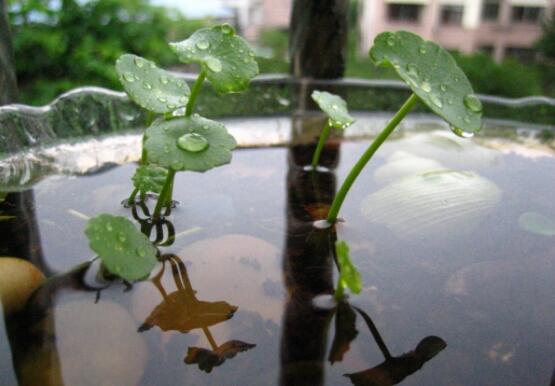
Growing creeping Jenny in water is easy, but there is one difficulty you should have noticed: it is hard to keep creeping Jenny anchored, because its stems are long and its leaves are large, so it easily topples over due to the top being heavy and the base being light, ultimately making it look unattractive. So, for the sake of good looks and for the health of the creeping Jenny, when growing it in water you should choose different water-culture methods, and when appropriate you can add soil, since the best way to grow creeping Jenny is half soil and half water.
Tips for growing creeping Jenny in water
1. Prepare the roots and stems. Before growing creeping Jenny in water, we first need to deal with its roots and stems. Because creeping Jenny grows in connected clusters, for a better look we can cut it into separate pieces, 1-3 stems each is fine; choose according to your actual situation. If the creeping Jenny was previously grown in soil, the roots need to be rinsed clean, and be careful not to break the leaves or stems.
2. Choose a suitable container. Once the creeping Jenny seeds are ready, the next step is arranging them. At this point, flower lovers only need to place the cleaned creeping Jenny reasonably in the container and then pour in clean water. It is worth mentioning that if the creeping Jenny cannot be held in place in the container, you can put in some pebbles or the like to anchor it, or sand works too.
3. Simple care. After growing creeping Jenny in water, flower lovers need to put it in a bright, indirect-light environment to acclimatize. If there are rotten leaves or the like, just trim them off. After reading this, you should know how to grow creeping Jenny seeds in water, so flower lovers can try it themselves. In fact, to anchor creeping Jenny, you just need to use more of it, as shown in the picture above; you can even keep goldfish in there.
2. Propagation methods for creeping Jenny
As a common Chinese medicinal herb, you probably have some understanding of the effects and functions of creeping Jenny. It can not only treat gynecological diseases, but also has very good therapeutic and preventive effects on kidney stones. It is understood that creeping Jenny is distributed across the provinces south of the Yangtze River in China and Taiwan, China, and has high cultivation value. Below, let us take a look at the propagation methods for creeping Jenny.
1. Seed propagation
Because creeping Jenny seeds have hard seed coats, with a typical hard-seed rate of 40-90%, before sowing they need to be sand-scarified for 3-5 minutes or soaked in 80-90°C hot water for 2-3 minutes, which can significantly increase the germination rate. First raise seedlings, then transplant. However, because creeping Jenny seeds are very small, hard to collect, and the seedlings grow slowly, the propagation method for creeping Jenny mostly uses cuttings.
2. Cutting propagation, best in spring and autumn
Creeping Jenny can be propagated by cuttings throughout the year, with higher survival rates for cuttings taken in spring and autumn. When taking cuttings, cut off the creeping stems and cut every 3-4 nodes into a section to serve as a cutting. In the south, in May-June, and in the north, in July-August, when the plants grow luxuriantly, cut off the creeping stems and cut every 3-4 nodes into a section to serve as a cutting. On a prepared bed, open shallow holes at a row and plant spacing of about 20 cm each, plant 2 cuttings per hole, with 2-3 nodes buried in the soil and 1-2 nodes exposed above the ground, press firm with soil, then cover with a layer of heavy soil mixed with human and livestock manure and urine, about 1.5 cm thick. After cutting, if there is drought and no rain, water to protect the seedlings so as to help them survive.
Note: creeping Jenny growing environment
Creeping Jenny has strong adaptability to the pH of the water body, but it is best to keep it between 6.5-7.5. It likes warmth, avoids high temperatures, and tolerates low temperatures, growing well within a temperature range of 16-24°C. The overwintering temperature should not be lower than 5°C. When the room temperature exceeds 30°C, the plant's growth will be inhibited. It likes moisture and is more often seen where there is flowing water.
Of course, this is not something ordinary flower lovers need to do; we only need to know how it is done, and the propagation methods of creeping Jenny can be left to professionals. The above is the related content on how to grow creeping Jenny seeds in water and the propagation methods of creeping Jenny, and we hope it can help the many flower lovers.
Methods and precautions for growing creeping Jenny in water
Creeping Jenny is actually the common name of Drosera burmannii, also known as jindiluo, and is one of the native carnivorous plants. Creeping Jenny is not difficult to keep, and now more and more people keep creeping Jenny at home, and most people who keep the plants indoors choose the water-culture method. Growing creeping Jenny in water is actually not hard; as long as the temperature is suitable and the water you give can also meet the nutritional needs of creeping Jenny, it is fine.
Creeping Jenny
1. Methods for growing creeping Jenny in water
1. Take a pot with no hole in the bottom, put a 2CM layer of mud at the bottom of the pot; you can also cover the bottom of the pot with small colorful stones.
2. Take some stem nodes of creeping Jenny and place them on top of the mud; it is also fine if it is creeping Jenny that has been beheaded, then cover with a small layer of mud.
3. Add water to the pot; the water surface being 1cm below the rim of the pot is fine.
4. Usually keep the water in the pot from drying out. Change the water once a week.
5. Creeping Jenny is not very particular about fertilizer. Put in a compound fertilizer once a week, dissolve the compound fertilizer in water, and add it to the pot together when adding water; be careful not to pour the fertilizer water onto the leaves.
6. Creeping Jenny likes an environment with sufficient light. If there is insufficient light, its leaves easily rot, so it is best to let it receive more than 4 hours of bright, indirect sunlight every day. Also, when the light is strong, the plant begins to grow laterally, and when the light is weak, the plant begins to grow upward. So let it receive sunlight from every direction, and avoid high temperatures.
7. Creeping Jenny is tolerant of low temperatures and grows well within a temperature range of 16-24°C. The overwintering temperature should not be lower than 5°C. When the water temperature exceeds 30°C, the plant's growth will be inhibited.
8. Creeping Jenny needs to be trimmed often; some leaves that are too crowded can be cut off or the pot can be changed, generally about every three months, because the roots in the pot grow too crowded, the water easily dries up, and creeping Jenny easily suffers from malnutrition. Transplant the overly dense creeping Jenny into another pot, so that the growth of creeping Jenny will not be affected.
Creeping Jenny
2. Precautions for growing creeping Jenny in water
Creeping Jenny does not have strict requirements for water quality and can be cultivated in fresh water with lower hardness. It has strong adaptability to the pH of the water body, and it is best to adjust it so that it can grow well in water from slightly acidic to slightly alkaline. It has a relatively high demand for fertilizer, and during the vigorous growth stage it is enough to apply fertilizer once every 2-3 weeks. After the plant differentiates flower buds, phosphorus fertilizer can be appropriately increased. Creeping Jenny likes an environment with sufficient light; in a shaded environment the leaves easily rot, so it is best to let it receive more than 4 hours of bright, indirect sunlight every day. A special fluorescent lamp can also be used, giving 8 to 10 hours of artificial light per day, and the plant can also grow normally. It should be noted that when the light is strong, the plant begins to grow laterally, and when the light is weak, the plant begins to grow upward. It likes warmth, avoids high temperatures, and tolerates low temperatures, growing well within a temperature range of 16 to 24 degrees. The overwintering temperature should not be lower than 5 degrees. When the water temperature exceeds 30 degrees, the plant's growth will be inhibited. Under good management conditions, creeping Jenny is not prone to disease and is also less subject to attacks by harmful animals.
The editor wants to remind everyone that the main pests of creeping Jenny are clams and snails, which bite and eat the stems and leaves of creeping Jenny. In addition, creeping Jenny also has certain pharmacological effects and can clear heat, reduce swelling, and so on. Although keeping creeping Jenny at home now is not for treating diseases, creeping Jenny can still achieve the effects of beautifying the environment and purifying the air.
Methods and precautions for growing creeping Jenny in water: understanding 4 points is enough
In choosing how to grow creeping Jenny, many flower lovers choose to grow creeping Jenny in water, because this way is not only clean but also looks very beautiful. As for how to grow creeping Jenny seeds in water, it has already been introduced above. Next we need to understand the methods and precautions for growing creeping Jenny in water. Although creeping Jenny is easy to grow, there are still many things we need to pay attention to.
1. Methods and precautions for growing creeping Jenny in water
1. Choosing the water
The water for creeping Jenny needs to be tap water that has been left to settle for 2 hours, or used the next day. In a water-culture environment, as long as the water has no rotting odor, there is no problem.
Precautions: Keep the water in the bottle clean, to prevent the water in the bottle from deteriorating and causing the water quality to go bad, leading to symptoms of root rot in the pothos. Generally, change the water once every 5-7 days in spring and autumn, every 3-5 days in summer, and every 10-15 days in winter. Each time, change two-thirds of the original water in the bottle.
2. Nutrient solution
After each water change for creeping Jenny, drip nutrient solution into the bottle according to the amount, and shake gently to make the nutrients even and at the same time increase the oxygen content in the water, which is good for root growth. As for the amount of nutrient solution, you can keep it at 6 drops per liter.
Precautions: Creeping Jenny likes warmth and humidity, so flower lovers should often spray water on the leaves to keep them moist.
3. Water level height
The water for growing creeping Jenny in water generally does not exceed two-thirds of the bottle, because a water level that is too high is not good for root growth.
Precautions: Creeping Jenny likes warmth and fears cold, growing well within the range of 10-25°C. The overwintering temperature should not be lower than 5°C.
4. Environment selection
Usually place water-grown creeping Jenny indoors in a sunny and ventilated place, which is good for photosynthesis and reduces the phenomenon of leggy growth and yellow leaves. In winter, it can be moved outdoors to bask for one hour in the sun around ten o'clock, increasing the water temperature and enhancing photosynthesis.
Precautions: It grows well under full sun. Under half sun, its leaf stalks will elongate and grow toward the light, and the posture needs to be adjusted slightly to be more beautiful. So creeping Jenny is best given 4-6 hours of bright, indirect light every day.
2. Care tips for growing creeping Jenny in water
1. Fertilizing
It has a relatively high demand for fertilizer, and during the vigorous growth stage it needs to be top-dressed once every 2-3 weeks. Commonly used fertilizers include quick-acting fertilizer——Hyponex No. 2, or slow-release fertilizer——Osmocote (which can maintain fertilizer effects in water for a long time).
2. Proper pruning
Creeping Jenny has relatively strong vitality, so it needs to be pruned appropriately; otherwise it will grow especially tall and affect its appearance. The correct approach is to prune according to its growth condition, not too dense and not too sparse, and do not let the top grow too tall; it should be shorter, and it is best to let it grow into a clump shape.
3. Change the pot and water on time
For water-grown creeping Jenny, after it has rooted, generally do not change the pot or the water; changing the pot will affect the root system, and the leaves will develop yellow spots. However, this plant is perennial, sprouts quickly, and takes shape relatively fast. Without changing the pot, a formed plant should not be continuously grown for more than 2 years, otherwise its growth may become weaker and weaker.
4. Creeping Jenny fears cold
Creeping Jenny fears cold. In winter, if creeping Jenny is placed outdoors, you can pour out all the water and place it in a south-facing, sunny, and wind-sheltered spot, and it can safely overwinter. Some of the leaves may die off, but the root system will sprout again the following spring. In cold northern regions, if there is no heating, you can make a cover and cover it together with the pot, pour out the water in the pot, and keep it moist. Generally, as long as the indoor temperature is not lower than 0°C, it will continue to grow the next year.