How to plant Boston ivy? Planting methods and techniques illustrated
Boston ivy (Parthenocissus tricuspidata) is a climbing plant in the grape family (Vitaceae). If you do not give it something to climb on while it grows, its stems and leaves can only spread over the ground, like a brocade quilt draped over the earth, which is why Boston ivy is also called "ground brocade." It can use the suckers on its branches to firmly attach to the surfaces of walls, rocks and other objects, climbing and growing tenaciously. It is like a green curtain, wrapping the walls of all kinds of buildings; when a breeze blows, it lifts a layer of intoxicating green waves, a feast for the eyes.
Boston ivy is generally planted in early spring. It grows very fast, reaching 3-5 m high in the same year, and by the second year it can grow as tall as a 3-story building. In addition, once this plant has established itself, it does not need frequent watering, fertilizing or much management, and certainly no pruning; it can simply be left to grow naturally. It is not afraid of cold, shade or drought, and its adaptability is very broad: it can adapt to both acidic and alkaline soil. Planting Boston ivy not only beautifies the environment, it also blocks wind, rain and sunlight, protecting and extending the life of buildings. It can also regulate temperature and humidity, block noise, adsorb dust and purify the air. Studies have shown that Boston ivy has strong resistance to sulfur dioxide, chlorine and hydrogen chloride, so it can be used as a vertical greening plant on walls in chemical pollution zones or factory workshops, with a good effect on protecting and improving the environment.
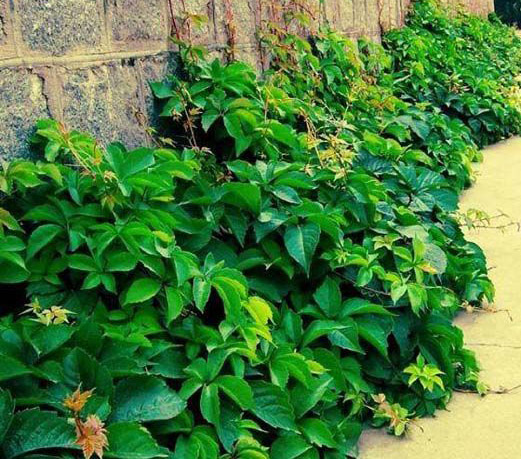
How do you plant Boston ivy? The main planting methods for this plant are cuttings and layering. Boston ivy layering can be done in spring: bend a branch of an old plant and bury it in the soil, and wait for it to root. The following spring, cut it away from the parent plant and plant it separately; it is very convenient and easy. Hardwood cuttings of Boston ivy can be done in March-April: cut hardwood branches into 10-15 cm sections and insert them into the soil, water thoroughly and keep moist. Note, however, that softwood cuttings must use new growth from the current year and are best done in summer.
After Boston ivy seedlings have established, if conditions are good, you can apply liquid fertilizer 2-3 more times to promote vigorous, fast growth. When planting Boston ivy, note that it fears waterlogging, so take care to prevent excessive water accumulation in the soil.
[Boston ivy planting] How to plant Boston ivy - planting methods
Boston ivy is a soft-bodied plant that generally needs a wall or trellis to grow on, and it reproduces and grows very quickly; before long you will see sheets of Boston ivy in the corner of a wall. I believe many people like this kind of climbing green plant; it not only has strong growth ability, but large patches of it also look good visually. With Boston ivy, doesn't planting it outside the house give a feeling of being wrapped and protected? It also has the effect of preventing heatstroke and cooling, regulating the air and reducing noise. The editor quite likes this kind of plant, especially the sight through the window of scattered Boston ivy spreading outside; it feels like the whole person is better, doesn't it.
How to plant Boston ivyBoston ivy can be propagated and planted by sowing, cuttings and layering.
Boston ivy sowing methodAfter harvesting, rub off the fruit skin and flesh from the seeds, wash them clean and dry them, then store them in moist sand at low temperature for a winter. Keeping them warm and moist helps promote germination. In early spring of the following year, in the first or middle ten days of March, they can be sown in the open field, covered with plastic film, and seedlings will emerge in the first ten days of May. After 1-2 years of cultivation they can leave the nursery.
Boston ivy cutting methodIn early spring, cut 20-30 cm of stem vine and insert it into an open seedbed, water it and keep it moist; it will soon send out vines and establish. You can also use softwood cuttings with leaves in summer and autumn, shade them and water them for care, and they will also quickly send out new shoots. The cutting survival rate is relatively high, so it is widely used. Hardwood cuttings are done in March-April: cut hardwood branches into 10-15 cm sections and insert them into the soil, water thoroughly and keep moist. Softwood cuttings take new growth of the current year and are done in summer.
Boston ivy layering methodA wavy layering method can be used, carried out in the rainy season on cloudy, damp days with no sun; the survival rate is high, and by autumn they can be separated and transplanted, then planted in the following year.
Notes on planting Boston ivyWhen propagating and planting Boston ivy, pay attention to the following points
1. Sand storage and germination of seedsIn September, when the berries ripen and turn purple-blue, harvest them immediately. After washing and drying in the shade, disinfect the surface with a 0.05% carbendazim solution. After draining, store them in moist sand in layers. By the first ten days of March of the following year, soak the seeds in 45°C warm water for two days, changing the water twice a day, then mix them evenly with moist sand at a seed-to-sand ratio of 2:1 and place them in a sunny, wind-sheltered spot. Cover with straw bags and spray with fine water frequently to keep moist. After about 20 days, when 20% of the seeds have sprouted white, they can be sown.
2. SowingFirst rake the sowing bed fine and level, water thoroughly, and sow the seeds together with the sand on the bed surface at a sowing rate of 100 g per sq m. Cover with 1 cm of loose humus soil from under the forest, then set up a small arched shed and cover it with polyethylene plastic film.
3. Seedling managementAfter the cotyledons emerge, the film should be uncovered by day and covered at night on sunny days, and kept covered all day on cloudy and rainy days, to raise soil temperature, promote uniform emergence and prevent damage from scarab beetles. In addition, sprinkle water often to keep the soil moist.
4. Transplanting and later managementAfter three true leaves have unfolded, choose a cloudy day or after 3 p.m. and transplant at a density of 1×1 chi. Immediately after planting, water once with diluted manure water (1:8). During the plum rain season, water must never accumulate for too long. After two months, the vines generally grow to more than 60 cm; at this point you can do the first pinching to prevent the vines from tangling with each other and blocking light, and to encourage thick, strong vine seedlings. Pinch once a month, combined with supplementary feeding. With the above measures, by the leaf-falling period the average thickness of the seedling vines can reach more than 0.5 cm, and they can then leave the nursery for planting.
5. FertilizingDuring the growing period, apply liquid fertilizer 2-3 times. Also hoe weeds and loosen the soil often to form a border, so the plants are not smothered by weeds, and to promote vigorous growth. Boston ivy fears waterlogging, so take care to prevent water accumulation in the soil. Boston ivy tolerates pruning; during growth, you can prune and tidy the branches at doors and windows as appropriate to keep things neat, attractive and convenient.
6. Pests and diseasesWatch for the following pests and diseases: powdery mildew, leaf spot and anthracnose, etc. Aphids are a common pest.
Boston ivy grows relatively fast and climbs relatively high. If you plant it on a home balcony or similar place, to avoid Boston ivy climbing into a neighbor's home and causing trouble, it is best to give the neighbors a heads-up.
Boston ivy planting - how to plant Boston ivy, Boston ivy planting methods
Boston ivy is actually a plant with extremely strong vitality; in daily life it is mostly seen on walls and rocks, very dense and lush. If you choose to plant Boston ivy, then you must have the spirit of managing it to the end, because Boston ivy's extremely strong vitality makes it easy for it to survive in cracks of corroded walls; as Boston ivy keeps reproducing and growing, it can easily damage the wall or even cause it to collapse, so when planting Boston ivy you must do a good job of cultivation and management. There is still a certain art to Boston ivy planting methods. If you want to know how to plant Boston ivy, then you should take a good look at this article.
[Morphological characteristics]
Boston ivy actually looks much like a grapevine. It is a large deciduous woody vine that blooms in summer. We usually rarely see Boston ivy flowers, right? That is because Boston ivy flowers are relatively small and are hidden by the dense branches and leaves, so they are hard to spot from a distance. Boston ivy's vine stems are very long, spreading and growing continuously. The branches are thick and grayish-brown, with tendrils on the branches. When we were children we thought those were Boston ivy's feet, and that only with those feet could it climb up step by step; thinking about it now is really funny. But comparing the tendrils to Boston ivy's feet is not entirely unfounded, because the surface of the tendrils has very sticky suckers; the reason Boston ivy can attach to walls and rocks is largely thanks to its feet.
[Growth habits]
We just mentioned that Boston ivy has tenacious vitality, so you can fully imagine its habits. Boston ivy likes a relatively shady and damp environment and has the characteristics of cold tolerance, drought tolerance and tolerance of poor soil. It is also very broad in climate adaptation; Boston ivy, which can thrive in shady, damp environments, also tolerates pruning. Of course, if it grows in shady, damp but fertile soil, then Boston ivy's growth rate is incredible. However, one thing to note in particular is that even though Boston ivy is not very picky about its growing environment, it still has a considerable weakness: it fears water accumulation, and severe water accumulation can cause Boston ivy's roots to rot.
[Planting methods]
Friends who want to plant Boston ivy can start planting after understanding Boston ivy's characteristics and growth habits. So how do you plant Boston ivy? What planting methods are there for Boston ivy? Based on Boston ivy's characteristic of tenacious vitality, I have summarized three Boston ivy planting methods here. Let's take a look.
·Sowing method
The first thing to introduce is of course the simplest and easiest method: sowing. Remove the skin and flesh from the collected Boston ivy seeds, wash them clean and put them in moist sand for low-temperature storage for a winter, but be sure to keep them warm and moist at all times. In the early spring of the following year you can break the soil and sow, cover with plastic film, and after two months the seedlings will emerge.
·Cutting method
In early spring, take about 20 cm of Boston ivy stem vine and insert it into an open seedbed, water it to keep it moist, and you will soon see the stem vine send out new buds and keep growing. You can also use softwood cuttings with leaves in summer and autumn, shade them and water them for care, and they will also quickly send out new shoots. The cutting survival rate is relatively high, so it is widely used.
·Layering method
The layering method needs to be carried out in rainy weather, so the survival rate can be much higher. The layering method mainly uses wavy layering: press Boston ivy branches into the soil, and by autumn they can be separated and transplanted, and in the following year they can be planted in place.
[Notes]
When cultivating Boston ivy, pay attention to diseases and pests, and do regular fertilizing and management. Boston ivy fears waterlogging, so take care to prevent water accumulation in the soil. If you do not want Boston ivy to grow too fast, then do appropriate pruning. Boston ivy is very tolerant of pruning; during growth, you can prune and tidy the branches at doors and windows as appropriate to keep things neat, attractive and convenient.
Conclusion: Now you know how to plant Boston ivy, right? If you are still not clear on how to plant Boston ivy, you can consult more related materials. Boston ivy's easy-to-survive characteristics also save a lot of worry in the cultivation process. Well, this article on how to plant Boston ivy and Boston ivy planting methods is introduced here. I hope it is helpful to everyone.