How do you force crabapple to bloom during the Spring Festival?
Crabapple is a traditional famous flower of our country. When planted in courtyards, it is often combined with magnolia, peony and osmanthus to create the artistic conception of “jade hall wealth and honor,” and it has long been known as the “immortal among flowers,” the “imperial consort among flowers” and the “noble one among flowers.” Crabapple normally blooms in April and May. Because its flowers bloom like brocade and signify festivity and good fortune, in recent years growers often force it into bloom in the first lunar month to add to the festive holiday atmosphere. To make crabapple bloom during the Spring Festival, preparations must be thorough, and particular attention should be paid to the following aspects.
Before Major Snow, the plant should be placed outdoors in a sunny spot to satisfy its chilling requirement
Crabapple likes sunlight and is relatively strong in cold tolerance and drought tolerance, and it must have a certain chilling requirement to bloom. For potted forcing, suitable plants can be dug up and potted from September to October, first placed in a cool, ventilated spot for a period of care, and after they have settled into the pots, placed outdoors in a sunny spot for normal management, allowing them to fully undergo vernalization dormancy to satisfy their chilling requirement, otherwise they will not bloom.
Before moving them indoors for forcing, the plants should be pruned and shaped. Crabapple has strong sprouting ability, and the only way to make the plant shape symmetrical and attractive is pruning. Potted crabapple is generally shaped and pruned about 10 days before being moved indoors for forcing, and when necessary, wire or string can be used for bending and tying so that the branches are arranged reasonably and orderly. Because crabapple mostly produces buds and blooms on old branches that are more than two years old, care should be taken during pruning to protect the old branches, and dead and weak branches, overlapping branches, diseased and pest-infested branches, and leggy branches should be cut off.
According to the different forcing varieties, determine the timing of moving them indoors and temperature control to ensure crabapple blooms on time
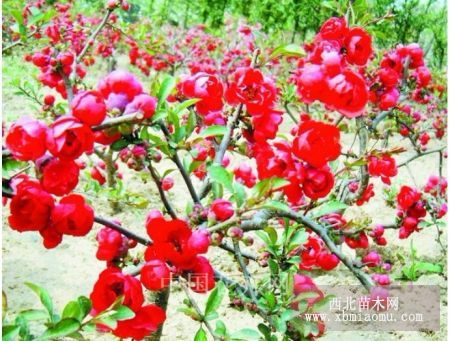
Crabapple cultivated in the open is generally moved indoors 40 to 50 days before the festival. During forcing, comprehensive regulation should be carried out from the aspects of temperature, humidity, ventilation and light, trying to create a climate condition similar to spring. Temperature regulation during forcing can be divided into: 7°C to 21°C for the flower bud swelling stage, 12°C to 27°C for the flower bud stage, and 15°C to 25°C for the flowering stage. After the potted flowers are first moved indoors, the room temperature is initially controlled at about 7°C. After one week, raise the temperature to about 15°C, and during the day it should not be higher than 26°C, otherwise the newly growing branches and leaves are prone to leggy growth, affecting the development and growth of flower buds. When the temperature at noon on a sunny day reaches above 23°C, the temperature can be lowered by shading or ventilation. The suitable temperature at night is 8°C to 12°C, and it should not be lower than 7°C at night. If it is lower than 7°C, appropriate heating can be carried out. If you want to further advance the flowering period, you can spray warm water at 35°C to 40°C three or four times a day to increase the accumulated temperature needed for plant growth, promote faster growth, and thereby advance flowering.
Forcing techniques for New Year crabapple | How to force crabapple to bloom? (Photo)
Forcing techniques for New Year crabapple | How to force crabapple to bloom? -- Crabapple is a traditional famous flower of our country. When planted in courtyards, it is often combined with magnolia, peony and osmanthus to create the artistic conception of “jade hall wealth and honor,” and it has long been known as the “immortal among flowers,” the “imperial consort among flowers” and the “noble one among flowers.” Crabapple normally blooms in April and May. Because its flowers bloom like brocade and signify festivity and good fortune, in recent years growers often force it into bloom in the first lunar month to add to the festive holiday atmosphere. To make crabapple bloom during the Spring Festival, preparations must be thorough, and particular attention should be paid to the following aspects.
Before Major Snow, the plant should be placed outdoors in a sunny spot to satisfy its chilling requirement
Crabapple likes sunlight and is relatively strong in cold tolerance and drought tolerance, and it must have a certain chilling requirement to bloom. For potted forcing, suitable plants can be dug up and potted from September to October, first placed in a cool, ventilated spot for a period of care, and after they have settled into the pots, placed outdoors in a sunny spot for normal management, allowing them to fully undergo vernalization dormancy to satisfy their chilling requirement, otherwise they will not bloom.
Before moving them indoors for forcing, the plants should be pruned and shaped. Crabapple has strong sprouting ability, and the only way to make the plant shape symmetrical and attractive is pruning. Potted crabapple is generally shaped and pruned about 10 days before being moved indoors for forcing, and when necessary, wire or string can be used for bending and tying so that the branches are arranged reasonably and orderly. Because crabapple mostly produces buds and blooms on old branches that are more than two years old, care should be taken during pruning to protect the old branches, and dead and weak branches, overlapping branches, diseased and pest-infested branches, and leggy branches should be cut off.
According to the different forcing varieties, determine the timing of moving them indoors and temperature control to ensure crabapple blooms on time
Crabapple cultivated in the open is generally moved indoors 40 to 50 days before the festival. During forcing, comprehensive regulation should be carried out from the aspects of temperature, humidity, ventilation and light, trying to create a climate condition similar to spring. Temperature regulation during forcing can be divided into: 7°C to 21°C for the flower bud swelling stage, 12°C to 27°C for the flower bud stage, and 15°C to 25°C for the flowering stage. After the potted flowers are first moved indoors, the room temperature is initially controlled at about 7°C; after one week, raise the temperature to about 15°C, and during the day it should not be higher than 26°C, otherwise the newly growing branches and leaves are prone to leggy growth, affecting the development and growth of flower buds. When the temperature at noon on a sunny day reaches above 23°C, the temperature can be lowered by shading or ventilation. The suitable temperature at night is 8°C to 12°C, and it should not be lower than 7°C at night. If it is lower than 7°C, appropriate heating can be carried out. If you want to further advance the flowering period, you can spray warm water at 35°C to 40°C three or four times a day to increase the accumulated temperature needed for plant growth, promote faster growth, and thereby advance flowering.
Because the chilling requirement differs among varieties, there is a certain difference in the timing of moving indoors and the length of the warming period
Through years of practice, the forcing time required by each variety is: ‘Changshoule’ and ‘Yin Changshou’ generally need about 34 days, ‘Xifu’ needs 36 days, ‘Dongyangjin’ about 36 days, ‘Changshouguan’ about 41 days, and ‘Shijieyi’ about 58 days.
During forcing, keep the air as humid as possible and thin the buds appropriately. During forcing, the relative humidity is best at 40% to 70%, and in the early period after moving indoors, spray water on the branches two or three times a day. During forcing, water thoroughly once or twice according to the dry and wet condition of the soil. To reduce the occurrence of diseases and pests, within one week after the potted flowers are moved indoors, spray one or two times with 20% imidacloprid emulsifiable concentrate 1500-fold solution to control aphids, and spray once with 70% thiophanate-methyl solution for sterilization. To ensure that crabapple blooms properly, bud thinning can be carried out when the flower buds are the size of a peanut, and it is best to keep only one or two robust flower buds per cluster. Through the above measures, the festive and auspicious crabapple will bloom on time during the Spring Festival, displaying its charm of blooming like brocade.
Forcing techniques for New Year crabapple
Crabapple is a traditional famous flower of our country. When planted in courtyards, it is often combined with magnolia, peony and osmanthus to create the artistic conception of “jade hall wealth and honor,” and it has long been known as the “immortal among flowers,” the “imperial consort among flowers” and the “noble one among flowers.” Crabapple normally blooms in April and May. Because its flowers bloom like brocade and signify festivity and good fortune, in recent years growers often force it into bloom in the first lunar month to add to the festive holiday atmosphere. To make crabapple bloom during the Spring Festival, preparations must be thorough, and particular attention should be paid to the following aspects.
Before Major Snow, the plant should be placed outdoors in a sunny spot to satisfy its chilling requirement. Crabapple likes sunlight and is relatively strong in cold tolerance and drought tolerance, and it must have a certain chilling requirement to bloom. For potted forcing, suitable plants can be dug up and potted from September to October, first placed in a cool, ventilated spot for a period of care, and after they have settled into the pots, placed outdoors in a sunny spot for normal management, allowing them to fully undergo vernalization dormancy to satisfy their chilling requirement, otherwise they will not bloom.
Before moving them indoors for forcing, the plants should be pruned and shaped. Crabapple has strong sprouting ability, and the only way to make the plant shape symmetrical and attractive is pruning. Potted crabapple is generally shaped and pruned about 10 days before being moved indoors for forcing, and when necessary, wire or string can be used for bending and tying so that the branches are arranged reasonably and orderly. Because crabapple mostly produces buds and blooms on old branches that are more than two years old, care should be taken during pruning to protect the old branches, and dead and weak branches, overlapping branches, diseased and pest-infested branches, and leggy branches should be cut off.
According to the different forcing varieties, determine the timing of moving them indoors and temperature control to ensure crabapple blooms on time. Crabapple cultivated in the open is generally moved indoors 40 to 50 days before the festival. During forcing, comprehensive regulation should be carried out from the aspects of temperature, humidity, ventilation and light, trying to create a climate condition similar to spring. Temperature regulation during forcing can be divided into: 7°C to 21°C for the flower bud swelling stage, 12°C to 27°C for the flower bud stage, and 15°C to 25°C for the flowering stage. After the potted flowers are first moved indoors, the room temperature is initially controlled at about 7°C; after one week, raise the temperature to about 15°C, and during the day it should not be higher than 26°C, otherwise the newly growing branches and leaves are prone to leggy growth, affecting the development and growth of flower buds. When the temperature at noon on a sunny day reaches above 23°C, the temperature can be lowered by shading or ventilation. The suitable temperature at night is 8°C to 12°C, and it should not be lower than 7°C at night. If it is lower than 7°C, appropriate heating can be carried out. If you want to further advance the flowering period, you can spray warm water at 35°C to 40°C three or four times a day to increase the accumulated temperature needed for plant growth, promote faster growth, and thereby advance flowering.
Because the chilling requirement differs among varieties, there is a certain difference in the timing of moving indoors and the length of the warming period. Through years of practice, the forcing time required by each variety is: ‘Changshoule’ and ‘Yin Changshou’ generally need about 34 days, ‘Xifu’ needs 36 days, ‘Dongyangjin’ about 36 days, ‘Changshouguan’ about 41 days, and ‘Shijieyi’ about 58 days.
During forcing, keep the air as humid as possible and thin the buds appropriately. During forcing, the relative humidity is best at 40% to 70%, and in the early period after moving indoors, spray water on the branches two or three times a day. During forcing, water thoroughly once or twice according to the dry and wet condition of the soil. To reduce the occurrence of diseases and pests, within one week after the potted flowers are moved indoors, spray one or two times with 20% imidacloprid emulsifiable concentrate 1500-fold solution to control aphids, and spray once with 70% thiophanate-methyl solution for sterilization. To ensure that crabapple blooms properly, bud thinning can be carried out when the flower buds are the size of a peanut, and it is best to keep only one or two robust flower buds per cluster. Through the above measures, the festive and auspicious crabapple will bloom on time during the Spring Festival, displaying its charm of blooming like brocade.