Ginger lily not blooming? Check these four main causes: soil, fertilizing, temperature and humidity
Normally, the flowering period of the ginger lily is July-August, but some flower growers find that it does not bloom when they plant it, and some even have it grow only flower buds without blooming, which distresses these growers greatly. So why does the ginger lily not bloom? I believe the main reasons are the following.
Why the ginger lily does not bloom
1. Improper fertilizing
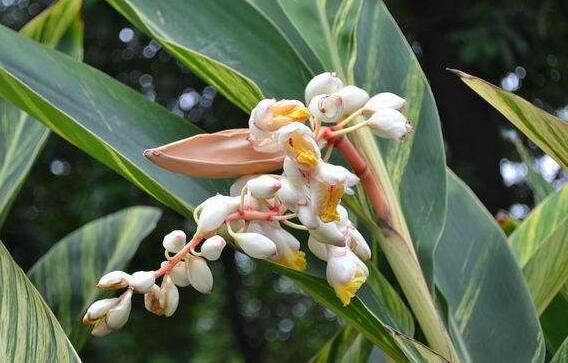
When a plant lacks nutrients, its growth will run into problems; the more common ones are yellowing leaves, slow plant growth, dull stems and leaves, difficulty flowering, and so on. When growing the ginger lily, improper fertilizing is one of the main reasons for failure to bloom; in addition, applying only quick-acting nitrogen fertilizer can also trigger this problem.
Solution: When fertilizing, pay attention to balanced nutrition and apply the corresponding fertilizer at different stages, for example applying base fertilizer at the seedling potting stage, applying decomposed organic fertilizer at the growth stage, and applying phosphorus and potassium fertilizer before the flowering period, and so on. Neither go a long time without fertilizing nor apply only one kind of fertilizer.
2. Unsuitable temperature
The ginger lily is not a plant with strong cold tolerance. When the temperature is below 10 degrees, the parts above ground will quickly wither, and if the temperature is below 15 degrees, its growth will be rather slow, and even when the flowering period arrives it will be hard for it to bloom, so pay attention to the ambient temperature at ordinary times.
Solution: In winter, place the ginger lily indoors where the room temperature is above 10 degrees; in the other seasons, adjust its position according to the ambient temperature. Do not put it in a place with strong wind or one that is too cool, otherwise it will grow poorly because of unsuitable temperature, and then it will bloom more slowly than other ginger lilies.
3. Dry air
The ginger lily comes from tropical rainforest regions, where the humidity is usually rather high, so when we grow it we need to keep the humidity above 50%. If the air is too dry, the growth of the ginger lily will be inhibited, and once the flowering period is missed, it will be even harder to bloom when the temperature drops.
Solution: Dry air is one of the reasons why the ginger lily does not bloom. Solving this problem needs to start with watering and environmental ventilation. When the humidity is low, you can spray water on the plant and leaves to raise the humidity; in addition, you can keep the environment ventilated to avoid dry air.
4. Soil problems
Soil determines how fast the ginger lily grows. If there is a problem with the soil, then the growth of the ginger lily will naturally run into problems, and failure to bloom is only one of the results caused by the problem. The more common soil problems are: too poor, compacted and dried out, too high in alkalinity, attacked by pathogens, and so on.
Solution: The problem of poor soil can be solved by reasonable fertilizing; compaction and drying out require reasonable watering to avoid long-term water shortage; too high alkalinity needs to be addressed starting with soil selection and repotting; and pathogen attack requires disinfecting the soil before potting and planting.
What to do when ginger lily leaves curl, four tricks can prevent leaf curling / light is very important
The leaves of the ginger lily are rather special. Their shape is oblong-lanceolate, with a length of about 20-40 cm. They can be called very broad and beautiful, making the whole plant shape look more spread out. However, some flower growers run into the situation of ginger lily leaves curling when growing it. What should be done at such a time? Let me tell you a few tricks.
What to do when ginger lily leaves curl
1. Increase light
When the ginger lily is in a rather dark environment, its leaves will grow leggy because of the lack of photosynthesis, and over time they will slowly wilt, after which the phenomenon of leaf curling is likely to appear. So when growing the ginger lily, you must not put it in a place without light.
What to do: The ginger lily rather likes sunny places. In spring, autumn and winter, try as much as possible to ensure that it can get sunlight. If you find curled leaves, first move it to a semi-shady environment, and then slowly increase the light.
2. Long-term lack of fertilizer
The growth of the ginger lily needs many kinds of nutrients, such as nitrogen, phosphorus, potassium, iron, and so on. When grown in a pot, the nutrients in the soil are limited. If you fertilize very seldom, the soil will lack the necessary nutrients, and one of the results is curled leaves; it may even cause poor plant growth.
What to do: What should be done when ginger lily leaves curl because of a lack of fertilizer? Fertilize reasonably according to the growth pattern of the ginger lily. It is best to use microbial bacterial fertilizer, and you can also use decomposed organic fertilizer. When you find that the leaves are growing abnormally, you need to check whether there is a fertilizing problem.
3. Reduce watering
Although the ginger lily is a freshwater herbaceous plant, it is not tolerant of waterlogging. Once it is watered too much or drainage is poor during the rainy season, water will accumulate in the flowerpot, the roots will easily rot from being soaked in water, and because the plant has problems absorbing nutrients, its leaves will curl.
What to do: In the ginger lily care methods, we once stressed that watering should follow "water when dry, stop when wet", meaning that you should water when the soil surface turns white and is on the dry side, and each watering needs to show water flowing out of the drainage holes at the bottom before it counts as watered thoroughly. So when watering, observe the wet and dry condition of the soil more.
4. Water and soil on the alkaline side
When growing the ginger lily, both the water and the soil used should be slightly acidic. If the alkalinity is too high, it will cause discomfort to the plant, and the ginger lily will have yellow, curled leaves because of a lack of iron. Therefore, black soil and the like cannot be used for the soil, and the water used should also avoid too high alkalinity as much as possible.
What to do: You need to help the ginger lily change soil as soon as possible, transplanting it from soil with too high alkalinity into slightly acidic soil. After that, for watering, tap water, river water and the like should be the main choice. If the tap water has rather high alkalinity, you can let it stand for a few days and filter it before use.
Can ginger lily be grown in water, how to grow ginger lily in water / can be grown in water / water culture tips included
The ginger lily is much loved by people for its elegant flower posture and fragrant scent, and quite a few flower growers even exclaim at how the ginger lily can be so beautiful. So can it be grown in water? If so, how do you grow the ginger lily in water? And how do you make a water-grown ginger lily bloom? With these questions, let us look for the answers together.
Can ginger lily be grown in water
First of all, the ginger lily can be grown in water. Like most hydroponic plants, the ginger lily can be fixed in a hydroponic container with a planting basket and grown there. However, when caring for it, there are some tips that need to be mastered, such as changing the water, pruning, adding nutrient solution, and so on, otherwise it can easily lead to the death of the plant.
How to grow ginger lily in water
1. Removing from the pot: Dig the ginger lily out of the flowerpot, and note that it should be taken out of the pot together with the soil ball. When removing it from the pot, you can tap lightly around the flowerpot so that the soil and the flowerpot loosen from each other; this way, removing it from the pot will not easily damage the stems and leaves.
2. Removing the soil: Wash the soil off the roots with clean water, then soak them in a potassium permanganate or carbendazim solution, which can serve to disinfect and sterilize. In this way, after water growing, too many microorganisms will not easily breed, and ginger lily pests and diseases will not easily appear.
3. Planting: Put the plant into the planting basket and fix the roots with vermiculite, then place the planting basket at the mouth of the water-growing container, add water to the container, and the water level should preferably cover two-thirds of the roots. Make sure one-third of the roots are exposed above the water; this can avoid the phenomenon of root rot.
4. Care: Once the above three steps are completed, the water growing of the ginger lily is achieved, but to make it grow smoothly, you still need to do the later care and management well, including changing the water, adding nutrient solution, pruning, and so on. Just after starting water growing, change the water once every 10 days; after it resumes growth, change the water once every 3-5 days. Nutrient solution can be added once every 2 water changes. If there is root rot, it needs to be pruned in time.
How to make a water-grown ginger lily bloom
1. Sufficient light: When water growing, the ginger lily must not be placed in a dark place, especially not in a room that lacks light and is rather closed off. If the light is insufficient, not only will growth slow down and it will not bloom, but the plant will also quickly wither.
2. Temperature control: The ginger lily needs a temperature of 25-30 degrees to bloom. If the temperature is rather low, it will be very hard for it to bloom, so when water growing, you must ensure the temperature is moderate. In winter, pay attention to keeping it warm. When changing the water, the water temperature should be close to room temperature; do not use water that is too cold, otherwise the roots will be frostbitten.