Can ginger lily be grown in water, and how to grow ginger lily in water / It can be grown in water / With water-growing tips included
Ginger lily is much loved for its elegant flowers and rich fragrance, and many flower lovers marvel at how beautiful ginger lily can be. So can it be grown in water? If so, how do you grow ginger lily in water? And how do you get ginger lily to bloom in water? Let us find the answers together.
Can ginger lily be grown in water
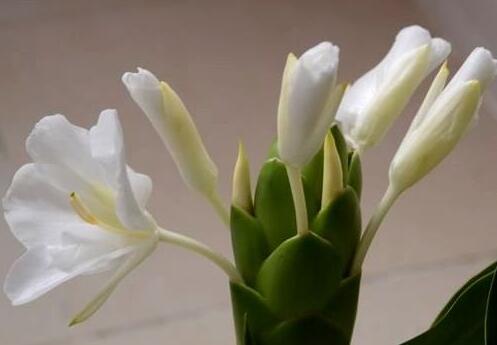
First of all, ginger lily can be grown in water. Like most hydroponic plants, ginger lily can be fixed in a hydroponic container with a planting basket. However, during care, there are some techniques you need to master, such as changing the water, pruning, adding nutrient solution, and so on, otherwise the plant may easily die.
How to grow ginger lily in water
1. Remove from pot: Dig the ginger lily out of the flower pot, taking care to remove it together with the root ball. When removing it, you can gently tap around the pot so the soil loosens from the pot, which makes it easier to remove without damaging the stems and leaves.
2. Remove the soil: Wash the soil off the roots with clean water, then soak them in a potassium permanganate or carbendazim solution to disinfect and sterilize. This way, after growing in water, too many microorganisms are less likely to breed, and ginger lily pests and diseases are less likely to occur.
3. Planting: Place the plant into the planting basket, fix the roots with vermiculite, then place the planting basket into the mouth of the water-growing container and add water to the container. The water level should preferably cover two-thirds of the roots, ensuring one-third of the roots are exposed above the water, which can prevent root rot.
4. Care: Once the above three steps are completed, the water-growing of ginger lily is done. But if you want it to grow smoothly, you still need to do good follow-up care and management, including changing the water, adding nutrient solution, pruning, and so on. Just after starting water growing, change the water once every 10 days; after it resumes growth, change the water once every 3-5 days. Nutrient solution can be added once every 2 water changes. If there is root rot, prune it in time.
How to get ginger lily to bloom in water
1. Plenty of light: When growing in water, ginger lily must not be placed in a dark place, especially not in a closed room lacking light. If there is not enough light, not only will growth slow down and it will fail to bloom, but the plant will also quickly wither.
2. Temperature control: Ginger lily needs a temperature of 25-30 degrees to bloom. If the temperature is lower, it is hard for it to flower, so when growing in water, be sure to keep the temperature moderate. In winter, pay attention to keeping it warm. When changing the water, the water temperature should be close to room temperature; do not use water that is too cold, otherwise the roots will be frostbitten.
Is ginger lily toxic?
We often say, "Every medicine has some toxicity." As a Chinese medicinal herb, ginger lily inevitably has a certain medicinal toxicity. But this does not stop us from growing ginger lily as an ornamental plant. Ginger lily's fragrance is indeed strong enough to easily cause discomfort in allergic people, but for people who are not allergic, ginger lily is shaped like a butterfly with a graceful posture, and its floral scent is rich but not cloying, fresh and pleasant. It also has the effects of purifying the air, relieving fatigue and refreshing the mind, and repelling mosquitoes, making it a high-quality ornamental plant.
In other words, ginger lily is not only non-toxic, but also has many other effects and functions, so it can be grown with confidence! Below, let us learn about the effects and uses of ginger lily.
Ginger lily
Ginger lily
Aliases: butterfly lily, spiked ginger lily, ginger orchid
Scientific name: Hedychium coronarium
Aliases: wild ginger lily, butterfly ginger, spiked ginger lily, butterfly flower, white butterfly flower, fragrant snow flower, yehansu, ginger orchid, turmeric
Morphological characteristics: The underground stem is block-like, spreading horizontally and aromatic, shaped like ginger. The leaves are long elliptical-lanceolate, sessile, with parallel veins, smooth leaf surfaces, and long hairs on the underside. The terminal dense spike-like inflorescence is protected by large bracts, with each inflorescence bearing 10-15 flowers. Flower colors include white, yellow, red, orange, and so on.
Ecological habits: It likes light, tolerates partial shade, is not cold-tolerant, and prefers a warm and humid climate. It grows well in slightly acidic, fertile sandy loam. When the winter temperature drops below 10 degrees C, the aboveground parts wither, and the underground ginger blocks go dormant to overwinter.
Flowering period: May to November.
Flower language: trust, noble and elegant, simple and unsophisticated.
Landscape uses: cut flowers, planted in clusters beside roads, on lawns, by streams, near rockeries, and beside ponds.
Medicinal effects: The rhizomes and fruits are used as medicine, with effects such as warming the middle and strengthening the stomach, relieving exterior symptoms, dispelling wind and dispersing cold, warming the meridians and relieving pain, and dispelling cold.