How to Grow Lady Palm (Rhapis excelsa)? Care Methods, Precautions, and Key Points on Environmental Ventilation
Lady palm is a fairly common foliage plant in people's daily lives, with high ornamental value, and is a plant very well suited to growing at home. However, to grow it well, there are many points that need attention. So how do you grow lady palm? What are the care methods and precautions for lady palm? Below, the editor will walk you through it.
I. How to Grow Lady Palm: Understand Its Habits
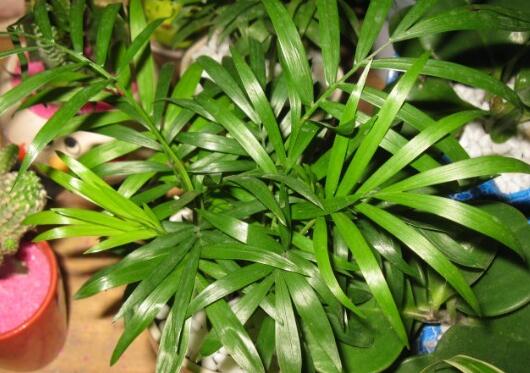
To know how to grow lady palm, we first need to understand its habits. It likes to grow in a well-ventilated environment and is not very tolerant of strong light, so when growing it we had best place it in a spot with scattered sunlight. In addition, its requirements for water and fertilizer are also quite strict, so everyone should pay attention to this point.
II. Care Methods and Precautions for Lady Palm
1. The soil should be loose and fertile
When growing lady palm, we first need to choose the soil. It relatively prefers loose, fertile, slightly acidic soil with good drainage, so we can choose soil according to this requirement. Generally, humus soil is quite good and relatively suitable for growing lady palm.
2. Suitable temperature 10-30°C
During the growth process of lady palm, its requirements for ambient temperature are not too high. As long as the temperature is not too low or too high, it can grow very well. Its suitable temperature is 10-30°C, it can withstand low temperatures down to around 0°C at minimum, and can withstand up to around 33°C at maximum.
3. Control the amount of watering / avoid waterlogging
Among the care methods and precautions for lady palm, watering is also a relatively particular part. In spring and autumn, we do not need to water too frequently; just keep the soil with a certain degree of moisture. In summer, the temperature is relatively high and the soil dries out relatively easily, so we need to water frequently, basically once in the morning and once in the evening each day. In winter, we need to control the watering frequency, waiting until the potting soil is completely dry before watering, and the amount of water should not be too much.
4. Pay attention to shading in summer
This plant, lady palm, is relatively intolerant of strong light, so during usual care we had best place it in a spot with scattered sunlight and avoid direct sunlight. In summer, when the light is relatively intense, we can keep it in a semi-shaded spot indoors, so as to avoid scorching the plant and causing its leaves to turn yellow.
5. Fertilize 1-2 times per month
During the growth process of lady palm, fertilizer is one of its main sources of nutrients. Especially after entering the growing season, its demand for fertilizer is very high; basically it needs fertilizing 1-2 times per month to keep nutrients sufficient, so that it can grow more vigorously. There is one point to note when fertilizing: be sure to apply thin fertilizer, and before applying, the fertilizer should be diluted with water, so as to avoid burning the plant due to too high a concentration.
6. Regularly prune yellow leaves
In the process of growing lady palm, we also need to prune it regularly, cutting off some yellow leaves and dead branches produced during growth, so as to maintain the plant's shape and make it look more layered. In addition, regular pruning can also promote branching.
7. Deal with pests and diseases promptly
In the process of growing lady palm, if we are not careful enough, it is easy for pests and diseases to take advantage of the situation. Such problems are extremely harmful to the plant, so when they appear we must deal with them promptly. For specific treatment methods, everyone can refer to the article on pest and disease control for lady palm; here the editor will not introduce too much.
How to Grow Potted Lady Palm: Care Methods and Precautions for Lady Palm / It Likes a Warm Environment
Flower lovers should be familiar with lady palm. It is also called Guanyin Zhen, and is a common indoor ornamental plant. In daily life, because lady palm looks very dignified, it is favored by many flower lovers. So how do you grow lady palm? For this, the editor has carefully compiled the care methods and precautions for lady palm, very comprehensive, so friends who want to grow it should not miss it~
I. How to Grow Potted Lady Palm: Understand Its Habits
Lady palm likes a warm, humid, semi-shaded environment. When growing it indoors, flower lovers should place it in a well-ventilated spot with scattered light. As for daily care, everyone should pay attention to watering to keep the potting soil moist, and in winter also do a good job of keeping it warm. As for soil, loose, fertile acidic soil is required. So for how to grow potted lady palm, everyone only needs to satisfy its growth habits.
II. Care Methods and Precautions for Lady Palm
1. Potting soil
For how to grow potted lady palm, the first thing is naturally choosing a flower pot and soil. Although when buying lady palm at a flower shop there is existing potting soil, to grow it well it is very necessary to choose a flower pot and soil yourself again.
Flower pot: a fired clay pot will do; Soil: according to lady palm's habit of liking loose, fertile, well-drained, slightly acidic soil, the editor recommends everyone use soil evenly mixed from leaf mold, garden soil, and river sand, and adding an appropriate amount of base fertilizer to it is even better.
2. Light
In the care methods for lady palm, light is indispensable. Lady palm likes scattered light, so everyone had best place it in a shaded environment for care. In summer, when sunlight is intense, the shading degree should be above 50%.
Precautions: Lady palm is afraid of direct sunlight. Once exposed to strong light, the leaves of lady palm will turn yellow.
3. Temperature
During the growth process of lady palm, temperature also needs to be adjusted accordingly. It is understood that the most suitable growth temperature for lady palm is 10-30°C, and flower lovers who want to grow it well should maintain this temperature.
Precautions: Lady palm dislikes high temperatures. When the temperature is above 34°C, its leaf edges often scorch and growth stagnates; in addition, lady palm is slightly cold-tolerant and can withstand low temperatures down to around 0°C, but the overwintering temperature had best not be lower than 5°C.
4. Watering
For how to grow potted lady palm, watering is indispensable. In spring and autumn, do not water too frequently; just keep the potting soil moist. In summer, the temperature is high and water evaporates quickly, so lady palm should be watered once in the morning and once in the evening, and the leaf surface should also be misted. In winter, the temperature is very low, so watering should be appropriately controlled; as long as it is not so dry that it cracks, do not water, and if watering is needed it should be chosen for noon on a sunny day.
Precautions: Although lady palm likes a humid environment, it cannot be watered too much either, otherwise it will cause waterlogging, leading to root rot and affecting plant growth.
5. Fertilizing
Having discussed watering, let's now talk about fertilizing, which is also very important in the care methods for lady palm. When planting, an appropriate amount of base fertilizer can be added. In spring and autumn, apply decomposed liquid fertilizer once every 3-4 weeks. In summer, apply thin fertilizer frequently, fertilizing 1-2 times per month. In winter, stop fertilizing.
Precautions: The beauty of lady palm is mostly shown in its emerald green leaves, so in order to promote emerald green leaves, everyone should add a small amount of ferrous sulfate to the fertilizer.
6. Pruning
During the growth process of lady palm, there will be times when it grows too lushly or has withered yellow leaves, and at those times it needs pruning. Pruning lady palm is very simple: mainly cut off the withered yellow leaves so that the branches have a layered look.
7. Repotting
As the care time increases, lady palm will slowly grow larger, and its roots will naturally grow larger as well. So for the healthy growth of the plant, flower lovers should repot once every two years, and the time can be chosen for March-April, replacing part of the old soil and planting after disinfection.
Overall, lady palm is still quite easy to grow, but to grow it beautifully, everyone needs to put in more effort and care for it according to the above requirements, so that lady palm can grow beautifully! The editor will introduce the care methods for lady palm here. Flower lovers who are tempted might as well try growing it, and I hope it can be helpful to everyone.
How to Grow Lady Palm: Care Methods and Precautions for Lady Palm
The lady palm has a short, graceful tree form and a very good ornamental effect. Paired with some landscape stones, it gives a very strong tropical rainforest feel. So how do you grow lady palm? The editor shares the care methods and precautions for lady palm with everyone.
How to Grow Lady Palm: First Understand Its Habits
Lady palm likes a warm, humid, well-ventilated, semi-shaded environment. It is not tolerant of waterlogging and is extremely shade-tolerant. In summer, when it is hot and the light is strong, it should be appropriately shaded. The suitable temperature is 10-30°C. When the temperature is above 34°C, the leaf edges often scorch and growth stagnates. The overwintering temperature should not be lower than 5°C. The plant form is small and growth is slow, and its requirements for water and fertilizer are not very strict. It requires loose, fertile acidic soil, is not tolerant of barren soil or saline-alkali soil, and requires relatively high soil moisture and air temperature. Ornamental period: flowering period April-May, fruit matures October-December.
Care methods and precautions for lady palm:
1. Potting soil: Potted lady palm is suitable for leaf mold, peat soil plus perlite or weathered rock granules or mud pond blocks.
2. Watering: Follow the principle of alternating dry and wet when watering.
3. Fertilizing: In the seasons of vigorous growth in summer and autumn, topdressing should be applied once every 2-3 weeks, and direct sunlight should be avoided; in winter and spring, fertilizer and water use should be controlled, and more direct sunlight should be received, which is beneficial for winter growth.
4. Light: Lady palm is relatively shade-tolerant and can be enjoyed long-term in a bright room; in a darker room it can also be placed continuously for 3-4 months.
5. Temperature: Lady palm is relatively cold-tolerant. A low temperature of 0°C has little effect on its survival, but it dislikes cold wind and frost, so indoor potted plants can overwinter safely.
When growing lady palm, pay attention to the following points:
In winter, move lady palm indoors and keep it above 0°C, and it can overwinter safely. Keeping it above 10°C allows it to maintain green leaf color. In winter the plant enters dormancy, so watering should be restricted.
In spring, as the temperature gradually rises, after Qingming it is desirable to place it outdoors for care. In summer, place it under a shade shed or in tree shade, in a semi-shaded and humid environment, so that new bamboo-like shoots keep growing and old leaves stay emerald green.
High temperatures and dry hot wind are the main causes of leaf scorch and withering, so in summer, in addition to normal watering, frequently water the leaf surface and the ground to increase air humidity. At the same time, prevent drought from waterlogging in the pot.
Summer and autumn are the seasons when lady palm grows, so fertilizer and water management need to be appropriately increased. Keep the soil moist. When scorched leaves or withered leaves are usually found, they need to be pruned promptly.
Since lady palm likes a semi-shaded environment and cannot be waterlogged during the growing process, the above are the care methods and precautions for lady palm. Now everyone knows how to grow lady palm, right?