What to do when ginger lily leaves curl? Four tips to help you prevent and treat it, light is key
The leaves of the ginger lily are rather special. Their shape is oblong-lanceolate, with a length of about 20-40 cm. They can be called very broad and beautiful, making the overall plant shape look more spread out. However, some flower lovers encounter the situation of ginger lily leaves curling when planting. What should be done at such a time? The editor will tell you a few tips.
What to do when ginger lily leaves curl
1. Increase light
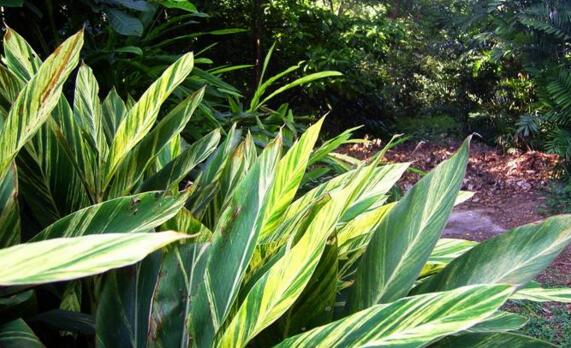
When the ginger lily is in a relatively dark environment, its leaves will grow excessively tall and weak due to lack of photosynthesis, and over time they will gradually wilt, after which leaf curling is likely to appear. Therefore, when planting ginger lily, it must not be placed in a place without light.
What to do: The ginger lily relatively likes places with plenty of sunlight. In spring, autumn, and winter, you should try to ensure that it can get sunlight. If leaf curling occurs, you should first move it to a semi-shaded environment, and then slowly increase the light.
2. Long-term fertilizer deprivation
The growth of the ginger lily requires many kinds of nutrients, such as nitrogen, phosphorus, potassium, iron, and so on. When potted, the nutrients in the soil are limited. If fertilizer is rarely applied, it will cause the soil to lack necessary nutrients, and one of the results is leaf curling, and it may even cause poor plant growth.
What to do: What should be done when ginger lily leaves curl due to lack of fertilizer? Apply fertilizer reasonably according to the growth pattern of the ginger lily. It is best to use microbial bacterial fertilizer, and decomposed organic fertilizer can also be used. When abnormal leaf growth is found, it is necessary to check whether there is a fertilization problem.
3. Reduce watering
Although the ginger lily is a freshwater herbaceous plant, it is not tolerant of waterlogging. Once it is watered too much or drainage is poor during the rainy season, there will be standing water in the flower pot. The roots soaked in water are very easy to rot, and because the plant has problems absorbing nutrients, its leaves will curl.
What to do: In the cultivation methods for ginger lily, we once emphasized that watering should follow the principle of watering when dry and stopping when wet, meaning that when the soil surface turns white and is somewhat dry, it should be watered, and each time you water, you need to see water flowing out of the drainage holes at the bottom to show that it has been thoroughly watered. So when watering, observe the dryness and wetness of the soil more.
4. Soil and water are too alkaline
When cultivating ginger lily, both the water and soil used should be slightly acidic. If the alkalinity is too high, it will cause discomfort to the plant. The ginger lily will develop yellow, curled leaves due to lack of iron, so black soil and the like cannot be used for the soil, and the water used for watering should also avoid being too alkaline.
What to do: The ginger lily needs to be repotted with new soil as soon as possible, moving it from soil with too high alkalinity to slightly acidic soil. After that, watering should mainly use tap water, river water, and so on. If the tap water is relatively alkaline, it can be left standing for a few days and filtered before use.
What to do when ginger lily roots rot: cut off the rotten roots and some leaves and replant / strengthen prevention
The roots of the ginger lily are relatively fragile. If watering is careless or there is a problem with the soil during planting, it can cause root damage or even rot. Once this happens, the ginger lily may wither and die. So what should be done when ginger lily roots rot? The editor will tell you the causes and methods.
What to do when ginger lily roots rot
When flower lovers encounter the phenomenon of ginger lily root rot, the first thing to do is take it out of the soil, and then prune off the rotten roots. Second, most of the branches and leaves at the top also need to be cut off to reduce nutrient consumption. Finally, replant it, and then find out the cause to avoid the root rot problem happening again.
Causes of ginger lily root rot and solutions
1. Excessive water
Cause: The growth of any plant must have a suitable supply of water, and the ginger lily is naturally no exception. But if the environment where its roots are located has too high a water content, then respiration and growth will be hindered, and root rot will appear along with it.
Solution:
(1) The soil must ensure good drainage. To achieve this, some sandy soil can be chosen. If drainage is not sufficient, some fine sand can be added to it, and some tiles or foam can be placed at the bottom of the flower pot. This can increase the air permeability of the potting soil and let excess water drain out of the soil.
(2) When watering, do not irrigate blindly. If standing water is found in the soil, watering should be stopped, and the standing water should be poured out of the flower pot. Whether watering is excessive can be judged by whether water flows out from the bottom of the pot. Waterlogging must not occur.
(3) When it rains, be careful to move the ginger lily to a place where rainwater cannot wash over it. If it is placed in a position such as a balcony or window, close the doors and windows, otherwise rainwater will gather in the soil, and it will be very easy to soak the roots until they rot, and it will also make the leaves wither prematurely.
2. Invasion by diseases and pests
Cause: Root-knot nematodes, white grubs, root aphids, root rot disease, and so on all harm the roots of the ginger lily. In the early stage, they cause nodules on the roots, resulting in weak plant growth and dull, yellow leaves, and in the later stage they cause the plant to wither and die. They must be prevented and controlled in time.
Solution:
(1) Disinfect the soil before planting. No matter how fertile the selected soil is, it must be ensured that it contains no pathogens or insect eggs. If they parasitize in the soil and are not removed in time, they will attack the roots after the plant is planted. Most pathogens and pests are afraid of sunlight exposure and disinfectant soaking, so these 2 methods are usually used for disinfection.
(2) Do a good job in maintenance and management, and use the correct ginger lily cultivation methods to create a suitable environment, such as good ventilation, light that is neither too strong nor too weak, temperature that is neither too high nor too low, and so on. In addition, the resistance of the ginger lily to diseases and pests can be improved through fertilization and selecting high-quality varieties.
Can ginger lily be grown in water? How to grow ginger lily in water / it can be grown in water / attached water cultivation tips
The ginger lily is much loved by people for its elegant flower posture and striking fragrance, and quite a few flower lovers even sigh about how the ginger lily can be so beautiful. So can it be grown in water? If so, how is the ginger lily grown in water? And how does the ginger lily bloom when grown in water? With these questions, let us look for the answers together.
Can ginger lily be grown in water?
First of all, the ginger lily can be grown in water. Like most hydroponic plants, the ginger lily can be fixed in a hydroponic container with a planting basket for cultivation. However, during maintenance, there are some tips that need to be mastered, such as changing the water, pruning, adding nutrient solution, and so on, otherwise it is easy to cause the plant to die.
How to grow ginger lily in water
1. Remove from pot: Dig the ginger lily out of the flower pot, taking care to remove it from the flower pot together with the soil ball. When removing it from the pot, you can tap around the flower pot lightly so that the soil and the flower pot loosen, making it less likely to damage the stems and leaves when taking it out of the pot.
2. Remove the soil: Wash the soil off the roots with clean water, then soak them in a potassium permanganate or carbendazim solution. This can play a role in disinfection and sterilization, so that after water cultivation it is less likely to breed too many microorganisms and less likely to develop ginger lily diseases and pests.
3. Planting: Put the plant into the planting basket, fix the roots with vermiculite, then place the planting basket at the mouth of the hydroponic container, and add water to the container. The water level should preferably cover two-thirds of the roots, and it is necessary to ensure that one-third of the roots are exposed outside the water. This can avoid root rot.
4. Maintenance: After completing the above three steps, the water cultivation of the ginger lily is achieved. But if you want it to grow smoothly, you also need to do a good job in later maintenance and management, including changing the water, adding nutrient solution, pruning, and so on. Just after starting water cultivation, change the water once every 10 days, and after growth resumes, change the water once every 3-5 days. Nutrient solution can be added once every 2 water changes. If there is root rot, prune it in time.
How does ginger lily bloom when grown in water
1. Sufficient light: When grown in water, the ginger lily cannot be placed in a dark place, especially not in a room that lacks light and is relatively enclosed. If there is insufficient light, not only will growth slow down and it will not bloom, but the plant will also quickly wither.
2. Temperature control: The ginger lily needs a temperature of 25-30 degrees to bloom. If the temperature is relatively low, it is very difficult for it to bloom. Therefore, when growing it in water, be sure to keep the temperature moderate. In winter, pay attention to keeping it warm. When changing the water, the water temperature should be close to room temperature, and water that is too cold cannot be used, otherwise the roots will be frostbitten.