How to water Pachystachys lutea? The water quality should be clean, do not overwater, and ensure good drainage during the rainy season
Pachystachys lutea likes a humid environment, so in the cultivation methods for Pachystachys lutea, you need to create a suitable environment for it through watering. You cannot go without watering for long periods, nor can you water too much. So how do you water Pachystachys lutea? This is a question many flower lovers care about, and below the editor will tell you the answer.
How to water Pachystachys lutea
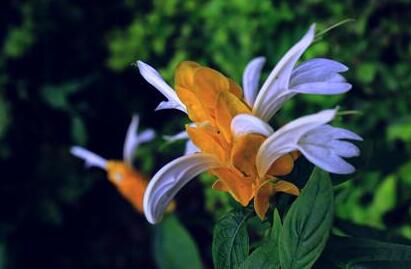
When watering Pachystachys lutea, the basic requirement is that the soil is moist and there is no standing water in the pot. Since the evaporation and consumption of water differ in each season and growth stage, the watering interval will also differ at different times. While following the basic requirements, you should judge flexibly according to the soil conditions.
Watering methods for Pachystachys lutea
1. Watering in spring and autumn
Botanists have found through research that the suitable growth temperature for Pachystachys lutea is 16-28 degrees. The temperatures in spring and autumn in most parts of China are just right for the growth of Pachystachys lutea, and it grows fastest in these two seasons, so its water demand is relatively high. Generally, water once every 2-3 days.
2. Watering in summer
When the temperature exceeds 30 degrees, the growth of Pachystachys lutea will be inhibited. Although this is not the peak growth period, high temperatures cause water to evaporate faster, so the watering interval is shorter than in spring. So how do you water Pachystachys lutea at this time? Generally once every 1-2 days, and you should also spray the leaves with water appropriately.
3. Watering Pachystachys lutea in winter
After the temperature drops below 10 degrees, Pachystachys lutea will enter a dormant state. Many flower lovers will move it to a warm place to prevent frost damage, so watering at this time also requires particular care. First, the water temperature needs to be close to room temperature and not too low. Second, you can water once every 5-7 days, keeping the soil slightly dry and only slightly moist.
Precautions for watering Pachystachys lutea
1. The problem of standing water
Aside from aquatic plants, most other plants are rather afraid of standing water, and Pachystachys lutea belongs to the latter group. So when watering normally, you must be careful to avoid standing water. Not only should you not water too much, but on rainy days you should also check whether drainage is good. Rainwater that falls into the flowerpot must be able to drain away promptly, otherwise the roots are prone to rotting.
2. Watering time
The specific watering time should preferably be in the morning. It is best to water before 10 a.m. each day, or you can water after 3 p.m. Try not to water at noon, because the temperature is higher at noon and water is easily evaporated. In the morning the demand for water is higher, and watering is also more easily absorbed.
3. Clean water quality
Saving water is a virtue. When watering Pachystachys lutea, the water quality we use should mainly be clean and clear, such as tap water, well water, and so on. Do not use household domestic wastewater for irrigation, otherwise it is easy to breed microorganisms and pathogens.
Pachystachys lutea
Other names for Pachystachys lutea
Pachystachys lutea has quite a few other names, such as Yanbao flower, Huaye Juemu, yellow shrimp flower, golden shrimp plant, small shrimp flower, shrimp flower, coral acanthus, golden package silver, golden pagoda, golden pagoda flower, and so on.
The flowers of Pachystachys lutea
Pachystachys lutea originates from the Mexico region, Peru, and South America. There are mainly two varieties: one with purple bracts and one with yellow bracts. The common Pachystachys lutea is yellow, with spike-like inflorescences, layer upon layer of bracts, and small white flowers.
The flowering period of Pachystachys lutea is relatively long, and the lifespan of the flowers is also very long, reaching several weeks. Plants grown at home are generally about 1 chi in height.
Growth habits of Pachystachys lutea
Pachystachys lutea likes a high-temperature and high-humidity growing environment and requires sufficient light, but it can also tolerate shade. The growth temperature is best at 18°C-25°C, and in winter it should be kept above 5°C. The soil should be fertile and well-drained.
How to grow Pachystachys lutea, cultivation methods and precautions for Pachystachys lutea / Do not let the temperature get too low
Pachystachys lutea originated in Peru, but after being introduced to China in the 1980s, it quickly won the affection of many flower lovers. The main reason is that Pachystachys lutea has many uses. It can not only be enjoyed ornamentally but also cultivate character and regulate mood. But how do you grow Pachystachys lutea better? Let's look at the cultivation methods and precautions for Pachystachys lutea.
How to grow Pachystachys lutea
Since Pachystachys lutea is a plant native to Peru and Mexico, it relatively likes the climate of South American tropical rainforests, especially high-temperature and high-humidity climates. Its light requirement is sufficient sunlight, but it is also fairly shade-tolerant. It likes temperatures of 16-28 degrees and is not very cold-resistant, so in winter you need to keep it warm. As for soil, it likes fertile, well-drained types.
Cultivation methods and precautions for Pachystachys lutea
1. Soil
In northern regions, Pachystachys lutea is often grown as a potted plant. The soil should be selected on the principle of being loose, fertile, and containing a large amount of humus. It can be made by mixing peat soil, grass peat, vermiculite, river sand, and so on. If you want to increase the fertility of the soil, you can also add decomposed base fertilizer.
Precautions: Although peat soil, vermiculite, and so on are the most suitable soils for growing Pachystachys lutea, flower lovers can actually also use ordinary soil to grow it, or buy potting soil from a professional flower shop. No matter what soil you choose, the most basic requirements are good drainage, looseness, and air permeability.
2. Temperature
Different plants have different suitable growth temperatures. For example, violets like a cool climate, but Pachystachys lutea likes a warm climate. Its optimal growth temperature is 16-28 degrees. When the temperature is below 10 degrees or above 30 degrees, growth will be affected, so in winter you should pay attention to keeping it warm.
Precautions: In the cultivation methods and precautions for Pachystachys lutea, in winter it is best to move Pachystachys lutea indoors for care. During the day, keep the temperature at around 18 degrees, and at night keep the temperature at least above 10 degrees. If the temperature is too low, it will cause leaves to drop, and prolonged low temperatures will cause root rot and the plant to freeze to death.
3. Light
When growing Pachystachys lutea, you must give it sufficient light. In spring, autumn, and winter, it should be allowed to enjoy sunlight. Only in the hot summer does it need a little shading, because only sufficient light can make it grow robustly and reduce disease.
Precautions: Although Pachystachys lutea also has strong shade tolerance and can grow normally in a semi-shaded environment, weaker light will cause one problem: leaves will grow excessively long without flowering. So try not to place it in a semi-shaded place lacking light.
4. Watering
Pachystachys lutea has average drought tolerance, so normally you need to water it in a timely manner. Especially during the growth period, you should not only keep the soil moist but also spray water frequently to control humidity. So in spring and autumn, water once every 2-3 days, and in summer, water once every 1-2 days.
Precautions: No matter when you water, you must pay attention to one key point, which is that there must be no standing water. This is also the most basic principle. In addition, in winter the potting soil should be kept slightly moist, and you should not water too frequently.
5. Fertilizing
Some flower lovers dislike fertilizing when growing plants, but the correct approach is to fertilize appropriately according to the plant's growth condition. When growing Pachystachys lutea, apply urea or organic fertilizer once every 15-20 days during the growth period. Stop fertilizing during summer high temperatures and when winter is too cold.
Precautions: When fertilizing, you cannot apply only nitrogen fertilizer, otherwise it is easy to cause thin and long flower stems and a relatively small number of flowers. Before the flowering period, you can apply a 0.2% potassium dihydrogen phosphate solution, which can make the flower color more vivid. During the flowering period, you can also apply 1-2 additional applications of phosphorus and potassium fertilizer, which can make flower bud formation smoother.
Pruning methods for Pachystachys lutea
During the seedling stage, Pachystachys lutea needs to be pinched. The time is when the seedling grows to 6 cm tall. After that, pinch again when the branches grow to about 4 cm. Pinching multiple times can make it sprout side branches, control the plant height, and increase the ornamental value of the overall plant shape.