How to grow sweet alyssum? It loves cool weather and fears heat, and needs plenty of light
Among plants in the Brassicaceae family, sweet alyssum has many uses, and its ornamental value is one of the reasons many people choose to grow it. So when cultivating it, how should we choose the soil, control the temperature, water and fertilize? How to grow sweet alyssum? Let's take a look at the growing methods for sweet alyssum.
How to grow sweet alyssum
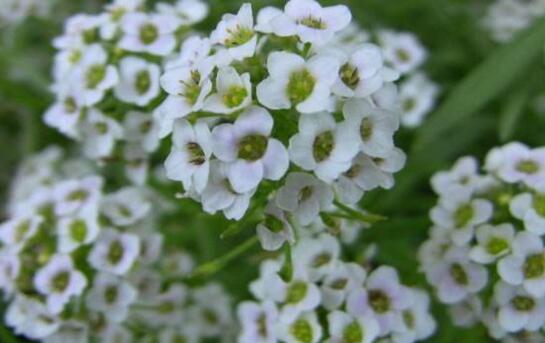
When growing sweet alyssum, you should have some understanding of its growth habits. Sweet alyssum prefers a cool climate and is rather afraid of heat; its light requirement is full sun, but it can also tolerate partial shade; it likes loose soil and tolerates poor, lean potting soil; it has a fairly strong tolerance for drought and is rather afraid of waterlogging.
Growing methods for sweet alyssum
1. Soil
The growing medium is generally best as loose, fertile soil. Of course, sweet alyssum can also adapt to fairly poor, lean media, but it is best to use garden soil and furnace slag mixed at a ratio of 3:1. You can also use pond mud, paddy soil, leaf mold and so on. A good soil environment makes it grow faster.
Notes: Garden soil, furnace slag, pond mud and leaf mold are all very suitable for growing sweet alyssum, but no matter which one you choose, it must be sterilized. If it has already been planted, you can regularly water it with some carbendazim solution, which can reduce pathogens in the soil.
2. Temperature
Its optimal growing temperature is 18-25 degrees. It prefers a cool climate and is afraid of hot weather, so in the growing methods for sweet alyssum, you should pay attention to cooling it reasonably in summer and can place it in a relatively cool spot. In addition, when propagating by cuttings, you need to keep the temperature at around 20 degrees to make rooting easier.
Notes: Although sweet alyssum can tolerate cold, in winter you should not let it stay in an environment that is too cold. When the temperature drops below 0 degrees, you need to take insulation measures. The most commonly used method is to move it indoors and let it receive sunlight.
3. Light
Sweet alyssum is a plant that likes plenty of sunlight, so how should it be grown as far as light is concerned? When the temperature is 20-30 degrees, it can be allowed to grow under full light, but when summer temperatures are high, you need to shade it from 50-80% of the sunlight, otherwise it will wilt because direct sunlight makes the temperature too high.
Notes: Try to keep sweet alyssum in a relatively bright place with plenty of light. Although it has some shade tolerance, in a partially shaded environment it does not grow as fast as outdoors, and the leaves and flower color are not as bright as when there is plenty of light.
4. Fertilizer and water
As for fertilizer and water requirements, sweet alyssum needs balanced nutrients and sufficient moisture. When fertilizing, focus on nitrogen, phosphorus and potassium fertilizers, with the principle of applying dilute fertilizer frequently, using small amounts but more often. When watering, pay attention to watering when dry and letting it dry between waterings, keeping the soil slightly moist and avoiding excessive humidity.
Notes: When fertilizing, it is better to use a lower concentration than to apply too much at once. As for watering, make sure to water thoroughly each time, but never let water accumulate in the pot. In summer, you can spray some water on the leaves, which both cools them and provides moisture.
[Sweet alyssum] Sweet alyssum pictures, growing methods for sweet alyssum
Sweet alyssum is a perennial herb with a woody base, and its flowers bloom in corymb-like clusters, with pale purple or white, oblong petals. When sweet alyssum blooms, its shape looks especially like a ball. Sweet alyssum is a highly ornamental plant, with many branches, abundant flowers, and a wafting delicate fragrance. It is an excellent flower for rock gardens. So what are the growing methods for sweet alyssum? Today, let's take a look at the sweet alyssum pictures and information on its growing methods brought to you by the editor.
Introduction to sweet alyssum
Sweet alyssum, also known as garden alyssum, little white flower and jade butterfly ball, is a plant in the genus Lobularia of the Brassicaceae family. It is a perennial herb with a woody base, but cultivated plants, whether annual or biennial, do not become woody. Its plants are 10-40 cm tall, and the whole plant is covered with "T"-shaped hairs that have a silvery gray tint. The stems branch upward from the base and often form dense clumps. The leaves are linear or lanceolate. It is native to the Mediterranean coast. Sweet alyssum is a flower that relatively prefers a cool climate, avoids intense heat, and can tolerate frost and cold. It likes a relatively dry air environment. If rainy days last too long, it is very susceptible to infection by pathogens. It is also afraid of rain, and the leaves should be kept dry at night as well.
Growing methods for sweet alyssum
Since sweet alyssum is a plant that likes cool conditions and fears heat, when growing it the temperature is best at 15-20 degrees. Generally, sowing in late September each year is better. When growing sweet alyssum, it is best to sterilize the medium used for sowing. The best method is to heat the medium in a pot, so that any pests and diseases in the medium are killed by the heat.
Sprouting:Soak the seeds in warm water for 24 hours, until the seeds absorb water and swell.
Sowing:Sweet alyssum can be propagated by sowing or cuttings. If using the sowing method, it is generally chosen to sow in autumn, so that seedlings emerge quickly and relatively uniformly. The suitable germination temperature for sowing is generally 20°C. Scatter the seeds over loose sandy loam, press them down lightly, water to maintain moisture, and seedlings will emerge in 5-10 days. When the sweet alyssum seedlings have 3-4 true leaves, they can be transplanted into pots. The potting soil is best pre-treated with a small amount of decomposed compost or phosphorus and potassium fertilizer.
Management after sowing:After sowing in autumn, if lower temperatures are encountered, you can wrap the flower pot with plastic film to keep it warm and moist. When the seedlings emerge, promptly uncover the film. Also let the seedlings receive sunlight before 9:30 every morning or after 3:30 in the afternoon, which is beneficial to seedling growth. When most of the seeds have grown into seedlings, thinning is needed appropriately: promptly pull out diseased and unhealthy seedlings so that the remaining seedlings have some space between one another. When most of the seedlings have grown 3 or more leaves, they can be transplanted into pots.
Cutting medium:If using the cutting method for propagation, it is recommended to use a ready-prepared and sterilized cutting medium for rooting sweet alyssum cuttings. Medium-coarse river sand can also be used, but it should be rinsed several times with clean water before use. Do not use sea sand or river sand from saline-alkali areas; these media are not suitable for the growth of flowers and plants.
Selection of cutting branches:The branches used for cuttings are called cuttings. Usually, in combination with pinching, the thick, pest- and disease-free top shoots that are pinched off are used as cuttings, and the top shoots can be used directly for cuttings.
Sweet alyssum management methods: temperatureThe best rooting temperature for sweet alyssum cuttings is 18-25 degrees. Below 18 degrees, the cuttings root with difficulty and grow very slowly. Above 25 degrees, they are more susceptible to infection by pathogens and rot, and the higher the temperature, the greater the proportion that rot. When low temperatures are encountered after cutting, the main insulation measure is to wrap the flower pot or container used for cutting with film. When the temperature is too high after cutting, the main cooling measure is to shade the cuttings with a shade net, blocking 50-80% of the sunlight. At the same time, mist the cuttings at least 3-5 times a day. On sunny days when the temperature is higher, the number of mistings should increase; on cloudy and rainy days when the temperature is lower and humidity is higher, mist less or not at all.
Light:Cutting propagation generally cannot do without sunlight, but the stronger the light, the higher the temperature inside the cuttings, the more vigorous the transpiration of the cuttings, and the more water they consume, which is very unfavorable to the survival of the cuttings. Therefore, after cutting, 50-80% of the sunlight must be blocked with a shade net. After the root system grows out, gradually remove the shade net: on sunny days, remove the shade net at 4:00 every afternoon and cover it again before 9:00 the next morning.
Fertilizer and water management:Sweet alyssum most fears random fertilizing, so when fertilizing sweet alyssum you must follow the principles of "dilute fertilizer applied frequently, small amounts but more often, complete nutrition" and "alternate drying and wetting; when dry, dry thoroughly; do not water when not dry." At night, be sure to keep the flowers and leaves dry.
Summary:The growth habits of sweet alyssum are that it likes cool conditions, avoids heat, requires plenty of sunlight, tolerates slight shade, prefers loose soil, avoids waterlogging, and is relatively tolerant of drought and poor, lean conditions. So when growing sweet alyssum, you must cultivate it according to its growth habits. The above is the information the editor has introduced to you about growing methods for sweet alyssum. After reading the editor's introduction, I believe you will grow sweet alyssum better when you plant it.
[Related recommendations]
☑Bedding shop ☑Fish tank oxygenator ☑Fabric handicrafts ☑Corsage making
☑Handmade cross-stitch ☑Automatic cooking pot ☑Flower arranging techniques ☑Beautiful wallpapers
Sweet alyssum Lobularia maritima Sweet alyssum illustrated guide: how to care for sweet alyssum / how to propagate sweet alyssum
Sweet alyssum profileSweet alyssum Lobularia maritima
Growing methods and precautions for sweet alyssum Introduction to sweet alyssum
Sweet alyssum is native to the Mediterranean coast. It likes cool conditions, avoids heat, requires plenty of sunlight, tolerates slight shade, prefers loose soil, avoids waterlogging, and is relatively tolerant of drought and poor, lean conditions. It is a perennial herbaceous flower, often grown as an annual or biennial.
Sweet alyssum is short with many branches. When it blooms, it forms a mass of white and gives off a wafting delicate fragrance, attracting large numbers of bees. It is an excellent flower for rock gardens, and also an excellent edging material for flower beds and flower borders, and it is also very good for potted viewing. Sweet alyssum grows prostrate and has a pleasant delicate fragrance. It is also suitable for planting along the edges of rock garden walls, and can also be potted or used as ground cover.
Perennial herb, woody at the base, but cultivated plants, whether annual or biennial, do not become woody, 10-40 cm tall, the whole plant covered with "T"-shaped hairs that have a silvery gray tint. Stems branch upward from the base and often form dense clumps. Leaves linear or lanceolate, 1.5-5 cm long, 1.5-5 mm wide, tapering at both ends, entire. Inflorescence corymb-like, greatly elongated in fruit; pedicels thread-like, 2-6 mm long; sepals about 1.5 mm long, the outer whorl wider than the inner whorl, the outer whorl oblong-ovate, the inner whorl narrowly elliptic or narrowly ovate-oblong; petals pale purple or white, oblong, about 3 mm long, apex obtuse-rounded, base abruptly narrowed into a claw. Silicles elliptic, 3-3.5 mm long, hairless or with sparse "T"-shaped hairs in the upper half; valves flattened and slightly swollen, midvein clear; replum often pale purple, septum white, semi-transparent, veinless; fruiting pedicels 7-15 mm long, obliquely ascending or nearly horizontally spreading, upturned at the tip. Seeds 1 per locule, pendulous from the top of the ovary locule, oblong, about 1.5 mm long, pale reddish-brown, with a sticky substance when wet. Flowering period March-April for greenhouse cultivation, June-July for open-field cultivation.
Native to the Mediterranean coast. In China, it is cultivated for viewing in parks and flower nurseries in Hebei, Shanxi, Jiangsu, Zhejiang, Shaanxi, ** and other provinces and regions.
Morphological characteristics of sweet alyssum
Perennial herb, woody at the base, but cultivated plants, whether annual or biennial, do not become woody, 10-40 cm tall, the whole plant covered with "T"-shaped hairs that have a silvery gray tint. Stems branch upward from the base and often form dense clumps. Leaves linear or lanceolate, 1.5-5 cm long, 1.5-5 mm wide, tapering at both ends, entire. Inflorescence corymb-like, greatly elongated in fruit; pedicels thread-like, 2-6 mm long; sepals about 1.5 mm long, the outer whorl wider than the inner whorl, the outer whorl oblong-ovate, the inner whorl narrowly elliptic or narrowly ovate-oblong; petals pale purple or white, oblong, about 3 mm long, apex obtuse-rounded, base abruptly narrowed into a claw. Silicles elliptic, 3-3.5 mm long, hairless or with sparse "T"-shaped hairs in the upper half; valves flattened and slightly swollen, midvein clear; replum often pale purple, septum white, semi-transparent, veinless; fruiting pedicels 7-15 mm long, obliquely ascending or nearly horizontally spreading, upturned at the tip. Seeds 1 per locule, pendulous from the top of the ovary locule, oblong, about 1.5 mm long, pale reddish-brown, with a sticky substance when wet. Flowering period March-April for greenhouse cultivation, June-July for open-field cultivation.
Ecological habits of sweet alyssum
Sweet alyssum is a shade-tolerant, drought-tolerant, light-loving plant.
Sweet alyssum likes cool conditions, avoids damp heat, likes sunlight, and also tolerates partial shade. It has strong adaptability and is not demanding about soil. It is relatively tolerant of drought and poor, lean conditions, but grows well in fertile, well-drained soil.
Cultivation techniques for sweet alyssum
Sweet alyssum is vigorous and can tolerate light frost and cold; it should be protected when overwintering outdoors. It avoids heat, likes sunlight, and is not demanding about soil, but well-drained soil is best, though it must not be too wet. Carry out heavy pruning before the heat of summer and place it in a cool spot to pass the summer, then it will bloom even more abundantly after autumn. Generally after flowering, the lower part of the inflorescence has already become bare. You can cut the inflorescence from the stem along with seed collection, so that new flower spikes are produced again. Dry the cut portions slightly and shake out the seeds to store them. If you feel the plant has become old and weak, you can also prune it heavily to renew it, apply a little liquid fertilizer, and before long it will again be full of flowers. Sweet alyssum has a long flowering period; fertilize and water it in a timely manner, applying dilute liquid fertilizer once every half month. Pay attention to intertillage weeding and pest and disease control. For potted plants, as the plant grows, gradually move it into larger pots, and finally into a 15 cm diameter clay pot. For those overwintering in a sunny cold frame, cover them well with straw curtains at night to protect against cold, and move them to the flower bed when spring warms up.
Key points for cultivation
The medium is best as peat + perlite, and leaf mold can also be used. Sift the potting soil and place it in a seedling tray, soak it thoroughly with 500-600 times diluted carbendazim solution, and after it dries slightly, sow by dibbling or broadcasting, about 1000 seeds per square meter. Spray with the solution so that the seeds and medium are in close contact. Cover with film or glass, and keep it shaded and moist. Seedlings emerge in about 8 days. After emergence, gradually remove the film and gradually increase light. Use 1000 times diluted chlorothalonil or thiophanate-methyl once a week to prevent damping-off, for 2-3 times in a row.
2-3 weeks after sowing, when there are 4-5 true leaves, they can be transplanted into 13 cm pots, with 1-3 plants per pot. After one week, carry out normal water and fertilizer management, applying a compound fertilizer solution once a month (150 PPM, equivalent to 1.5 grams of fertilizer in 10 kg of water), and add dilute organic fertilizer solution with each watering. After 10 leaves, the fertilizer concentration can be increased to 1000 PPM (1 gram of fertilizer in 1 kg of water). Do not let fertilizer water touch the stems and leaves. Do not let it be exposed to rain for long periods during the plum rain season. Moisture or poor drainage easily causes root rot. If there is sudden hot weather, temporarily move the potted flowers to a ventilated, cool place, which can extend the flowering period and lifespan.
Humidity management
It likes a relatively dry air environment. If cloudy and rainy days last too long, it is susceptible to infection by pathogens. It is afraid of rain, and the leaves should be kept dry at night. The most suitable relative air humidity is 40-60%.
Temperature management
It likes a cool climate, avoids intense heat, and tolerates frost and cold. It is not very strict about winter temperature; as long as it is not exposed to frost, it can overwinter safely. It dies when the temperature rises above 30°C in late spring and early summer, and its most suitable growth temperature is 15-25°C. Try to choose autumn and winter for sowing to avoid high summer temperatures. In the three seasons of late autumn, winter and early spring, since the temperature is not very high, it should be given direct sunlight to help it carry out photosynthesis and form flower buds, bloom and set seed. If high-temperature weather occurs in summer, it needs to be shaded from about 50% of the sunlight. For those kept indoors for viewing after flowering, place them near southeast-facing doors and windows to extend the flowering period and increase the number of flowers as much as possible.
Light management
[Fertilizer and water management]: Like other herbaceous flowers, it has relatively high requirements for fertilizer and water, but it most fears random fertilizing, concentrated fertilizer, and one-sided application of nitrogen, phosphorus or potassium fertilizer. It is required to follow the two fertilizing (watering) principles of "dilute fertilizer applied frequently, small amounts but more often, complete nutrition" and "alternate drying and wetting; when dry, dry thoroughly; do not water when not dry, and water thoroughly when watering." Also, after fertilizing, keep the leaves and flowers dry at night:
[Autumn]: After the sown seedlings are potted and have recovered for a period, fertilizer and water management should be brought up to speed quickly. Fertilizer and water management follows the cycle of "Hua Bao" - "Hua Bao" - clear water - "Hua Bao" - "Hua Bao" - clear water, with an interval of about 1-3 days. On sunny days or during high temperatures, the interval is shorter; on cloudy and rainy days or during low temperatures, the interval is longer or do not water.
[Winter]: Although it is still growing, the relatively low temperature slows its growth rate, and it does not need much fertilizer or water, and may even need controlled fertilizer and water. Fertilizer and water management follows the cycle of "Hua Bao" - clear water - clear water - "Hua Bao" - clear water - clear water, with an interval of about 4-7 days. On sunny days or during high temperatures, the interval is shorter; on cloudy and rainy days or during low temperatures, the interval is longer or do not water. Try to arrange watering at noon on sunny days when the temperature is relatively high.
[Spring]: After the temperature rises, growth recovers rapidly and gradually enters the flower bud differentiation stage and flowering stage, with high requirements for fertilizer and water. Fertilizer and water management follows the cycle of "Hua Bao" - clear water - "Hua Bao" - clear water, with an interval of about 2-4 days. On sunny days or during high temperatures, the interval is shorter; on cloudy and rainy days or during low temperatures, the interval is longer or do not water. After entering the seed-setting stage, stop fertilizer supply.
Pruning: During the flowering process, cut off spent flowers together with three leaves, which can extend the flowering period.
Propagation methods for sweet alyssum
Propagation by sowing: the suitable germination temperature is about 22°C, and germination occurs in 5 to 10 days. Spring sowing blooms in June, while autumn sowing blooms profusely in May of the following year. It can also be propagated by cuttings. Carry out heavy pruning before the heat of summer, place it in a cool spot to pass the summer, and it will bloom even more abundantly after autumn.
Sowing
Since it is relatively afraid of heat throughout the growing period, and the most suitable sowing temperature is 15-20°C, autumn sowing is often carried out after mid-to-late September: medium sterilization. Sterilize the medium used for sowing. The best method is to heat it in a pot, so that any pests and diseases are killed by the heat.
[Sprouting]: Soak the seeds in warm hot water (temperature similar to face-washing water) for 12-24 hours, until the seeds absorb water and swell. For very common seeds that germinate easily, this step can be skipped.
[Sowing]: For tiny seeds that are difficult to pick up with hands or other tools, you can moisten one end of a toothpick with water and stick the seeds one by one onto the surface of the medium, then cover with medium 1 cm thick. Then place the sown flower pot into water, with the water depth at 1/2-2/3 of the pot height, and let the water slowly soak up from below (this method is called the "pot immersion method");
For larger seeds that can be picked up with hands or other tools, place the seeds directly into the medium and dibble them at a spacing of 3 x 3 cm. After sowing, cover with medium at a thickness of 2-3 times the size of the seeds. After sowing, use a sprayer or a fine-holed watering can to moisten the sowing medium, and later when the potting soil is slightly dry, water again. Still be careful not to water with too much force, so as not to wash the seeds up;
[Management after sowing]: After sowing in autumn, if a cold wave with low temperatures is encountered, you can wrap the flower pot with plastic film to keep it warm and moist; after the seedlings emerge, promptly uncover the film, and let the seedlings receive sunlight before 9:30 every morning or after 3:30 in the afternoon, otherwise the seedlings will grow very weak; after most of the seeds have emerged, thinning is needed appropriately: pull out the diseased and unhealthy seedlings so that the remaining seedlings have some space between one another; when most of the seedlings have grown 3 or more leaves, they can be transplanted into pots.
Propagation by cuttings
[Cutting medium]: This refers to the nutrient soil, river sand, peat soil and other materials used for cuttings. For home cuttings, given the conditions, it is very difficult to obtain an ideal cutting medium. It is recommended to use a ready-prepared and sterilized cutting medium; medium-coarse river sand can also be used, but it should be rinsed several times with clean water before use. Do not use sea sand or river sand from saline-alkali areas; they are not suitable for the growth of flowers and plants.
[Selection of cutting branches]: The branches used for cuttings are called cuttings. Usually, in combination with pinching, the thick, pest- and disease-free top shoots that are pinched off are used as cuttings, and the top shoots can be used directly for cuttings.
Management after cutting
[Temperature]: The optimal temperature for rooting of cuttings is 18°C-25°C. Below 18°C, the cuttings root with difficulty and slowly; above 25°C, the cut ends of the cuttings are easily infected by pathogens and rot, and the higher the temperature, the greater the proportion that rot. When low temperatures are encountered after cutting, the main insulation measure is to wrap the flower pot or container used for cutting with film; when the temperature is too high after cutting, the main cooling measure is to shade the cuttings, blocking 50-80% of the sunlight. At the same time, mist the cuttings 3-5 times a day. On sunny days when the temperature is higher, mist more often; on cloudy and rainy days when the temperature is lower and humidity is higher, mist less or not at all.
[Humidity]: After cutting, the relative air humidity must be kept at 75-85%. Humidity can be increased by misting the cuttings, 1-3 times a day. On sunny days, the higher the temperature, the more often you mist; on cloudy and rainy days, the lower the temperature, the less you mist or not at all. But excessive misting makes the cuttings susceptible to infection by pathogens and rot, because many kinds of pathogens exist in water.
[Light]: Cutting propagation cannot do without sunlight, but the stronger the light, the higher the temperature inside the cuttings, the more vigorous the transpiration of the cuttings, and the more water they consume, which is unfavorable to the survival of the cuttings. Therefore, after cutting, 50-80% of the sunlight must be blocked. After the root system grows out, gradually remove the shade net: on sunny days, remove the shade net at 4:00 every afternoon and cover it again before 9:00 the next morning.
[Potting or transplanting]: When potting small seedlings, first place a 2-2 cm thick layer of coarse-grained medium or ceramic pellets at the bottom of the pot as a drainage layer, then sprinkle a layer of fully decomposed organic fertilizer on top as base fertilizer, about 1-2 cm thick, then cover with another layer of medium about 1-2 cm thick, and then place the plant in, so as to separate the fertilizer from the root system and avoid burning the roots.
The medium used for potting can be chosen from one of the following. Vegetable garden soil: furnace slag = 3:1; or garden soil: medium-coarse river sand: sawdust (mushroom residue) = 4:1:2; or one of paddy soil, pond mud, leaf mold. Or peat + perlite + ceramic pellets = 2 parts + 2 parts + 1 part; vegetable garden soil + furnace slag = 3 parts + 1 part; peat + furnace slag + ceramic pellets = 2 parts + 2 parts + 1 part; sawdust + vermiculite + medium-coarse river sand = 2 parts + 2 parts + 1 part. After potting, water once thoroughly and place it in a slightly shaded environment for a week of care.
When transplanting small seedlings, first dig the planting hole, sprinkle a layer of organic fertilizer at the bottom of the planting hole as bottom fertilizer (base fertilizer), about 4-6 cm thick, then cover with a layer of soil and place the seedling in, so as to separate the fertilizer from the root system and avoid burning the roots. After placing the seedling in, backfill the soil to cover the root system, firm the soil with your foot, and water once thoroughly.
[Pinching]: Before flowering, generally pinch twice to encourage more flowering branches to sprout: one to two weeks after potting, or when the seedling is 6-10 cm tall and has six or more leaves, pinch off the top shoot and keep the lower 3-4 leaves to encourage branching. Three to five weeks after the first pinching, or when the side branches grow to 6-8 cm long, carry out the second pinching, that is, pinch off the top shoots of the side branches and keep the 4 leaves below on the side branches. After two pinchings, the plant shape will be more ideal and the number of flowers will also be greater.
Distribution range of sweet alyssum
Native to the Mediterranean coast. In China, it is cultivated for viewing in parks and flower nurseries in Hebei, Shanxi, Jiangsu, Zhejiang, Shaanxi, ** and other provinces and regions.
Landscape uses of sweet alyssum
Sweet alyssum is short with many branches. When it blooms, it forms a mass of white and gives off a wafting delicate fragrance, attracting large numbers of bees. It is an excellent flower for rock gardens, and also an excellent edging material for flower beds and flower borders, and it is also very good for potted viewing.
Sweet alyssum can be used for flower bed flowers, flower border flowers, rock garden flowers, lawns and ground cover.
Sweet alyssum pictures