How to grow Oriental lilies? Cultivation methods and precautions, watering should not be excessive
Oriental lily (Lilium 'Oriental Hybrids') is the name of a song, and it is also a very beautiful flower. It is said that the Oriental lily is the queen among lilies; its flower shape is beautiful and its colors are rich, making it deeply loved by flower enthusiasts. In daily life, many people want to grow Oriental lilies, so how do you grow them? Below is a carefully compiled guide to the cultivation methods and precautions for Oriental lilies, very detailed, so anyone who wants to grow them should definitely take a look~
I. How to grow Oriental lilies: understand their habits
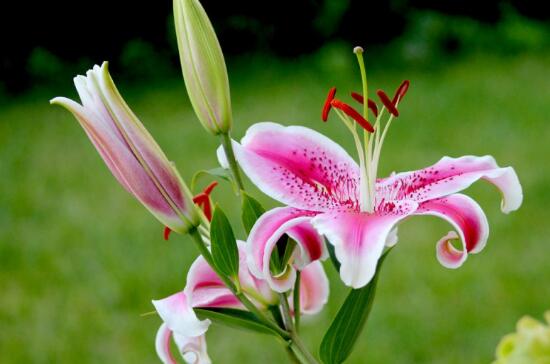
The Oriental lily, a perennial bulbous plant, likes a warm and dry environment. When grown indoors, besides giving it an appropriate amount of light, watering should not be too frequent, and in winter, measures should also be taken to keep it warm. As for the soil, it is best to use deep and fertile soil. So how do you grow Oriental lilies? It is very simple: just meet their growth habits. For specific requirements, let us continue reading below.
II. Cultivation methods and precautions for Oriental lilies
1. Soil: deep and fertile
To grow potted Oriental lilies, you first need to choose new soil. Although the Oriental lilies bought in flower shops come with existing potting soil, the shop owner cannot prepare the soil properly for you, so if you want to grow them well, it is very necessary to choose the soil yourself again.
Soil selection: deep, well-drained, and fertile slightly acidic soil. It is recommended to use a culture soil mixed with equal proportions of sandy soil, leaf mold, and garden soil. Ps: Be sure not to use relatively hard soil with high clay content.
2. Light: changes constantly
In the cultivation methods for Oriental lilies, light is very important. It is said that at different growth stages, Oriental lilies have different light requirements.
Light requirements: During the bud stage of Oriental lilies, you need to shade them; when leaf temperature is too high, appropriate shading is needed; at other growth stages, especially when the flowers enter the development stage, stronger light is needed. Especially when the flowers enter the development stage.
3. Temperature: 20-25°C
During the growth of Oriental lilies, temperature also needs to be adjusted accordingly. According to the cultivation experience of gardening experts, the most suitable temperature for the growth of Oriental lilies is around 20-25°C. Under normal circumstances, they can grow normally as long as the temperature is not lower than 15°C.
Temperature requirements: If you are propagating Oriental lilies yourself, in the first half month, the temperature should be controlled at 4-13℃; afterward, increase the temperature to promote plant growth.
Precautions: Oriental lilies also like a warm environment, so during the growth period, the temperature should preferably be kept at around 20-25°C; if the temperature is too low, the plant will grow slowly, and if it is too high, it will affect flower quality.
4. Watering: do not water too much
Water is indispensable in the growth process of plants, so for how to grow Oriental lilies, watering is indispensable. However, Oriental lilies do not have high water requirements; watering only needs to keep the potting soil moist.
Precautions: Do not water too much. Once too much water is given and water accumulates in the pot, the plant's bulb is prone to rot.
5. Fertilizing: once every 10-15 days
After watering, let us talk about fertilizing, which is also very important in the cultivation methods for Oriental lilies. It is said that Oriental lilies have a relatively large need for potassium fertilizer and nitrogen fertilizer. During the growth period, flower enthusiasts should fertilize them once every 10-15 days.
Precautions: Oriental lilies should be given only a small amount of phosphate fertilizer. In addition, fertilizer should not be applied too much. Once too much is applied, it is easy to cause fertilizer burn, which will result in yellowing leaves on the Oriental lily.
6. Pruning: cut the roots after flowering
When growing Oriental lilies indoors, for their healthy growth, sometimes they also need proper pruning. After the flowering period of Oriental lilies, to ensure the bulb is plump, the plant can be cut off at the root to reduce the massive consumption of nutrients.
Overall, Oriental lilies are actually not easy to grow, so flower enthusiasts who want to grow them beautifully need to put in more care and follow the requirements above for maintenance; only then can Oriental lilies bloom into beautiful flowers. That is all for the introduction to the cultivation methods of Oriental lilies. I hope it can be helpful to everyone.
How to grow Oriental lilies: cultivation methods and precautions for Oriental lilies
The Oriental lily is the queen among lilies; its beauty radiates from the inside out, without affectation. At the same time, the flower meaning of the Oriental lily is "great and pure love," and it also represents that lovers will ultimately be united. So how do you grow Oriental lilies? This article introduces the cultivation methods and precautions for Oriental lilies.
Cultivation methods for Oriental lilies
1. Oriental lilies like moisture and light, and require fertile sandy soil rich in humus, with deep soil layers and extremely good drainage. Most varieties are suitable for growing in slightly acidic to neutral soil.
2. Oriental lilies like cool and humid environments. Places with sufficient sunlight and slightly shaded environments are more suitable for lilies. They avoid drought and extreme summer heat, and their cold tolerance is somewhat poor.
3. The growth and flowering temperature of Oriental lilies is 16-24℃. Below 5℃ or above 30℃, growth almost stops. The plant only grows normally above 10℃. When it exceeds 25℃, growth stalls again. If the nighttime temperature in winter is below 5℃ for 5-7 consecutive days, flower bud differentiation and flower bud development will be seriously affected, delaying flowering or even causing blind flowers and flower splitting.
4. Oriental lilies like fertile, deep soil rich in humus, and most avoid hard clay; slightly acidic soil with good drainage is best, with a soil pH of 5.5-6.5.
5. Pot cultivation should be carried out from September to October. The culture soil should preferably be prepared by mixing leaf mold, sandy soil, and garden soil at a ratio of 1:1:1. Apply sufficient fully decomposed compost and a small amount of bone meal at the bottom of the pot as base fertilizer. The planting depth is generally about 2-3 times the diameter of the bulb. Lilies do not have very high fertilizer requirements; usually, applying fertilizer as appropriate when spring growth begins and at the early flowering stage is enough.
6. To make the bulb plump, the remaining flowers should be cut off promptly after flowering to reduce nutrient consumption. Watering only needs to keep the potting soil moist, but during the peak growth season and in dry weather, it must be watered appropriately and more frequently, and water should often be sprinkled around the flowerpot to increase air humidity.
7. The potting soil should not be too wet, otherwise the bulb is prone to rot. Potted lilies should be repotted once a year, replacing the culture soil and base fertilizer. In addition, during the growth period, the flowerpot should be rotated once a week. Otherwise, the plant tends to grow lopsided, affecting its appearance.
8. Lilies have a relatively large need for nitrogen and potassium fertilizers, and should be fertilized once every 10-15 days during the growth period, while phosphate fertilizer should be limited, because too much phosphate fertilizer can cause leaves to turn yellow. (During the flowering period, phosphate fertilizer can be added for 1-2 days.)
Pest and disease control for Oriental lilies
1. Gray mold: use captan, thiophanate-methyl, or zineb 500-fold solution for control
2. Damping-off: before planting, soak in 500-fold solution of formetanate or 40% formaldehyde 50-fold solution for 15
3. Root rot: remove diseased plants, then disinfect the soil with dexon
4. Pests: for aphids, mites, grubs, and cutworms, use omethoate, dicofol, and poison bait for control.
Oriental lilies are generally not easy to grow. You must pay attention to their temperature, humidity, fertilizing, and other issues. When growing Oriental lilies, you can follow the information mentioned above.
How to grow Oriental lilies: cultivation methods and precautions for Oriental lilies
The Oriental lily is a type of lily. How do you grow lilies? Below, let us talk about the cultivation methods and precautions for Oriental lilies.
Cultivation methods for Oriental lilies:
1. Soil: Oriental lilies like fertile, deep soil rich in humus, and most avoid hard clay; slightly acidic soil with good drainage is best, with a soil pH of 5.5-6.5.
2. Watering: watering only needs to keep the potting soil moist. The potting soil should not be too wet, otherwise the bulb is prone to rot.
3. Light: potted lilies have different requirements for light intensity at different growth stages. During the bud stage, shading treatment is needed. If leaf temperature is too high, appropriate shading is also needed. At other growth stages, light should be increased, especially during the flower development stage. Temperature: the growth and flowering temperature of Oriental lilies is 16-24℃. Below 5℃ or above 30℃, growth almost stops. The plant only grows normally above 10℃. When it exceeds 25℃, growth stalls again. If the nighttime temperature in winter is below 5℃ for 5-7 consecutive days, flower bud differentiation and flower bud development will be seriously affected, delaying flowering or even causing blind flowers and flower splitting.
4. Fertilizing: lilies have a relatively large need for nitrogen and potassium fertilizers, and should be fertilized once every 10-15 days during the growth period, while phosphate fertilizer should be limited, because too much phosphate fertilizer can cause leaves to turn yellow. (During the flowering period, phosphate fertilizer can be added for 1-2 days.)
5. Pests and diseases:
(1) Gray mold: use captan, thiophanate-methyl, or zineb 500-fold solution for control
(3) Root rot: remove diseased plants, then disinfect the soil with dexon
(4) Pests: for aphids, mites, grubs, and cutworms, use omethoate, dicofol, and poison bait for control.
6. Pruning: to make the bulb plump, lilies can be cut off at the root after flowering to reduce nutrient consumption, because flowering has already consumed a lot of the bulb's nutrients. If you want to keep the bulb for continued planting, you must continue fertilizing to supplement the bulb's nutrients. After one month, you can dig out the bulb, cut off the fibrous roots, and refrigerate it for a period to break dormancy before planting again, but flower quality will decline.
Precautions for growing Oriental lilies:
1. Flowering regulation: If you want Oriental lilies to bloom from November to early February of the following year, first treat the bulbs at 13℃ for 2 weeks (14 days), then at 3℃ for 4-5 weeks (28-36 days), so they can bloom from November to December. If you require flowering from January to February, first treat at 13℃ for 2 weeks, then at 8℃ for 4-5 weeks (28-36 days). At this time, after planting, the nighttime temperature is relatively low, so heating should be added to maintain around 15℃.
2. Blind bud treatment: In forced cultivation of lilies, when flower buds grow to 1-2 cm, if light is insufficient, blind buds are likely to occur. Blind buds often occur from the end of October to mid-March of the following year. Artificial lighting can be used to supplement light. The method is to hang one 40-watt high-pressure sodium lamp, or an ordinary waterproof incandescent lamp, every 8-10 square meters. Supplemental lighting should begin before the flower buds reach 0.5-1 cm and continue until harvest. Under a temperature of 16℃, maintaining light for about 6 weeks, from 8 p.m. to 4 a.m. the next morning every day, has a very good effect on preventing blind buds, advancing flowering, and improving cut flower quality.
3. Lopsided plant growth: During the growth period, Oriental lilies should also have their flowerpot rotated once a week. Otherwise, the plant tends to grow lopsided, affecting its appearance.