How to water cypress vine? Water generously during the growing season, mist in summer, and water sparingly in winter.
Cypress vine is also known as five-pointed star flower and twining dragon flower. Because its blooms are small and exquisitely shaped, it is deeply loved by gardening enthusiasts. But to grow it well, you need to understand how to plant cypress vine, and watering is a key part of that. So how do you water cypress vine? Let's look at its watering techniques together.
Cypress vine's growing habits
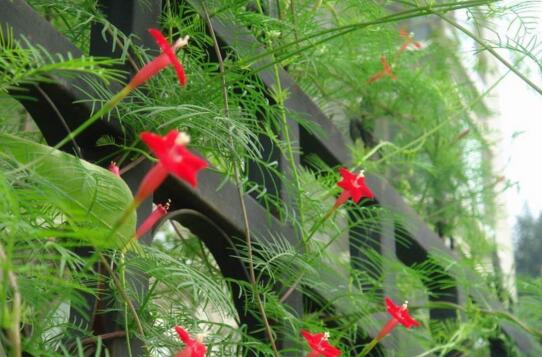
Cypress vine originates from the tropical rainforests of the Americas. It likes warm, humid environments and has a fairly high demand for water. Its drought tolerance is fairly average, so the watering strategy should alternate between dry and wet periods, and the soil must not be kept dry for long periods, otherwise growth will stall due to lack of water.
How to water cypress vine
Watering techniques mainly cover two aspects: the choice of water quality and the timing of watering. As for water quality, ordinary tap water will do, but the water must be clean and healthy, and its alkalinity must not be too high. Watering timing should be adjusted according to climate changes and growth stage.
Cypress vine watering techniques
1. March to May, September to November
Late spring and early summer are the stages when cypress vine grows fastest, and its water demand is fairly high. During this stage, watering is generally done once every 3-5 days, but in practice you need to judge by how well the water is being absorbed, because different regions have different climates and different rates of water absorption. Just make sure the soil stays slightly moist and never dry.
2. May to August
Summer has the highest temperatures of the year and is also the season with the highest water demand. At this time, how should cypress vine be watered? Usually watering is done once every 1-2 days. If temperatures are high, it may need watering once in the morning and once in the evening each day. At the same time, you can also mist the cypress vine's leaves appropriately to increase humidity and lower temperature.
3. December to February
This stage is when temperatures are lower, and most plants, including cypress vine, enter a state of stalled growth, which botanists often call dormancy or semi-dormancy. The need for water is fairly low, so watering is generally done once every 1-2 weeks. If the soil is not dry, you can skip watering.
Precautions for watering cypress vine
1. Each time you water, it is best to choose a time before 9 a.m. or after 3 p.m. The ideal time is early morning, because growth speeds up once the sun comes out. Watering at noon or in the evening is not recommended, because watering efficiency is lowest during those periods.
2. Except in winter, when watering in other seasons you must pay attention to one thing: there must be no standing water in the soil. Especially in summer when watering frequency is higher, you should avoid applying too much water at once. Standing water easily causes cypress vine's roots to rot, and in severe cases affects growth and health.
How to grow cypress vine: 6 routine care tips
How to grow cypress vine: gardeners preparing to grow cypress vine should first understand its growing habits, such as its requirements for environment, light, soil and watering. Below are 6 routine care methods for cypress vine.
How to grow cypress vine 1: Adapt to the environmentCypress vine originates from tropical regions, so it likes warmth, dislikes cold, and fears frost. When temperatures are low, growth becomes very slow.
The suitable growing temperature for cypress vine is 25-30°C. Five-pointed star flower is slightly more cold-tolerant, and in various places in the south it can overwinter outdoors. If the temperature is below 0°C, you can cover it with plastic film to protect it from the cold. In areas north of the Yangtze River, it must be brought indoors to overwinter, and room temperature must be kept above 5°C.
2. Soil requirementsCypress vine does not have very high soil requirements. Generally, loose and fertile soil is better, and you can usually choose fertile soil in a sunny spot.
3. Light requirementsCypress vine likes a sunny and warm environment. Proper thinning of vines and leaves not only helps ventilation and light penetration, but also gives the plant a graceful shape.
4. Fertilizer and water requirementsDuring cypress vine's growing period, its water demand is fairly high, so in spring it should be given one thorough watering every day. In addition, during the high-temperature heat of summer, besides giving the pot soil one thorough watering in the morning and one in the evening,
when the sunlight is especially strong around noon, you need to spray water on the pot surface and the ground around the pot, to promote vigorous growth and more flower bud formation and blooming. In autumn, restrict watering; in winter, just keep the pot soil slightly moist.
During cypress vine's growing period, sufficient base fertilizer is needed, with timely fertilization. Generally, apply standard liquid fertilizer once every half month.
5. DeadheadingAfter cypress vine's flowers fade, the spent blooms should be removed promptly so it does not set seed. This allows nutrients to be concentrated on producing new branches and flowers, extending the flowering period.
6. Pest and disease controlFor cypress vine leaf spot and powdery mildew, spray with 50% thiophanate wettable powder at 500 times dilution. For aphids and scarab beetles, spray with 10% chudongjing emulsifiable concentrate at 2500 times dilution.
How to water potted flowers
How to water potted flowers
Watering potted flowers is a basic task in growing them well. Water too little and the flowers will wither and die; water too much and too often and the flowers will rot at the roots and die.
(1) Principles to master in watering. Watering potted flowers involves many factors such as the flower's habits, growth stage and climate season, but the general principle is: do not water when not dry, water when dry; when you water, water thoroughly; alternate between dry and wet.
The "dry" in "do not water when not dry, water when dry" refers to the degree to which the surface layer of the pot soil is dry. It does not mean watering as soon as it is slightly dry, nor does it mean watering only after the soil has "dried completely." This point requires a certain amount of practical experience to grasp well.
"When you water, water thoroughly" means do not give "waist-high water": it looks as if water has been applied, but in fact the roots have not absorbed any water.
"Alternate between dry and wet" means that after watering a potted flower, there should be an interval of "drying" in between; you do not water as soon as you see the surface soil is slightly dry. For example, if you water in the morning and then water again in the evening or the next morning when you see the pot soil is dry, there is a "drying" process in between, and this is called "alternating between dry and wet."
(2) Distinguishing and judging whether the pot soil is dry or wet. To judge whether a potted flower needs watering, that is, to what degree the pot soil must be dry before watering is needed, experienced flower growers or horticultural workers generally use the following methods:
① Water by color: looking at color means looking at the color of the pot soil. When the pot soil appears grayish-white and the surface soil has already become dry, generally speaking the pot soil is dry, or half the pot soil is already dry. If it is midsummer, late spring or early autumn, watering is needed; if it is early spring, late autumn or winter, watering may not be necessary or only a little should be given. If the pot soil appears brownish-black and the surface soil is moist, generally speaking the pot soil is not dry and does not need watering. This is the most common and simplest judgment method.
② Water by pressing the soil: if visual observation is still not enough to decide, or the pot soil is covered with moss, then press the pot soil with your finger. If the pot soil feels fairly hard and dry, or if the surface soil crumbles into powder when pinched by hand, it shows the pot soil is already dry and needs watering. If your finger presses down and the pot soil feels soft and moist, or if the surface soil comes away in flakes or crumbs when pinched by hand, it shows the pot soil is moist and does not need watering.
(3) Water for watering flowers. Water can be divided into hard water and soft water according to its salt content. Hard water contains more salts such as calcium, magnesium, sodium and potassium. Using it to water flowers often causes brown spots on the leaves, affecting ornamental value. Therefore, soft water with fewer salts is better for watering flowers.
① Rainwater or snow water: among soft waters, rainwater or snow water is the most ideal, because rainwater or snow water is a nearly neutral water, contains no minerals, and has more air, making it very suitable for watering flowers. If rainwater or snow water can be used for a long time to water flowers, it can improve their ornamental value. In seasons without rainwater or snow water, you can use mild river water, lake water or pond water.
② Tap water: urban tap water has a relatively low temperature and may contain more chlorine. It is best not to use it directly to water flowers. It should first be stored in a bucket or vat for 1-2 days to let the chlorine volatilize before use.
(4) Determining watering amount. The watering amount for potted flowers should be determined according to factors such as the different habits of various flowers, their growth stages and seasonal climate changes, and must not be applied uniformly.
① Water according to different flower habits: for drought-loving flowers, such as the common epiphyllum, Christmas cactus, nopalxochia, snake plant, spider plant and clivia, and other succulent or fleshy-rooted flowers, whether in the growing period or dormant period, after the pot soil dries, do not water too much or too often. Generally, keeping it on the dry side is better, otherwise root rot is easily caused. We have previously said that the watering principle for cacti and Crassulaceae plants is to prefer dry over wet, and in winter they need to be completely dry. In addition, for orchids and chrysanthemums, what we emphasize is "dry orchids, wet chrysanthemums."
For moisture-loving flowers, such as the common monstera, taro, caladium and Guangdong evergreen, except during the dormant period, in other seasons watering can be slightly more and more frequent, and the pot soil is generally better kept on the moist side.
② Water according to the flower's growth stage: generally speaking, when flowers are growing new branches and leaves, they need somewhat more water. After the pot soil dries, watering can be slightly more generous, and it is usually better to keep the soil moist. But during flower bud differentiation, the pot soil should be on the dry side, because under photosynthesis this favors flower bud differentiation. If watered too much and the pot soil is often too wet, it will accelerate branch and leaf growth and affect flower bud differentiation.
For potted five-needle pines and similar plants, when growing new branches and leaves, especially just when the needles emerge, the pot soil should be on the dry side. Do not water too much, so that the emerging needles are short and dense. Otherwise, the needles will become long and sparse, affecting the ornamental value of the bonsai.
When flowers are blooming, the pot soil is generally better kept slightly moist. If the pot soil is on the dry side, it will shorten the flowering period and cause the flowers to wither and fade early.
During the young fruit stage of fruit trees, the pot soil should be on the dry side and must not be too wet, otherwise it will prompt dormant terminal buds and lateral buds on the branches to sprout and produce many new shoots, competing with the young fruit for nutrients and causing heavy fruit drop. When the fruit grows larger, the pot soil can be slightly moist; if the pot soil is too dry, the fruit will also shrivel and drop.
During the winter dormant period, unless the room is equipped with heating, the pot soil of flowers should generally be on the dry side. Usually do not water too much, and even more so do not water fully or thoroughly. This is because sunlight is weak at this time, temperatures are low, water evaporates slowly, and the flowers are in the dormant stage with low water requirements. If watered too much at this time and the pot soil remains wet for a long time, root rot is easily caused. The watering amount at this time can be less than half the watering amount during the growing period, so as to achieve the requirement of alternating between dry and wet. But note that the dormant or semi-dormant period of some flowers is not in winter but in the high-temperature period of summer, such as cyclamen. At this time, although it is the high-temperature season, watering should not be too much either, and the pot soil should generally be on the dry side. If watered too much and the pot soil is often too wet, it will also cause root rot and withered leaves.
In addition, for seedlings grown from seed, the watering amount should also differ at different growth stages. Generally speaking, before the seeds germinate, the pot soil should be somewhat moist. After germination and emergence, that is, the seedling stage, the watering amount should be reduced and the pot soil kept on the dry side, otherwise leggy growth will occur. Therefore, during the seedling stage, soil moisture should be kept relatively low. Only in this way can leggy growth be prevented and the seedlings grow relatively sturdy. This measure is called "hardening the seedlings."
(5) Watering time. In summer, late spring or early autumn, watering should be done in the morning or evening; in winter, early spring or late autumn, it can be done around noon. This keeps water temperature and soil temperature relatively consistent, preventing sudden cold or heat from stimulating the roots and harming flower growth and development. Potted flowers indoors or in greenhouses can also follow the above times. In cold winter, cold water can be left indoors for some time before being poured into the pot. But note that in summer, well water or cold water must not be used directly to water flowers, otherwise the flowers will develop "physiological drought."
A great difference between air temperature and water temperature can cause "physiological drought" in plants. This is because at noon in summer, water evaporates quickly, and the flower's root system needs to continuously absorb water from the soil to replenish the loss from leaf transpiration. If cold water is poured at this time, although the pot soil gains water, the sudden drop in soil temperature stimulates the root hairs with low temperature, which immediately hinders normal water absorption. At this time, because the flower's body is in no way prepared, water supply and demand lose balance, producing "physiological drought." This phenomenon is especially obvious in herbaceous flowers, such as geranium, cypress vine and China aster.
(6) Watering methods
① Watering: you must neither give "bottom-nest water" (dry on top, wet below) nor "waist-high water" (wet on top, dry below).
② Spot watering: finding individual potted flowers that lack water and watering them. This method is generally used during high temperatures in summer. In addition, during the indoor maintenance stage of flowers in winter, the spot watering method should also be adopted, rather than watering everything.
③ Withholding water: consecutive rainy days or usually too much watering will cause oxygen deficiency in the pot soil, leading to partial root rot and causing leaves to turn yellow or drop. At this time, watering should be stopped and the soil loosened. This is called "withholding water," and watering resumes only after the pot soil dries.
④ Free watering: during the peak growing season, increase the watering amount along with topdressing, and even temporary standing water in the pot does no harm, to meet the flower's rapid growth needs.
⑤ Restricting water: this means controlling the number of waterings and the watering amount. "Restricting water" is generally carried out in the following situations: first, to control vegetative growth and promote flower bud differentiation. For example, plum blossom in July, kumquat in mid-June, and grape at the budding or flower bud differentiation stage need water restriction in addition to extra phosphorus and potassium fertilizer. Second, to make leaves smaller and improve the ornamental value of bonsai. For example, five-needle pine and black pine need water restriction during the needle growth period in May-June. Third, to improve the cold resistance of greenhouse flowers, the watering amount should be reduced throughout the overwintering period. Fourth, to control height and promote sturdy plant growth and root growth, such as chrysanthemums needing water restriction in the late vegetative growth stage. Fifth, when repotting and changing soil, if too much old soil is removed, it will inevitably damage a large number of roots and create many wounds. Some orchids and pine and cypress bonsai that are not tolerant of wet conditions often rot at the roots and die after potting if the pot soil is watered thoroughly. Therefore, when potting, use moist cultivation soil, do not water, and only mist the plant. Water again after new buds sprout.
⑥ Drop watering: when the leaves of a potted flower wilt, move the potted flower to a cool place, first give a small amount of water to help it recover, then water thoroughly. This kind of watering is called "drop watering," or "revival water."
⑦ Return water: also called "returning water," this means giving one relatively large watering on the second day after fertilizing. Its purpose is to dilute the applied fertilizer and let it seep around the deeper roots, so it is more easily absorbed by the plant. At the same time, it washes away the fertilizer liquid that contaminated the branches and leaves during fertilizing, to avoid fertilizer damage.
⑧ Misting: in dry weather and hot summer seasons, frequently spraying clear water on branches and leaves and sprinkling water on the ground around the flower pot can effectively wash away dust on stems and leaves, enhance leaf photosynthesis, and increase air humidity, lower air temperature, avoid scorching of tender leaves and drying of leaf edges, thereby keeping branches and leaves fresh and green and improving ornamental value. After summer rain suddenly clears or on stuffy evenings, timely misting can play a role in cooling and preventing rot.
For some flowers that fear heat (such as cyclamen and fuchsia) and flowers that like shade and humidity (such as camellia, azalea and orchid), frequently misting the leaves in summer is very beneficial to their growth. The amount of misting on flower leaves varies according to flower type. Seedlings and delicate flowers, as well as newly potted cuttings that have not yet rooted, should all be misted somewhat more; some flowers in Araceae and Bromeliaceae need frequent misting.
In winter, misting should use water close to room temperature to wash the leaf surface, promptly rinsing away dust accumulated on the leaves, which can keep the plant fresh. But misting should not be too frequent; generally, mist once every 1-2 weeks. If misting is too much and too frequent at this time, it will increase pot soil humidity and easily cause root rot in dormant flowers.
But note that for flowers such as gloxinia, calceolaria, African violet, cactus and fuchsia, frequent misting will cause the leaves and fleshy stems to rot, so it is not suitable to mist their leaves. The leaf buds and flower buds on the tuber of cyclamen, and the flower buds in the leaf rosette of African daisy, all fear water and moisture, and rot easily if wet for too long. The pseudobulb in the center of a clivia's leaf rosette also fears water getting in. For fully open flowers, do not mist too much either, to avoid petal mildew or affecting fertilization and reducing seed-setting and fruiting rates.