How to prune Pachystachys lutea? Spring or autumn is best
If growers follow the correct cultivation methods for Pachystachys lutea, it grows very quickly; for example, one month after pinching, it will sprout new branches and produce flower buds that open into small flowers, and pinching is one of the commonly used pruning methods. So how do you prune Pachystachys lutea? Come and take a look at the pruning methods for Pachystachys lutea with the editor.
How to prune Pachystachys lutea
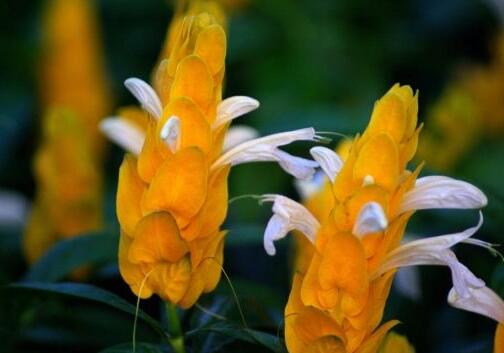
There are two main reasons for pruning Pachystachys lutea during care. The first reason is that pruning can make the plant's shape more attractive, keeping its height balanced, the branches and leaves appropriately dense, and preventing the lower part from becoming bare; the second reason is that pruning can promote the formation of new shoots and make it branch more, so pruning is very necessary.
After confirming the necessity of pruning, we need to understand how to prune Pachystachys lutea, such as the pruning time, pruning methods, and so on, because sometimes pruning lets it quickly resume growth, while at other times pruning is not suitable. Below, the editor will introduce this in detail from the two aspects of timing and method.
Pruning methods for Pachystachys lutea
1. When is the best time to prune Pachystachys lutea
Under normal circumstances, pruning is best done in spring and autumn, because after pruning at this time it will quickly grow and sprout new shoots, so most pruning is concentrated in these two seasons. In addition, some minor pruning can be done according to the growth condition of Pachystachys lutea; for example, if yellow leaves or diseased leaves appear in summer or winter, pruning can also be carried out.
2. Pruning techniques
1. Pinching during the seedling stage
For young seedlings that survive after cuttings, when they grow to a height of about 6 cm, the first pinching is needed. After that, provide sufficient light, fertilizer, and water. When the side branches grow to about 4 cm, carry out the second pinching. In this way, it will sprout branches. Generally, during the seedling stage there will be 2-3 pinchings.
2. Pruning during the growing season
During the vigorous growth period, it needs to be pruned once every spring. At this time, how should Pachystachys lutea be pruned? At this time, heavy pruning is generally used, and it is often carried out together with changing the potting soil. The specific method is to cut from one-half of the plant's height, keeping the base and the lower branches and leaves, and cutting off everything above.
When repotting, take the plant out of the potting soil, then clear away the old soil and observe the growth of the roots. Cut off some old and rotten fibrous roots, then keep about 10 cm of roots and replant, which can make root growth and development better and also prevent pests and diseases.
3. Daily pruning
In daily care and management, pruning is not needed. Only when yellow leaves or diseased leaves appear on the plant do they need to be removed, because if diseased leaves are not removed in time, pathogens may spread to other leaves with wind and rain, causing enormous harm.
Pachystachys lutea Pachystachys lutea illustrated guide: how to grow Pachystachys lutea / how to propagate Pachystachys lutea
Pachystachys lutea profilePachystachys lutea Pachystachys lutea
Cultivation methods and precautions for Pachystachys lutea Introduction to Pachystachys lutea
Pachystachys lutea (scientific name: Pachystachys lutea), also known as yellow shrimp flower, small shrimp flower, shrimp flower, golden shrimp plant, coral acanthus, and gold-wrapped silver, is native to Mexico, Peru, and Guyana in South America. There are two varieties; one has purple-brown bracts, and the other has yellow bracts. The one with yellow bracts is more common, and the flower shape is divided into upper and lower lips, resembling lips in appearance. It is an evergreen subshrub in the Acanthaceae family, with swollen stem nodes, opposite leaves, and long elliptical leaves with obvious veins. It gets its name because the yellow bracts of the terminal spike are layered one upon another and extend white small flowers, resembling a shrimp body. Pachystachys lutea has a long flowering period, from summer to winter, and the flower spikes can last for several weeks. Wild small shrimp flowers can grow to 2 to 3 chi tall, while those generally grown in homes are mostly no more than 1 chi tall.
Morphological characteristics of Pachystachys lutea
There are more than 200 species of this plant. Aphelandra squarrosa can reach 1 m, while potted plants are only 15-20 cm. Leaves are opposite, ovate or long ovate, acute at the tip, leathery, with the midrib and pinnate lateral veins yellow-white. It flowers in summer and autumn, terminally, with golden-yellow flower buds and a long flowering period; both flowers and leaves are beautiful. Aphelandra sinclairiana grows 50-80 cm tall, 15-30 cm as a potted plant. Leaves are long elliptical or lanceolate, with silver-white in the middle, flowering in summer and autumn, terminally, with red flower buds and a long flowering period. This type of plant has strong shade tolerance; its flowers and foliage are elegant and pleasant. The stems are much branched, upright, and gradually become woody at the base. Leaves are opposite, lanceolate, with distinct vein texture, wrinkled and glossy leaf surfaces, and wavy leaf margins. The inflorescence is borne at the top of the stem, composed of overlapping neat golden-yellow heart-shaped bracts, forming a four-angled shape, 10-15 cm long. The flowers are milky white, labiate, about 5 cm long, opening successively from the base of the inflorescence upward, and the golden-yellow bracts can remain for 2-3 months. The flowering period is very long, beginning in late spring and continuing until November, with midsummer being the peak flowering period.
Ecological habits of Pachystachys lutea
Pachystachys lutea is native to Peru and Mexico. It likes high temperature, high humidity, and a sunny environment, is relatively shade-tolerant, and grows suitably at temperatures of 18 and 25°C. In winter, it must be kept above 5°C to overwinter safely. It is suitable for planting in fertile, well-drained light loam.
Landscape uses of Pachystachys lutea
Because of its long flowering period and high ornamental value, after being introduced in the 1980s it quickly became popular among flower growers. Pachystachys lutea has neat clumps, bright yellow flowers, and a long flowering period. It is suitable for decorating conference venues, halls, rooms, and balconies. In the south it is used to arrange flower beds. In warm regions it can be planted in gardens, while in the north it is grown as a greenhouse potted flower, and it is an excellent potted flower variety.
Distribution areas of Pachystachys lutea
Native to tropical America. Central subtropical evergreen and deciduous broad-leaved forest region (main cities: Wuhan, Shashi, Huangshi, Yichang, Nanchang, Jingdezhen, Jiujiang, Ji'an, Jinggangshan, Ganzhou, Shanghai, Changsha, Zhuzhou, Yueyang, Huaihua, Jishou, Changde, Xiangtan, Hengyang, Shaoyang, Guilin, Wenzhou, Jinhua, Ningbo, Chongqing, Chengdu, Dujiangyan, Mianyang, Neijiang, Leshan, Zigong, Panzhihua, Guiyang, Zunyi, Liupanshui, Anshun, Kunming, Dali).
South subtropical evergreen broad-leaved forest region (main cities: Fuzhou, Xiamen, Quanzhou, Zhangzhou, Guangzhou, Foshan, Shunde, Dongguan, Huizhou, Shantou, Taipei, Liuzhou, Guiping, Gejiu).
Tropical monsoon forest and rainforest region (main cities: Haikou, Sanya, Qionghai, Kaohsiung, Tainan, Shenzhen, Zhanjiang, Zhongshan, Zhuhai, Macao, China, Hong Kong, China, Nanning, Qinzhou, Beihai, Maoming, Jinghong).
Propagation methods of Pachystachys lutea
Pachystachys lutea is mainly propagated by cuttings, which can be done during the growing season. The best time for cuttings is June. Take about 5 cm long tender shoots from an old plant, insert them into sand or vermiculite, keep moist, and they will root in about half a month. If cuttings are taken in June, they can root in one week, and water cuttings are also possible. When potting rooted young cuttings, use 2 parts pond mud, 1 part rice husk ash, and add bean cake powder or chicken manure as base fertilizer. The seedlings can only gradually be exposed to sunlight after one week. For surviving young seedlings, pinching should be carried out. The first pinching keeps 1-2 nodes; when the new shoots grow 2-3 pairs of leaves, pinch again leaving one pair of leaves. After stopping pinching, they can bloom in 2-3 months. To prevent excessively long internodes and excessively tall plants after stopping pinching, irrigate the roots with 2000 ppm daminozide or 500 ppm paclobutrazol.
Pachystachys lutea is commonly propagated by cuttings. This can be done throughout the year, with June-July being best. Cuttings should be selected from robust branches with short internodes, remove the lower leaves, keep the top leaves, 8-10 cm long, insert into plain sand, shade and keep moist, and they will root after 2 weeks. Cuttings taken in the same year can bloom in the same year.
During the growth period, except for slight shading in midsummer, sufficient light should be given, which can not only make the plant grow stronger but also reduce diseases. Although this flower can also grow fairly well in a semi-shaded environment, if it is too shaded, it will become leggy, and flowering will be delayed and reduced. Pachystachys lutea likes a ventilated environment, so plants should not be placed too densely at ordinary times, so as not to affect air circulation.
In summer, water before the potting soil dries out completely, and frequently spray water on the plant and around it to maintain relatively high environmental humidity. Fertilizer should mainly be cake fertilizer water or diluted human waste, applied once every 10-15 days. During the flowering period, supplement with phosphorus-based compound fertilizer to meet the plant's fertilizer needs as it continuously forms buds and blooms.
In winter, the overwintering temperature should be kept above 10°C, otherwise the leaves easily turn yellow and fall. If it can be kept above 15°C, it can also bloom in winter. In the spring of the following year, for old plants over 2 years old whose stems have become semi-lignified and whose growth has weakened, cutting propagation should be carried out for renewal.
Cultivation techniques for Pachystachys lutea: scientific cultivation
First, scientific propagation. Its propagation mainly uses the cutting method. You can cut a 5 cm section from the middle of a branch with a pair of axillary buds, insert it into vermiculite or plain sand substrate, keep the substrate moist, and in about 3 weeks it will root and sprout, and after one month it can be potted.
Second, soil mixing and potting. For potting, choose loose, fertile, well-drained and breathable slightly acidic soil. Generally, a nutrient soil can be prepared by mixing leaf mold with 1/3 river sand and adding a small amount of bone meal; clay soil and sandy soil are not suitable for its growth and development. After potting and recovering, when it grows to 8 cm tall, pinch it to promote branching. When the branches grow to about 6 cm-8 cm, carry out a second pinching, so the plant shape will be uniform and flowering will be neat, thereby improving ornamental value.
Third, regulating temperature and light. Its suitable growth temperature is about 18°C-25°C. Above 30°C or below 10°C is unfavorable for its growth. Low temperatures easily cause leaf drop, and over time can lead to root rot and, in severe cases, plant wilt and death. Therefore, for home cultivation in the north, if you want it to continue blooming in winter, it should be placed in a greenhouse, with the daytime room temperature kept above 18°C and the nighttime temperature also maintained above 10°C, while giving appropriate fertilizer and water to achieve the goal. Pachystachys lutea relatively likes sunlight. In northern cultivation, in spring and autumn it should be placed outdoors for care, generally without shading, but around noon in summer it needs appropriate shading. If exposed to scorching sun, the leaves easily wither and the leaf margins become scorched. In winter, placing it in a bright place in a greenhouse will keep the leaves fresh green and glossy, the plant compact, the inflorescence large, and the color brilliant.
Fourth, reasonable fertilizer and water. Pachystachys lutea likes moisture. In summer and dry seasons, attention should often be paid to increasing the air humidity around the flowerpot so the plant can grow vigorously. Pachystachys lutea relatively likes fertilizer. During the growing season, generally apply a complete-element liquid fertilizer once every 7-10 days, such as "Chunquan 883", Huimanfeng, and other humic acid liquid fertilizers, or spray with urea + potassium dihydrogen phosphate diluted in water; during the bud stage, spray a 0.2% potassium dihydrogen phosphate solution on the leaves, which helps produce more and brighter flowers. If nutrients are insufficient, the plant grows weakly, with small inflorescences and few flowers; if too much nitrogen fertilizer is applied, the stem nodes become slender and the number of flowers decreases. Pachystachys lutea has luxuriant branches and leaves, large inflorescences, and many flowers, and needs more water, so the potting soil should often be kept moist, but water accumulation in the pot should be avoided. During flower bud differentiation, attention should be paid to appropriately controlling watering, weakening vegetative growth, so as to facilitate nutrient accumulation and promote flower bud differentiation.
Care and management: planting
The potting soil should be fertile, loose, and well aerated, and heavy clay soil should be avoided. A culture soil can be made by evenly mixing 5 parts leaf mold, 3 parts garden soil, 1 part river sand, and 1 part decomposed organic fertilizer.
Temperature
Its suitable growth temperature is 20°C to 28°C. In summer, when the temperature reaches above 30°C, create a relatively cool environment for it by building shade and spraying the surroundings with water. During overwintering, it requires the indoor temperature not to be lower than 10°C, otherwise the plant's leaves are very likely to all fall off; below 4°C to 5°C it will freeze to death. For plants placed indoors in winter, it is best to use an electric heater to raise the temperature. If low temperatures last too long, it can also cause root rot and plant death. For greenhouse cultivation, if you want it to bloom in winter, the daytime temperature should be kept at about 25°C, and the nighttime temperature should be kept above 15°C.
Light
In spring and autumn it can receive full light. In midsummer, shade 30% to 40%, or maintain about half a day of light in the morning and evening, but in winter it is best placed in front of a south-facing window that is warm and has sufficient light.
Pay attention to appropriate light; it cannot be exposed to scorching sun or go without light for a long time, otherwise it is unfavorable for its growth and flowering. In spring, autumn, and winter, letting the plant receive sufficient light can make it grow stronger and reduce diseases. In an overly shaded environment it will become leggy, and flowering will be delayed and reduced. Indoors, it should be placed in front of a window with sufficient light. After the beginning of summer, it should be placed in a semi-shaded place for care, especially young seedlings, which should avoid direct strong light, and attention should be paid to ventilation.
Water
During the growing season, not only should the potting soil always be kept moist, but relatively high relative air humidity is also required; however, there must be no water accumulation in the potting soil. In spring and autumn, water once every 1 to 2 days. In summer, water once before 10 a.m. or after 3 p.m. each day, and appropriately increase the frequency of spraying water on the leaves. In winter, just keep the potting soil slightly moist. During the plum rain season, prevent water accumulation and root rot. During the growing period, water sufficiently and maintain about 80% humidity in the potting soil, but also prevent water accumulation in the pot. In summer, water before the potting soil dries out completely, and frequently spray water on the plant and around it to maintain relatively high environmental humidity.
Soil
It can be prepared by mixing 5 parts leaf mold, 3 parts garden soil, 1 part river sand, and 1 part decomposed organic fertilizer. During the growing season, loosen the soil once every half month, and before taking it outdoors each spring, repot and change the soil once.
Fertilizer
During the growing season, apply diluted organic fertilizer once every half month. After flower buds appear, add 0.2% potassium dihydrogen phosphate to the diluted fertilizer water applied, to meet its nutrient needs for continuous long-term flowering. When the ambient temperature is above 35°C or below 15°C, fertilization should be stopped. When applying organic fertilizer, do not splash the fertilizer liquid onto the leaves, so as to avoid leaf diseases. For potted plants in northern regions, in order to avoid leaf yellowing, 0.1% ferrous sulfate powder can also be added irregularly to the fertilizer liquid applied, which can ensure the leaves are dark green and lively and can also prevent physiological yellowing of the plant. Pachystachys lutea likes fertilizer and is tolerant of fertilizer. During the growing period, apply liquid fertilizer once every half month, but do not apply excessive nitrogen fertilizer, otherwise the stem nodes will become slender and the number of flowers will decrease. During the flowering period, apply phosphorus and potassium fertilizer twice more to meet the plant's fertilizer needs as it continuously forms buds and blooms. Insufficient fertilizer is often the main reason for poor growth and few and small flowers in Pachystachys lutea.
How can you make Pachystachys lutea bloom in all four seasons?
The inflorescence is densely covered with golden-yellow flower bracts and pure white small flowers, extremely beautiful. As long as it is cultivated properly, with sufficient light and a temperature above 15 degrees, it will bloom continuously throughout the year.
For potting, choose loose, fertile, well-drained and breathable slightly acidic soil. Generally, a culture soil can be prepared by mixing leaf mold with 1/3 river sand and adding a small amount of bone meal. Clay soil and sandy soil are both unsuitable for its growth and development. Pachystachys lutea relatively likes sunlight. When cultivated in northern regions, place it outdoors for care in spring and autumn, generally without shading, but around noon in summer it needs appropriate shading. In winter, placing it in a bright indoor place keeps the leaves fresh green and glossy, the plant compact, the inflorescence large, and the color brilliant. If exposed to scorching sun, the leaves easily turn yellow and the leaf margins become scorched.
Pachystachys lutea likes moisture. In summer and dry seasons, attention should often be paid to increasing the air humidity around the flowerpot so the plant can grow vigorously. Pachystachys lutea relatively likes fertilizer. During the growing season, generally apply a complete-element liquid fertilizer once every 7-10 days. During the bud stage, spray a 0.2% potassium dihydrogen phosphate solution on the leaves, which helps produce more and brighter flowers. If nutrients are insufficient, the plant grows weakly, with small inflorescences and few flowers. If too much nitrogen fertilizer is applied, the stem nodes become slender and the number of flowers decreases. Pachystachys lutea has luxuriant branches and leaves, large inflorescences, and many flowers, and needs more water, so the potting soil should often be kept moist, but water accumulation in the pot should be avoided. During flower bud differentiation, attention should be paid to appropriately controlling watering, weakening vegetative growth, so as to facilitate nutrient accumulation and promote flower bud differentiation. The suitable growth temperature is about 18-25 degrees. Above 30 degrees or below 10 degrees is unfavorable for its growth. Low temperatures easily cause leaf drop, and over time can lead to root rot and, in severe cases, plant wilt and death.
Therefore, for home cultivation, if you want it to continue blooming in winter, the daytime room temperature needs to be kept above 18 degrees and the nighttime temperature also maintained above 15 degrees, while giving appropriate water and fertilizer conditions, to achieve the goal.
Pruning methods
For newly rooted young cuttings, attention should be paid to pinching. Pinch once when the seedling is about 6 cm tall, and pinch again when the branches grow to about 4 cm, to promote branching. One month after pinching, it can form buds and bloom on the new branches. Every spring, pruning should be carried out together with repotting, generally cutting off about 1/2 of the plant height. This can not only control height and promote branching, but also prevent the lower leaves from becoming bare and affecting ornamental value.
Whenever new shoots appear, new inflorescences are produced at their tips, so timely pinching and pruning are very important for promoting abundant flowering in Pachystachys lutea. Generally starting from the seedling stage, pinch 2-3 times to promote more branching and also control plant height. In winter, prune the plant and keep it indoors for care. In spring, prune together with repotting, which can both reduce plant height and promote more branching. After the beginning of autumn, the plant begins to resume growth. At this time, branch pruning and shaping are needed, while strengthening light and increasing fertilizer and water, to ensure the plant is well-proportioned and full, with luxuriant leaves and abundant flowers.
Pest and disease control of Pachystachys lutea
It is susceptible to damage from whiteflies, red spider mites, and aphids, and should be controlled in time.
During the flowering period and in winter greenhouses, Pachystachys lutea often develops small black mold spots on the flowers due to poor ventilation. This is mainly the excrement of mealybugs. The nymphs and adults of mealybugs gather at the base of the bracts and in the leaf axils. When adult density is high, dense black spots appear, causing poor flowering and gradual rotting. In addition, red wax scale and aphids can also occur, directly affecting growth and ornamental value. Once discovered, spray continuously with a 1500-fold solution of 40% omethoate.
Pachystachys lutea pictures
Is Pachystachys lutea poisonous? Planting methods and care management of Pachystachys lutea
Pachystachys lutea is also known as yellow shrimp flower, small shrimp flower, shrimp flower, and so on. It is native to Mexico, Peru, and Guyana in South America. Pachystachys lutea has a long flowering period, from summer to winter, and the flower spikes can last for several weeks, making it very suitable for home cultivation. Regarding the question of whether Pachystachys lutea is poisonous, everyone can rest assured that Pachystachys lutea is not poisonous and can be planted with peace of mind. Below, let us learn about related information on Pachystachys lutea together.
Introduction to Pachystachys lutea
Pachystachys lutea (scientific name: Pachystachys lutea), also known as yellow shrimp flower, small shrimp flower, shrimp flower, golden shrimp plant, coral acanthus, and gold-wrapped silver, is native to Mexico, Peru, and Guyana in South America. There are two varieties; one has purple-brown bracts, and the other has yellow bracts.
The one with yellow bracts is more common, and the flower shape is divided into upper and lower lips, resembling lips in appearance. It is an evergreen subshrub in the Acanthaceae family, with swollen stem nodes, opposite leaves, and long elliptical leaves with obvious veins. It gets its name because the yellow bracts of the terminal spike are layered one upon another and extend white small flowers, resembling a shrimp body. Pachystachys lutea has a long flowering period, from summer to winter, and the flower spikes can last for several weeks. Wild small shrimp flowers can grow to 2 to 3 chi tall, while those generally grown in homes are mostly no more than 1 chi tall.
1. Morphological characteristics
Aphelandra squarrosa can reach 1 m, while potted plants are only 15-20 cm. Leaves are opposite, ovate or long ovate, acute at the tip, leathery, with the midrib and pinnate lateral veins yellow-white. It flowers in summer and autumn, terminally, with golden-yellow flower buds and a long flowering period; both flowers and leaves are beautiful.
Aphelandra sinclairiana grows 50-80 cm tall, 15-30 cm as a potted plant. Leaves are long elliptical or lanceolate, with silver-white in the middle, flowering in summer and autumn, terminally, with red flower buds and a long flowering period. This type of plant has strong shade tolerance; its flowers and foliage are elegant and pleasant.
Pachystachys lutea has much-branched, upright stems, gradually becoming woody at the base. Leaves are opposite, lanceolate, with distinct vein texture, wrinkled and glossy leaf surfaces, and wavy leaf margins. The inflorescence is borne at the top of the stem, composed of overlapping neat golden-yellow heart-shaped bracts, forming a four-angled shape, 10-15 cm long. The flowers are milky white, labiate, about 5 cm long, opening successively from the base of the inflorescence upward, and the golden-yellow bracts can remain for 2-3 months.
Pachystachys lutea has a very long flowering period, beginning in late spring and continuing until November, with midsummer being the peak flowering period.
2. Ecological habits
Pachystachys lutea is native to Peru and Mexico. It likes high temperature, high humidity, and a sunny environment, is relatively shade-tolerant, and grows suitably at temperatures of 18 and 25°C. In winter, it must be kept above 5°C to overwinter safely. It is suitable for planting in fertile, well-drained light loam.
Propagation methods of Pachystachys lutea
Pachystachys lutea is mainly propagated by cuttings, which can be done during the growing season. The best time for cuttings is June. Take about 5 cm long tender shoots from an old plant, insert them into sand or vermiculite, keep moist, and they will root in about half a month. If cuttings are taken in June, they can root in one week, and water cuttings are also possible. When potting rooted young cuttings, use 2 parts pond mud, 1 part rice husk ash, and add bean cake powder or chicken manure as base fertilizer. The seedlings can only gradually be exposed to sunlight after one week. For surviving young seedlings, pinching should be carried out. The first pinching keeps 1-2 nodes; when the new shoots grow 2-3 pairs of leaves, pinch again leaving one pair of leaves. After stopping pinching, they can bloom in 2-3 months. To prevent excessively long internodes and excessively tall plants after stopping pinching, irrigate the roots with 2000 ppm daminozide or 500 ppm paclobutrazol.
Pachystachys lutea is commonly propagated by cuttings. This can be done throughout the year, with June-July being best. Cuttings should be selected from robust branches with short internodes, remove the lower leaves, keep the top leaves, 8-10 cm long, insert into plain sand, shade and keep moist, and they will root after 2 weeks. Cuttings taken in the same year can bloom in the same year.
During the growth period, except for slight shading in midsummer, sufficient light should be given, which can not only make the plant grow stronger but also reduce diseases. Although this flower can also grow fairly well in a semi-shaded environment, if it is too shaded, it will become leggy, and flowering will be delayed and reduced. Pachystachys lutea likes a ventilated environment, so plants should not be placed too densely at ordinary times, so as not to affect air circulation.
In summer, water before the potting soil dries out completely, and frequently spray water on the plant and around it to maintain relatively high environmental humidity. Fertilizer should mainly be cake fertilizer water or diluted human waste, applied once every 10-15 days. During the flowering period, supplement with phosphorus-based compound fertilizer to meet the plant's fertilizer needs as it continuously forms buds and blooms.
In winter, the overwintering temperature should be kept above 10°C, otherwise the leaves easily turn yellow and fall. If it can be kept above 15°C, it can also bloom in winter. In the spring of the following year, for old plants over 2 years old whose stems have become semi-lignified and whose growth has weakened, cutting propagation should be carried out for renewal.
Cultivation techniques for Pachystachys lutea: care management
1. Planting
The potting soil should be fertile, loose, and well aerated, and heavy clay soil should be avoided. A culture soil can be made by evenly mixing 5 parts leaf mold, 3 parts garden soil, 1 part river sand, and 1 part decomposed organic fertilizer.
2. Temperature
Its suitable growth temperature is 20°C to 28°C. In summer, when the temperature reaches above 30°C, create a relatively cool environment for it by building shade and spraying the surroundings with water. During overwintering, it requires the indoor temperature not to be lower than 10°C, otherwise the plant's leaves are very likely to all fall off; below 4°C to 5°C it will freeze to death. For plants placed indoors in winter, it is best to use an electric heater to raise the temperature. If low temperatures last too long, it can also cause root rot and plant death. For greenhouse cultivation, if you want it to bloom in winter, the daytime temperature should be kept at about 25°C, and the nighttime temperature should be kept above 15°C.
3. Light
In spring and autumn it can receive full light. In midsummer, shade 30% to 40%, or maintain about half a day of light in the morning and evening, but in winter it is best placed in front of a south-facing window that is warm and has sufficient light.
Pay attention to appropriate light; it cannot be exposed to scorching sun or go without light for a long time, otherwise it is unfavorable for its growth and flowering. In spring, autumn, and winter, letting the plant receive sufficient light can make it grow stronger and reduce diseases. In an overly shaded environment it will become leggy, and flowering will be delayed and reduced. Indoors, it should be placed in front of a window with sufficient light. After the beginning of summer, it should be placed in a semi-shaded place for care, especially young seedlings, which should avoid direct strong light, and attention should be paid to ventilation.
4. Water
During the growing season, not only should the potting soil always be kept moist, but relatively high relative air humidity is also required; however, there must be no water accumulation in the potting soil. In spring and autumn, water once every 1 to 2 days. In summer, water once before 10 a.m. or after 3 p.m. each day, and appropriately increase the frequency of spraying water on the leaves. In winter, just keep the potting soil slightly moist. During the plum rain season, prevent water accumulation and root rot. During the growing period, water sufficiently and maintain about 80% humidity in the potting soil, but also prevent water accumulation in the pot. In summer, water before the potting soil dries out completely, and frequently spray water on the plant and around it to maintain relatively high environmental humidity.
5. Soil
It can be prepared by mixing 5 parts leaf mold, 3 parts garden soil, 1 part river sand, and 1 part decomposed organic fertilizer. During the growing season, loosen the soil once every half month, and before taking it outdoors each spring, repot and change the soil once.
6. Fertilizer
During the growing season, apply diluted organic fertilizer once every half month. After flower buds appear, add 0.2% potassium dihydrogen phosphate to the diluted fertilizer water applied, to meet its nutrient needs for continuous long-term flowering. When the ambient temperature is above 35°C or below 15°C, fertilization should be stopped. When applying organic fertilizer, do not splash the fertilizer liquid onto the leaves, so as to avoid leaf diseases. For potted plants in northern regions, in order to avoid leaf yellowing, 0.1% ferrous sulfate powder can also be added irregularly to the fertilizer liquid applied, which can ensure the leaves are dark green and lively and can also prevent physiological yellowing of the plant. Pachystachys lutea likes fertilizer and is tolerant of fertilizer. During the growing period, apply liquid fertilizer once every half month, but do not apply excessive nitrogen fertilizer, otherwise the stem nodes will become slender and the number of flowers will decrease. During the flowering period, apply phosphorus and potassium fertilizer twice more to meet the plant's fertilizer needs as it continuously forms buds and blooms. Insufficient fertilizer is often the main reason for poor growth and few and small flowers in Pachystachys lutea.
7. Pruning methods
For newly rooted young cuttings, attention should be paid to pinching. Pinch once when the seedling is about 6 cm tall, and pinch again when the branches grow to about 4 cm, to promote branching. One month after pinching, it can form buds and bloom on the new branches. Every spring, pruning should be carried out together with repotting, generally cutting off about 1/2 of the plant height. This can not only control height and promote branching, but also prevent the lower leaves from becoming bare and affecting ornamental value.
Whenever new shoots appear, new inflorescences are produced at their tips, so timely pinching and pruning are very important for promoting abundant flowering in Pachystachys lutea. Generally starting from the seedling stage, pinch 2-3 times to promote more branching and also control plant height. In winter, prune the plant and keep it indoors for care. In spring, prune together with repotting, which can both reduce plant height and promote more branching. After the beginning of autumn, the plant begins to resume growth. At this time, branch pruning and shaping are needed, while strengthening light and increasing fertilizer and water, to ensure the plant is well-proportioned and full, with luxuriant leaves and abundant flowers.
8. Scientific cultivation
First, scientific propagation. Its propagation mainly uses the cutting method. You can cut a 5 cm section from the middle of a branch with a pair of axillary buds, insert it into vermiculite or plain sand substrate, keep the substrate moist, and in about 3 weeks it will root and sprout, and after one month it can be potted.
Second, soil mixing and potting. For potting, choose loose, fertile, well-drained and breathable slightly acidic soil. Generally, a nutrient soil can be prepared by mixing leaf mold with 1/3 river sand and adding a small amount of bone meal; clay soil and sandy soil are not suitable for its growth and development. After potting and recovering, when it grows to 8 cm tall, pinch it to promote branching. When the branches grow to about 6 cm—8 cm, carry out a second pinching, so the plant shape will be uniform and flowering will be neat, thereby improving ornamental value.
Third, regulating temperature and light. Its suitable growth temperature is about 18°C—25°C. Above 30°C or below 10°C is unfavorable for its growth. Low temperatures easily cause leaf drop, and over time can lead to root rot and, in severe cases, plant wilt and death. Therefore, for home cultivation in the north, if you want it to continue blooming in winter, it should be placed in a greenhouse, with the daytime room temperature kept above 18°C and the nighttime temperature also maintained above 10°C, while giving appropriate fertilizer and water to achieve the goal. Pachystachys lutea relatively likes sunlight. In northern cultivation, in spring and autumn it should be placed outdoors for care, generally without shading, but around noon in summer it needs appropriate shading. If exposed to scorching sun, the leaves easily wither and the leaf margins become scorched. In winter, placing it in a bright place in a greenhouse will keep the leaves fresh green and glossy, the plant compact, the inflorescence large, and the color brilliant.
Fourth, reasonable fertilizer and water. Pachystachys lutea likes moisture. In summer and dry seasons, attention should often be paid to increasing the air humidity around the flowerpot so the plant can grow vigorously. Pachystachys lutea relatively likes fertilizer. During the growing season, generally apply a complete-element liquid fertilizer once every 7 days—10 days, such as "Chunquan 883", Huimanfeng, and other humic acid liquid fertilizers, or spray with urea + potassium dihydrogen phosphate diluted in water; during the bud stage, spray a 0.2% potassium dihydrogen phosphate solution on the leaves, which helps produce more and brighter flowers. If nutrients are insufficient, the plant grows weakly, with small inflorescences and few flowers; if too much nitrogen fertilizer is applied, the stem nodes become slender and the number of flowers decreases. Pachystachys lutea has luxuriant branches and leaves, large inflorescences, and many flowers, and needs more water, so the potting soil should often be kept moist, but water accumulation in the pot should be avoided. During flower bud differentiation, attention should be paid to appropriately controlling watering, weakening vegetative growth, so as to facilitate nutrient accumulation and promote flower bud differentiation.
How can you make Pachystachys lutea bloom in all four seasons?
The inflorescence is densely covered with golden-yellow flower bracts and pure white small flowers, extremely beautiful. As long as it is cultivated properly, with sufficient light and a temperature above 15 degrees, it will bloom continuously throughout the year.
For potting, choose loose, fertile, well-drained and breathable slightly acidic soil. Generally, a culture soil can be prepared by mixing leaf mold with 1/3 river sand and adding a small amount of bone meal. Clay soil and sandy soil are both unsuitable for its growth and development. Pachystachys lutea relatively likes sunlight. When cultivated in northern regions, place it outdoors for care in spring and autumn, generally without shading, but around noon in summer it needs appropriate shading. In winter, placing it in a bright indoor place keeps the leaves fresh green and glossy, the plant compact, the inflorescence large, and the color brilliant. If exposed to scorching sun, the leaves easily turn yellow and the leaf margins become scorched.
Pachystachys lutea likes moisture. In summer and dry seasons, attention should often be paid to increasing the air humidity around the flowerpot so the plant can grow vigorously. Pachystachys lutea relatively likes fertilizer. During the growing season, generally apply a complete-element liquid fertilizer once every 7-10 days. During the bud stage, spray a 0.2% potassium dihydrogen phosphate solution on the leaves, which helps produce more and brighter flowers. If nutrients are insufficient, the plant grows weakly, with small inflorescences and few flowers. If too much nitrogen fertilizer is applied, the stem nodes become slender and the number of flowers decreases. Pachystachys lutea has luxuriant branches and leaves, large inflorescences, and many flowers, and needs more water, so the potting soil should often be kept moist, but water accumulation in the pot should be avoided. During flower bud differentiation, attention should be paid to appropriately controlling watering, weakening vegetative growth, so as to facilitate nutrient accumulation and promote flower bud differentiation. The suitable growth temperature is about 18-25 degrees. Above 30 degrees or below 10 degrees is unfavorable for its growth. Low temperatures easily cause leaf drop, and over time can lead to root rot and, in severe cases, plant wilt and death.
Therefore, for home cultivation, if you want it to continue blooming in winter, the daytime room temperature needs to be kept above 18 degrees and the nighttime temperature also maintained above 15 degrees, while giving appropriate water and fertilizer conditions, to achieve the goal.
Pest and disease control of Pachystachys lutea
It is susceptible to damage from whiteflies, red spider mites, and aphids, and should be controlled in time.
During the flowering period and in winter greenhouses, Pachystachys lutea often develops small black mold spots on the flowers due to poor ventilation. This is mainly the excrement of mealybugs. The nymphs and adults of mealybugs gather at the base of the bracts and in the leaf axils. When adult density is high, dense black spots appear, causing poor flowering and gradual rotting. In addition, red wax scale and aphids can also occur, directly affecting growth and ornamental value. Once discovered, spray continuously with a 1500-fold solution of 40% omethoate.