Purple heart (Tradescantia pallida) has vivid foliage and strong ornamental appeal; what are its medicinal effects and uses?
Purple heart, also known as purple queen, is a plant that is entirely purplish-red and looks very beautiful. In daily life, because purple heart looks attractive, many people grow it at home. However, if you think purple heart is only good-looking, you would be greatly mistaken, because purple heart has powerful effects and uses, especially medicinally, where it can treat numerous ailments. Let us take a look together.
1. What uses does purple heart have? Ornamental / medicinal
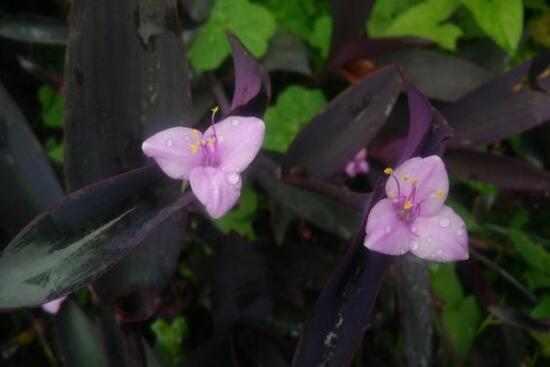
Every plant grown at home plays a different role. For example, money tree, happiness tree, and money plant are not only ornamental but also carry auspicious meanings. So what uses does the equally beautiful purple heart have? After checking, the editor found that purple heart is not only good-looking but also has decent economic value, and is especially well used medicinally.
2. Effects and uses of purple heart
1. Ornamental value
When it comes to the effects and uses of purple heart, the first thing everyone thinks of is naturally its ornamental value. As shown in the picture above, purple heart's flowers resemble plum blossoms, and set off by its purple-red leaves, they look especially charming. Place purple heart on a sun-facing balcony, and under the sunlight it looks especially elegant and beautiful.
2. Landscape value
Besides being placed indoors as a potted plant, purple heart is also a typical ever-colored-leaf plant in scenic areas. By combining purple heart with other flowers and plants and coordinating it with the surrounding environment, its unique color beauty can be fully brought out, creating a beautiful landscape.
3. Air purification
As a green plant, purple heart also has a good ability to purify air. When grown indoors, purple heart can absorb carbon dioxide, carbon monoxide, and other gases, and release the oxygen people need. When indoor air is fresh, people living in it have a guarantee of health.
4. Economic value
It is understood that natural pigments can also be extracted from purple heart. They have good water solubility, bright and natural color, stable properties, and certain health benefits, and can be used in beverages, fruit wine, cosmetics, and other personal care products. So economic value is also one of the effects and uses of purple heart. Growing it can make money.
5. Medicinal value
In addition to the above points, the effects of purple heart are also reflected in its medicinal use. It is understood that purple heart can be used as medicine, with effects of cooling blood, relieving depression, moistening the lungs, and promoting urination, and it has good results in treating bruises, vomiting blood, blood stasis, and so on.
Overall, purple heart is very beautiful. Whether planted indoors or outdoors, it has good effects, and it brings many benefits to people. So friends who are tempted may as well grow a pot at home. After purple heart blooms, you can fully enjoy its beauty. That is all the editor has to introduce about the effects and uses of purple heart, and I hope it helps everyone.
Effects and uses of inch plant (Tradescantia zebrina):
Medicinal effects
Inch plant is a perennial herb in the Commelinaceae family, also known as variegated spiderwort, water bamboo grass, and purple-backed spiderwort. It has the functions of clearing heat and detoxifying, cooling blood and stopping bleeding, and promoting urination. Its main effects include clearing heat and draining dampness, cooling blood and detoxifying, treating edema, difficult urination, strangury, dysentery, vaginal discharge, coughing blood, red swollen painful eyes, sore swollen throat, sores and abscesses, burns and scalds, and venomous snake bites.
Ornamental effect
Inch plant grows quickly, with stems and leaves trailing and hanging down. Its leaves are interspersed with purple, green, and silver, dazzling to the eye. Grown in pots and placed on tall stands or cabinet tops to let it hang naturally, it forms a green curtain with a very good ornamental effect and a distinctive mood. It is often used for overall arrangements in homes, courtyards, and similar places.
Air purification effect
Plants more or less have the effect of freshening the air, and inch plant is no exception. Moreover, inch plant grows vigorously and is a herbaceous foliage plant very suitable for use where investment is low but ground-cover greening results are fast and good. In places where inch plant covers large areas, the air is also relatively fresher.
Above we introduced the effects and uses of inch plant. Inch plant is quite ornamental, and many people know its stems and leaves are highly ornamental. In fact, its flowers are also beautiful. So do you know how to make it bloom more? Let us take a look next.
How to grow Moses-in-the-cradle (Tradescantia spathacea): it has very good medicinal value
Moses-in-the-cradle is a relatively common indoor foliage plant, suitable for home balconies, rooms, reception rooms, and some public places. Besides having good ornamental value, Moses-in-the-cradle has very good medicinal value. Now let us learn about how to grow Moses-in-the-cradle together with the editor from wed114.
Introduction to Moses-in-the-cradle
Moses-in-the-cradle, also called oyster plant, blood-seeing sorrow, purple orchid, and red-faced general, is an evergreen perennial herb in the genus Tradescantia of the Commelinaceae family. It likes a warm and humid climate, and its requirements for the soil are fertility and water retention. When planting oyster plant, watering should not be too frequent, otherwise root rot is likely. When propagating oyster plant by division, generally choose to divide it when repotting in spring, and it will take about two weeks to root. If sowing is chosen, generally sow in pots during April, transplant promptly after seedlings emerge, and by autumn it can grow into a full plant.
Medicinal effects of Moses-in-the-cradle:
Moses-in-the-cradle is sweet and bland in nature and has good effects of clearing heat and resolving phlegm, and cooling blood and stopping dysentery. It is generally mostly used for dry lung cough, bloody stool, and lymph node tuberculosis. The usual method of using oyster plant is to use about two liang of fresh leaves, or between 20 and 30 dried flowers. If treating coughing blood and bloody stool, use dried flowers and lean pork, simmered in clear water and taken as a decoction. For treating dry lung cough, use dried oyster plant flowers and candied jujube, simmered in clear water and taken as a decoction, and the effect is very good. In addition, oyster plant can also be applied externally: mash fresh leaves and apply to the affected area to treat vulvar sores.
But note that the rhizome of Moses-in-the-cradle is toxic. Accidental ingestion of the rhizome can cause nausea, abdominal pain, cold limbs, and even coma. Generally, if the sap touches the hands or skin, it can cause an allergic reaction, with patches or severe itching.
How to grow Moses-in-the-cradle:
(1) Temperature: It likes a warm climate and can grow all year under temperatures above 15°C. The most suitable temperature for growth is 15〜25°C. It is not cold-tolerant; growth stops below 10°C, and it enters dormancy at 5°C. The overwintering temperature is best maintained above 5°C.
(2) Light: It likes semi-shade and sufficient scattered light. Avoid exposure to scorching sun; from May to September, shading should be provided, blocking about 50% of the light. When light is too intense, the leaves curl, turn withered yellow, and lose their luster, and the plant grows short. It should also not be too shady; do not place it in a dark indoor spot for too long, otherwise the plant becomes slender, internodes elongate, leaves become narrower, and color darkens, thus losing ornamental value. After being displayed in a dark place for 2〜3 weeks, it should be moved to a place with sufficient scattered light to recuperate.
(3) Watering: Because the stems and leaves are somewhat succulent, the plant contains more water, so it has a certain drought resistance. Even if not watered for several days, it will not dry out and die, but it grows best when the soil is moist. During the growing season, watering should follow the principle of "do not water if not dry, and water thoroughly when watering," keeping the potting soil moist, but avoid waterlogging; excessive moisture easily causes root rot. In winter, reduce watering and keep the potting soil relatively dry. A humid and cold environment easily causes cold damage to the plant, and the leaf tips will appear water-soaked and withered.
(4) Environmental humidity: It likes a humid environment. In the growing season, if the weather is clear and dry, frequently spray water on the branches, leaves, and surroundings to increase relative air humidity. Only under humid air conditions can the plant grow luxuriantly and the branches and leaves be tender. When the temperature is high and the weather is dry, leaf tips may scorch.
(5) Fertilizing: During growth, apply a fertilizer combining nitrogen, phosphorus, and potassium once every 10〜15 days to make the branches and leaves grow vigorously and the leaf color more intense. Stop applying nitrogen fertilizer in September and apply only phosphorus fertilizer to improve the plant's cold resistance. Stop fertilizing in winter.
(6) Pruning: Young plants should be pinched to encourage branching. To make the plant shape full and beautiful, leggy branches should be pruned promptly. For old plants cultivated for more than 3 years, because the basal leaves wither and fall off, the plant becomes loose and its growth vigor declines, affecting the plant shape. In spring, combine repotting with severe pruning and renewal so that it sprouts new branches again and forms an ideal plant shape.
(7) Repotting: Repot once every 2 years. It likes fertile, well-drained sandy loam and is not suitable for heavy clay soil; planting in too-heavy clay soil easily causes root rot. The growing medium can be prepared from materials such as leaf mold, peat soil, garden soil, and coarse sand.
(8) Pest and disease control: When the overwintering temperature exceeds 8 degrees, scale insect damage often occurs. There is also damage from leaf blight.