How to care for Aptenia cordifolia in winter? 4 points to tell it apart from Panax notoginseng
Because Aptenia cordifolia has strong benefits and looks beautiful, many people grow it indoors. However, Aptenia cordifolia is afraid of the cold, so winter care must be paid special attention to. So how do you care for Aptenia cordifolia in winter? Earlier we already covered the difference between Andrographis paniculata and Aptenia cordifolia, and recently, someone else confused Aptenia cordifolia with Panax notoginseng. To make buying easier for everyone, let's take a look at the difference between Aptenia cordifolia and Panax notoginseng.
I. How to care for Aptenia cordifolia in winter, in three steps
Step one: Pruning before overwintering
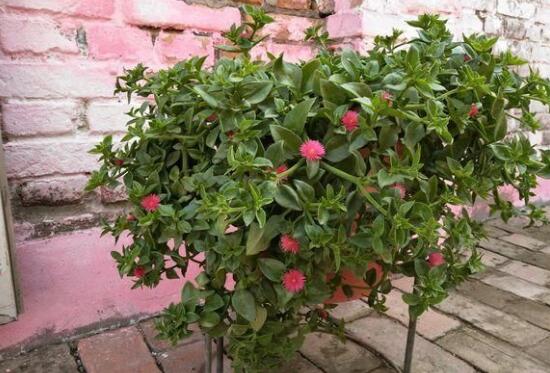
Aptenia cordifolia is not cold-tolerant and enters dormancy before winter arrives, at which point the plant basically stops growing. To help Aptenia cordifolia overwinter safely, it should be pruned accordingly at this time, cutting off old branches, diseased branches and some overlapping branches. This not only reduces the consumption of Aptenia cordifolia's nutrients, but also preserves reasonable growing space.
Step two: Pruning during overwintering
How do you care for Aptenia cordifolia in winter? One word: "prune"; three words: "prune, prune, prune." At this time, growers should cut off all leggy branches and weak, thin branches. Don't underestimate this step, because pruning in this way will extend the lifespan of Aptenia cordifolia! Those interested can also look at the pruning methods for Aptenia cordifolia.
Step three: Overwintering management
① Temperature: Aptenia cordifolia is afraid of the cold, so when winter arrives, it should be moved to a relatively warm place.
② Light: Aptenia cordifolia loves light. In winter, because the light is not strong, it can be given full sun. This helps prevent the plant from getting sick in winter and plays an important role in making the plant grow more luxuriantly the following year.
③ Water and fertilizer: In the cold winter, Aptenia cordifolia basically stops growing and does not need much water supply. So watering and fertilizing should be gradually reduced until they are stopped completely.
II. The difference between Aptenia cordifolia and Panax notoginseng
1. Different family and genus
[Aptenia cordifolia] Aptenia cordifolia is a type of begonia-family plant. It can be both ornamental and edible.
[Panax notoginseng] Panax notoginseng is a plant of the Araliaceae family, genus Panax. It is a precious Chinese medicinal herb unique to China, with great medicinal value.
2. Different appearance
[Aptenia cordifolia] The stems of Aptenia cordifolia are relatively slender and weak, with ridges growing on them, and after extending they become semi-prostrate. Its leaves are broad and large, oblong in shape, and opposite.
[Panax notoginseng] The rhizome, branches and leaves of Panax notoginseng grow upright, and the leaves have serrated edges, so they are not smooth and flat.
3. Different flowers
[Aptenia cordifolia] The flowering period of Aptenia cordifolia lasts from spring to autumn. Its flowers bloom at the tips of the branches, and the flower color is red.
[Panax notoginseng] Panax notoginseng has a short flowering period. Its flowers grow in a spherical shape, with thick but small petals clustered together, looking just like a ball.
Regarding the difference between Aptenia cordifolia and Panax notoginseng, after reading the introduction above, everyone should know now! For beginners, Aptenia cordifolia and Panax notoginseng really do look alike, but as long as you master the identification methods above, they are easy to tell apart. As for winter care of Aptenia cordifolia, you just need to pay attention to temperature and pruning. Finally, may everyone's Aptenia cordifolia bloom into beautiful flowers.
What is the difference between Andrographis paniculata and Aptenia cordifolia? What is the difference between Aptenia cordifolia and Panax notoginseng
Andrographis paniculata is a common medicinal plant distributed in many places, while Aptenia cordifolia is a type of succulent. In terms of species, we clearly know they are different species, but in morphology the two share a certain similarity, so they still need to be distinguished by details.
What is the difference between Andrographis paniculata and Aptenia cordifolia
1. Aptenia cordifolia, a perennial evergreen trailing succulent herbaceous plant of the genus Aptenia in the family Aizoaceae. Although it is called "peony spider plant", it has nothing to do with spider plants. It is fairly easy to grow and will survive from just any cutting.
2. Andrographis paniculata, scientific name: Andrographis paniculata (Burm. f.) Nees, also known as Chunlian Qiuliu, Yijianxi, Lanhe Lian, Kudan Cao, Jinxiang Cao, Jin'er Gou, Yindu Cao, Kucao, etc. It is an annual herbaceous plant, 4-8 cm long and 1-2.5 cm wide. A medicinal plant, it has the effects of clearing heat and detoxifying, reducing inflammation, and relieving swelling and pain.
What is the difference between Aptenia cordifolia and Panax notoginseng
1. Difference in family and genus
Aptenia cordifolia is a type of begonia-family plant, native to southern Africa. In China it is cultivated only for ornamental use.
Panax notoginseng is a plant of the Araliaceae family, genus Panax. It is a precious Chinese medicinal herb unique to China, with great medicinal value.
2. Difference in appearance and characteristics
The stems of Aptenia cordifolia are relatively slender and weak, very slim, fleshy and quite thick, with a bright, fresh green color. The branches have ridges growing on them, and after extending they become semi-prostrate. Its leaves are oblong and opposite; it grows sprawling and has many branches, so the foliage is lush. The flowers of Aptenia cordifolia are borne singly at the tips of the branches or in the leaf axils, with 4 lobes, 2 large ones, inverted-conical in shape, and persistent; most of the petals are red-purple, very showy, growing in a spoon shape, with a pale yellow center, shaped like a chrysanthemum, and the flowers are glossy. The flowering period is from spring to autumn and is very long.
The rhizome of Panax notoginseng, as well as the branches and leaves of the plant, grow upright, and the leaves have serrated edges, so they are not smooth and flat. The leaves of Panax notoginseng are very thin, and the leaves are broader and larger than those of Aptenia cordifolia, and are also covered with fine hairs. Its flowers grow in a spherical shape, with thick but small petals clustered together, so densely packed that they look like a ball, and the flower stalk is very long, bearing a single flower on it.
How to grow Aptenia cordifolia
1. Environment and soil: Aptenia cordifolia is native to South Africa and likes a sunny, dry and well-ventilated growing environment. It dislikes high temperatures and excessive moisture and prefers well-drained sandy soil. Care is relatively simple.
2. Light: Throughout the year, apart from appropriate shading at midday in midsummer, it should be given sufficient light at all other times, especially in winter. While ensuring temperature, it can be placed in a sunny spot to receive as much sunlight as possible. If it is left in a place with insufficient light for a long time, the leaf color easily becomes pale and lacks vitality, and the leaves may even drop, losing their ornamental value. Friends with the conditions can place it outdoors starting in spring; a plant that receives sufficient light will have abundant flowers with bright colors, and its leaves will also be less prone to becoming leggy.
3. Temperature: Aptenia cordifolia is not cold-tolerant, so care is needed once autumn arrives. After the weather turns cool, attention should be paid to keeping it warm. Those placed outdoors should be moved indoors in time to avoid the cold, so as not to freeze the plant.
4. Watering: March to September each year is the peak growing period for Aptenia cordifolia, during which the water requirement is relatively high, especially during the hot summer period. While increasing the amount of watering, also be careful that water does not accumulate in the pot. Follow the principle of watering when dry and letting it dry between waterings, and water thoroughly only after the potting soil is dry. Too much water easily causes root rot and, in severe cases, death. After September, Aptenia cordifolia enters a slow-growth period, at which point watering should be gradually reduced in preparation for moving it indoors to overwinter.
5. Fertilizer and water: Aptenia cordifolia does not have high requirements for fertilizer and water. During the growing season, applying cake fertilizer water about once every half month is enough.
6. Propagation method: Propagating Aptenia cordifolia is very simple. Generally, the cutting method is used: take a mature branch, let it dry for a moment, then insert it into prepared potting soil and place it in a cool, ventilated place, keeping the soil slightly moist. After a few days you will see the branch stand upright, which shows that the new branch has begun to take root.
The benefits of Aptenia cordifolia
The main benefit of Aptenia cordifolia is ornamentation. Used as a potted plant or hanging basket, Aptenia cordifolia can accent indoor spaces. In landscaping applications, Aptenia cordifolia can be used to create desert landscapes.
Aptenia cordifolia also has an edible use and can be served as a cold dressed dish.
Besides Andrographis paniculata, another Chinese medicinal herb similar to Aptenia cordifolia is Panax notoginseng. Similarity in plant morphology can be somewhat misleading to the naked eye, so we need to grasp the details that distinguish them conceptually, which will in turn guide us well in identifying them.