Pomegranate flower propagation methods: choose good cuttings when propagating by cuttings, and you can get fruit the next year
As an excellent choice for indoor cultivation, many flower lovers grow pomegranate flowers, and placing them on a balcony is absolutely a beautiful sight. If relatives and friends see it and want to grow it too, this is the moment that tests you: do you know how to propagate pomegranate flowers? Generally speaking, there are 3 propagation methods for pomegranate flowers: cuttings, division and layering, and we only need to master cutting propagation. Come in and learn!
I. Propagation methods of pomegranate flowers: cuttings/division/layering
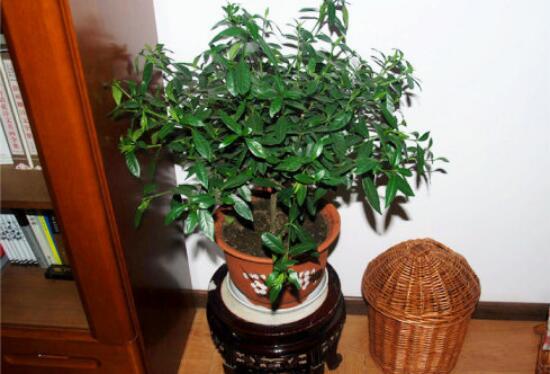
Pomegranate is not only delicious but also very attractive. Whether planting pomegranate trees or pomegranate bonsai, it is loved by many people. To grow potted pomegranate flowers, mastering their propagation methods is essential. It is understood that division and layering will be briefly discussed, and below the focus will be on the cutting propagation method of pomegranate flowers.
(1) Cutting method for pomegranate flowers
Is your balcony still missing something? Don't think too much; the editor recommends you choose to root a pot of pomegranate by cuttings, enjoying flowers and eating fruit, which is truly wonderful. Next, let's take a look at the cutting method for pomegranate!
① Cutting time
As long as the temperature is suitable, cuttings can be taken in all four seasons. But if you want pomegranate flowers to have a high survival rate and grow quickly, it is best to choose spring (late March) or autumn (October-November). Comparatively speaking, autumn is better than spring, because branches in autumn contain more nutrients, and low temperatures make water less likely to evaporate, which is beneficial for rooting. However, autumn cuttings should not be taken too early, as shoots that sprout too early are easily frozen to death.
② Selection of cuttings
In the cutting method for pomegranate flowers, the more troublesome part is the selection of cuttings. The reason is that if you choose softwood cuttings, their survival rate is high, but the time to fruit will be very long; if you choose vigorous branches as cuttings, they are not easy to root and will also fruit very late.
Therefore, overall, for home cutting propagation of pomegranate flowers, it is best to choose branches that are more than 3 years old. After cutting, they bloom and fruit earlier, and are not easy to grow too large, making them just right for keeping at home. The diameter of the cuttings is generally about 0.5-1 cm, and the length is 15-30 cm. Everyone just needs to pay a little attention to this.
③ Cutting method
After completing the above two steps, you can officially begin cutting. The specific operation is as follows:
1. Fill the flowerpot with soil, then water it thoroughly and set it aside for later use.
2. Trim the selected cutting, cut the cut surface into a horseshoe shape, and remove some leaves to avoid consuming too many nutrients.
3. Insert the cutting into the pot, cover it with a plastic bag to retain moisture, and place it in a semi-shaded area.
In about one month it will root and grow tender leaves. When 5-6 leaves have grown, it can be dug out and replanted! Next, everyone just needs to follow the pomegranate flower cultivation methods step by step. If you keep doing this, your pomegranate flower will eventually become a beautiful small bonsai.
(2) Layering propagation
Layering, one of the propagation methods of pomegranate flowers, uses the characteristic of roots producing root suckers. In spring, press the sprouts into the soil, and by autumn they can become seedlings.
(3) Division propagation
This can be done in early spring when the buds have just begun to sprout. Select relatively robust root sucker seedlings produced from the roots of superior varieties, dig them out with roots, and plant them separately. In production, spring division is more suitable, and after division they can be planted out immediately.
That is all the editor will introduce about pomegranate flower propagation methods. After reading the whole article, everyone should have more or less mastered it! Generally speaking, pomegranate flowers have extremely strong vitality, so their propagation methods are not difficult either. As long as everyone boldly tries, they will basically succeed. So, what are you waiting for? Hurry and propagate a pot to grow and see, the effect is quite good~
How to make a pomegranate bonsai and key points of daily care and management
Pomegranate is also known as Shanliye, Danruo, Ruoliumu, Jinying, Jinpang, Tulin, Tianjiang, etc. It is a deciduous tree or shrub of the genus Punica in the family Lythraceae. In our traditional culture, pomegranate is regarded as an auspicious symbol and a symbol of many sons and much fortune. It has extremely high cultivation value, as it can both be enjoyed for its flowers and eaten for its fruit, and is therefore deeply loved by people. Now let's take a look at pomegranate bonsai cultivation techniques!
Growth habits of pomegranate bonsai
Pomegranate is native to the Balkan Peninsula to Iran and adjacent areas, and is cultivated in temperate and tropical regions worldwide. It grows on mountains at an altitude of 300-1000 m. It likes a warm, sunny environment, is drought-tolerant, cold-tolerant, and also tolerant of poor soil. It is not tolerant of waterlogging or shade. It is not strict about soil requirements, but cultivation in well-drained sandy loam is preferable.
Management of stock cultivation for pomegranate bonsai
For making pomegranate bonsai, small pomegranate varieties with dwarf habit, small leaves and small flowers and fruits are mostly selected, such as Huoshi pomegranate, Sijishi pomegranate, Manao pomegranate and other varieties. Propagation can use seeding or cutting. Seedlings obtained by seeding and cutting must be field-planted for more than 3 years before the trunk can be cut and branches cultivated to produce small to medium bonsai. If making large bonsai, you can dig up tree stumps in the mountains or buy old potted pomegranate stumps at farmers' markets.
Branch cultivation management of pomegranate bonsai
According to the form of the tree, the pomegranate trunk should be cut off at an appropriate height and the main branches shortened. This can create various styles such as straight-trunk, slanting-trunk and curved-trunk. In some old-stump pomegranate bonsai, the trunk is composed of two pieces of bark with xylem, and branches at the top of each piece of bark bear fruit, making the contrast between decay and vitality even more charming. Pomegranate trees have a certain cold tolerance; in a wind-sheltered, sunny place only slight protection is needed. To make the tree grow quickly, field planting is better. Pomegranate trees like fertilizer. In addition to applying good base fertilizer when planting, during the vigorous growth period in spring and summer, apply a thin, well-rotted organic fertilizer once every half month. Growth speed is relatively fast. When branch thickness reaches about 70% of the ideal thickness, shorten the branch to promote the development and growth of side branches.
Formation management of pomegranate bonsai
After several years of branch cultivation, pruning and shaping, when the pomegranate basically meets the designed composition requirements, plant the pomegranate stump in early spring into an ornamental pot of suitable size and style. Straight-trunk and slanting-trunk styles can be planted in oval pots of medium depth or slightly shallower, and curved-trunk style can be planted in square pots of medium depth. At this stage of cultivation, still apply appropriately more fertilizer to promote tree growth and better perfect the shape. On the other hand, the needs of appreciation must also be taken into account.
Pomegranate bonsai care techniques
1. Shaping: Pomegranate trees have strong sprouting ability and produce new branches several times within a year. Generally, the robust new branches grown in spring can form fruiting mother branches. The next spring, the terminal buds or axillary buds on these branches produce short new branches that often bloom, among which the flowers from terminal buds are the easiest to set fruit. Buds grown in summer and autumn should be removed in time. Bonsai shaping is often carried out before bud break in spring, cutting out water sprouts, overly dense branches and thin weak branches, and care should be taken to retain those robust fruiting mother branches.
2. Fertilization: Pomegranate trees like fertilizer more than ordinary flowers and trees. When repotting, place appropriately more fermented hoof pieces or cake fertilizer at the bottom of the pot. During the vigorous growth period in spring and summer, fertilizer rich in phosphorus should be applied.
3. Environment: The period from late April to early June is the pomegranate's bud differentiation period. There should be sufficient light and watering should be appropriately reduced, keeping the potting soil on the dry side. When the new leaves at the branch tips are slightly wilted, place the pomegranate tree in a shaded place for 30 minutes, then water thoroughly into the pot. Repeat this several times, and in about 20 days flower buds will appear.
4. Fruit thinning: After the pomegranate fruits have set firmly, cut off excess fruits not needed for the shape. A medium pomegranate bonsai only needs to keep 3-5 fruits. The fruit distribution should be staggered in height, with some sparse and some dense, not evenly spaced. If there are too many fruits, besides looking messy, it will also affect fruiting the next year.
Daily management of pomegranate bonsai
1. Sunlight: Pomegranate likes sunlight and does not need shading throughout the year; it can receive full-day sunlight. Place it in a ventilated, sunny place and there is no need to move it often.
2. Watering: Pomegranate likes dryness, and water should not be excessive. During the flowering period, be careful not to water the flowers. If water seeps into the ovary, it will cause the flower base to rot, leading to flower and fruit drop. Therefore, during pollination, when encountering rainy days and when watering, prevent rainwater from seeping in.
3. Fertilization: Pomegranate likes fertilizer. When changing the pot, apply fully rotted base fertilizer and phosphate fertilizer, preferably bone meal, which is high in phosphorus and has a long fertilizer effect. Generally apply once every 10 days or half a month, and do not apply raw fertilizer. Do not fertilize during the flowering period or when fruit is about to set. This is the key to pomegranate fruiting. If fertility is too strong at this time, flowers are likely to drop and fruit is difficult to set.
4. Cold protection: Pomegranate is not cold-tolerant. If the pomegranate is frozen, it will affect flowering and fruiting the next year. Therefore, good insulation management for pomegranate must be done in winter.
5. Branch thinning: Pomegranate has strong sprouting ability; strong sprouted branches should be removed in time, and branches and leaves should be regularly trimmed to maintain the tree shape and strengthen ventilation and light. If there is too much fruit, it should also be thinned in time to ensure nutrient supply and flowering and fruiting the next year.
Pest and disease control of pomegranate bonsai
1. Pomegranate dry rot
[Symptoms]It damages fruits and also infects branches and trunks. Diseased young fruit generally develops light brown spots the size of bean grains around the calyx tube, which gradually expand until the entire fruit rots. From July to September, spots are likely to occur on the underside of fruits in contact with leaves. After mature fruit becomes diseased, it loses water and turns into brown mummified fruit. During storage, it can cause fruit rot, with dense small black spots appearing on the fruit surface. When branches and trunks are damaged, the bark color turns dark brown and dries up, with dense small black spots on it. The boundary between diseased and healthy tissue often cracks, and the diseased bark lifts and even peels off. Diseased branches weaken, leaves turn yellow, and the upper part quickly dies.
[Control]① Strengthen cultivation management to improve the tree's disease resistance. ② Clean the orchard, and in winter remove diseased branches, rotten fruit and so on together with pruning. In summer, promptly remove diseased fallen fruit and bury deeply or burn. ③ Protect the tree body and prevent freezing or injury. ④ Bag the fruit. ⑤ Scrape off disease spots on branches and trunks and bury them deeply, then apply medicine for protection, such as asomate. ⑥ Spray lime sulfur mixture in early spring, and from May to August use Bordeaux mixture, carbendazim and others alternately, spraying once every 15-20 days, with good results.
2. Pomegranate brown spot disease
[Symptoms]After leaves are infected, small dark brown spots first appear, which after expansion become nearly round, with black to dark brown slightly raised edges and a grayish brown center. The symptoms on the underside and upper side of leaves are the same. Spots on fruit are nearly round or irregular, black and slightly sunken, and also have small gray velvety granules. After the fruit colors, the outer edge of the spots appears pale yellowish white.
[Control]① Strengthen cultivation management, prune reasonably, and enhance tree vigor. ② Clean the orchard. After leaf fall, collect fallen leaves and fruit in the orchard and burn or bury them deeply. ③ For chemical control, use 140-fold equal Bordeaux mixture or a 0.125-0.17% solution of 80% ultra-micronized carbendazim. Spray once at the early stage of disease, and the control effect can reach more than 80%. If sprayed 3 times consecutively, the effect is even better.
3. Peach fruit borer
[Symptoms]Eggs are mainly laid in the pomegranate calyx tube. Newly hatched larvae mostly feed inside the calyx tube or between twin fruits or where fruits touch leaves, or bore into the fruit. The larvae have the characteristic of transferring to other hosts for damage. After the larvae mature, they mostly spin cocoons inside the damaged fruit or between fruits and in bark crevices, and pupate inside the cocoons.
[Control]① Scrape bark and plug tree holes in early spring. ② Plug the calyx tube with medicated mud. Use 10 g of 90% trichlorfon, 100 times soil and 10 kg water to make medicated mud, form it into mud balls and plug the calyx tube. This can effectively control larval damage, with a valid period of 70-80 days. ③ Take advantage of the peach fruit borer's strong tendency to lay eggs on sunflower heads. Plant some sunflowers around the orchard; after blooming they attract adults to lay eggs, and spray regularly for control. ④ During the adult occurrence period, spray a 0.1% solution of 50% fenitrothion emulsion. After field application, the insecticidal rate within 5 days is above 90%. During the hatching period of the first-generation eggs and larvae, spray a 0.1% solution of 50% phoxim or 90% trichlorfon 1-2 times, with good results.
4. Pomegranate noctuid
[Symptoms]Larvae can feed on buds and leaves. The larval body color is similar to bark color and is not easy to find. They rest quietly during the day and feed at night. Mature larvae pupate and emerge at the junction of the trunk. At the end of September, mature larvae descend from the tree and pupate in the soil near the trunk to overwinter. Generations overlap, and adults suck fruit juice.
[Control]① After leaf fall and before bud break, dig for overwintering pupae around the trunk. ② During the larval occurrence period, spraying a 0.15% solution of 90% trichlorfon or a 0.2% solution of 50% phoxim emulsifiable concentrate can effectively control them.
5. Yellow slug moth
[Symptoms]It occurs 2 generations a year and overwinters as mature larvae in cocoons. The next year, pupation begins in late May. The adult occurrence period of the first generation is from mid-July to late August. The second-generation larvae begin damaging at the end of July, with the heaviest damage in early to mid-August. Newly hatched larvae concentrate to cause damage, mostly gnawing leaf flesh on the underside of leaves. After growing larger, they gradually disperse and their feeding amount increases; they can eat all leaf blades, leaving only petioles.
[Control]① In winter, together with winter pruning, cut off cocoons. ② During the period when larvae concentrate to cause damage, inspect the orchard and pick off leaves to eliminate larvae. ③ During the larval occurrence period, spraying 90% trichlorfon or a 0.15% solution of 50% dichlorvos both have good control effects.
6. Ceroplastes japonicus
[Symptoms]One generation a year, overwintering as fertilized female adults on small branches. The next year, damage begins between March and April. The peak egg-laying period is during the wheat harvest. In late June, larvae begin feeding and causing damage, and secrete wax to form a scale. Newly hatched insects are quite active and can spread over long distances by wind. The insects begin to differentiate in late July, and male and female adults appear in September. After mating, males die, females continue to cause damage, and in November they enter the overwintering state.
[Control]① During the overwintering period, manually scrape bark and cut off infested shoot tips, and spray 5% diesel emulsion. ② In early spring, spray 1 time with 5° lime sulfur mixture. ③ During the summer egg hatching period, spray 1 time with a 0.17% solution of 50% wettable carbaryl.
7. Scale insects
[Symptoms]It occurs 3-4 generations a year and overwinters as last-instar nymphs in cortical cracks of 2-3-year-old branches, old bark and on fruit stalks. Damage begins in April of the second year. As nymphs grow, a waxy covering gradually forms and they differentiate into male and female sexes. In early May, female adults have a raised back and lay eggs in felt-like sacs. Nymph hatching periods are from late May to early June, mid-to-late July, and late August to early September. In early October, nymphs begin overwintering. It is mainly spread by nursery stock and cuttings.
[Control]① For severely damaged orchards, use a stiff brush dipped in systemic insecticide to brush the branches and trunk from top to bottom once, with good results. ② In early spring during the emergence period of overwintering nymphs, which is the key period for chemical control, the best effect is achieved with 3-5° lime sulfur mixture plus 0.3% washing powder, and the control effect can reach more than 95%.
Autumn care and management of potted flowers
In autumn, as the seasons change, the environmental temperature gradually changes. For potted flowers, autumn is a very critical growing season. Of course, how to care for potted flowers in autumn is also something flower growers often study and worry about. In autumn, the climate changes from hot summer to cool and gradually colder. At this time, all things begin to wither, so potted flower care requires even more attention. Therefore, at this time, potted flower management should focus on the following management tasks. Below, the editor will comprehensively introduce the methods for autumn care and management of potted flowers.
I. Three timely tasks in autumn flower care
1. Light: Timely light. Some light-loving woody flowers that bloom in summer, such as jasmine, hibiscus and orange jasmine, should still be placed in a place with sufficient sunlight. Potted flowers that bloom around the Spring Festival, such as azalea, clivia, cyclamen, poinsettia and Christmas cactus, should also be placed in a place with sufficient sunlight.
2. Pruning: Timely pruning. Except for flowers that bloom in early spring, most flowers such as jasmine, crape myrtle and pomegranate can be pruned and shaped in autumn. This can reduce nutrient consumption in winter and promote more flowering of potted flowers the next year.
3. Propagation: Timely propagation. In autumn, temperatures are lower, and for some biennial flowers such as pansy, dianthus, cineraria and hollyhock, it is exactly a good time to sow. After sowing, pay attention to spraying water and keep the soil moist. Some woody flowers are suitable for autumn cuttings, such as Chinese rose, geranium and jasmine; autumn cuttings have a relatively high survival rate. For perennial flowers that grow densely and need division, such as tree peony and herbaceous peony, division propagation should be carried out in time. For flowers that bloom around the Spring Festival, such as hyacinth, tulip and amaryllis, pot them up promptly. Cao Qidong
II. How should potted flowers be managed in autumn?
1. Appropriate water and fertilizer: After the beginning of autumn, water and fertilizer management should be treated differently according to the habits of different flowers. For autumn chrysanthemum, osmanthus, camellia, azalea, wintersweet and others that bloom once a year, promptly apply 2-3 times liquid fertilizer mainly based on phosphate fertilizer; otherwise not only will the flowers be fewer and smaller, but bud drop may also occur. For Chinese rose, Milan and jasmine, which bloom multiple times a year, continue to supply relatively sufficient water and fertilizer to promote continuous flowering. For most flowers, in northern regions after the Cold Dew solar term, generally do not fertilize again, in order to facilitate overwintering. As the temperature decreases, except for flowers that bloom in autumn and winter or early spring and autumn-sown herbaceous flowers, which can continue normal watering according to the actual needs of each flower, for other flowers the number of waterings and the amount of water should be gradually reduced to avoid excessive water and fertilizer, causing excessive vegetative growth, affecting flower bud differentiation and suffering cold damage.
2. Pruning and shaping: After the beginning of autumn, when the temperature is around 20°C, most flowers easily sprout many tender branches. Apart from retaining some as needed, the rest should be cut off in time to reduce nutrient consumption. The retained tender branches should also be pinched in time. For chrysanthemum, dahlia, Chinese rose, jasmine and others, after buds appear in autumn and when the buds grow to a certain size, except for retaining 1 large well-growing terminal bud, remove all the other side buds.
3. Timely seed collection: The seeds of many flowers mature successively around mid-autumn and need to be collected in time. After harvesting seeds of scarlet sage, cypress vine and morning glory, remove impurities, dry them, put them in cloth bags and store them in a low-temperature, ventilated place. For some seeds with thicker seed coats, such as tree peony, herbaceous peony, magnolia and michelia, after collection it is better to bury the seeds with moist sand and soil for stratified sand storage.
4. Sowing at the appropriate time: Biennial or perennial herbaceous flowers cultivated as annual or biennial plants, such as snapdragon, dianthus and daisy in open-field flowers, and cineraria, cyclamen and gloxinia in greenhouse flowers, as well as flowers that easily lose germination ability after collection such as African daisy, delphinium, primula and begonia, are all suitable for autumn sowing.
5. Moving indoors at the right time: In northern regions, after the Cold Dew solar term, most flowers should be successively moved indoors for overwintering according to their cold resistance, so as to avoid cold damage. The specific time for moving indoors varies with the flower. For most flowers, when the weather first changes, do not rush to move them indoors. Because moving indoors too early affects nutrient accumulation and is unfavorable for growth and development the next year. Therefore, on the premise of not suffering cold damage, it is better to move them indoors a little later.