How many propagation methods does the four o'clock flower have? Master cuttings and turn one pot into ten
Every flowering season, the four o'clock flower produces many beautiful blooms, with fresh colors and a rich fragrance, making it a rare feast for us. However, many flower lovers are not satisfied, because a single pot of four o'clock flowers is too plain, and it is only beautiful when many pots bloom together, and that is when we need to master the propagation methods of the four o'clock flower. As for how many propagation methods the four o'clock flower has, there are mainly three: cuttings, layering, and division. Come in and learn!
I. How many propagation methods does the four o'clock flower have? 3
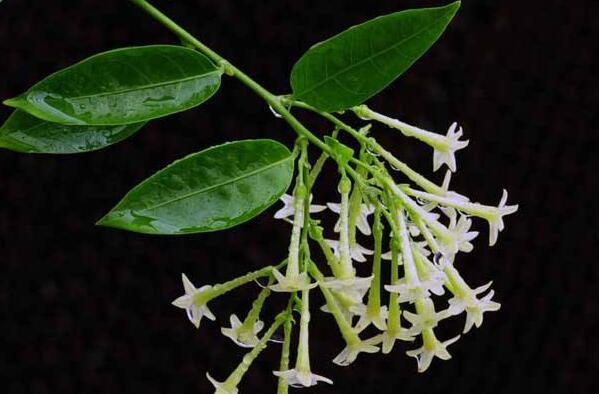
For many flower lovers, knowing how to grow the four o'clock flower is enough, but if it is one of your beloved flowers, mastering its propagation methods is very necessary. It is understood that the propagation methods of the four o'clock flower mainly include cutting propagation, layering propagation and division propagation, among which cutting propagation is the most commonly used.
II. Propagation methods of the four o'clock flower
(1) Cutting propagation method of the four o'clock flower
Among all the propagation methods of the four o'clock flower, cutting is undoubtedly the most convenient one with the highest survival rate. Except in winter, cutting propagation can be carried out at any time. However, the best time for cutting propagation of the four o'clock flower is spring and autumn, when the plant has strong reproductive ability and easily develops adventitious roots. The specific operations are as follows:
① Selection of cuttings
If you want to carry out cutting propagation, the first thing to do is to select cuttings. Whether this succeeds or not will directly determine the entire propagation process. Therefore, flower lovers should choose branches that grow robustly and are free of pests and diseases. On the same plant, branches from the middle and upper parts of the current year facing the sun should be selected, requiring shorter internodes, thick and strong branches and leaves, and full buds. Branches about to bloom and leggy branches should not be used.
② Soil selection
It likes loose, fertile, well-drained, organic-rich, slightly acidic soil. Therefore, when cutting, we should use peat soil, leaf mold and sand mixed in a ratio of 3:3:4 respectively. The bed soil prepared in this way has the characteristics of raising bed temperature, retaining water, providing aeration, being fertile, and being slightly acidic, and is suitable for branches to take root and sprout.
③ Treatment of cuttings
In the cutting propagation of the four o'clock flower, after the cuttings are selected, they must undergo corresponding treatment. Before cutting, treating the cuttings with agents such as ABT rooting powder has the effect of promoting rooting. Cut the cuttings into segments of 8 cm to 12 cm, with 2 to 3 buds on them. The lower cut of the cutting should preferably be 0.5 cm below a node. The cut should be smooth. Remove the lower leaves, leaving only 2 to 3 leaves at the top. The insertion depth is generally about 3 cm.
④ Rooting environment
Temperature: The optimum rooting temperature for the four o'clock flower is 20°C to 24°C. Generally, soil temperature being 3°C to 5°C higher than air temperature is favorable for rooting;
Air: The relative air humidity of the cutting bed is 80% to 90%, which is favorable for rooting, and the light requirement is about 30%;
Water: Moisture should be appropriate. In the early stage of cutting, moisture should be slightly greater, and later slightly drier;
Time: The suitable period for open-field cutting locally is from early May to mid-June. At this time the climate is relatively good and can better meet the temperature and humidity conditions required for cuttings to take root.
⑤ Care and management
1. After cutting, water thoroughly, cover with plastic film, and place in a relatively shaded place, or scatter loose grass on the film to prevent direct sunlight, and increase light at night to help the cuttings survive.
2. Ventilate 1 to 2 times a day to supplement the needed oxygen and prevent disease.
3. Spray water frequently to keep the cutting bed moderately moist, but do not spray excessively, otherwise the cutting bed will be too wet, which often affects callus formation and rooting of the cuttings.
4. When the new roots of the cuttings grow to 2 cm to 3 cm, they can be transplanted into pots at the appropriate time.
(2) Division propagation of the four o'clock flower
Division is also one of the propagation methods of the four o'clock flower. Because the four o'clock flower has relatively strong sprouting ability, we can divide the plant from the roots into several plants for propagation. This method propagates quickly, but it is also subject to limitations.
(3) Air layering propagation of the four o'clock flower
The branches of the four o'clock flower are hard and not suitable for bending and training. During the growing period, at the fork of the current-year or previous-year branch tips, use a knife to cut the bark, apply soil to the wound, wrap it well with plastic film, and after roots form, cut off the branch and plant it.
That is all the editor has to introduce about the propagation methods of the four o'clock flower. In fact, the four o'clock flower is very easy to keep alive, so everyone can boldly try cuttings. As long as the steps are in place and you are careful along the way, propagation will succeed. By then, your one pot of four o'clock flowers will become two pots, and if you continue, it can even become ten pots! Just think, ten pots of four o'clock flowers blooming together, that scene would be absolutely stunning.
Four o'clock flower Mirabilis jalapa Linn. Four o'clock flower guide: how to grow the four o'clock flower / how to propagate the four o'clock flower
Four o'clock flower profileFour o'clock flower Mirabilis jalapa Linn.
Cultivation methods and precautions of the four o'clock flower Introduction to the four o'clock flower
The four o'clock flower is a perennial herbaceous flower, often cultivated as an annual, and can reach 1 m in height. It is a tuberous-rooted plant, with thick roots, obconical, black or blackish brown. The main stem is upright, cylindrical, much branched, hairless or sparsely covered with fine soft hairs, with slightly swollen nodes.
The leaves of the four o'clock flower are opposite, ovate or heart-shaped, with light-colored veins inside. Several flowers are clustered on the involucre. The calyx is petal-like, trumpet-shaped, red, orange, yellow, white, purple, etc., or striped, blotched, or bicolored, and fragrant. The fruit is black, ovate, with a wrinkled surface. It is a tuberous-rooted plant with thick roots, obconical, black or blackish brown. The thousand-seed weight is about 109 grams. At the root of the flower, the seeds change from an initially light tender color to black when mature. The endosperm inside the seed is white and fine, and is a natural ideal cosmetic. The root is spindle-shaped, fleshy, with a brown-black surface.
The endosperm inside the seed of the four o'clock flower is white and fine, and is a natural ideal cosmetic. The thousand-seed weight is about 109 g. The root is spindle-shaped, fleshy, with a brown-black surface.
The four o'clock flower is suitable for courtyard cultivation and gives off a strong fragrance at dusk. The leaves and endosperm can be made into cosmetic powder; the roots and leaves can be used as medicine. It is native to the tropical regions of the Americas and is one of China's invasive alien species. In both northern and southern parts of China, it is often cultivated as an ornamental flower, being an ornamental flower.
Morphological characteristics of the four o'clock flower
The four o'clock flower blooms small purple flowers in summer and autumn. Its leaves are ovate or heart-shaped, opposite. The flowers are fragrant, several clustered on the involucre, opening from evening to early morning, giving off a strong fragrance at dusk, and closing under strong sunlight. The calyx is petal-like, trumpet-shaped. The fruit is ovate, black, with a wrinkled and ribbed surface, so the fruit has the elegant nickname "little landmine."
The main stem of the four o'clock flower is upright, 50-100 cm tall, with swollen nodes, much branched and spreading. The single leaves are opposite, ovate or ovate-triangular, entire. The flowers are terminal, with only 1 flower inside the involucre, without petals. The calyx is petal-like, trumpet-shaped, about 2.5 cm in diameter. The flower opens in the afternoon and withers the next morning; it soon falls off, and is fragrant.
The petalized calyx comes in various colors such as purple-red, pink, red, yellow, white, etc., and also variegated colors. Some plants bear two flower colors at the same time, commonly red plus yellow; white plus pink.
The single leaves are opposite; the leaf blade is ovate or ovate-triangular, 3-15 cm long, 2-9 cm wide, with an acuminate apex, truncate or cordate base, entire margin, hairless on both sides, with raised veins; the petiole is 1-4 cm long, and the upper leaves are almost sessile. The flowers are often several clustered at the branch tips; the sepals are petal-like; the style is 1-2 mm long; the involucre is bell-shaped, about 1 cm long, 5-lobed. The lobes are triangular-ovate, with an acuminate apex, hairless, with veinlets, persistent in fruit; the perianth is purple-red, yellow, white or variegated (white, yellow, and red are its varieties). It is salver-shaped, with a tube 2-6 cm long, limb diameter 2.5-3 cm, 5-lobed; the flower opens in the afternoon, is fragrant, and withers before noon the next day; there are 5 stamens, with slender filaments often extending outside the flower, and spherical anthers; the style is single, linear, extending outside the flower. The stigma is capitate.
The root of the four o'clock flower is thick, obconical, black or blackish brown. The stem is upright, cylindrical, much branched, hairless or sparsely covered with fine soft hairs, with slightly swollen nodes. The leaf blade is ovate or ovate-triangular, 3-15 cm long, 2-9 cm wide, with an acuminate apex, truncate or cordate base, entire margin, hairless on both sides, with raised veins; the petiole is 1-4 cm long, and the upper leaves are almost sessile. The flowers are often several clustered at the branch tips; the pedicel is 1-2 mm long; the involucre is bell-shaped, about 1 cm long, 5-lobed, with triangular-ovate lobes, acuminate apex, hairless, with veinlets, persistent in fruit; the perianth is purple-red, yellow, white or variegated, salver-shaped, with a tube 2-6 cm long, limb diameter 2.5-3 cm, 5-lobed; the flower opens in the afternoon, is fragrant, and withers before noon the next day; there are 5 stamens, with slender filaments often extending outside the flower, and spherical anthers; the style is single, linear, extending outside the flower, with a capitate stigma. The achene is spherical, 5-8 mm in diameter, leathery, black, with a wrinkled surface; the seed endosperm is white and powdery.
The seeds of the four o'clock flower are white, and the cotyledons are very fine and powdery white. The flowers are several and terminal, and may have striped or spotted compound colors, with a jasmine-like fragrance that feels even more elegant. There is a variety, the dwarf four o'clock flower, about 30 cm tall, with small and thin seeds. The achene is spherical, black, with longitudinal ribs and reticulate texture, resembling a landmine.
The flowering period of the four o'clock flower is June to October, and the fruiting period is August to November.
Ecological habits of the four o'clock flower
The four o'clock flower is native to the tropical regions of South America. It likes mild and humid climatic conditions and is not cold-tolerant. In winter, the aboveground parts die, and in the Jiangnan region the underground parts can overwinter safely and become a perennial herbaceous flower, sending up new plants again in the following spring. Open-field cultivation requires deep, loose, fertile loam, while pot cultivation can use general flower culture soil. It grows even better in slightly shaded places. The flowers open from evening to early morning and close under strong light. If there is shade in summer, it grows and blooms well; under intense summer sun it often sheds leaves. It likes a well-ventilated environment. It is often cultivated in both northern and southern parts of China as an ornamental flower, and sometimes escapes into the wild.
It likes mild and humid climatic conditions and is not cold-tolerant. In winter, the aboveground parts die, and in the Jiangnan region the underground parts can overwinter safely and become a perennial herbaceous flower, sending up new plants again in the following spring. Open-field cultivation requires deep, loose, fertile loam, while pot cultivation can use general flower culture soil. It grows even better in slightly shaded places. The flowers open from evening to early morning and close under strong light. If there is shade in summer, it grows and blooms well; under intense summer sun it often sheds leaves. It likes a well-ventilated environment, is very robust, grows quickly, is not choosy about soil, and requires only extensive management. It has a taproot nature, few fibrous roots, is not tolerant of transplanting, and has a mosquito-repelling effect in summer.
The four o'clock flower is native to tropical America. It likes a warm and humid climate, is not choosy about soil, and is not cold-tolerant. In North China it is cultivated as an annual, and south of the Yangtze River it is perennial. It likes light and grows better in slightly shaded places. The four o'clock flower is robust, grows quickly, and is easy to manage. It is suitable for clump planting in front of and behind houses, beside fences, and near sparse woods. Its seed endosperm can be made into cosmetic powder.
Variety classification of the four o'clock flower
The four o'clock flower family has about 30 genera and 300 species, distributed in tropical and subtropical regions, mainly produced in tropical America. China has 7 genera, 11 species and 1 variety, among which 3 species are commonly cultivated or have escaped, mainly distributed in South China and Southwest China.
Main tribes and genera
This family is divided into 5 tribes: Mirabileae, Pisonieae, Colignonieae, Boldoeae, and Leucas-tereae. The first 4 tribes have hairless ovaries, with the bases of the stamens more or less united into a tube; the latter tribe has hairy ovaries and free filaments. Mirabilis, Boerhavia, and Bougainvillea all belong to the tribe Mirabileae.
The main genera are as follows:
1. Pisonia Linn.
2. Ceodes J. R. et G. Forst.
3. Bougainvillea Comm. ex Juss.
4. Mirabilis Linn.
5. Oxybaphus L'Hér. ex Willd.
6. Boerhavia Linn.
7. Commicarpus Standl.
Identification and distinction
Blue jasmine and the four o'clock flower are not in the same family or genus as jasmine. Jasmine belongs to the genus Jasminum in the family Oleaceae, an evergreen shrub or vine; blue jasmine belongs to the genus Plumbago in the family Plumbaginaceae, an evergreen semi-climbing or upright shrub; while the four o'clock flower belongs to the genus Mirabilis in the family Nyctaginaceae, a perennial herb.
Distribution region of the four o'clock flower
The four o'clock flower is native to tropical America and has been widely introduced and naturalized in temperate to tropical regions of the world. In both northern and southern parts of China, it is often cultivated as an ornamental flower, being an ornamental flower, and sometimes escapes into the wild. Some people also plant it in courtyards (Hunan, Hubei, Jiangsu and Zhejiang regions, etc.).
Distribution in China
It is often cultivated as an ornamental flower in both northern and southern parts of China, and has escaped into the wild in Hebei, Beijing, Shandong, Henan, Shaanxi, Gansu (southern part), Sichuan, Chongqing, Guizhou, Hubei, Hunan, Jiangxi, Fujian, Zhejiang, Shanghai, Jiangsu, Anhui, Guangdong, Hainan and other places.
Cultivation techniques of the four o'clock flower Planting techniques
This species is simple to cultivate and manage. Sow in early spring, and it blooms and sets seed in summer and autumn. It tolerates transplanting, grows quickly, and is robust. South of the Yangtze River it is cultivated as a perennial. In North China it is mostly cultivated as an annual, or at the end of autumn the old roots are dug up, placed indoors at 5°C to overwinter, and planted in the open field the following spring, where they can still bloom in the afternoon and wither by the next morning.
The four o'clock flower is very robust, highly adaptable, and requires only extensive care and management. In cultivation, note the following:
Propagation
The four o'clock flower is commonly propagated by seed. It can be direct-sown in the open field in spring, and after emergence, thin the seedlings as needed; it can also be raised as seedlings first, and when the seedlings grow 3-4 true leaves, transplant and set them out, with a plant spacing of about 1250 px. After transplanting, pay attention to proper shading and watering.
Care and management
The four o'clock flower grows easily, and care and management are relatively extensive. During the growing period, appropriate fertilization and watering are enough.
Seed collection
Because the four o'clock flower is wind-pollinated, varieties easily hybridize with each other. In order to ensure that the collected seeds can maintain excellent characteristics, different varieties should be isolated during cultivation.
The four o'clock flower likes a warm climate, and the soil should be loose, fertile, deep, and humus-rich loam or sandy loam is better. Daily management of the four o'clock flower is relatively simple. Spray some water in the evening on sunny days, and apply dilute fertilizer once or twice in the evening each week, which is beneficial for normal growth.
Cultivation management
The four o'clock flower likes a warm climate, and the soil should be loose, fertile, deep, and humus-rich loam or sandy loam is better. The four o'clock flower is mostly propagated by seed, and sometimes by underground tubers.
In the region south of the Yangtze River basin in China, sow at the end of March and the beginning of April. In early February, the seedbed should be deeply dug, finely broken up, and leveled, and made into beds 1 m wide and 6-8 m long. Broadcast sowing or drilling can be used. The seeds should be sown evenly, covered with a layer of plant ash mixed with soil about 3 cm thick, watered thoroughly, and kept moist as usual. After emergence, dilute liquid fertilizer can be applied to speed up seedling growth. After summer begins, when the seedlings grow to 5-6 cun tall, robust seedlings can be selected and transplanted into flower gardens, flower beds or flower pots.
The four o'clock flower has rich flower colors, strong resistance, and can self-sow and propagate. The flowers open at night and close during the day, and are fragrant when blooming. It is suitable for arranging in places where people enjoy the cool in the evening or at night, adding much charm. It can be planted in clumps in front of and behind houses, beside fences, and along roadsides, or cultivated in patches around forest edges. Its perennial tuberous-root nature can also be used to make tree-stump-style exposed-root potted plants. Daily management of the four o'clock flower is relatively simple. Spray some water in the evening on sunny days, and apply dilute fertilizer once or twice in the evening each week, which is beneficial for normal growth. Cultivated in flower gardens and courtyards, no pests or diseases have been found for many years.
Cultivation methods of the four o'clock flower Cultivation and growing
The four o'clock flower is very robust, highly adaptable, and requires only extensive care and management. In cultivation, note the following:
① Propagation. The four o'clock flower is commonly propagated by seed. It can be direct-sown in the open field in spring, and after emergence, thin the seedlings as needed; it can also be raised as seedlings first, and when the seedlings grow 3-4 true leaves, transplant and set them out, with a plant spacing of about 50 cm. After transplanting, pay attention to proper shading and watering.
② Care and management: The four o'clock flower grows easily, and care and management are relatively extensive. During the growing period, appropriate fertilization and watering are enough.
③ Seed collection: Because the four o'clock flower is wind-pollinated, varieties easily hybridize with each other. In order to ensure that the collected seeds can maintain excellent characteristics, different varieties should be isolated during cultivation.
Cultivation notes
The root of the four o'clock flower is a brown tuberous root, shaped like a mountain stone, and is a very good material for tree-stump bonsai. The tuberous root of the four o'clock flower expands year by year, and in 3 years it can grow to about 10 cm in diameter, and can be cultivated for decades. As the cultivation time increases, the tuberous root appears more and more vigorous. In cultivation, note the following:
① Overwintering: The four o'clock flower can overwinter in the open field south of the Yangtze River. In the north, measures must be taken: at the end of autumn, dig out the roots of the four o'clock flower and bury them in moist soil in a pot, place indoors, and cultivate again the following spring.
② Planting: Plant the lower 1/4 of the four o'clock flower root in a shallow pot, leaving the rest exposed. Under normal care and management, it can take root, grow, and bloom.
Propagation methods of the four o'clock flower
The four o'clock flower is mainly propagated by sowing. Sown in spring and fruiting in autumn, it has the ability to self-sow and propagate. Alternatively, in late autumn dig up the roots and store them indoors at 5°C, then plant them again the following spring, and they can still send up new plants, bloom and set seed.
Seed propagation
The four o'clock flower is propagated by seed. It can be propagated by spring sowing and can also self-sow. The small nut is used as the sowing propagation material. It is suitable to sow and raise seedlings in March-April. The optimum germination temperature is 15°C to 20°C, and germination occurs in seven or eight days. When the seedlings grow 2-4 leaves, set them out, with a plant spacing of 50-80 cm being suitable. After transplanting, pay attention to shading.
The four o'clock flower requires extensive management and grows easily. Just pay attention to appropriate fertilization and watering. The four o'clock flower is a wind-pollinated flower, and different varieties easily hybridize. If variety characteristics are to be maintained, isolated cultivation should be used. In the north, at the end of autumn, the aboveground parts can be cut off, the perennial roots dug up, buried in flower pots with moist soil, and placed in a low-temperature room to overwinter.
The following spring, continue cultivating in the open field. Plants mature quickly and bloom early. Although the growth of perennial-root plants is not as vigorous as that of sown seedlings, their tuberous roots expand year by year, and after 3 consecutive years they can grow into brown tubers about 10 cm in diameter, with wrinkled bark and hard texture. In spring, the lower 1/3 of the tuberous root can be planted in a shallow pot, with the upper part of the tuberous root exposed, gradually becoming stem-like and adapting to the external environment. And according to its shape, it can be composed into a natural mountain-stone bonsai.
Every spring it sends out 1 to 2 new branches that bloom and set seed. After autumn, cut off the branches, put the tuberous root in its original pot indoors, and keep the pot soil slightly moist for storage. It can be cultivated continuously for decades; the older the tuberous root, the more simple and vigorous it appears, with a unique charm. This species is simple to cultivate and manage. Sow in early spring, and it blooms and sets seed in summer and autumn. It tolerates transplanting, grows quickly, and is robust.
The four o'clock flower can be propagated by spring sowing and can also self-sow. It is usually propagated by seed. The small nut is used as the sowing propagation material. It can be direct-sown in the open field in mid-to-late April. The optimum germination temperature is 15-20°C, and germination occurs in seven or eight days. Because it is a deep-rooted flower, it is not suitable to sow in an open-field seedbed and then transplant. If conditions permit, it can be sown in advance into a cylindrical pot with an inner diameter of 10 cm, and after the seedlings form, remove them from the pot and set them out.
The four o'clock flower is propagated by seed. It is suitable to sow and raise seedlings in March-April. When the seedlings grow 2-4 leaves, set them out, with a plant spacing of 50-80 cm being suitable. After transplanting, pay attention to shading. The four o'clock flower requires extensive management and grows easily. Just pay attention to appropriate fertilization and watering. The four o'clock flower is a wind-pollinated flower, and different varieties easily hybridize. If variety characteristics are to be maintained, isolated cultivation should be used.
In the north, at the end of autumn, the aboveground parts can be cut off, the perennial roots dug up, buried in flower pots with moist soil, and placed in a low-temperature room to overwinter. The following spring, continue cultivating in the open field. Plants mature quickly and bloom early. Although the growth of perennial-root plants is not as vigorous as that of sown seedlings, their tuberous roots expand year by year, and after 3 consecutive years they can grow into brown tubers about 10 cm in diameter, with wrinkled bark and hard texture. In spring, the lower 1/3 of the tuberous root can be planted in a shallow pot, with the upper part of the tuberous root exposed, gradually becoming stem-like and adapting to the external environment. And according to its shape, it can be composed into a natural mountain-stone bonsai. Every spring it sends out 1-2 new branches that bloom and set seed. After autumn, cut off the branches, put the tuberous root in its original pot indoors, and keep the pot soil slightly moist for storage. It can be cultivated continuously for decades; the older the tuberous root, the more simple and vigorous it appears, with a unique charm.
Seed propagation: In the region south of the Yangtze River basin in China, sow at the end of March and the beginning of April. In early February, the seedbed should be deeply dug, finely broken up, and leveled, and made into beds 1 m wide and 6-8 m long. Broadcast sowing or drilling can be used for sowing. The seeds should be sown evenly, and the soil temperature controlled at about 20°C. For broadcast sowing, the sowing rate per square meter of seedbed is about 300 grams, covered with a layer of plant ash mixed with soil about 3 cm thick, watered thoroughly, and kept moist as usual. The optimum temperature for seed germination and emergence is about 20°C. Seedlings emerge in 6 days. After emergence, dilute liquid fertilizer can be applied to speed up seedling growth. When there is 1 pair of leaves, transplant the seedlings, and grow them into single plants. Because the seedling-raising period is short, they are generally transplanted once, and the nutritional area of the seedlings is 64-81 cm2. During the seedling stage they tend to grow leggy, and cultivating them on the south side of a greenhouse or in a plastic tunnel is beneficial for control; otherwise there should be a larger nutritional area and the air temperature should be appropriately lowered. When the seedlings grow to 5-6 cun tall, robust seedlings can be selected and transplanted into flower gardens, flower beds or flower pots. 5-7 days before setting out, lower the temperature and increase ventilation to harden the seedlings, and set them out after the last frost. When setting out, the seedlings should have about 6 pairs of leaves, of which 3 pairs of leaf axils have already sprouted branches. To raise the above seedlings, spring seedling raising in a greenhouse requires about 50 days.
Technique for utilizing old roots
The tuberous roots of old plants can be repeatedly propagated and used for about 10 years. South of the Yangtze River, the tuberous roots can overwinter safely and become a perennial flower. In areas where they cannot overwinter, the roots can be dug up and stored to be planted the following year, and after planting the following year they will send up new plants again. Method: after frost, cut the plant off 3-5 cm above the ground, dig out the tuberous root, dry it in the sun until the surface is dry, then place it in a dry place not exposed to direct sunlight, do not water it all winter, and control the temperature at about 10°C.
Cutting propagation
Use foot buds, terminal buds, axillary buds, etc. as cuttings, among which foot buds have the strongest growth vigor, are not prone to degeneration, and have strong disease resistance. Use sand, furnace slag, garden soil, etc. as the substrate. After cutting, control the temperature at about 20°C, and roots will form in 10 days. After rooting, transplant into containers to grow into seedlings.
Pest and disease control of the four o'clock flower
The four o'clock flower has relatively few pests and diseases. In dry weather it is prone to aphids. Paying attention to moisture retention normally can prevent aphids.
Cultivated in flower gardens and courtyards, no pests or diseases have been found for many years. Daily management is relatively simple. Spray some water in the evening on sunny days, and apply dilute fertilizer once or twice in the evening each week, which is beneficial for normal growth.
Cultivated in flower gardens and courtyards, no pests or diseases have been found for many years.
Medicinal or dietary therapeutic value of the four o'clock flower
The medical information and health dietary information on Hugarden website are for reference only and cannot be used as a basis for diagnosis or medical treatment. Any health problems should be consulted with professional medical personnel, and the treatment of any disease should follow medical advice.
Ultimate flower-protecting mission: Love yourself, proceed from reality, and strictly follow medical advice. For illness, do not be careless, do not delay, do not give up hope, face it bravely, warm the silent world with love, and care for the flower field in your heart with your heart.
Medicinal value
Promotes urination, clears heat, invigorates blood and dissipates stasis. Treats strangury and turbid urine, leukorrhea, pulmonary tuberculosis with blood-streaked sputum, carbuncles and deep-rooted sores on the back, and acute arthritis. Dispels wind and invigorates blood. Treats breast carbuncles and white turbidity. Promotes urination and reduces edema. Treats women's profuse uterine bleeding, leukorrhea, furuncles, injuries, and bone setting. Relieves fever, mildly purges, breaks blood stasis, and regulates menstruation. Treats pulmonary tuberculosis with coughing of blood. Treats consumptive injury with emaciation, dizziness and blurred vision, the five types of strangury, and women's uterine bleeding and leukorrhea.
Application value
The four o'clock flower blooms small purple flowers in summer and autumn. Its leaves are ovate or heart-shaped, opposite. The flowers are fragrant, several clustered on the involucre, opening from evening to early morning, giving off a strong fragrance at dusk, and closing under strong sunlight. The calyx is petal-like, trumpet-shaped. The fruit is ovate, black, with a wrinkled and ribbed surface, so the fruit has the elegant nickname "little landmine." It can be planted in clumps in front of houses, behind houses, beside fences, and near sparse woods, giving off a strong fragrance at dusk. In garden green spaces it can be planted in clumps or patches, or dotted in the courtyards of residential communities. Besides being ornamental, the roots, leaves, and flowers of the four o'clock flower can be used as medicine to treat diarrhea. The leaves and endosperm can be made into cosmetic powder (because the seed embryo can be ground fine after drying to make cosmetic powder, it is also called guanfen flower).
The roots and leaves can be used as medicine, with the effects of clearing heat and detoxifying, invigorating blood and regulating menstruation, and nourishing. The white powder of the seeds can remove facial spots, moles, and acne.
Chemical composition
The roots contain amino acids, organic acids, and a large amount of starch. The flowers contain various yellow pigments such as betaxanthins.
Pharmacological effects
The root is also called "ground rat" and is irritating to the skin and mucous membranes. The flowers emit a rich fragrance at night and can anesthetize and repel mosquitoes. The water extract of the related plant Mirabilis multiflora has antitumor effects in preliminary animal screening tests.
Functions and indications
Promotes urination, clears heat, invigorates blood and dissipates stasis. Treats strangury and turbid urine, leukorrhea, pulmonary tuberculosis with blood-streaked sputum, carbuncles and deep-rooted sores on the back, and acute arthritis. Dispels wind and invigorates blood. Treats breast carbuncles and white turbidity. Promotes urination and reduces edema. Treats women's profuse uterine bleeding, leukorrhea, furuncles, injuries, and bone setting. Relieves fever, mildly purges, breaks blood stasis, and regulates menstruation. Treats pulmonary tuberculosis with coughing of blood. Treats consumptive injury with emaciation, dizziness and blurred vision, the five types of strangury, and women's uterine bleeding and leukorrhea.
Usage and dosage
Internal use: decocted in water, 15-25 g (25-50 g if fresh).
External use: pounded and applied.
Selected prescriptions
① Strangury and turbid urine, leukorrhea: one to two liang of white-flowered four o'clock flower root (peeled, washed, and sliced), three to five qian of Poria. Decoct in water and take before meals, twice a day. Fujian Folk Herbal Medicine
② Treating leukorrhea: one liang of white rouge flower root, five qian of white hibiscus, five qian of white peony. Stew with meat and eat. Guiyang Folk Herbal Medicine
③ Treating profuse uterine bleeding: two liang of red rouge flower root, one liang of red cockscomb flower root, one liang of toutyunyao, five qian of tuerfeng. Stew with pig trotters and eat. Guiyang Folk Herbal Medicine
④ Treating acute arthritis: three liang of fresh four o'clock flower root. Decoct in water and take. Add tofu if the body is hot, add pig trotters if the body is cold. Chinese Herbal Medicine Manual
⑤ Treating carbuncles and sores on the back: one fresh plant of four o'clock flower root. Peel, wash, add a little brown sugar, pound into a paste, apply to the affected area, and change twice a day. Fujian Folk Herbal Medicine
Special attention
Among commercial Gastrodia elata products, the roots of the four o'clock flower or dahlia are often carefully processed and passed off as Gastrodia elata for sale, which not only causes economic losses but also seriously threatens personal safety. The key points of distinction are as follows:
Gastrodia elata is the dried tuber of the orchid plant Gastrodia elata. It is long-elliptical or flat-round, with a reddish-brown dried bud at one end (commonly called parrot beak), and a round navel-shaped scar at the other end. The surface sometimes shows dotted ring-like transverse lines; the cross-section is horny and bright. Spring Gastrodia has gaps, while winter Gastrodia has no gaps. It has a slight odor, a sweet taste, rarely a peculiar smell, is slightly sweet and slightly bitter when chewed, with a slight sticky feeling.
Four o'clock flower root (rouge flower root) is the root of the Nyctaginaceae plant Mirabilis jalapa. It is long-conical (mostly flattened), with longitudinal grooves and sunken star-like or small hole-like fibrous root scars, and the cross-section is uneven, slightly showing concentric rings. The taste is bland with a prickling sensation in the throat.
Medical classics
Root (four o'clock flower root): sweet, bitter, neutral. Promotes urination and clears heat, invigorates blood and dissipates stasis. Used for strangury and turbid urine, leukorrhea, pulmonary tuberculosis with cough, and joint pain.
Leaves: sweet, neutral. Used for carbuncles and boils, scabies and tinea, and wounds.
Endosperm: can remove facial spots, moles, and acne.
[Miao medicine] Shuifen, Houbenglian: the whole plant treats irregular menstruation, diabetes, traumatic injuries, prostatitis, adnexitis, cervicitis, mastitis, carbuncles, and amenorrhea; the fruit is ground into powder, mixed with water, and applied externally to treat skin ulcers. Xianglan Kao
[Yi medicine] Baihei: the root treats cancers of the digestive system. Yunnan Provincial Records. The whole plant treats oral and tongue sores, damp-heat pouring downward, joint swelling and pain, breast carbuncles and furuncles, white turbidity and damp strangury, irregular menstruation, traumatic injuries, and blood stasis swelling and pain. Ailao
[Dai medicine] Nuowainiang (Xi Dai): the whole plant and root treat colitis, abdominal distension, diarrhea, and mucous stool; the stem and leaves treat sores, ulcers, swellings, and boils; Mawanghan (De Dai): the root treats irregular menstruation, leukorrhea, and pediatric hepatitis. Dianyao Lu. Nuowainiang: the root, stem, and leaves treat colitis, abdominal distension, diarrhea, mucous stool, and sores, ulcers, swellings, and boils. Banna Dai Medicine. Nuowainiang: the flowers are used for colitis, abdominal distension, diarrhea, mucous stool, and sores, ulcers, swellings, and nodes. Dai Medicine Records. Mowanhan (De Dai): the root and leaves treat urinary tract infections, diabetes, edema, prostatitis, scabies and tinea, traumatic injuries, sores, ulcers, swelling and pain, and ecthyma; the seed endosperm treats facial spots and moles, acne, and yellow water blisters on the skin that rupture and discharge yellow fluid; Mowanha, Nuowainiang (Xi Dai): the root treats abdominal distension, diarrhea, mucous stool, colitis, and sores, ulcers, furuncles, and swellings. Yunnan Provincial Records. Nuowainiang (Xi Dai): the whole plant and root treat colitis, abdominal distension, diarrhea, and mucous stool; the stem and leaves treat sores, ulcers, swellings, and boils, and fresh material is pounded and applied as a poultice or decocted in water for external washing; Mawanghan (De Dai): the root treats irregular menstruation and leukorrhea (in plants with white flowers), and pediatric hepatitis (in plants with yellow flowers). Dianyao Lu.
[Bai medicine] Baifanghuju: the seed endosperm treats facial spots and moles, acne, and yellow water blisters on the skin that rupture and discharge yellow fluid. Yunnan Provincial Records; the root and leaves treat urinary tract infections, diabetes, edema, prostatitis, scabies and tinea, traumatic injuries, sores, ulcers, swelling and pain, and ecthyma. Baifanhuku: the root and whole plant clear heat and promote diuresis, invigorate blood and regulate menstruation, and detoxify and reduce swelling; the root treats irregular menstruation, leukorrhea, tonsillitis, urinary tract infections, prostatitis, and diabetes. Dianyao Lu. Baifanhuku: the root and whole plant treat irregular menstruation, leukorrhea, tonsillitis, urinary tract infections, prostatitis, diabetes, carbuncles, deep-rooted sores, swelling and pain, fractures, traumatic injuries, furuncles, and eczema. Dianyao Lu.
[De'ang medicine] Bogao: functions the same as Bai medicine. Yunnan Provincial Records.
[Benglong medicine] Functions the same as Bai medicine. Yunnan Provincial Records. Bogao: the whole plant and root treat colitis, abdominal distension, diarrhea, and mucous stool; the stem and leaves treat sores, ulcers, swellings, and boils, and fresh material is pounded and applied as a poultice or decocted in water for external washing. Dianyao Lu.
[Lisu medicine] Aimomqi: the whole plant and root treat tonsillitis, irregular menstruation, prostatitis, and urinary tract infections; the whole plant is used externally to treat mastitis and traumatic injuries. Nujiang Medicine.
[Shui medicine] Malaomu: the root treats diabetes. Shui Medicine.
[She medicine] The root and flowers treat tonsillitis, irregular menstruation, leukorrhea, prostatitis, urinary tract infections, rheumatic joint pain, carbuncles, deep-rooted sores, furuncles, hemoptysis, and impetigo. She Medicine.
[Maonan medicine] Gongwabaifen: the tuberous root treats traumatic sprains and fractures. Gui Medicine Compilation.
[Zhuang medicine] Chouyahua: the tuberous root treats irregular menstruation. Gui Medicine Compilation.
[Yao medicine] The tuberous root treats headache. Gui Medicine Compilation.
[Mulao medicine] The tuberous root treats diabetes, urinary tract infections, and excessive leukorrhea. Gui Medicine Compilation.
[Hani medicine] Wujiwuxiaoayan: the root treats tonsillitis, irregular menstruation, and urinary tract infections. Hani Medicine.
[Dong medicine] Nugs cuix fenx, Mal Bial sagx: the root and whole plant mainly treat irregular menstruation and excessive leukorrhea. Dong Medicine.
[Uyghur medicine] Baihemanasibite: the root is used for body weakness, soreness and softness of the limbs, poor appetite, neurasthenia, palpitations and shortness of breath, consumptive cough, chronic diarrhea, urinary tract stones, diabetes, uterine bleeding, clearing damp mucus, and arthritis, and is combined with other medicines to treat hair loss. Uyghur Medicine Records.
[Wa medicine] Four o'clock flower, Fengguogen: the root treats irregular menstruation, low back pain, fractures, and traumatic injuries. Chinese Wa Medicine.
[Achang medicine] Four o'clock flower: the root treats tonsillitis, irregular menstruation, and prostatitis. Dehong Medicine Records.
[Tujia medicine] Tugongsen: the root treats tuberculosis, leukorrhea, and infantile fetal toxin. Tujia Medicine.
[Jino medicine] Weiweiabo: the root stewed with meat treats edema; the tender stems and leaves are applied externally to treat mumps, mastitis, carbuncles, furuncles, and scabies and tinea. Jino Medicine.
[Gelao medicine] Laosuobaoao: the white rouge flower root treats leukorrhea.
Traditional Chinese medicinal use
Inheritance of flower color in the four o'clock flower
Pharmacological effects: The root contains resin and is irritating to the skin and mucous membranes. The flowers emit a rich fragrance at night and can anesthetize and repel mosquitoes. The water extract of the related plant Mirabilis multiflora has antitumor effects in preliminary animal screening tests.
Medicinal material traits: Irregularly conical, slightly curved, branched or unbranched, 6-12 cm long, 1.5-4 cm in diameter. The surface is pale yellowish-white or grayish-yellow, with longitudinal grooves and sunken shallow pit-like fibrous root scars, and the top has residual stem bases. The texture is solid and not easy to break. The cross-section is uneven, yellowish-white or pale yellowish-brown, starchy, with scattered needle-hole-like dots visible, and when steamed it appears horny. Odorless, bland taste, with a prickling sensation in the throat when chewed. Those that are large, have the outer skin removed, have a pale yellowish-white surface, and are solid in texture are considered better.
Nature and flavor: sweet, bitter
Functions: Enters the kidney and bladder meridians. Clears heat and promotes diuresis, invigorates blood and dissipates stasis. Used for damp-heat strangury and turbid urine, leukorrhea, irregular menstruation, edema, pulmonary tuberculosis with coughing of blood, carbuncles and deep-rooted sores on the back, traumatic injuries, and blood stasis swelling and pain.
Common dosage 9-15 grams. Appropriate amount for external use. Contraindicated in pregnant women. Incompatible with iron in combination.
Effects of the four o'clock flower root: Promotes urination, clears heat, invigorates blood and dissipates stasis. Treats strangury and turbid urine, leukorrhea, pulmonary tuberculosis with blood-streaked sputum, carbuncles and deep-rooted sores on the back, and acute arthritis.
① Gangmu Shiyi: Dispels wind and invigorates blood. Treats breast carbuncles and white turbidity.
② Kunming Medicinal Plant Investigation Report: Promotes urination and reduces edema.
③ Guizhou Folk Prescriptions and Medicines: Treats women's profuse uterine bleeding, leukorrhea, furuncles, injuries, and bone setting.
④ Nanning City Drug Records: Relieves fever, mildly purges, breaks blood stasis, and regulates menstruation. Treats pulmonary tuberculosis with coughing of blood.
⑤ Sichuan Chinese Medicine Records: Treats consumptive injury with emaciation, dizziness and blurred vision, the five types of strangury, and women's uterine bleeding and leukorrhea.
Functions and uses of the four o'clock flower Ornamental value
The four o'clock flower is a flower plant with extensive management and relatively high ornamental value, and is one of the good greening plants. Among them there is a rose-red variety with very high ornamental value. It has rich flower colors, strong resistance, and can self-sow and propagate. The flowers open at night and close during the day, and are fragrant when blooming. It is suitable for arranging in places where people enjoy the cool in the evening or at night, adding much charm. In both northern and southern parts of China, it is often cultivated as an ornamental flower, being an ornamental flower.
Pot cultivation uses
It can be planted in clumps in front of and behind houses, beside fences, and along roadsides, or cultivated in patches around forest edges. Its perennial tuberous-root nature can also be used to make tree-stump-style exposed-root potted plants.
Mosquito-repelling effect
The four o'clock flower likes a well-ventilated environment, is very robust, grows quickly, is not choosy about soil, and requires only extensive management. It is suitable for courtyard cultivation and gives off a strong fragrance at dusk. It has a taproot nature, few fibrous roots, is not tolerant of transplanting, and has a mosquito-repelling effect in summer.
Medicinal value
The roots and leaves can be used as medicine, with the effects of clearing heat and detoxifying, invigorating blood and regulating menstruation, and nourishing. The white powder of the seeds can remove facial spots, moles, and acne.
Landscape uses of the four o'clock flower
The four o'clock flower blooms small purple flowers in summer and autumn. Its leaves are ovate or heart-shaped, opposite. The flowers are fragrant, several clustered on the involucre, opening from evening to early morning, giving off a strong fragrance at dusk, and closing under strong sunlight. The calyx is petal-like, trumpet-shaped. The fruit is ovate, black, with a wrinkled and ribbed surface, so the fruit has the elegant nickname "little landmine."
The four o'clock flower can be planted in clumps in front of houses, behind houses, beside fences, and near sparse woods, giving off a strong fragrance at dusk. In garden green spaces it can be planted in clumps or patches, or dotted in the courtyards of residential communities.
Cultural background of the four o'clock flower Origin of the name
1. Four o'clock flower. It is named because its flowers are purple-red and its fragrance is like jasmine.
2. Yelaixiang. The four o'clock flower opens in the evening and is pleasantly fragrant. In some northern places, it is also called "yelaixiang."
3. Rouge flower. Legend has it that when Chang'e flew to the moon, she accidentally knocked over a rouge box, and the rouge scattered into the human world, producing brilliant four o'clock flowers. Moreover, women in the past liked to pick the flowers of the four o'clock flower, press and extract the juice, and apply it to their lips as rouge, so the four o'clock flower is also called rouge flower.
4. Cooking flower, bathing flower. The four o'clock flower happens to bloom at dusk, when rural women light the fire to cook and help children bathe, so it is called cooking flower or bathing flower. Legend says the cooking flower was transformed from a playful child who played until dark and got lost. It wants to tell children lingering outdoors that when they see the cooking flower bloom, it means darkness is about to fall, mother has already started cooking, and they must hurry home to bathe and eat.
5. Landmine flower. The fruit of the four o'clock flower is ovate, black, with wrinkled markings on the surface, and looks like a small landmine, so it is also called "landmine flower."
6. White powder flower. The seeds of the four o'clock flower are rich in white endosperm, which becomes powdery white after drying and can be used on the face, hence the name white powder flower.
Episode in Dream of the Red Chamber
Baoyu hurried to the dressing table, opened a Xuande ware porcelain box, inside which was a row of ten jade hairpin flower sticks, and picked one up and handed it to Ping'er. He also said with a smile, "This is not lead powder. This is made from the ground seeds of the four o'clock flower, mixed with ingredients." When Ping'er poured it onto her palm and looked, she indeed saw it was light, white, red, and fragrant, beautiful in all four aspects. When applied to the face it spread evenly and smoothly, and could moisturize, unlike other powders that felt rough and sluggish. ----- Chapter 44, "An Unexpected Misfortune Makes Xifeng Spill Vinegar; Delighted Beyond Expectations, Ping'er Makes Up"
Guo Moruo - Four O'Clock Flower
The four o'clock flower is also called rouge flower
Blooming all over, they all look like small trumpets.
Children pick off the flower tubes and pull out all the stamens,
Put them between their lips and blow, the sound crisp and humming.
The flower juice can tint the lips, and the black seeds contain white powder,
Country girls especially welcome this.
Cosmetics born like us,
If you adopt us, it fits the principle of more, faster, better, and more economical.
Preface to "Dinner Flower Collection"
Beijingers call the dinner flower wild jasmine, which really flatters it. It can be said to have nothing to do with jasmine, and it certainly must not belong to the same family; the branches, leaves, and flower shapes are all dissimilar. Lumping it together with jasmine may be because it has a faint fresh fragrance - however, it does not resemble the smell of jasmine either. Only the word "wild" is truly deserved. It is almost unnecessary to plant it. Casually throw a few seeds into the soil, and it will conspicuously grow into a large clump. After setting seed and falling into the soil, the next year it will grow into even larger clumps, and as long as there is a bit of open space, it will fill it all up without any politeness. It is not afraid of drought, not afraid of waterlogging, needs no watering, no fertilizing, does not get sick, and has never been seen to harbor insects. What kind of flower is this? But if it is not a flower, then what is it? You cannot say it is a crop, a vegetable, or a medicinal material. Although Wu Qijun said that inside the black skin of its seeds there is a packet of white powder that is edible; the leaves can be used as a vegetable, like Indian aster; and folk doctors use its root to treat vomiting of blood, I have not seen anyone eat it or take it. Then let us still count it as a flower.
"Dinner Flower"
The dinner flower is wild jasmine. Because it blooms at dusk and blooms most abundantly around dinner time, it is also called dinner flower.
Wild jasmine is found everywhere and is extremely easy to propagate. It is two to three chi tall, with luxuriant branches and leaves, and a vigorous one can shade five or six chi. The flowers are like jasmine but larger, and their color varies and changes easily. The seeds are like beans, deep black with fine lines, containing a white pulp that can be made into powder, so it is also called powder bean flower. Dried in the sun it can be used as a vegetable, similar to Indian aster. The large roots are like fists, black and hard, and folk doctors use them to treat vomiting of blood.
Wu Qijun: "Illustrated Investigation of the Names and Natures of Plants"
At the foot of the front gable wall grew a dense row of dinner flowers. Wang Yuying sat in this narrow courtyard, sitting in front of the dinner flowers doing needlework.
Li Xiaolong passed by Wang Yuying's gate every day after school. He always saw Wang Yuying (he had looked at the Chen family's pomegranates, and also at the "double-scented sesame oil, supplied to the village," and would also look at the Xia family's flowers and trees). The dinner flowers bloomed very vigorously, straining to bloom outward, as if mad, shouting, blooming themselves into the evening air. Deep green, impossibly abundant green leaves; crimson, rouge-like, impossibly abundant red flowers; very lively, yet also very desolate. Without a sound, in front of the deep, deep green leaves and the tangled red flowers, sat a Wang Yuying.
This was Li Xiaolong's dusk. If there were no Wang Yuying, dusk would not be dusk.
Lin Qingxuan's prose - Four O'Clock Flower
For those plants that change their posture with the seasons, or open and close at set times as time shifts, or respond immediately when touched by external forces, I always hold a feeling of curiosity and joy.
What force makes the sunflowers planted in the garden or the portulaca along country paths turn with the sun? Is it merely a sensitivity to light? Like the water lilies spread flat on the pond, during the day they assume the most graceful posture, but why at night do they sleep into a shy ball shape? And the epiphyllum is just the opposite of the water lily: it always waits until the deep night when all is quiet before opening its smiling face and releasing its fragrance. Yelaixiang, osmanthus, and qilixiang always allow their subtle fragrance to be savored more the darker the night. There are also mimosa and pitcher plants: as soon as they are shaken, they nod silently like a shy girl. And Cordyceps sinensis: clearly in winter it is an insect, but in summer it becomes a plant.
In biology books we can all find an experimentally derived explanation for these plant variations, but to me these explanations are all insufficient. I believe that in the unseen, there must be some spiritual dimension that we cannot find, and in that spiritual dimension perhaps these plants all have an invisible heart. Among the plants that can change posture and appearance, the one most closely related to me is the four o'clock flower.
Behind my childhood home there was a large area of uncultivated land, often blooming with beautiful flowers: small yellow or red flowers of clover, yellow or white round flowers of Leucaena leucocephala, morning glories of various colors, and once autumn arrived, reed flowers swaying in the wind filled the area... Among these flowers of various shapes and colors, small purple four o'clock flowers grew mixed in everywhere.
The four o'clock flower is the most ordinary wildflower in the countryside. They grow in dense patches, unremarkable in appearance, yet in the midst of all the green they have a distinctive beauty. In the countryside, the name of the four o'clock flower is "cooking flower," because on dewy mornings, or at high noon when the sun is in the middle of the sky, or in the black night full of stars, it remains tightly closed; it opens only for a short period, when the evening sun is about to set, when farming families finish a day's work and cooking smoke rises curl after curl, only then does it seem suddenly to release all its worries and bloom joyfully.
Every rural woman goes into the kitchen to cook at this time, so it is called "cooking flower."
This annual, biennial, or perennial herbaceous plant has very strong vitality and especially strong reproductive capacity. If you plant one four o'clock flower in the wild, after a year the ground will be full of four o'clock flowers; its flowering period is also very long, blooming from spring all the way to autumn, so how many flowers one four o'clock flower can bloom in a year is impossible for anyone to count.
What is most regrettable is that it blooms only at dusk each day, but this is also what makes it most beloved. A botanist once called it the "timer of agricultural society." When it opens, country children all know that the setting sun is about to go down and red clouds will fly across the horizon.
When I was young, I often played with my brothers on the wasteland behind the house. When we saw the four o'clock flowers open, we knew it was time to go home for dinner. When our mother let us play outside, she often warned, "When you see the cooking flowers in full bloom, you must come home." We obeyed our mother's words and often came home along the path in the setting sun only after seeing the four o'clock flowers bloom each day. Coincidentally, when we got home, it was already dark.
Since childhood, I have been a bit foolish and could not understand why the four o'clock flower must choose to bloom at dusk. Someone sat many times watching the ground full of bud-laden four o'clock flowers, watching how they slowly propped open their petals and came out to see the sunset scenery. I asked my mother, and she said, "The cooking flower was transformed from a playful child who played until dark and got lost. It wants to tell you wild children not to play until dark before going home."
My mother's words were beautiful, but I did not believe them. I always thought the four o'clock flower, like people, must love beautiful scenery. In this world, what is better than the scenery at dusk? Therefore it chose dusk.
The four o'clock flower was a very important flower in my childhood, so I planted one in a flower pot. It grew very well. Unfortunately, in the city, perhaps because it cannot see the beautiful dusk scenery of the fields, it blooms almost all day long. The four o'clock flower in my pot may have undergone the ruthless baptism of city noise and forgotten its ancestors' best choice of the dusk rosy clouds.
Every day when I see the four o'clock flower I planted, I think sorrowfully that not only are city people prone to losing their own hearts, but even the hearts of plants are lost without knowing it.
Other names of the four o'clock flower
Caojasmine, shaotanghua, moniuhua, rouge flower, yewanhua, landmine flower, guanfen flower, chaolaihua, yejiaojiao, bathing flower, fendouhua, wanchahua.
Four o'clock flower (Caohua Pu), rouge flower (Caohua Pu), powder bean flower (Illustrated Investigation of the Names and Natures of Plants), dinner flower (Shanghai), zhuangyuan flower (Shaanxi), lilac leaf, bitter lilac, wild lilac (Diannan Bencao), dinner flower (Beijing), wild jasmine (Beijing), yelaixiang (Hebei) [Dinner Flower Collection].
Flower language of the four o'clock flower
1. Chastity, simplicity, exquisiteness, conjecture, suspicion, mature beauty, timidity, cowardice.
2. Pure, chaste, simple, exquisite
3. Charming.
4. Represents loyalty and respect.
Jasmine flowers convey closeness and love of sensory experience. The four o'clock flower is named for its purple-red flowers, but its flower colors are rich, commonly red, yellow, white, and variegated. When it blooms in summer, a single plant is densely covered with many four o'clock flowers of different colors, very lovely and beautiful.
Four o'clock flower pictures
Orange jasmine Murraya exotica L. Orange jasmine guide: how to grow orange jasmine / how to propagate orange jasmine
Orange jasmine profileOrange jasmine Murraya exotica L.
Cultivation methods and precautions of orange jasmine Introduction to orange jasmine
Orange jasmine is also known as stone chili, jiuqiuxiang, jiushuxiang, qilixiang, qianlixiang, wanlixiang, guoshanxiang, golden osmanthus, mountain wampee, thousand eyes, and yueju. Latin name: Murraya exotica L. It is an evergreen shrub of the genus Murraya in the family Rutaceae, sometimes able to grow into a small tree form, with graceful plant posture, elegant branches and leaves, and a rich floral fragrance.
Orange jasmine is the dried leaves and leafy tender branches of the Rutaceae plants Murraya exotica and Murraya paniculata. It can be harvested throughout the year, removing old branches, and drying in the shade. The tender branches are cylindrical, 1-5 mm in diameter, grayish-brown on the surface, with longitudinal wrinkles, tough in texture, not easy to break, and with an uneven cross-section.
The chemical components contained in the roots, stems, and leaves are similar to those of Murraya paniculata. It is produced in southern parts of Taiwan, China, Fujian, Guangdong, Hainan, and Guangxi.
It is commonly found in shrub thickets on flat land, gentle slopes, and small hills not far from the coast. It likes to grow in sandy soil and sunny places. In the southern region it is mostly used as hedge material, or as an embellishment for flower gardens and hotels, and also as bonsai material.
Orange jasmine is an evergreen shrub, sometimes able to grow into a small tree form. Its plant posture is graceful, its branches and leaves are elegant, and its floral fragrance is rich. In addition, orange jasmine also has extremely high medicinal value. The essential oils in the flowers, leaves, and fruits of orange jasmine can be used to make cosmetic flavors, food flavors, etc. Its branches and leaves are used as medicine and also have the effects of promoting qi and relieving pain, and invigorating blood and dissipating stasis.
Morphological characteristics of orange jasmine
Orange jasmine is an evergreen shrub or small tree, up to 8 m tall. The branches are white-gray or pale yellow-gray, but the current-year branches are green.
The leaves of orange jasmine have 3-5-7 leaflets. The leaflets are obovate or obovate-elliptic, often asymmetrical on both sides, 1-6 cm long, 0.5-3 cm wide, with a rounded or obtuse apex, sometimes slightly concave, a shortly pointed base, one side slightly skewed, entire margin, flat; the petiolules are very short. The inflorescence is usually terminal, or terminal and axillary, with many flowers gathered into an umbel-like form, a shortened paniculate cyme; the flowers are white and fragrant; the sepals are ovate, about 1.5 mm long; there are 5 petals, long-elliptic, 10-15 mm long, reflexed when in full bloom; there are 10 stamens, of unequal length, slightly shorter than the petals, with white filaments, and 2 small oil dots on the back of the anthers; the style is slightly more slender than the ovary, with no obvious boundary between it and the ovary, both pale green, and the stigma is yellow and thick. The fruit is orange-yellow to vermilion, broadly ovate or elliptic, with a shortly pointed top, slightly skewed, sometimes spherical, 8-12 mm long, 6-10 mm in transverse diameter, with sticky mucilaginous liquid in the flesh, and the seeds have short cottony hairs. The flowering period is April-August, sometimes blooming after autumn, and the fruiting period is September-December.
The bark is grayish, with many branches, smooth and hairless. The odd-pinnate compound leaves are alternate; there are 3-9 leaflets, ovate, obovate to nearly rhombic, 2-8 cm long, 1-3 cm wide, with an obtuse or obtusely acuminate apex, sometimes slightly concave, a broadly cuneate or nearly rounded base, entire margin, dark green and glossy above, blue-green below, densely glandular-punctate, the glandular dots brown-black after drying, the midvein prominent, all hairless, papery or thickly papery.
The cyme has 3 to several flowers, terminal or axillary, and the floral axis is nearly hairless; the flowers are large, up to 4 cm in diameter, extremely fragrant; the pedicels are slender; there are 5 sepals, triangular, about 1-2 mm long, persistent; there are 5 petals, white, oblanceolate or narrowly oblong, 2-2.5 cm long, with transparent glandular dots; there are 8-10 stamens, alternating in length; the ovary is superior, 2-locular, with 2 ovules per locule, the style 4-6 mm long, and the stigma extremely enlarged, often wider than the ovary. The berry is rice-red, spherical or ovate, 12-20 mm long, 5-10 mm thick, with a pointed tip; it has 1-2 seeds, and the seed coat has cottony hairs.
Traits
The dried stems are slender and round, generally cut into segments 3-6 cm long, with a maximum diameter not exceeding 7 mm; the exterior is grayish-yellow, with fine longitudinal stripes, the cork layer peeling off to reveal flesh-colored xylem; the center of the cross-section is lighter in color, and the texture is hard. The dried leaves are leathery, ovate or elliptic, about 2-7 cm long, about 1-3 cm wide, yellow-green, with a cuneate base, entire margin, and the main vein clearly prominent on the back. The petiole is very short. The odor is fragrant.
Small-leaved orange jasmine differs from orange jasmine in: odd-pinnate compound leaves with 3-7 leaflets, the leaflets smaller, obovate, 2-4.5 cm long, 1-2 cm wide, with the midvein not prominent on either side, and thicker leathery texture; the inflorescence has more flowers, the flowers smaller, 2-3 cm in diameter, and both stamens and pistils are shorter and smaller; there are 2 protruding small glands on the back of the anthers. Each locule of the ovary has only 1 ovule. The fruit is smaller, 8-10 mm long.
Characteristics: Its fruit has mucilage
The chemical components contained in the roots, stems, and leaves are similar to those of Murraya paniculata, and the content of yuehchukene is about 1 times higher than that of Murraya paniculata. The content of transcaryophyllene is as high as 50%.
Ecological habits of orange jasmine
Orange jasmine likes warmth, and the most suitable temperature for growth is 20-32°C. It is not cold-tolerant.
Orange jasmine is a sun-loving tree species. It should be placed in a place with sufficient sunlight and air circulation (at least five or six hours of direct light per day) to have lush leaves, abundant flowers, and fragrance. When blooming, it can be moved to a windowsill, filling the room with fragrance. After the flowers fade, it still needs to be placed in a sunny place. Grown in semi-shade, it is not as robust as in a sunny place, and the floral fragrance is also fainter. If too shaded, the branches become thin and soft, the leaf color becomes light, and there are few or no flowers. When brought indoors in winter, it should also be placed in a sunny place.
It is commonly found in shrub thickets on flat land, gentle slopes, and small hills not far from the coast. It likes to grow in sandy soil and sunny places.
Cultivation techniques of orange jasmine
Orange jasmine does not have high soil requirements; choosing humus-rich, loose, fertile sandy soil is enough. Watering should follow the principle of watering when dry and stopping when wet, and water should not accumulate in the pot, so as to avoid damaging the roots. Orange jasmine likes slightly acidic soil, and it is best to apply "alum fertilizer water" twice a year at intervals. It is also necessary to promptly prevent and control pests and diseases such as powdery mildew, rust disease, red spider mites, and scale insects to ensure healthy plant growth.
Site selection and land preparation
Choose flat, fertile land or sunny hilly slopes. Before setting out, the land needs to be prepared, beds made, and planting holes dug. It can also be planted beside homes, in front of and behind houses, and combined with greening to form hedges.
Setting out
In areas with irrigation conditions, setting out can be done in spring; where conditions are lacking, it should be done in the rainy season. As a spice plant, for convenient flower harvesting, it is suitable to cultivate it intensively in areas with good soil, water, and fertilizer conditions. When the main purpose is flower harvesting, it can be planted appropriately sparsely, with a row spacing of 50 cm x 50 cm; when the purpose is leaf harvesting combined with hedge cultivation, it can be planted densely, with a row spacing of 25 cm x 30 cm.
Care and management
Orange jasmine likes sufficient sunlight and also tolerates semi-shade. It likes warmth, and the most suitable temperature for growth is 20-32°C. It is not cold-tolerant. In winter, when the minimum temperature drops to about 5°C, move it into a low-temperature (5-10°C) room to overwinter. Moving it in too early is not conducive to hardening its cold tolerance. If the room temperature is too low, it easily drops leaves and affects growth the following year; below 0°C it may freeze to death. If the room temperature is too high, the plant cannot go into proper dormancy, and may even sprout indoors. When taken outside, a cold wind may cause the buds to shrink back, and when new buds emerge again, it affects growth that year. If the winter room temperature is too high, it consumes the plant's nutrients, which is unfavorable for growth and flowering the following year. During the growing period, avoid direct sunlight and place it under light shade for cultivation; only in this way can orange jasmine have abundant flowers and a strong fragrance.
Orange jasmine is not strict about soil. It is suitable to choose humus-rich, loose, fertile sandy soil. Newly planted or repotted orange jasmine should be watered thoroughly, first placed in a shaded place for about 10 days, and then placed in a sunny, well-ventilated place for cultivation.
When planting, place a few pieces of animal hoof and horn slices at the bottom of the pot as base fertilizer. In addition to applying base fertilizer when planting, when potting or repotting and changing soil, it is suitable to mix some bone meal or nitrogen-phosphorus-potassium compound fertilizer into the culture soil. During the growing period, apply decomposed organic liquid fertilizer once a month. Do not apply only nitrogen fertilizer, otherwise the branches and leaves will grow leggy without forming buds. From April to June, to promote flower bud differentiation, spray a 0.2% potassium dihydrogen phosphate solution on the leaves once a month, and the leftover can be poured at the roots. Because orange jasmine is native to the south and likes slightly acidic soil, it is best to apply "alum fertilizer water" twice a year at intervals. However, do not fertilize during the winter dormancy period. If cultivating young trees, fertilizer and water can be appropriately increased to promote faster growth and development, so as to reach the height and thickness required for shaping as soon as possible.
Orange jasmine is drought-tolerant. Watering should follow the principle of watering when dry and stopping when wet, and water should not accumulate in the pot. During continuous rainy weather, the pot should be laid on its side or placed in a rain-sheltered place. If watered too much, it often causes root rot. If the leaves curl and lose their luster, this is a signal of root rot, and attention should be paid to taking remedial measures as soon as possible. First control watering and observe the changes. If after 2-3 days there is still no improvement but instead it becomes more serious, the plant should be taken out of the pot, the soil around the roots washed away with water, dried, then soaked in a 1:5000 potassium permanganate solution for disinfection, and then placed in a 1:2000 naphthalene acetic acid rooting solution for 8 hours before repotting.
During the growing period, watering should not be excessive; it is enough to keep the soil slightly moist regularly. In the high-temperature summer season, watering should not be excessive, but water must not accumulate in the pot (barrel). At this time, it is also necessary to frequently spray water on the branches and leaves, which can both cool and increase humidity, and is also beneficial for keeping the branches and leaves glossy green. After being brought indoors in winter, water less; just keep the pot soil moist.
In spring, pruning should be carried out in combination with planting or repotting. Over-dense branches and steeply growing branches should be shortened or thinned at any time. Major pruning should be carried out in late October or November. Do not prune heavily during the flowering period, so as not to affect ornamental value.
Bonsai making
Processing
Orange jasmine is suitable for shaping by pruning. Old tree stumps collected from the mountains and wild can be appropriately carved and processed so that the trunk and branches and leaves are proportionate, but care should be taken not to leave traces of artificial cutting. For seedlings cultivated from a young age, the main trunk can also be slightly trained and shaped, and then pruned. The pruning period is preferably April-May in spring. Generally, the "branch-storing and trunk-cutting method" is used, that is, when the main branches of the trunk are cultivated to a suitable thickness, a section is cut off from each branch. If these cut branches are called "first-section branches," then the secondary branches growing on them afterward are called "second-section branches." When the "second-section branches" grow to a suitable thickness, another section is cut off to produce "third-section branches"... and so on for shaping and processing. Usually only 1-3 branchlets are kept on each section of branch, with differences in length. After years of pruning in this way, the branches can achieve a naturally winding and vigorous effect. Of course, during pruning and processing, some flexible handling should also be done according to shaping needs, to achieve a balance of density and sparseness and a painterly quality.
Precautions
1. Organic fertilizer and cake fertilizer must be fully decomposed before use, otherwise fermentation in the pot soil easily burns the roots.
2. Liquid fertilizer should not be too concentrated; it must be diluted before use, otherwise fertilizer damage easily occurs.
3. Newly potted trees should not be fertilized before new roots grow.
4. When the pot soil is dry, water after fertilizing. Fertilizing before rain is better; do not fertilize on rainy days.
5. Liquid fertilizer water should not be sprinkled on the leaf surface.
6. During the growing season, topdressing should use quick-acting fertilizer; during the dormancy period, use slow-acting fertilizer. Generally do not fertilize during the plum rain season and autumn.
Pruning
After shaping, orange jasmine continues to grow. If allowed to grow naturally without suppression, it will inevitably affect the tree posture and shape and lose its artistic value. Therefore, it should be pruned in time: long branches shortened, dense branches thinned, to maintain a beautiful tree posture and appropriate proportions. In particular, orange jasmine has strong branch sprouting ability, so to maintain a certain tree shape, frequent pruning must be noted.
1. Pinching: For tree bonsai, to suppress height growth and promote the development and spreading of side branches, the tender tips of the branches can be pinched off.
2. Bud removal: When many adventitious buds grow on the base or trunk of a tree bonsai, they should be removed at any time to avoid the growth of forked branches that affect the beauty of the tree shape.
3. Branch pruning: Tree bonsai often produce many new branches. To maintain a beautiful shape, frequent pruning must be noted, and the pruning method should be determined according to the tree shape. Dead branches, parallel branches, crossing branches, etc. that hinder beauty should be cut off in time. Useful branches can be left until April-May in spring for another pruning in combination with shaping.
Repotting
Orange jasmine can be repotted every 2-3 years. The best period is October-November in autumn, and April-May in late spring is also fine. Winter is generally not suitable for repotting. For repotting, the original pot can be used or a pot one size larger can be used, depending on the size of the tree. When repotting, root pruning and soil replacement can be combined. Roots that are too dense or too long should be pruned. When removing from the pot, peel off 50-70% of the old pot soil around the root ball, cut off rotten roots and some old roots, and then proceed according to the potting process.
If more original soil is retained, repotting can be done at any time without seasonal restrictions. If most or all of the old soil needs to be replaced, the appropriate repotting period must be strictly selected.
Harvesting and storage
During the vigorous growth period, leaves are harvested in combination with pinching and shaping pruning. For established plants, harvest branches and leaves 1-2 times a year and dry them in the sun.
Cultivation methods of orange jasmine
Orange jasmine should not be placed indoors. It is suitable to place it in semi-shade, and in summer care must be taken to prevent exposure to the sun; in winter it needs to be placed in a greenhouse, and the temperature must not be lower than 5°C. It likes a warm and humid climate, is drought-tolerant, and is not cold-tolerant. The most suitable annual average temperature is 15-18°C, the highest monthly average temperature is 27-29°C, the lowest monthly average temperature is 1-2°C, it can withstand an extreme minimum temperature of -7°C, and an annual rainfall of 1000-1600 mm is suitable. It is suitable to choose a sunny place with deep, loose, fertile, slightly alkaline soil for cultivation.
Watering
Where orange jasmine is placed, it is suitable to spray water frequently to maintain air humidity. Watering: Orange jasmine likes moisture, but because orange jasmine grown in pots has limited
soil, it dries out easily. If not watered in time, it will become short of water and die. Tree bonsai certainly need constant watering, but not excessively. Too much water causes leggy growth, and long-term overly wet pot soil causes poor root respiration and easily leads to root rot and death.
Therefore, watering should follow the principle of "do not water if not dry, and water thoroughly when watering." Generally, in the high-temperature summer period, water once in the morning and once in the evening; in spring and autumn, water once a day or every other day; in winter, water once every few days; during the plum rain season or on rainy days, do not water.
Watering can be combined with fertilizing, and after topdressing, water in time. Tap water should be stored in a water tank for a day before use. The watering tool is best a watering can with a shower head. Fertilizing: The nutrients in the pot soil are limited. In order to supply the necessary nutrients for the growth of bonsai trees, attention should be paid to supplementing appropriate fertilizer. However, tree bonsai grow slowly and do not need too much fertilizer, which would cause leggy growth and affect their beauty.
Fertilizing
Orange jasmine should be fertilized in appropriate amounts, and the type of fertilizer and nutrient content should be controlled. The nutrients needed for plant growth mainly include fertilizer that can promote branch and leaf growth, promote flower and fruit growth, and promote stem and root growth. Therefore, the choice of fertilizer can be determined according to the growth conditions of the orange jasmine bonsai and the needs of different growth stages.
After shaping, orange jasmine continues to grow. For tree bonsai, to suppress height growth and promote the development and spreading of side branches, the tender tips of the branches can be pinched off.
Field management
The cultivation site should be chosen in a sunny area that does not accumulate water. Fertilization should combine nitrogen, phosphorus, and potassium, and not only nitrogen fertilizer; before flowering and bud formation, apply more phosphorus and potassium fertilizer, which is beneficial for more flowering and a stronger fragrance. If there is too much nitrogen fertilizer and a lack of phosphorus and potassium fertilizer, branches and leaves will grow leggy without forming buds. Before bud formation, appropriately water less to allow bud formation. During the flowering period and after buds have formed, water and fertilize normally. Potted orange jasmine should have some slow-acting fertilizer containing phosphorus and potassium applied as base fertilizer. For old orange jasmine stumps cultivated and made into tree-stump bonsai, after potting and surviving, generally do not water much and do not fertilize or fertilize little. Because too much water and fertilizer easily sprouts useless tender branch tips that affect beauty.
Propagation methods of orange jasmine
1.Seed propagation
For orange jasmine, pick plump and mature vermilion fresh fruits, rub them in clean water, remove the fruit skin as well as impurities and shriveled seeds floating on the water surface, and dry them in the shade for later use. Sowing can be done in spring and autumn. Generally spring sowing is more commonly used. Spring sowing is from March to April, and May is also acceptable. At a temperature of 16-22°C, germination occurs 25-35 days after sowing; autumn sowing is preferably from September to early October. Before sowing, choose a plot with good water and fertilizer conditions as a nursery, deep plow, break up the soil, rake level and make beds, with a bed width of 1-1.2 m. Drilling or broadcast sowing can both be used. For drilling, use a row spacing of 30 cm; for broadcast sowing, mix the seeds evenly with fine sand and spread them evenly on the seedbed. After sowing, cover with 1.2 cm of soil, cover with grass on top, and irrigate. After emergence, remove the covering grass in time. When 2-3 true leaves appear, thin the seedlings, keeping a plant spacing of 10-15 cm. Combined with weeding, apply human and livestock manure as topdressing. When the seedlings are 15-20 cm tall, set them out.
2.Cutting propagation
Orange jasmine cuttings should be taken in spring or during the rainy season in July-August. Cut fully developed, moderately mature, gray-green 1-year-old or older branches as cuttings; current-year tender branches should not be used. The cuttings are 10-15 cm long, with 4-5 nodes; the cut should be flat. Insert them obliquely into the seedbed. A layer of clean river sand can be spread on the seedbed. The row spacing is 12 cm x 9 cm. After cutting, water and keep the soil in the bed moist. Seedlings sown in spring can be set out the same year, while those sown in autumn are set out the following year.
3.Layering propagation
Generally carried out in the rainy season. Part of a semi-lignified branch is ring-barked or cut and buried in the soil. After it takes root and sprouts, it can be separated in late autumn or the following spring and then set out.
Pest and disease control of orange jasmine Powdery mildew
It occurs on the leaves and can be controlled by spraying agents such as azoxystrobin, triadimefon, and thiophanate-methyl. Rust disease is a common trunk disease that causes the trunk core to rot, and can be controlled by spraying triadimefon. Red spider mites occur when the temperature is relatively high. They suck the sap of branches and leaves. After the leaves are damaged, gray spots appear, and in severe cases they turn yellow and fall off. They can be controlled by spraying propargite, hexythiazox, and pyridaben. Scale insects suck the sap of trees and can also cause sooty mold, making trees grow poorly, with branches and leaves turning yellow and falling early. Besides manual brushing to eliminate them, they can be killed by spraying dimethoate, trichlorfon, and dichlorvos. Longhorn beetles are more harmful to plants. Adults can be removed manually, or stone sulfur mixture can be applied for control.
Red spider mites
They damage leaves, attach to orange jasmine leaves and suck sap, causing poor nutrition in the plant, resulting in leaf chlorosis and yellowing, and causing a large number of leaves to fall.
Control method: They are prone to occur in high temperature and drought. Pay attention to checking the leaves. When small red mites the size of needle heads are found crawling on the leaf surface or back, spray continuously 2-3 times with 1000 times Lesiben aqueous solution, or 1500 times Manjisi aqueous solution, or 2000 times Mieshaoli aqueous solution for control, spraying once every 10-15 days. For household potted orange jasmine, a 25-30 times red chili aqueous solution, or 25-30 times dried tobacco leaf infusion can be sprayed, or after wetting the leaves with clean water, spread a layer of sulfur powder.
Branch-tip longhorn beetles
They damage branches and branch tips, boring in from the epidermal layer to cause damage, forming insect tunnels, weakening tree vigor, and in severe cases causing branches and branch tips to break, or even die.
Control method: During the growing season of orange jasmine, pay attention to frequently checking the branches and branch tips. When insect frass is found discharged, find the insect hole, then use cotton dipped in undiluted dichlorvos to plug the hole opening, so that the branch-tip longhorn beetle is suffocated in the tunnel. During the egg-laying and hatching season of branch-tip longhorn beetles, generally in autumn, spray Lesiben aqueous solution, or 1000 times Dusiben aqueous solution, on the branches and branch tips once every 7-10 days, continuously spraying 2-3 times, which can kill the eggs and newly hatched larvae.
Scarab beetles, swallowtail butterflies
They damage leaves, mainly gnawing tender leaves, reducing leaves, weakening tree vigor, and affecting normal growth.
Control method: During the growth period of tender leaves, spray once with 800 times trichlorfon aqueous solution, or 1000 times Yibianjing aqueous solution for control. For household potted orange jasmine, manual capture can be adopted for control, and the captured pests can be killed by scalding with hot water.
Leaf roller moths, aphids
They damage tender leaves, causing orange jasmine leaves to curl and then die, or causing growing points to shrink and stop growing, affecting normal leaf growth.
Control method: During the growth period of tender leaves, spray once with 1500 times Yashijing aqueous solution, or 1500 times Dagongchen aqueous solution, or 1500 times Anlubao aqueous solution for control, killing the larvae.
Precautions
Strengthen fertilizer and water management, cultivate robust plants, and improve disease resistance. Loosen the soil in time, pay attention to matching the supply of water and fertilizer at each growth stage, and spray Xinguozhimu to preserve moisture, preserve fertilizer efficiency, prevent water loss, and ensure that the plant body has a good growth environment and conditions.
Prevent in time and combine prevention with control. Combined with production seasons and weather changes, use medicine in time, and add Xinguozhimu to enhance efficacy, prevent pest invasion, and effectively kill pests and diseases. For plant branch tips that have already been infected, cut and clean them in time, and apply callus antiseptic film to the cut and shear openings to prevent infection and invasion by pathogens. Before overwintering, the soil should be treated to kill pests and diseases, and Xinguozhimu should be sprayed to prevent cold and preserve warmth and prevent pest migration.
Thicken branches and leaves, spray Zhuangjingling, to promote thick and strong plant stems, thick leaves, fresh and tender leaf color, and luxuriant plants, which can improve disaster resistance, reduce the amount of pesticides and chemical fertilizers, and reduce residual toxicity.
Distribution region of orange jasmine
Orange jasmine is produced in: Yunnan, Guizhou, Hunan, Guangdong, Guangxi, Fujian, Hainan, Taiwan, China, and other tropical and subtropical regions of Asia.
It is produced in southern parts of Taiwan, China, Fujian, Guangdong, Hainan, and Guangxi.
Medicinal or dietary therapeutic value of orange jasmine
The medical information and health dietary information on Hugarden website are for reference only and cannot be used as a basis for diagnosis or medical treatment. Any health problems should be consulted with professional medical personnel, and the treatment of any disease should follow medical advice.
Ultimate flower-protecting mission: Love yourself, proceed from reality, and strictly follow medical advice. For illness, do not be careless, do not delay, do not give up hope, face it bravely, warm the silent world with love, and care for the flower field in your heart with your heart.
Medicinal value
The decoction of stems and leaves has a local anesthetic effect. A 12.5% concentration used for infiltration anesthesia has fairly good effects, but it is relatively irritating locally. It has no significant effect on the blood pressure or respiration of anesthetized dogs.
A nitrogen-free crystalline component (decomposition point 91-92°C) isolated from the petroleum ether extract of this product has a significant relaxing effect on isolated rat intestine and can counteract smooth muscle spasms caused by histamine and barium chloride, but has no antagonistic effect on smooth muscle spasms caused by acetylcholine.
A glycoprotein isolated from orange jasmine, when injected intraperitoneally at 10 mg/kg or into the amniotic cavity at 3 mg/embryo in pregnant rabbits at 12-16 days of gestation, can terminate pregnancy in the rabbits.
Inspection
Moisture: not more than 15.0% (Appendix IXH, Method 2).
Total ash: not more than 12.0% (Appendix IXK).
Trait identification
Orange jasmine: The tender branches are cylindrical, 1-5 mm in diameter. The surface is grayish-brown, with longitudinal wrinkles. The texture is tough, not easy to break, and the cross-section is uneven. The odd-pinnate compound leaves have 3-9 leaflets, mostly already fallen; the leaflets are obovate or nearly rhombic, widest above the middle, about 3 cm long and about 1.5 cm wide; the apex is obtuse, mucronate or concave, the base slightly skewed, entire margin; yellow-green, thinly leathery, with transparent glandular dots on the upper surface, the petiolules short or nearly absent, and the lower part sometimes covered with soft hairs. The odor is fragrant, the taste bitter and pungent, with a numbing sensation on the tongue.
Decoction piece processing method
Remove impurities, cut into pieces. Store in a dry place.
Nature and flavor: pungent; slightly bitter; warm in nature; slightly toxic.
① Shengcao Yaoxing Beiyao: Pungent in taste, warm in nature.
② Fujian Chinese Herbal Medicine: Pungent, bitter, warm.
Meridian entry
Enters the heart; liver; lung meridians.
① Guangxi Chinese Medicine Records: Enters the heart, liver, and lung three meridians.
Functions and indications
Promotes qi and invigorates blood; dissipates stasis and relieves pain; detoxifies and reduces swelling. Mainly for stomach duct pain; traumatic swelling and pain; sores and carbuncles; snake and insect bites.
Mainly treats traumatic swelling and pain, rheumatic bone pain, stomach pain, toothache, tetanus, epidemic encephalitis B, insect and snake bites, and local anesthesia. Used for stomach pain and rheumatic arthralgia; externally for toothache, traumatic swelling and pain, and insect and snake bites.
① Shengcao Yaoxing Beiyao: Relieves pain, reduces swelling and toxins, opens the orifices, can stop sore itching, remove skin wind, and kill lice and scabies.
② Lingnan Caiyao Lu: For baizi tan da, use a pinch of leaves, pound them, cook porridge, mix with sugar and take.
③ Guangxi Chinese Medicine Records: Promotes qi and relieves pain, invigorates blood and dissipates stasis. Treats traumatic swelling and pain, rheumatism, and qi pain.
Additional prescriptions
① Treating eczema: Fresh branches and leaves of orange jasmine, decocted in water, used to wash the affected area. Fujian Chinese Herbal Medicine
② For baizi tan da, use a pinch of leaves, pound them, cook porridge, mix with sugar and take. Lingnan Caiyao Lu
③ Treating abdominal carbuncle, pound orange jasmine herb, soak in wine and take. It is suspected to be this product. Bencao Gangmu quoting Fu Zi's Yixue Jicheng
Discussions by various authors
Shengcao Yaoxing Beiyao: Relieves pain, reduces swelling and toxins, opens the orifices, can stop sore itching, remove skin wind, and kill scabies.
Lingnan Caiyao Lu: For baizi tan da, use a pinch of leaves, pound them, cook porridge, mix with sugar and take.
Guangxi Chinese Medicine Records: Promotes qi and relieves pain, invigorates blood and dissipates stasis. Treats traumatic swelling and pain, rheumatism, and qi pain.
Bencao Gangmu quoting Fu Zi's Yixue Jicheng for treating abdominal carbuncle: pound orange jasmine herb, soak in wine and take. It is suspected to be this product.
Usage and dosage
6-12 grams.
Clinical application
Used for local anesthesia and surface anesthesia. With orange jasmine injection used for local anesthesia in major and minor surgeries in 100 cases, preliminary observation showed stable effects, no adverse reactions, stable blood pressure, pulse, and respiration during and after surgery, no liver, kidney, or other damage or other complications, and no bleeding, edema, necrosis, etc.; the analgesic time was long. In 49 cases of subtotal gastrectomy, except for 2 cases, there was no obvious pain after surgery. The disadvantage is that local irritation is relatively strong, the abdominal muscles are relatively tense during abdominal surgery, and deep surgery is still relatively difficult. Dosage: for one subtotal gastrectomy, 150-200 ml of 12.5% injection (incision infiltration), 150-200 ml of 6.25% injection (visceral block); for minor surgeries, several dozen ml varies. About 10-20 minutes after injection, anesthesia takes effect, and the longest surgery time was 3 hours. Minor surgeries generally do not use preoperative drugs. For subtotal gastrectomy, generally 0.1 g of phenobarbital sodium or 50-100 mg of dolantin is injected intramuscularly before surgery. For more nervous patients, half or full dose of hibernation No. 1 is added during surgery. A surface anesthetic made from orange jasmine is applied to the mucosal surface of the throat for tonsillectomy in 108 cases, with good results. Several minutes after application, anesthesia appears and pain sensation decreases. The anesthesia time can be maintained for about 10 minutes.
The flowers, leaves, and fruits of orange jasmine all contain essential oil, with an oil yield of 0.25%. The essential oil can be used for cosmetic flavors and food flavors; the leaves can be used as a seasoning spice; the branches and leaves are used as medicine, with the effects of promoting qi and relieving pain, and invigorating blood and dissipating stasis, and can treat stomach pain and rheumatic arthralgia, while external use can treat toothache, traumatic swelling and pain, and insect and snake bites, etc. In addition, in medicine it is also used as a tonic and stomachic, etc.
Processing method
This product is washed, dried in the shade, and cut into sections for later use. It can also be pounded, soaked in wine, and taken.
Functions and uses of orange jasmine
Ornamental value: Orange jasmine has an elegant tree posture, vigorous branches and trunk, is evergreen all year round, blooms white and fragrant, and has eye-catching red fruits. It is an excellent bonsai material. It is suitable for viewing in all four seasons, and the effect is best in early summer when new leaves unfold. In the southern region it is mostly used as hedge material, or as an embellishment for flower gardens and hotels, and also as bonsai material. Orange jasmine is produced in Yunnan, Guizhou, Hunan, Guangdong, Guangxi, Fujian, Taiwan, China, and other tropical and subtropical regions of Asia. It likes a warm climate and is not cold-tolerant. In northern regions it is all grown in pots, and the overwintering room temperature must not be lower than 5°C. It also likes a humid environment and is relatively shade-tolerant. In many shaded places where flowers and trees are difficult to grow, it is lush and verdant, with dense flowers, and is very suitable for cultivation on relatively shaded balconies and courtyards. It is slightly drought-tolerant, avoids waterlogging, and is not strict about soil, but for pot cultivation it is still best to use loose, fertile, neutral culture soil containing a large amount of humus and with strong permeability. In South China, orange jasmine can be planted in the ground and is also suitable for pot cultivation. It is also an excellent material for making bonsai. In the Yangtze River basin and to its north, it can only be potted and brought indoors to overwinter. It is not very choosy about soil, and grows best when planted in deep, fertile, loose neutral sandy loam. For pot cultivation, choose a slightly deeper and larger pot with good air permeability. If using a plastic cylindrical pot, it is suitable to place a layer of broken hard plastic foam blocks at the bottom of the pot to enhance air permeability and drainage. Repot and change soil once a year around Qingming, and cut off dead branches and diseased and pest-infested branches, shorten leggy and overly long branches, and thin overly dense branches. Overview of uses: Orange jasmine is an evergreen shrub, sometimes able to grow into a small tree form. Its plant posture is graceful, its branches and leaves are elegant, and its floral fragrance is rich. In addition, orange jasmine also has extremely high medicinal value. The essential oils in the flowers, leaves, and fruits of orange jasmine can be used to make cosmetic flavors, food flavors, etc. Its branches and leaves are used as medicine and also have the effects of promoting qi and relieving pain, and invigorating blood and dissipating stasis.
Variety classification of orange jasmine Variety textual research
Orange jasmine is recorded in Lingnan Caiyao Lu, and in Shengcao Yaoxing Beiyao it is named qianlixiang and manshanxiang. Southern regional Chinese herbal medicine manuals record it in many places. The 1977 edition of the Pharmacopoeia of the People's Republic of China, Part One, also includes it. (Only the true species is included, not the varieties.)
Cultural background of orange jasmine Poetry - Orange Jasmine
Plain snow-like small flowers hidden among green leaves
Without wind, it has its own ancient fragrance
Unlike orchids growing in deep valleys
Why envy plum blossoms proud of snow and frost
At the corner wall in a quiet courtyard, content with loneliness
Each emerald belt is even more fragrant
Starry dots adorn the autumn colors
Cluster after cluster, meaning profound
References
Shengcao Yaoxing Beiyao: Compiled by He Jian of the Qing dynasty. Published in 1711
Fujian Chinese Herbal Medicine: Compiled by the Fujian Provincial Institute of Materia Medica
Guangxi Chinese Medicine Records: Edited by the Health Department of the Guangxi Zhuang Autonomous Region
Lingnan Caiyao Lu: Written by Xiao Budan
Although orange jasmine is not as delicate and precious as yelaixiang, nor as magical as night lily, it is indeed one of the most widespread flowers and trees in the south. The Qing dynasty Lingnan poet Qu Dajun had a poem saying that every household by custom has orange jasmine. In our hometown, country people often regard orange jasmine as a guardian spirit. It is said to have the effect of driving away evil and eliminating toxins, so almost every household plants it. There is no other floral fragrance in the world that can conquer my sense of smell more than orange jasmine. Because I grew up beside its hedge from a very young age, its fragrance had already seeped into the essence of my life. As the saying goes, fragrant flowers are colorless and colorful flowers are not fragrant, and plain flowers like to gather in groups, while gorgeous flowers like to be quietly alone. This saying is very appropriate when applied to orange jasmine. The flowers of orange jasmine are small and not dazzling, scattered among the green leaves, yet giving off an alluring fragrance. When in bloom, orange jasmine is a group of girls in green skirts and plain clothes, shy and incomparably graceful. I remember when I was young in my cardamom years, the first time I spoke with a girl on campus was beside that orange jasmine hedge. In hesitant words, I feared that all my thoughts would be spread about by the flowers and the wind.
Flower language of orange jasmine
Flower language of orange jasmine: silent era, soundless black-and-white love
Orange jasmine is also called qilixiang. As the name suggests, what makes orange jasmine outstanding is naturally its fragrance. Although orange jasmine is very common, its fragrance carries the mission of spreading its fame. It is precisely because its fragrance is rich and far-reaching that it is famous far and wide. The fragrance of nine li is very strong; whenever orange jasmine blooms, the fragrance can drift several li away.
Orange jasmine represents love, related to that lingering rich fragrance and to the distant fragrance in memory. From its flowering, I feel a love affair that haunts my dreams. Jay Chou's "Common Jasmine Orange" is a kind of stubborn first love, with the innocence and abruptness of youth. He sings, the plump rice ears have made this season happy; and your cheeks are like ripe tomatoes in the field. You suddenly tell me that the name qilixiang is very beautiful; but at this moment I only want to kiss your stubborn mouth.
Orange jasmine pictures