What to Do When Hibiscus Gets Pests? Pest and Disease Control Methods
Since ancient times, hibiscus has been deeply loved by people, and the phrase "lotus emerging from water" has been used to death. Nowadays, many people keep hibiscus at home, but during the care process, flower lovers will encounter some problems, such as how to propagate hibiscus, and what to do when hibiscus gets pests? The control methods for different pests are not the same. Below are the hibiscus pests and diseases and their control methods compiled by the editor. Read on to find out.
I. What to Do When Hibiscus Gets Pests
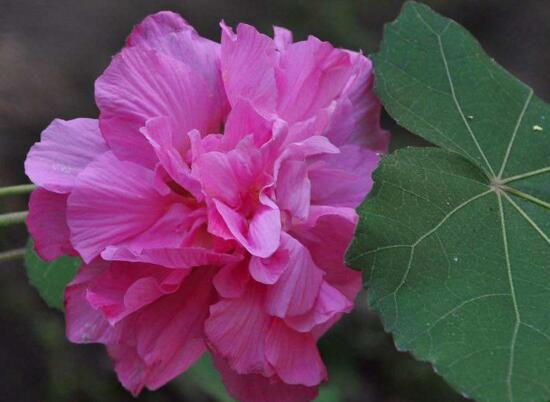
Hibiscus, the city flower of Chengdu, has excellent ornamental value. Not only that, the effects and benefits of hibiscus are also amazing. Its flowers and leaves can both be used as medicine, with effects of clearing heat and detoxifying, reducing swelling and discharging pus, and cooling blood and stopping bleeding. Although the effects are good, hibiscus can also encounter pest and disease damage during cultivation. What to do when hibiscus gets pests? Identify what the pest is, then pick up the insecticide and spray it.
II. Pest and Disease Control of Hibiscus
1. Red leaf mite
Red leaf mite is the most common pest and disease of hibiscus. This pest reproduces extremely quickly under good conditions and must be thoroughly controlled in the early stage. The key is not to bring mites on seedlings into the main field.
Control methods: ① Spray with 73% propargite 3000 times dilution or 20% amitraz EC 1000 times dilution; ② In the early stage of occurrence, mites usually parasitize the lower leaves that touch the ground, so removing the lower leaves and cleaning up are also one of the important control measures for hibiscus.
2. Powdery mildew
Powdery mildew is also one of the pests and diseases of hibiscus. It mainly harms the leaves. Symptoms: at first, many small spots appear on the front of the leaves, slowly expanding into large powdery white patches, and after autumn, small dark brown granules are produced on the white powder. In severe cases, it causes the leaves to turn yellow and wither, weakening the entire plant.
Control methods: ① Diseased plants found should be burned promptly; ② In the early stage of the disease, treat by spraying chemicals, 25% triadimefon 2000 times dilution, or spray 70% thiophanate-methyl wettable powder 1500 times dilution.
3. Artaxa tussock moth
Newly hatched Artaxa tussock moth larvae gather on the underside of hibiscus leaves, feeding on the leaf mesophyll and leaving only the upper epidermis. Third-instar larvae disperse to feed, and mature larvae spin cocoons and pupate on the underside of leaves; before winter, third-instar larvae overwinter under the bark.
Control methods: ① In winter, scrape off the overwintering larvae under the bark; ② In early to mid-June, spray with 20% fenpropathrin EC 2500 times dilution, or 20% fenvalerate 2500 times dilution, or 90% trichlorfon 1000 times dilution.
Small green leafhopper
Speaking of hibiscus pests and diseases, besides red leaf mite, another common one is the small green leafhopper. This pest mainly harms the leaves. Symptoms: white spots appear on the leaves, and in severe cases the entire leaf turns white and falls off, and in even more severe cases it affects the growth of the plant.
Control methods: ① Clear weeds around the plant to destroy overwintering sites for the pest and reduce the population base for the second year; ② At the first peak of occurrence, spray 1500 times dilution of each of 50% fenitrothion, 50% phosfolan, and pyrethroid insecticides, or 50% malathion 1500 times dilution.
Green leafhopper
Adults and nymphs pierce and suck sap on tender buds, leaves and tender branches, causing the branches to gradually die. Control methods: apply chemicals to the branches before the adults lay eggs at the end of September to prevent egg laying. During the nymph damage period, spray 50% carbaryl 500 times dilution or 2.5% deltamethrin 2000 times dilution.
Carmine spider mite
In the early stage of occurrence, the damaged leaves show small yellowish-white spots, which slowly spread to the entire leaf, causing it to wither, curl and fall off. Control methods: aim at the underside of the leaves and spray 40% omethoate 1500 times dilution for control.
Other pests of hibiscus
Besides the several hibiscus pests and diseases above, hibiscus is also harmed by aphids, red spiders, scale insects, etc. Simple control methods are as follows:
Armored scale: spray 1-2 times with 80% dichlorvos EC 500-900 times dilution or 50% fenitrothion EC 1000 times dilution.
Aphids: use dimethoate or omethoate 1000-1500 times dilution or 2.5% rotenone 1000-1500 times dilution, spray once every 7-10 days, 2-3 times is enough.
Red spider: use 20% tetradifon 800 times dilution, dicofol emulsion 2000 times dilution, spray once every 7-10 days, 2-3 times is enough.
III. Cultivation and Management of Hibiscus
Now that we know about hibiscus pests and diseases, we also need to pay attention to the cultivation and management of hibiscus. Weeding is needed once each in summer and winter every year, and topdressing can be done 2-3 times. Hibiscus sprouts very slowly and should not be exposed to direct sunlight; suitable light conditions are enough. Hibiscus tolerates pruning and can be pruned into shape as needed. Cut the dead branches and fallen leaves into pieces to ensure light penetration. In winter, keep it warm, and it is best to cultivate the plant into a shrub shape.
Pest and disease control is a major lesson that flower lovers need to learn. Only by knowing the control methods can we grow healthy and beautiful hibiscus. The above is the related content on what to do when hibiscus gets pests and the pest and disease control of hibiscus. We hope the control methods above can help everyone, and may everyone grow healthy and beautiful hibiscus.
How to Deal with Three Common Pests and Diseases in Succulent Plant Care
Floral Bonsai Network guide: Today, the editor of Floral Bonsai Network brings you an article on how to deal with three common pests and diseases in succulent plant care. Hibiscus and snow lotus ranks first. Let's take a look.
In the process of growing succulents, every succulent grower needs to pay attention to the following three situations, because each of these situations can cause problems for succulents. Every succulent grower will also encounter these three situations. I believe you may encounter them too, because they are unavoidable, but when we encounter them, how should we handle them? Everyone can learn a bit.
1. Pathogen situation. I believe many people have more or less encountered the problem of succulents getting sick during the process of growing them. Black rot, black spot, and so on. These can all be encountered, but do you know what causes them? Yes, it is caused by pathogens. Many times when we water too much, or in a relatively dark and humid environment, a large amount of bacteria and fungi will breed. This causes lesions and a sick state in succulent plants. Do not underestimate the sick state caused by pathogens; it may be irreversible. Solution: do not water too much, try to choose a place with sufficient light, and if you encounter such a situation, choose to use medication as soon as possible. Thoroughly kill the pathogens.
Here let's focus on black rot, which is caused by fungi. Different plants have different black rot fungi. This fungus can not only infect plants but can also parasitize in the soil. Therefore, when encountering black rot, the pot and soil need to be changed. The plant needs to be treated with medication.
2. Pest disaster situation. Whether it is fungus gnats or scale insects, they all belong to pest disasters. 100% of succulent growers have encountered pest disasters. The impact on succulents is also very great. It can even cause succulent death. Some insects will also lay eggs in the soil, or even spread to other succulents. It is best to choose an environment with sufficient sunlight. Solution: if succulents are found to have insects, the pot and soil need to be changed promptly, and the best choice is to treat with medication. Thoroughly kill the insects. Here let's focus on scale insects: small white insects, sesame-sized, with a waxy scale covering the surface, with strong reproductive capacity. They are contagious, and summer high temperature and excessive humidity is the peak period. When encountering scale insects, the pot and soil need to be changed promptly, and it is best to isolate the individual succulent. Medication treatment is needed.
3. Fertilization situation. Most succulent growers choose nutrient soil, but over time, nutrients are lost, and the succulents gradually stop being beautiful. At this time, most people feel it should be a lack of condition or an environmental problem. In fact, the performance of the succulent may indicate that there are no nutrients left. It is not a lack of sufficient light, nor a lack of corresponding watering. Rather, it is caused by nutrients not being sufficient. Also, soil compaction and poor air permeability will also make succulents unattractive and listless. Here let's focus on fertilizer: supplementing nitrogen fertilizer can promote the growth of plant branches and leaves, making them lush. Supplementing potassium fertilizer can make plant stems thick and strong, with well-developed root systems, increasing lodging resistance. However, it is best to choose slow-release fertilizer, and not too much, otherwise it will burn the roots.
Speaking of this, you may encounter all three of the above problems. I believe that as a succulent grower, after reading this, you will recall your own succulents getting sick, getting insects, and not having enough fertilizer. Although everyone can encounter them, some succulent lovers still do not know the solutions. If you are a beginner, worried that you really cannot solve these problems when you encounter them, and cannot bear to watch your lovely succulents die, the editor recommends several succulents with super strong vitality that are super easy to grow.
Subholding lotus, a variety I quite like, small clustered growth, loves to fill the pot, and the appearance of the leaves closing during dormancy is very cute. It will die after flowering, so if flower buds grow, cut them off.
Crassulaceae succulent plant Subholding lotus
¥4.80 Buy
2. Jade butterfly, like Subholding lotus, is one I relatively like among common varieties. Some people also say it belongs to the relatively delicate varieties among common ones, but the price is not expensive either. If you like it, you can get one.
Jade butterfly imported succulent plant
¥5.00 Buy
3. Variegated rainbow jade, I have grown rainbow jade, but I prefer variegated rainbow jade even more. The price of variegated rainbow jade is not too expensive, and when it develops its colors it is prettier than rainbow jade, so I recommend buying this one. Leaves that fall into the soil easily take root.
Rainbow jade succulent plant
¥5.40 Buy
4. Sedum pachyphyllum, a relatively easy variety to grow. A very similar-leafed variety is Sedum pachyphyllum 'Yachiyo'. According to a correction from a Zhihu friend, the picture below is Sedum pachyphyllum. Yachiyo has a woody stem, and generally the leaf tips do not turn red. However, the Sedum pachyphyllum I grew did not have colors as jelly-like as in the picture below; it was somewhat smoky green, not as pretty.
Sedum pachyphyllum succulent potted plant
¥5.04 Buy
5. Purple pearl, I have not grown this variety, but from what I have seen, when people grow it into color, the color is relatively purple; when it does not develop color, the color is ordinary and not very pretty. It belongs to common varieties and is not difficult to grow.
Succulent plant Purple pearl
¥2.90 Buy
6. Succulent lovers affectionately call it "Chihuahua". Because the red blush on the leaf tips has quite the charm of a drunken imperial concubine, it is also called "Yang Guifei". Its full-of-energy appearance is lovable and worth getting! Just give it enough water in spring and autumn. However, Chihuahua is a variety that goes dormant in summer, so in summer you need to pay attention to controlling water, and it needs to be kept in a bright, well-ventilated place without direct light.
Crassulaceae succulent plant Chihuahua
¥7.20 Buy
These succulents are all very easy to grow and very suitable for beginners. If you are afraid of encountering the three problems above, choosing these succulents is still great.
5 Management Methods for Potted Flowers in Early Winter
This year's winter feels like it has come especially early. The leaves on the trees have only just slightly turned yellow, yet the wind seems unstoppable, and the cold feels a bit unnatural. Although it has not snowed where we are, I still feel the footsteps of winter. Early winter is a critical period for nutrient accumulation and flower bud differentiation in potted flowers. However, most potted plants cannot endure the severe cold and frost of winter and easily die in winter. Management work at this time directly affects the flowers' ability to overwinter and resist cold and their flowering the following year. Below is an introduction to winter management methods for potted flowers:1. Cold protection: Determine the appropriate time to move plants indoors according to the growth habits of the flowers and their temperature requirements. Flowers that go dormant in winter, such as Chinese rose, pomegranate, and lotus, should be placed indoors at 3°C to 5°C; flowers that are semi-dormant in winter, such as osmanthus, gardenia, and camellia, should be placed in a cool greenhouse above 5°C; flowers that continue to grow in winter, such as wax begonia and carnation, should be placed in a greenhouse at 8°C to 10°C to overwinter safely.
Now many people like to create Southeast Asian style courtyards. In plant configuration, tall palm trees are mostly paired with low shrubs. For example, some Southeast Asian plants such as palm, oleander, fiddle-leaf fig, hibiscus, croton, and bromeliads are relatively not cold-tolerant. In winter, care should be strengthened, and they should be placed in a place with suitable temperature to overwinter.
2. Fertilization: Fertilize flowers promptly, and if the potting soil is dry after fertilization, water promptly. In addition, foliar topdressing can be combined with pesticide spraying to supplement flower nutrition. Commonly used topdressings include 0.5% urea, 1% superphosphate, and 0.3% potassium sulfate.
3. Pruning: For flowering trees and shrubs that bloom on current-year branches, such as Chinese rose, hibiscus, poinsettia, cotton rose, kumquat, and bitter orange, pruning should be done during winter dormancy to promote more new shoots, more flowers, and more fruit; for perennial vine flowers, cut out overly dense branches, overlapping branches, and diseased and pest-infested branches; for shrubs grown for ornamental branches and trunks, such as red-twig dogwood, choose new shoots near the main branches for heavy shortening to encourage new branch growth.
4. Loosening the soil: Poor ventilation will hinder respiration, affecting the normal growth of flowers or even causing death. Loosen the soil promptly to keep the potting soil loose.
5. Pests and diseases: In early winter, temperatures drop and pest and disease activity decreases, but timely control is still necessary. Although winter is relatively cold and not a period for mosquitoes and insects to lay eggs and reproduce, there will still be insects parasitizing plants to overwinter, so management should be strengthened. Focus on controlling leaf perforation disease, aphids, red spiders, and leaf miners and other pests and diseases. Generally, 50% carbendazim 800 times dilution plus 40% dimethoate EC 1500 times dilution, or 50% tebuconazole wettable powder 600 times dilution plus 40% isocarbophos 1000 times dilution and other chemicals can be used for control.
To let courtyard potted flowers safely pass through this cold winter, you must carefully care for your flowers as you would for yourself. As long as you do the above points, next spring, the courtyard flowers will bloom even more brilliantly.