What to Do When Moneywort Gets Pests? A Complete Guide to Pest and Disease Prevention and Control
As people pay more and more attention to their health, many have started growing small plants at home, and because moneywort has remarkable benefits, growing moneywort has become a good choice. However, in the process of growing moneywort, pests and diseases are unavoidable, so what should you do when moneywort gets pests? In response, the editor has brought you a complete guide to moneywort pest and disease prevention and control. Once you know it, you no longer need to fear pests!
I. What to Do When Moneywort Gets Pests: Everyday Problems
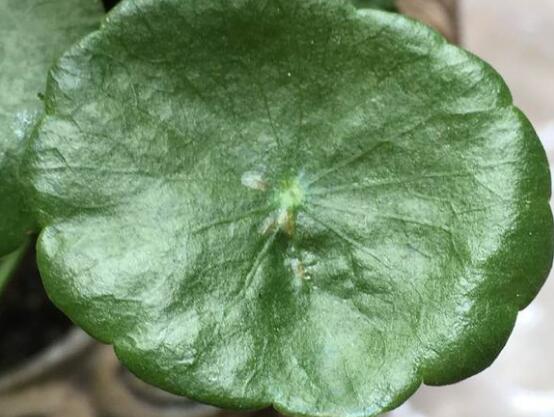
For flower lovers new to moneywort, simply knowing how to grow and care for moneywort is already good enough; they know nothing about more advanced moneywort knowledge, such as moneywort propagation methods or what to do when moneywort gets pests. However, in the process of growing moneywort, encountering pests is very common, so what should you do? Before learning the complete guide to moneywort pest and disease prevention and control, let's first look at the pest problems netizens encounter in daily life.
1. Small White Bugs
Friends new to moneywort, being beginners, are easily cheated, and the moneywort they buy back may have small white bugs under the leaves, as shown in the picture above, so what should be done?
Solution: These are cottony cushion scale insects; spray with 1000x diluted omethoate solution to kill them. If you don't have insecticide on hand, you can also apply garlic juice, which also has a good pest-repellent effect.
2. Bugs Inside Every Leaf
As shown in the picture above, many flower lovers encounter the situation shown above, where there is a bug inside every leaf, which looks quite scary. What should be done in this situation?
Solution: The bugs inside the moneywort leaves are pests. At this point, spraying insecticide is not effective. You should cut off all the leaves and wait for new leaves to regrow.
3. A Bunch of Small Bugs
Some flower lovers also encounter the situation above, where the leaves are full of bugs. One look tells you it's not good, so what should be done?
Solution: These are aphids; buy pesticide and spray it. If the effect is not obvious, just as in the previous case, you can cut off all the leaves and wait for new leaves to regrow.
4. Leaves Clearly Bitten by Bugs
As shown in the picture above, many flower lovers have encountered this situation: no bugs are found, but the moneywort leaves have already been chewed up by bugs. What should be done then?
Solution: It is clearly bug damage. At this point, spraying pesticide won't work. You should cut everything off, apply a little fertilizer water, and it will grow back fine.
II. Moneywort Pest and Disease Prevention and Control Methods
(1) Root Rot
This disease mainly harms seedlings. There are three control methods:
1. Select and breed disease-resistant varieties;
2. Pull out diseased plants and burn them in a centralized manner;
3. Pour 0.3% limewater on the affected area to prevent spread.
(2) Mold Disease
This disease mainly harms the stems during the growth period, appearing as water-soaked spots when affected, which rot after expanding. There are three control methods:
1. Diseased parts should be promptly removed and burned;
2. Improve ventilation conditions;
3. In the early stage of disease, spray with 50% thiophanate-methyl 1000-1500x diluted solution. Once every 15 days, for 3-4 consecutive times.
(3) Armyworms
These insects mainly harm the leaves. There are four control methods:
1. During the period when larvae enter the soil to pupate, dig the soil to destroy the pupae;
2. In the young larval stage, spray with 90% trichlorfon 1000x diluted solution;
3. Taking advantage of the larvae's death-feigning habit, manually capture and kill them in the early morning;
4. At the peak emergence of adults, use sugar-vinegar toxic liquid to trap and kill them.
(4) Caterpillars
These larvae feed exclusively on moneywort leaves. There are three control methods:
1. In winter, turn over the soil around affected plants to kill pupae;
2. During the larval hatching period, spray with 90% trichlorfon 2000x diluted solution to kill larvae, with better results;
3. During the adult stage, use black light lamps to trap and kill adult moths.
Introduction to the Growth Habits and Cultivation Methods of Copper Coin Grass
Copper coin grass, also known as copper coin grass, South American pennywort, coin grass, round coin grass, shield-leaf pennywort, money lotus, etc., is a perennial herbaceous plant of the Apiaceae family. The plant has a trailing nature and very strong spreading ability, making it an excellent ground cover plant. Its shape resembles both copper coins and small lotus leaves. It is one of the most beautiful and easy-to-grow aquatic plants. Let's take a look at the cultivation methods and precautions for copper coin grass!
Growth Habits of Copper Coin Grass
Copper coin grass is native to Europe and is now widely distributed in tropical and subtropical regions of the world. In China, it is mainly distributed in the provinces south of the Yangtze River. It likes warm and humid conditions, and is best cultivated in partial sun or shade, avoiding direct sunlight. It is not particular about soil, but soft, well-draining soil is best, or it can be grown directly in water. The optimal water temperature is 22-28°C. It is shade-tolerant, moisture-tolerant, slightly drought-tolerant, highly adaptable, robust by nature, easy to grow, and reproduces quickly. It can grow both in water and on land.
Propagation Methods of Copper Coin Grass
Copper coin grass is mainly propagated by division or cuttings, mostly carried out from March to May each year. It is easy to cultivate; keep the soil moist, and roots will develop in about 1-2 weeks. Seeding can also be used for propagation. For the growing medium, a mixed substrate of leaf mold, river mud, and garden soil can be used, with a volume ratio of 0.5:2:2. It is moisture-tolerant and an emergent-type plant, so it is also suitable for cultivation in water basins and ponds. If grown in water, be sure to change the water once a week and add special liquid fertilizer for foliage plants.
Cultivation Methods of Copper Coin Grass
1. Soil: Copper coin grass is not strict about soil requirements. It can grow in yellow soil, red soil, or black soil, and even in poor soil. However, its drought resistance is not strong, and it grows best in fine, slightly acidic, moist, low-fertility loam. It is suitable for fertile, loose soil with high water absorption and good water retention, and can also be cultivated in moist riverbanks, swamps, grasslands, or low-hardness freshwater. The growing medium can be a mix of leaf mold, river mud, and garden soil in a ratio of 5:2:2.
2. Fertilizing: Copper coin grass has a relatively high demand for fertilizer. During the vigorous growth stage, apply fertilizer once every 2-3 weeks. If grown in pots or containers, only a small amount of fertilizer is needed, such as the quick-acting fertilizer Hyponex No. 2, which can maintain fertilizer effectiveness in water for a relatively long time. Just ensure the water quality is slightly acidic or neutral.
3. Watering: Copper coin grass prefers a relatively moist growing environment. Because it has many leaves and high transpiration, in summer you should frequently spray water on the plant to maintain high air humidity. The leaves should be kept clean to facilitate photosynthesis. In winter, the pot soil should be kept on the dry side. Follow the principle of preferring wet over dry when watering, and avoid waterlogging, otherwise root rot is likely. Tap water in the north should be sun-exposed and left standing for 1-2 days before use. During the growing period, water once every 2-3 days to keep the pot soil moist. For water cultivation, change the water once every 7-10 days in spring and summer, and once every half month in autumn and winter. If grown in water, be sure to change the water once a week and add special liquid fertilizer for foliage plants. If using soil cultivation, you must maintain moisture long-term. Water once every morning, but not too much; water until it flows out of the drainage holes at the bottom, ensuring the pot soil is thoroughly wet.
4. Temperature: Copper coin grass likes warm and humid environments but is not cold-tolerant. It grows well at temperatures of 10-25°C. When the summer temperature rises above 32°C, it stops growing, and in winter the temperature must not be lower than 5°C.
5. Light: Copper coin grass is shade-tolerant, and partial sun or shade is best. Avoid strong direct sunlight; the more shaded the environment, the more likely the leaves will rot. Copper coin grass does not compete for light, but if you let it receive 4-6 hours of scattered light daily, or give it 8-10 hours of artificial light, it will grow even better.
6. Disease Prevention: Copper coin grass has very few pests and diseases. It has strong growth adaptability and requires no deliberate care. After growing for a period, copper coin grass will fill the entire container. Frequently spray water on the leaf surface to clean the leaves and keep them green and glossy. After growth becomes dense, pay attention to ventilation, otherwise the plant is prone to yellowing.
Precautions for Cultivating Copper Coin Grass
1. Copper coin grass likes warmth and high temperatures, and 80% sunlight is appropriate. Insufficient light or excessive shading will cause the stems to become leggy and the leaves to yellow and rot. Use a medium with good water retention and keep it moist at all times. The amphibious copper coin grass is commonly found in aquatic ponds, wetlands, and other spaces, and is also very suitable for water trays and aquariums.
2. Copper coin grass generally does not need extensive pruning. When the leaves are too dense, promptly remove withered lower leaves and outer old leaves and diseased leaves to improve light and ventilation conditions. In spring, when the pot is full of roots, repot and divide and reshape the plant. If the plant grows too tall, prune it lower to encourage new shoots from the base of stems and leaves.
3. Copper coin grass, which loves sunlight and water, can be grown hydroponically, in soil, or in a half-water half-soil setup. Its leaves are round and very cute, and it is very easy to grow. In short, you can do whatever you like with it. It does not compete for fertilizer, but loves light and water. As long as light and water are sufficient, it will be full of vitality.
4. Copper coin grass does not need a very large pot; you can also use a relatively large bowl to plant it, and a narcissus pot works too. When planting, you can plant it flat, covering the rhizomes so they are not visible. Avoid planting too deep. Then place it in partial shade for a week and wait for new leaves to grow before exposing it to sunlight.
5. Copper coin grass sometimes develops yellowing leaves, mainly caused by the following reasons, which should be avoided as much as possible. First, the pot soil has been too wet or too dry for a long time, without watering as soon as it dries. Second, the roots have already been frost-damaged in winter. Third, in spring it is moved outdoors too eagerly, and the copper coin grass temporarily cannot adapt to the sudden climate change. Fourth, it has been placed in a poorly ventilated environment for a long time. Fifth, the leaf surface has not been sprayed and cleaned for a long time, accumulating dust and hindering photosynthesis.
6. If you find that new leaves are generally turning yellow, you can spray a compound fertilizer mainly composed of nitrogen on the leaf surface. If water moss appears on the roots or in the water, clean and change the water immediately, otherwise it is unfavorable for plant growth and affects ornamental value. Usually pay more attention to whether the water in the container is sufficient to avoid drying up.
Handling Flowering in Copper Coin Grass
Copper coin grass is often grown as a foliage plant, but it also blooms. However, the flowers have a slightly faint foul odor. How to deal with copper coin grass flowering mainly depends on the flower lover's own attitude. Here we mainly provide some simple analysis for reference. If you want to keep the flowers, just let them grow; if not, simply cut them off when they appear. Flowering consumes nutrients. When there are more and more flowers, nutrients are consumed, and the leaves begin to turn yellow. It is mainly appreciated as a foliage plant, and the flowers are not attractive and smell a bit foul. Of course, copper coin grass can produce seeds, but compared to division, the seed germination rate is low and the growth cycle is long.
The Cultivation Benefits of Copper Coin Grass
1. Ornamental value: Copper coin grass has distinct nodes, one segment after another, with each node bearing a leaf, and it can keep extending. Its underground creeping stems grow at an astonishing rate, spreading wherever they reach. It is one of the most beautiful and easy-to-grow aquatic plants.
2. Landscaping value: Copper coin grass has round, shield-shaped leaves like a copper coin, with long petioles and wavy margins. It blooms small yellow-green flowers in summer and autumn. Copper coin grass is simple to cultivate and manage, with a beautiful plant shape and verdant leaf color. It is very pleasing to look at and is currently one of the most popular aquatic plants among flower lovers, widely praised. This plant can be potted outdoors in warm regions and is suitable for water trays, aquariums, ponds, wetlands, and indoor water landscaping. When cultivated in aquariums, it is often used as a foreground plant.
3. Feng shui symbolism: Copper coin grass can be used for indoor water landscaping, can purify water quality, and its green leaves can purify indoor air, so it is beneficial to the indoor environment. Furthermore, in Chinese culture, which emphasizes symbolism and homophones, copper coin grass has round leaves like mini lotus leaves, quite cute, resembling ancient copper coins, symbolizing reunion and continuous good fortune. Moreover, its name includes the characters "copper" and "coin," giving it a naturally different symbolic meaning. Having copper coins at home means rolling in wealth, so it is considered a symbol of wealth.
4. Medicinal uses: Copper coin grass can also be used as a Chinese medicinal herb to dispel wind, strengthen the intestines, improve eyesight and clear summer heat, clear heat and remove dampness, detoxify, and promote urination.
Hydroponic Cultivation of Copper Coin Grass
1. Water quality: Copper coin grass actually has no special requirements for water quality; ordinary water is sufficient, but river water is best because it is relatively rich in organic matter. Generally, the water only needs to be changed about once a week, and when changing, it is enough to replace roughly half the container. In winter, it is more special: change only one-third of the water.
2. Water and fertilizer: Copper coin grass synthesizes its own nutrients. If growing hydroponically, it is recommended to fertilize less, though in the early growth stage you can use hydroponic fertilizer and add some hydroponic nutrient solution, but be careful not to make it too concentrated.
3. Light: If copper coin grass is grown hydroponically, its sunlight requirements are still relatively important. Generally, at least half a day of sunlight is needed. If growing in a greenhouse, it is recommended to use fluorescent lamps to ensure 5 hours of light per day.
4. Pests: Generally, bugs will not grow on the leaves. However, because it is grown in water, there is no guarantee that some aquatic pests will not appear in the water, so it is recommended to remove them promptly.
5. Temperature: Because of the environment where copper coin grass originally grows, the most suitable temperature is 20°C. Because it is hydroponic, generally there will be no problem as long as it is not below 10°C. But it cannot be too high or too low, because that will inhibit its growth.
Growing Copper Coin Grass from Seeds
1. Obtaining seeds: You can buy them from reputable online stores or flower markets, or receive them as shares from other flower lovers.
2. Seeds need access to air. If clay pellets and stones are placed too early during hydroponic cultivation, the seeds will more or less fall under the stones and be very difficult to germinate. Therefore, it is generally recommended to first find a bottle cap (a beverage bottle cap will do), then prepare some sun-exposed tap water, plastic wrap, and a small rubber band, and everything is ready.
3. If purchased from an online store or flower market, when you open the seed package, you will find that the seeds are wrapped in a green powder coating. Do not blindly crush it; that is really not the seed shell. Pour the seeds into the bottle cap, but do not pour them all at once, to prevent failure and leave a backup for next time. Pour in a small amount of water, just enough to dissolve the green coating, then cover with plastic wrap.
4. Place the prepared bottle cap in a dark place and wait 2-4 days, and you will see that some seeds have already broken their shells, and some even show white roots. Every night, remove the plastic wrap to let the seeds breathe, to prevent root rot.
5. When the white roots are 4-6 mm long, you can expose them to sunlight, but it is best to do so at 8-9 o'clock to avoid sunburn. If not exposed to sunlight, the leaves are not easy to grow out.
6. When the seeds sprout to the point of about to shed their shells, they can be potted. Place clay pellets or stones into a cup, put the small sprout in, gently fix the roots with clay pellets or stones, add water, and it is best to pour water along the edge of the cup, otherwise the fixed seedling will be washed away. Pour water until it just touches the roots.
7. Expose them to sunlight every day, avoid strong winds, add water timely, and if necessary add some hydroponic nutrient solution, and the seedlings will grow vigorously.
Cultivation Methods and Precautions for Ficus elastica 'Money Ficus'
Chinese name: Money FicusLatin name: Ficus elasticaAlso known as: Round-leaf Rubber Tree (F. diversifolia)Kingdom: PlantaeDivision: MagnoliophytaClass: MagnoliopsidaSubclass: HamamelidaeOrder: UrticalesFamily: MoraceaeGenus: FicusSpecies: Money FicusDistribution: Native to India and Malaysia, widely distributed in China, with about 120 species.Money Ficus (scientific name: Ficus elastica) belongs to the Moraceae family, Ficus genus, commonly known as "round-leaf rubber tree" or "Indian rubber tree." It is an evergreen large tree. Potted plants are 1-2 m tall, with smooth bark and white latex. The leaves are broad, oblong or elliptical, dark green, glossy, thickly leathery, with pointed tips and entire margins. Young buds are red with bracts. Fruits are paired in leaf axils, oblong, turning orange-red when mature. Cultivated varieties include: 'Golden Chain' rubber tree, with golden-yellow leaf margins that become more pronounced in autumn; and variegated rubber tree, with yellow-white markings on the leaves. Medium to large potted plants are used for decoration, widely used for landscaping decoration in hotel courtyards, theater lobbies, large shopping mall entrances, offices, etc. Indoors, they can be placed by the living room wall, in corners, or on both sides of the sofa.1. Morphological Characteristics
Money Ficus (a name given by flower vendors) is an evergreen small tree that has emerged relatively recently. Its scientific name is round-leaf rubber tree. The money ficus sold on the market is not the true money ficus; all of them use the trunks of other flowering plants as rootstock, graft money ficus branches onto them, and then prune and train them into a shape for sale.Round-leaf rubber tree (F. diversifolia): Evergreen small shrub, 50-80 cm tall, much branched. Leaves broadly obovate, broadly rounded at the tip, 1.5-5 cm long, leathery; upper surface dark green, lower surface pale yellow; leaf margins have dark glands. Syconia spherical to pear-shaped, solitary, yellow or slightly red when mature. It generally grows in mountain open forests at altitudes of 400 m-2500 m and 600 m-900 m, and also grows in hilly areas and near villages at altitudes of 100 m-300 m.
Basic Information
Engler SystemAngiospermae
Dicotyledoneae
Archichlamydeae
Urticales
Moraceae
Ficus
Introduction to Ficus Genus Plants
Also known as the fig tree, an evergreen tree or shrub of the Moraceae family. It has latex, and leaves are usually alternate, mostly entire. Stipules are connate, enclosing the terminal bud, leaving a ring-shaped scar after falling off. Flowers are monoecious, born inside a spherical hollow receptacle. Native to tropical and subtropical regions. It likes high temperatures, high humidity, and environments with sufficient light, and can also tolerate partial shade. It requires loose, fertile, well-draining, slightly clayey soil.2. Growth Habits
Money Ficus likes warm, humid, well-ventilated environments. In winter, it needs to be placed indoors with heating equipment, but do not place the pot too close to the radiator. In summer, when temperatures exceed 30°C, it can be moved to a ventilated room on the north side. Do not water until the surface soil in the pot is dry; when watering, water thoroughly until water seeps out. Relatively high air humidity must be maintained, which can be achieved by spraying the leaf surface. If using tap water for irrigation, it is best to expose the tap water to sunlight for half an hour; light helps decompose oxides in tap water. Ensure that there is no water on the leaf surface at night, and keep the leaf surface clean regularly; you can often wipe the leaves with a dry soft cloth.Money Ficus likes warm and humid environments, needs sufficient sunlight, is relatively cold-tolerant and also shade-tolerant, and requires fertile, well-draining soil. Winter temperatures should not be lower than 5°C. Because money ficus grows relatively fast, it needs repotting every spring, adding fertile soil, and pruning and shaping. In summer with high temperatures, water more, and spray water on the leaves frequently. During the growing period, fertilize once every half month, and avoid strong direct sunlight.
3. Geographic Distribution
Native to India and Malaysia, widely distributed in China, with about 120 species.4. Cultivation Techniques
Propagation and Cultivation of Ficus Genus Plants
Ficus is mainly propagated by cuttings, and layering can also be used; if mature seeds can be obtained, sowing propagation is also possible. Variegated rubber trees are best propagated by layering. Greenhouse propagation is not affected by season, but the most suitable season for cuttings is spring. One-year-old terminal or lateral branches can be selected, generally with 2-3 leaves. To prevent white latex from flowing out, the cuttings should be dipped in plant ash or coated with paint after cutting, then inserted into sand, vermiculite, or perlite, or water-rooted. Keep the temperature at 25-30°C, and roots will form in about 3 weeks. For layering, first peel off a ring of bark from the stem, then wrap it with sphagnum moss or peat soil and keep it moist. After roots form in 3-4 weeks, cut it off from the mother plant and plant separately. For potting soil, a mix of 1 part peat soil, 1 part garden soil, and 1 part river sand can be used, with cake fertilizer etc. applied as base fertilizer. During the growing season, water and fertilizer should be sufficient to keep the pot soil moist. In summer, in addition to keeping the substrate moist, water should also be sprayed on the leaf surface and ground. Apply diluted fertilizer water once a month, mainly nitrogen fertilizer. In summer, provide appropriate shade to avoid strong direct sunlight. The overwintering temperature must be kept above 10°C; prolonged low temperatures will cause root rot. However, it can recover.Key Maintenance Points
1) Light, Water, Soil, FertilizerMoney Ficus likes light, and in northern regions it can receive direct sunlight year-round. After Qingming each year, it can be moved outdoors and placed in the open without shading. In winter, it is best placed under a south-facing window. If conditions are suitable, this period is the peak growing season for money ficus.
For watering, still water thoroughly after the soil has dried out. Fertilizing can be done together with watering, such as in summer using soaked liquid of cake fertilizer (sesame paste residue), organic fertilizer, etc. In summer, if money ficus is placed outdoors, it can receive rain and dew, and there is no need to worry about the acidity or alkalinity of the water. In winter, more attention is needed, because tap water is weakly alkaline. Generally, after every 2-4 tap water irrigations, it is better to use a diluted soak of orange peel once. In winter, it is best to spray water once a day, because under a south-facing window indoors at noon, the temperature can reach over 30°C, and after heating, the room becomes even drier.
As for soil, there are no special requirements; ordinary soil is fine, and loose, breathable soil is even better.
2) Flowering and fruiting
In this respect, the Malayan banyan is very similar to the fig: it also flowers and fruits, but the syconium is green, very small, and hidden in the leaf axils, so it is not easily noticed and only becomes visible after it turns into a fruit and grows larger.
The fruit of the Malayan banyan is very small, only about half the size of a soybean. When ripe it is slightly red, and the fruit is fibrous, making it very difficult to distinguish the flesh from the seeds (stones).
Repeated experiments have shown that the fruit of the Malayan banyan cannot be used for propagation. Therefore, if you do not want to enjoy its fruit, it is best to snap it off as soon as it appears or pierce it with a needle (it will fall off on its own after two or three days), so as to avoid consuming too many nutrients and let the Malayan banyan focus single-mindedly on development and concentrate its energy on growing branches and leaves.
3) Pruning and cuttings
The Malayan banyan grows relatively fast and needs pruning from time to time; otherwise it keeps growing vertically, and especially with newly rooted cuttings, if they are not pinched back and pruned they will grow into a bare pole. The cut branches can be used for cuttings; otherwise they are wasted - the simplest way to propagate the Malayan banyan is by cuttings.
One of the keys to the survival rate of cuttings is the selection of the branches: the branches must be lignified. Semi-lignified branches contain more water and fewer nutrients, and even in clean vermiculite they rot very easily, and rooting is difficult. Newly grown branches generally need to grow for more than another 8 months before they are suitable for cuttings; of course, the longer the safer.
Another key to the survival rate of cuttings is the cutting medium, and vermiculite is very good. Vermiculite bought at the flower market for 2 yuan per jin can be washed clean and used; then buy a one-yuan packet of rooting powder. If the branches are up to standard, the survival rate of cuttings can basically reach more than 90%. Amorphous granular activated carbon, treated sawdust, and the like can also be used as cutting media.
After cutting, it is best to cover the pot with a white or transparent plastic bag to keep it warm and moist. Generally, rooting occurs after 2 to 6 weeks, and after rooting, the seedlings can be transplanted in 1 to 2 weeks. When transplanting, plant them in flower pots with loose, fertile soil, also cover with a plastic bag to keep them warm and moist, and place them under a sunny window where they can grow rapidly.
Finally, there are pests and diseases. The only insect the Malayan banyan may attract is probably the scale insect. Often in shaded, poorly ventilated environments, the Malayan banyan is somewhat prone to scale insects, which can be picked off one by one with a bamboo skewer. Prevention comes first; just pay attention to ventilation.
5. Points to note
The Malayan banyan likes a warm, humid environment and well-ventilated surroundings. It needs sufficient sunlight, is relatively cold-tolerant, and also tolerates shade. The soil should be fertile with good drainage. In winter the temperature should not be lower than 5°C. Because the Malayan banyan grows relatively fast, it needs repotting every spring, with added fertile soil, and pruning and shaping. In summer, when temperatures are high, it should be watered more, and the leaves should be sprayed with water frequently. During the growing season, fertilize once every half month. When summer temperatures exceed 30°C, it can be moved to a ventilated room on the north side. In autumn and winter, in some places the Malayan banyan will shed its leaves; this is normal, and in the following spring it will still sprout and grow new leaves.6. Main categories
Species of the genus Ficus
There are about 1000 species in the same genus. Varieties commonly cultivated in horticulture include: ① rubber tree (also known as Indian rubber fig) (F. elastica) (N characters omitted here, same below) ② round-leaf rubber tree (F. diversifolia) ③ sacred fig (F. religiosa) ④ fiddle-leaf fig (F. lyrata) ⑤ small-fruited fig (F. microcarpa) ⑥ climbing fig (R. pumila) ⑦ willow-leaf fig (F. variolosa) ⑧ weeping fig (F. benjamina) ⑨ long-leaf fig (F. binnendijkii) ⑩ creeping fig (F. radicans)Money tree
Also known as the coin tree, it belongs to the genus Zamioculcas in the family Araceae. It is a perennial herbaceous flower introduced from abroad, with a plant height of 50 cm to 80 cm. On the underground corm grow pinnate compound leaves resembling those of zamia cycads or ferns. The petioles are fleshy, with 7 to 10 pairs of leaflets. The leaflets are elliptical, like pairs of neatly arranged copper coins. The spathe is reddish brown.The coin tree is native to Tanzania. It can grow well in bright or relatively dark places. In summer, maintain relatively high air humidity and pay attention to shading. In winter, a relatively dry environment can be maintained, but there must be bright light. The best growing medium is slightly acidic soil that is fertile and loose, rich in organic matter, well aerated, and strong in water and fertilizer retention, but not waterlogged. During the growing season, apply a compound fertilizer once a month. It can be propagated by sowing, leaflet cuttings, tissue culture, and other methods.