Three Propagation Methods for Calla Lilies: Division Has the Highest Survival Rate
Calla lily, a flower with pure white blooms and a beautiful plant shape, is absolutely a great choice to keep in a pot at home. However, quite a few flower lovers are not satisfied, because a single calla lily in bloom is simply too monotonous - it is only beautiful when several pots bloom together as a group, and this requires us to master the propagation methods of calla lilies. So how do you propagate calla lilies? Follow along with the editor to find out.
I. How to Propagate Calla Lilies: Division / Seeding / Bulb Division
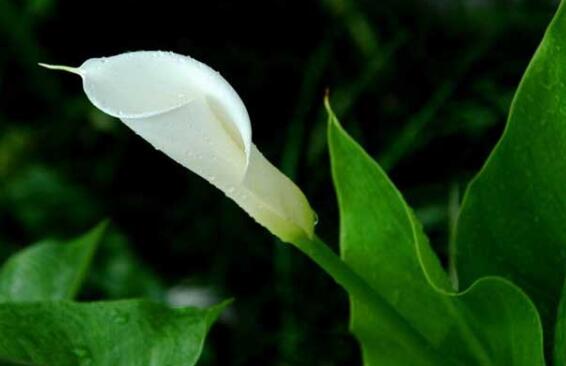
There are many calla lily varieties with rich flower colors - white, red, pink and so on, each one amazingly beautiful! If you grow just one kind on its own, does it feel monotonous? It is time to propagate a few more pots of calla lilies in different colors. As for how to propagate calla lilies, there are mainly three methods: division, seeding and bulb division. Let us take a detailed look next.
II. Three Propagation Methods for Calla Lilies
Division, seeding, bulb division
(1) Division Propagation of Calla Lilies
1. Time for division
If you want to propagate calla lilies, the most common method is division, and choosing the right time is crucial. Time one: May to June, when the old leaves of the calla lily gradually wither and new leaves grow, it can be divided; Time two: mid-September, when the calla lily needs repotting, division propagation can be carried out together with repotting.
2. Potting soil selection
In the calla lily growing methods, we introduced its soil requirements, so all flower lovers carrying out division need to choose the soil well. The potting soil for division propagation can be made by mixing fertile sandy garden soil, leaf mold and decomposed organic compost in a 3:1:1 ratio, plus an appropriate amount of superphosphate. Note that the soil needs to be sterilized by exposure to the hot sun.
3. Starting division propagation
When repotting in September, divide the roots of the calla lily, and remember to dip the cuts in plant ash to achieve a disinfecting effect. Then, according to the size of the calla lily rhizomes, plant them separately in clay pots of different sizes. Each pot can hold 1 to 3 rhizomes, with the buds facing upward.
4. Care after division
After completing the above steps, the division propagation of the calla lily is basically done, but of course the remaining care is also very important. After propagation, do not water immediately to avoid root rot; just keep the potting soil moist. Flower lovers can first place the pots in a semi-shaded spot with little light, and after sprouting, move them to a spot with light for normal care and management.
(2) Seeding Propagation of Calla Lilies
1. Calla lily seeds
Besides division, calla lilies can also be propagated by seeding. When the calla lily seeds are mature and harvested, they should be sown right away, because the seeds have a short lifespan and are not suitable for long-term storage. Environment: mainly indoor pot sowing, with an optimum germination temperature of 18 to 24°C.
2. Starting sowing
Seeding propagation is best done by pot sowing. Flower lovers sow the prepared seeds in a pot, cover with 1.0-1.5 cm of soil, press down lightly, water thoroughly, and keep the room temperature at around 20°C; they will germinate in 2-3 weeks. After seeding propagation, the calla lily will bloom after 2 years of careful cultivation.
(3) Bulb Division Propagation of Calla Lilies
Bulb division is also one of the propagation methods for calla lilies. When it enters the dormant period, we can cut off the small spherical plants around its tubers and plant them separately.
It is worth mentioning that the dormant period of calla lilies varies with different regions. When cultivated in the Yangtze River basin of China and the north, calla lilies enter dormancy in summer due to high temperature and drought; while in subtropical regions where winter is not cold and summer is not dry and hot, calla lilies do not go dormant all year round.
How to Propagate Calla Lilies from Seed
The calla lily is a rather precious flower, and its flowers and leaves both have high ornamental value, but in the north the calla lily is generally propagated by division, which has a low propagation rate. According to the author's experience, in the north the calla lily can be propagated from seed, and with a high propagation rate. Each inflorescence can bear about 250 seeds, with a germination rate and survival rate above 90%. The method is as follows:
From early February to late April, select white, robust, large-flowered calla lily varieties and use artificial pollination: when the calla lily flower has just opened, without damaging its tissues, gently tear off the spathe so that the pistils at the lower part of the flower spike are fully exposed. Pollination should be thorough; to ensure successful pollination, pollinate once a day for 2 to 3 consecutive times. Cross-pollination should be used, and during this period the temperature must be well controlled, around 20°C during the day and around 10°C at night, avoiding excessively high temperatures. About 15 days after pollination the ovary noticeably enlarges, and it matures in about two months. The fruit is spike-shaped and orange-yellow, like a small pineapple. Wash off the flesh, dry it, and store it in a ventilated, dry place.
Start sowing in early August. Before sowing, it is best to pre-germinate the seeds by soaking them in hot water at around 70°C; after the water cools, pour it off, cover with several layers of wet cloth, keep moist, and rinse with water once every two days. They sprout in about 15 days. Sow in a prepared seedbed or shallow pot, covering the seeds with soil just enough. Note that you should provide appropriate shading, keep humidity rather high, and not let the temperature get too high. In this way the seedlings will emerge from the soil in about a week, and afterwards they can be managed according to the general calla lily management methods.
How to Propagate Calla Lilies from Seed
China Landscape Web, September 14 news: The calla lily is a rather precious flower, and its flowers and leaves both have high ornamental value, but in the north the calla lily is generally propagated by division, which has a low propagation rate. According to the author's experience, in the north the calla lily can be propagated from seed, and with a high propagation rate. Each inflorescence can bear about 250 seeds, with a germination rate and survival rate above 90%. The method is as follows:
From early February to late April, select white, robust, large-flowered calla lily varieties and use artificial pollination: when the calla lily flower has just opened, without damaging its tissues, gently tear off the spathe so that the pistils at the lower part of the flower spike are fully exposed. Pollination should be thorough; to ensure successful pollination, pollinate once a day for 2 to 3 consecutive times. Cross-pollination should be used, and during this period the temperature must be well controlled, around 20°C during the day and around 10°C at night, avoiding excessively high temperatures. About 15 days after pollination the ovary noticeably enlarges, and it matures in about two months. The fruit is spike-shaped and orange-yellow, like a small pineapple. Wash off the flesh, dry it, and store it in a ventilated, dry place.
Start sowing in early August. Before sowing, it is best to pre-germinate the seeds by soaking them in hot water at around 70°C; after the water cools, pour it off, cover with several layers of wet cloth, keep moist, and rinse with water once every two days. They sprout in about 15 days. Sow in a prepared seedbed or shallow pot, covering the seeds with soil just enough. Note that you should provide appropriate shading, keep humidity rather high, and not let the temperature get too high. In this way the seedlings will emerge from the soil in about a week, and afterwards they can be managed according to the general calla lily management methods.