How to grow potted osmanthus? Cultivation methods and precautions for more watering and sunlight
When it comes to osmanthus, I believe everyone is familiar with it. Many people think osmanthus can only be planted in the ground, but that is not actually the case. With the advancement of potting techniques, osmanthus can also be grown at home. Osmanthus fragrance drifts for ten li, deeply loved by people. But many people do not know how to grow potted osmanthus. Below we will take a look at the cultivation methods and precautions for potted osmanthus.
I. How to grow potted osmanthus, avoid strong direct sunlight
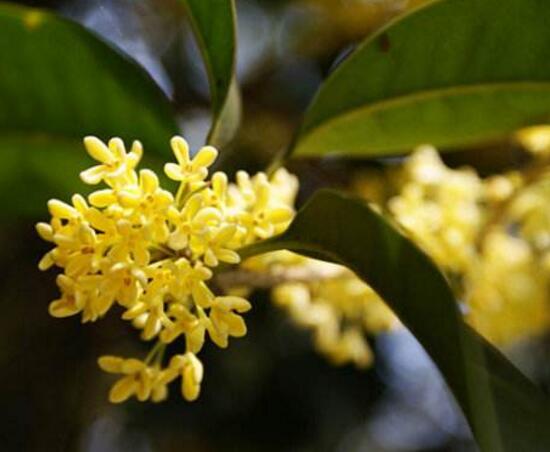
The floral fragrance of osmanthus is famous for drifting for ten li. Earlier we said osmanthus can be grown in pots at home, so how do you grow osmanthus? In the cultivation methods and precautions for potted osmanthus, what needs attention is its watering amount and light. Osmanthus likes sunlight, but strong direct sunlight should be avoided, and watering should be done until thoroughly soaked. As long as you pay attention to these two points, growing osmanthus well is not a problem.
II. Cultivation methods and precautions for potted osmanthus
1. Selection of potting soil and flower pot
When potting osmanthus, the potting soil can be prepared with mountain soil/leaf mold : garden soil : sandy soil at 5:3:2, or with garden soil : manure : river sand at 1:1. When potting, decomposed organic fertilizer such as bone meal should be added as base fertilizer. When potting osmanthus, it is recommended to choose a clay pot with good air permeability for planting. Place a tile at the bottom to facilitate drainage.
2. Planting time
How to grow potted osmanthus? First we need to pay attention to its planting time. The planting time for osmanthus should preferably be chosen in late autumn from November to early December, or in spring from February to early March. Seedlings should preferably be potted in spring to avoid frost damage in winter. After potting, water thoroughly, place in a ventilated area to recover, and after 1 week move to a sunny place for care.
3. Watering
For osmanthus potting soil, master the principle of not watering when dry and watering thoroughly when watering. Generally, water once every 3-4 days in spring and autumn, once a day during high summer temperatures, and once every 7-10 days in winter. In summer, water in the morning and evening, and in winter water before or after noon, so that the water temperature is close to the soil temperature, avoiding sudden cold or heat that damages the root system. In autumn, water moderately, and during the plum rain season prevent the potting soil from becoming too wet or waterlogged.
4. Fertilizing
Osmanthus is mainly grown for its flowers, so it should be supplied with sufficient fertilizer. When new shoots appear, apply nitrogen fertilizer 1-2 times to promote branch and leaf growth; before flower bud differentiation and flowering, mainly apply phosphorus fertilizer. Before fertilizing, the potting soil should be slightly dry, and it is best to loosen the soil first so that the fertilizer can be absorbed. Water once on the second day after fertilizing. If using compost or manure, it must be fully decomposed before use. If using the chemical fertilizer superphosphate, its concentration must not exceed 2%.
5. Pruning
The shaping and pruning of osmanthus should preferably be done after autumn, cutting off overly strong upper branches to balance the tree's vigor. Dense branches should be thinned out, and diseased and weak branches removed, so that nutrients are concentrated and flowering is promoted. Shaping and pruning combined with water and fertilizer management can improve the healthy growth of potted osmanthus and maintain a beautiful form. Now that we know how to grow potted osmanthus and the cultivation methods for osmanthus, let us look at its precautions.
III. Precautions for growing osmanthus
1. Prevent excessive shade and dampness. Osmanthus is a long-day flowering plant, likes strong light, and tolerates partial shade. Insufficient light and excessive shade and dampness easily lead to sooty mold, causing leaf drop, leggy growth, thin and weak branch tips, poor flower bud differentiation, and thus affecting flowering, or failure to bloom.
2. Prevent weakness. Osmanthus requires relatively high fertilizer and water conditions. Insufficient nutrition will cause poor growth and affect flowering quality. Apply a nitrogen-based fertilizer once before each flush of shoots, in December, June and September.
3. Prevent smoke pollution. Osmanthus is most afraid of smoke and dust pollution. In an environment polluted by coal smoke and dust, the leaves will lose green color, become smaller and easily fall off, bloom less, have poor flower quality, or even fail to bloom. If dust stains the leaves, spray water to wash them and keep the leaf surface clean. The above is how to grow osmanthus and the cultivation methods and precautions for potted osmanthus. We hope it can help you.
Cultivation methods and precautions for Michelia alba
Chinese scientific name: BailanLatin scientific name: Michelia alba DC.Other names: Baimianhua, Bailanhua, Mianmihua, Tiannü Mulan, HuangjuelanBinomial name: Michelia x albaKingdom: PlantaeDivision: AngiospermsClass: DicotyledoneaeSubclass: ArchichlamydeaeOrder: MagnolialesFamily: MagnoliaceaeTribe: Trib. MagnolieaeGenus: MicheliaSubgenus: Subgen. MicheliaSpecies: Michelia albaSubspecies: Michelia albaDistribution area: native to Java, Indonesia; South China, Southwest China and Southeast AsiaPinyin: bai lanEnglish name: PrynneFlower language: pure love, sincerityMichelia alba, aliases: white jade orchid, white orchid, white magnolia, Tiannü magnolia, yellow orchid, yellow fruit orchid, etc. It belongs to the Magnoliaceae family, Michelia genus, and is a tree obtained by natural hybridization of Michelia champaca and Michelia figo. It grows in South China, Southwest China and Southeast Asia, and is an evergreen native plant. Its flower shape resembles the bud of a yellow tree, and it can generally grow to a height of 10-13 m. It is commonly seen in southern China, grows easily, is fragile, and is often picked by passersby. Flower language: pure love, sincerity. It is designated by Buddhist temples as one of the "Six Flowers" among the "Five Trees and Six Flowers."1. Morphological characteristics
Growth habitsEvergreen tree, up to 17 m tall, with widely spreading branches forming a broad umbrella-shaped crown; DBH can reach 50 cm; bark gray; crushed branches and leaves aromatic; young branches and buds densely covered with pale yellowish-white fine pubescence, hairs gradually falling off when old. Leaves thinly leathery, oblong or lanceolate-elliptic, 10-27 cm long, 4-9.5 cm wide, apex long-acuminate or caudate-acuminate, base cuneate, hairless above, sparsely pubescent below, both sides with very obvious reticulate veins when dry; petiole 1.5-2 cm long, sparsely pubescent; stipular scar reaching the middle of the petiole. Flowers white, extremely fragrant; tepals 10, lanceolate, 3-4 cm long, 3-5 mm wide; connective of stamens extending into a long pointed tip; gynoecium pubescent, gynophore about 4 mm long, carpels numerous, usually partly undeveloped, at maturity forming a loosely arranged aggregate fruit as the receptacle extends; follicles bright red when ripe. Flowering period April-September, blooming profusely in summer, usually not fruiting.
2. Growing environment
It likes light, fears high temperatures, is not cold-tolerant, and is suitable for slightly acidic soil. It likes warmth and humidity, is not tolerant of drought or waterlogging, and is relatively sensitive to toxic gases such as sulfur dioxide and chlorine, with poor resistance.3. Distribution range
Distribution areas: currently cultivated in Beijing and south of the Yellow River basin. In ancient times it was mostly planted in front of pavilions, terraces, towers and chambers. Now it is mostly seen in gardens, factories and mines as solitary plantings, scattered plantings, or as street trees on both sides of roads. In the north it is also grown as potted stump bonsai.Native to Java, Indonesia, now widely planted in Southeast Asia. In China's Fujian, Guangdong, Guangxi, Yunnan and other provinces and regions it is cultivated very extensively, while in the provinces and regions of the Yangtze River basin it is mostly potted and overwintered in greenhouses. There are also about 49 species in the same genus. The flower of Michelia alba has a very unique and pleasant fragrance, so it is generally grown as an ornamental plant to bring fragrance to gardens. Michelia alba generally blooms twice, the first time in summer and the second time in autumn, with more flowers in summer, and the flower color is generally milky white. Leaves light green, alternate, oblong with a relatively pointed tip, leathery, epidermis hairless, about 10-20 cm long.
4. Propagation methods
Propagation: layering and grafting are commonly used. For layering, use the air layering method in June-July, keep moist, and roots form after about 2 months. For grafting, use 2-year-old Magnolia biondii as rootstock, select Michelia alba branches of the same thickness as the rootstock during the plum rain season, and after grafting they heal in 60-70 days; cut away from the mother plant to form a new plant. Propagation of Michelia alba can usegrafting, layering, cuttings, sowingand other methods, but the two most commonly used are grafting and layering.Pruning
For potted Michelia alba, choose a suitable height and use pruning shears to cut off the terminal bud and shorten some side branches. After the terminal bud is cut off, it is beneficial for growing more side branches, more flower buds and more flowers.Grafting
[Grafting propagation] In the grafting method there are two types of grafting, one is approach grafting and the other is cut grafting.Approach grafting: the time for approach grafting can be from spring to autumn, throughout the whole growing season. It is mostly done from April to July. The best position for approach grafting is 70 cm above the ground. After binding, wrap with a mud ball and cover the outside with leaves to prevent rain from washing it away; after about 60 days it can be cut away. Approach grafting is an easier method to succeed with, but growth is not as vigorous as with cut grafting.
Layering
[Layering propagation] There are also two types of layering propagation: ordinary layering and air layering.① Ordinary layering: layering is best done in February-March. Cut halfway into the base of the branch to be layered, then cut upward a section, insert a tile in the middle, then gently press it into the soil without breaking it, insert a U-shaped thick wire into the soil to fix it and prevent it from lifting, then pile soil on top. For spring layering, once root buds appear it can be cut away and planted separately.
② Air layering: before the dog days, select healthy and disease-free young branches on the mother plant (1.5-2 cm in diameter), cut a slit at the lower part of the branch fork, then cover with a bamboo tube or bottomless clay pot, fill it with culture soil, tie it tightly outside with fine string, being careful not to disturb it, and spray a small amount of water frequently to keep it moist. New roots can grow around May of the following year, then remove and plant in place.
5. Main value
Landscape value
Michelia alba has an upright, branching plant form and is elegant. In the south it can be cultivated in open courtyards and is a backbone tree species in southern gardens. In the north it is potted and can be used to decorate courtyards, halls and meeting rooms. Small and medium-sized plants can be placed in living rooms and studies. Because it fears smoke, it should be placed in a well-ventilated area. Besides being viewed for both flowers and leaves, as a fragrant plant Michelia alba can also serve as both spice and medicine. Michelia alba containsaromatic volatile oils, antioxidants and bactericidal substancesand other substances, and can beautify the environment, purify the air, and fragrance the room; moreover, the essential oil and dried spice substances extracted from it can also be used in cosmetics, bathing, food and medicine. Not only can Michelia alba extract be used medicinally, the whole flower can also be directly used as medicine. It is said to have excellent effects on chronic bronchitis, chronic cough due to deficiency, prostatitis and so on.In addition, Michelia alba can also be used to scent flower tea. According to relevant records, pure Michelia alba tea "has a tight and heavy appearance, dark green and still moist color, fresh, rich and lasting aroma, thick and still mellow taste, yellow-green and bright liquor color, and tender, even and bright infused leaves." In the 1960s-70s, some young women in Hong Kong, China and Guangdong liked to tuck it into their hair, and after the 1980s those wearing flowers in their hair were mostly middle-aged and elderly women.
The flowers are white and fragrant, opening between summer and autumn, with a long flowering period, and the leaves are dark green. It is a famous garden ornamental tree species, often planted as a street tree. The flowers can be used to extract essence or scent tea, and can also be made into extract for medicinal use, with effects such as promoting qi flow and transforming turbidity, and treating cough. Fresh leaves can be used to extract aromatic oil, called "Michelia alba leaf oil," which can be used to blend essences; root bark is used as medicine: to treat constipation.
Medicinal value
Nature, flavor and meridian entry: bitter and pungent, warm. Enters the lung and spleen meridians.Usage and dosage: oral administration: decocted in water, 15-25 grams.
Aliases: Bailan, Baiyulan (Flora of Guangzhou)
Distribution of animal and plant resources: cultivated in Fujian, Guangdong, Guangxi, Yunnan, Sichuan, Jiangsu, Zhejiang, Anhui, Jiangxi and other places.
Harvesting and storage of medicinal material: when flowers open in late summer and early autumn
harvest, use fresh or dry in the sun.
Latin name: MicheliaalbaDC.
Textual research: from Sichuan Chinese Materia Medica.
Chemical constituents of the Chinese medicine: leaves contain alkaloids, volatile oils and phenolics. Fresh leaves contain 0.7% oil; the main components of the oil are linalool, methyleugenol and phenylethyl alcohol. Root and stem bark contain ushinsunine and oxidized ushinsunine.
Skincare benefits
Michelia alba extract can brighten skin tone and improve problems such as sallow complexion and uneven skin tone. Many cosmetics have already added Michelia alba as an active ingredient.
Feng shui value
1. Michelia alba is a white-flowered plant, relatively suitable for planting in the bedroom, and is especially recommended for people whose Chinese zodiac signs are Rat and Pig, because people with these two signs are best suited to growing flowers and plants belonging to metal and water; at the same time, in years of Yi and Geng, people whose Five Elements belong to metal, such as those born in 1955, 1960, 1965, 1970, 1980, 1985 and other years ending in 5 and 0, are most suitable to grow white-flowered plants in the bedroom, or plants that look more austere. For this kind of friend, Michelia alba is a good choice. In addition, the flower language of Michelia alba is: pure love, sincerity. Growing Michelia alba in the bedroom is helpful for strengthening the relationship between husband and wife.2. The growing environment of Michelia alba improves the living environment of the residence and also improves the feng shui environment dominated by the owner. Michelia alba likeswarmth and humidity, is suitable for good ventilation and sufficient sunlight, fears cold, avoids dampness, neither likes shade nor tolerates sun scorch. Such living requirements give the owner a standard for judging whether the home environment is suitable for warmth, humidity and ventilation. If a home's Michelia alba grows well, it proves that all these conditions have been met. These conditions are precisely the standards for judging whether a house has good or bad feng shui. If you do not know whether your home's feng shui is good or not, plant a Michelia alba and judge for yourself.
3. The fragrance of Michelia alba creates good feng shui at home. We all know there is a perfume called Michelia alba, and itseffectsare quite good: aromatherapy makes people feel relaxed and joyful, refreshes the mind, promotes appetite, and stimulates the body's latent immunity; aromatherapy can purify the air, improve air quality, and create a pollution-free living space for humanity; aromatherapy can promote metabolism, reduce fatigue, and help maintain respiratory function; aromatherapy can create a romantic atmosphere, romance and aphrodisiac effects, and promote desire; aromatherapy can regulate physiological functions, nourish and beautify, relieve mental stress, promote vitality, and improve work efficiency. Let us imagine: in daily life at home, a residence that lets us eat well, live well, work smoothly and be healthy is a residence with good feng shui. Perfume made from Michelia alba can make us live energetically, and the main ingredient of Michelia alba perfume is Michelia alba. Place a Michelia alba at home, and believe that its effect will not be much less; the above ideals of life will sooner or later be realized.
6. Cultivation techniques
Flower pot and soil
For household potted Michelia alba, choose loose soil with strong air permeability and relatively rich humus for cultivation. Usually choose a clay pot or purple clay pot (jar) with good air permeability, or a plastic pot with more bottom holes. The soil in the pot should preferably contain a certain amount of granular soil of different sizes to facilitate water seepage and air permeability.Repotting
According to the size of the crown and the length of the tree's age, replace with a pot or jar of appropriate size to facilitate vigorous plant growth. When doing this, wait until the potting soil is slightly dry, slowly tilt the pot (jar) (or turn it upside down), support the pot with one hand, grasp the plant firmly with the other, and pour the Michelia alba out into a new pot. The new pot (jar) should first be lined with a small amount of loose soil, then water thoroughly immediately, and once planting is stable it is fine.Planting position
From March to April each year, move the pot or jar containing Michelia alba outdoors and place it in a sunny spot. Summer temperatures are high, so use a shade net as appropriate or build a simple shade shed, so that Michelia alba can receive the morning sun while avoiding the strong light of summer afternoons (to avoid scorching branches and leaves due to exposure).Fertilizing
During the vigorous growth period of Michelia alba (usually May-June or July-August each year), apply flower fertilizer to Michelia alba about once every half month, or apply a small amount of nitrogen, phosphorus and potassium compound fertilizer at intervals of about 20 days, 2 grams to 6 grams each time.The specific operation is: first use a small iron shovel to draw several vertical and horizontal small trenches in the soil in the pot, then slowly sprinkle the fertilizer into the trenches, then cover with the surface soil in the pot, and water a little. Let the fertilizer gradually penetrate to the plant's roots with each watering. Never sprinkle fertilizer directly onto the roots, to avoid "burning roots" caused by excessive fertilizer effect in the soil around the roots. Apply thin fertilizer frequently; cake fertilizer is preferable. Do not fertilize in winter. From after new buds appear until June, apply fertilizer water once every 3-4 days; from July to September, apply fertilizer water once every 5-6 days; after applying fertilizer several times, stop applying once.
Watering
Whether watering is appropriate is the key to maintaining Michelia alba well. Michelia alba should not be watered too frequently or excessively. The correct watering method should be: moisten the soil in the pot thoroughly in one go, and when the soil in the pot is slightly dry there is no need to water. Remember not to water every day, but you can frequently use a small spray bottle to spray water on the leaves. In summer, water thoroughly no fewer than three or four times a month (in addition to spraying water on the leaves). An easier method to master is: as long as you see the leaves of Michelia alba drooping, it is time to water. In autumn, water thoroughly two or three times a month, and in winter water thoroughly once or twice a month.Because the root system is fleshy, it fears waterlogging and is not tolerant of dryness. In spring when it comes out, water thoroughly once, then water thoroughly once every other day; in summer, once in the morning and once in the evening, and in case of severe drought spray water on the leaf surface; in autumn, once every 2-3 days; in winter reduce water, as long as the potting soil is slightly moist; after rain, promptly pour off accumulated water.
Temperature
It is not cold-tolerant. Except in South China, in other regions it must be brought indoors for care in winter, and the minimum room temperature should be kept above 5°C. The suitable time to move it outdoors is from Qingming to Guyu.7. Plant care
Management and care
July, August, Septemberis the peak growth season for Michelia alba and also its peak flowering season. During this period, improper care can cause leaves to wither and even the whole plant to die. With good care, it will have luxuriant branches and leaves and continuous blooming. According to the author's experience, care during this period should master the following points:1. Light should be soft. Michelia alba likes light. In summer it can be placed under a shaded flower shed. In the morning open the curtain and let it receive sunlight. After 9 o'clock, cover it well to block sunlight, and especially avoid direct strong light at noon.
2. Water frequently.
Michelia alba likes humidity. In summer it should be watered frequently, preferably thoroughly once in the morning and once in the evening each day. On days with high temperatures, spray water twice each in the morning and afternoon on the leaves and surrounding area to increase humidity. Because its roots are fleshy roots and fear waterlogging, on rainy days it should be watered less or not at all. If it is exposed to rain, promptly pay attention to drainage in the pot to prevent the roots from rotting due to soaking, which can cause the whole plant to die. Because Michelia alba is a typical acid-loving flower and fears alkalinity, and northern water is relatively alkaline, long-term use can easily cause leaves to yellow and fall off, so when watering it is best to alternately use stored rainwater, or water with ferrous sulfate solution.
3. Fertilizer should be heavy. During the growing period, Michelia alba likes heavy fertilizer and heavy water. Not only should it be watered well, it should also be fertilized well. Liquid fertilizer is best. Mix horseshoe slices, sesame paste and ferrous sulfate in a ratio of 1:1:0.5, soak in water for one week, and after fermentation dilute with clean water and apply once every 5 days for better effect; the flowers and leaves will be broad and thick, and the flowers richly fragrant. Prevent diseases and pests. In summer Michelia alba is most easily harmed by red spider mites. Usually spray more water on the leaf surface and the plant to increase humidity and prevent pest occurrence. If occurrence happens, when the number is small, use a sprayer to spray clean water to wash the leaves; when the number of pests is large, spray 1000 times diluted 20% dicofol emulsifiable concentrate to kill the pests.
After Michelia alba enterswinter, the following points need to be done well for it to overwinter safely.
1. Temperature. Whether Michelia alba can overwinter safely, temperature is a major key. After the Start of Autumn, Michelia alba should be moved indoors, and the temperature should be maintained at 5-10°C. When the temperature is too high, cool it appropriately.
2. Humidity. It is necessary to spray into the air frequently to increase the humidity of the surrounding environment. On clear mornings from 10 a.m. to 2 p.m., it is suitable to open windows for ventilation, but avoid cold wind from the north.
3. Light. After Michelia alba is moved indoors, place it in a sunny spot.
4. Moisture. Watering should be controlled; water only after the potting soil is completely dry, and fertilizing is prohibited.
5. Around Qingming is the transition stage. When the temperature is warmer, the plant can be moved outdoors at noon to a sunny, wind-sheltered place for leaf spraying, then moved back indoors in the afternoon. When the temperature stabilizes above 10°C, it can be moved outdoors for normal care.
Precautions
White orchid (Michelia alba) is a tropical tree species that loves warmth and light, fears cold and smoke. Whengrown in pots in the north, the following 6 points need attention:1. Do a good job of freeze protection and insulation. During the day, keep the indoor temperature above 12°C, and at night no lower than 6°C, otherwise it is prone to low-temperature cold damage. Air circulation and keeping the potting soil moist are necessary for safe overwintering.
2. Move it outdoors around the Beginning of Summer. Place it in a sunny and ventilated spot, with sunlight of more than 6 hours. Only with sufficient light can it grow well; with insufficient light, it will produce leggy branches and leaves, bloom less, or even not bloom at all. In the hot midsummer season, the intensity of sunlight should be slightly shaded to avoid scorching the leaves and tender stems.
3. Prevent smoke pollution and keep the leaf surface clean. When necessary, spray-wash the leaves to facilitate normal plant development and growth.
4. White orchid has fleshy roots. In summer and autumn, when temperatures are higher, the watering amount should be larger; in winter, keeping the potting soil moist is sufficient. Be sure to prevent the potting soil from becoming too wet or waterlogged, otherwise it will affect root growth, and in severe cases the roots will turn black and rot, causing leaves to yellow, drop, and the plant to die.
5. Starting from when it is moved outdoors until the end of June, water with alum fertilizer water once every 7-10 days to make the soil slightly acidic. During the flowering period, additionally apply ~ times of quick-acting phosphorus fertilizer to keep it fragrant continuously.
6. Before bringing it indoors, prune off dead branches, diseased branches, leggy branches and overly dense branches to minimize the plant's nutrient consumption; when moving it outdoors, the old leaves on the lower part of the branches can be appropriately removed to help promote new branch growth. In addition, attention should be paid to aphids and other pests that harm tender shoots, which must be controlled in time.
8. Species differences
Varieties in the same genus: there is yellow orchid, also called yellow Burmese osmanthus, orange-yellow, with a sweet, moist fragrance similar to osmanthus, more fragrant and rich than white orchid! Its flowering period is a little later than that of white orchid.Banana shrub (Michelia figo), with flowers smaller than white orchid, yellow-white, solitary in leaf axils, with a banana-like fragrance.
9. Plant culture
Flower language
Pure love, sincereHow to grow four-season osmanthus and what to do when four-season osmanthus drops leaves
Four-season osmanthus is a plant that blooms in all four seasons. In northern regions, four-season osmanthus is mostly grown in pots, and it also has high economic value, so many flower lovers grow it indoors. So, how do you grow four-season osmanthus? What should you do when four-season osmanthus drops leaves? Below, we will introduce the cultivation methods for four-season osmanthus, as well as the causes of and solutions for four-season osmanthus leaf drop.
How to grow four-season osmanthus
1. Choose good potting soil
Osmanthus likes slightly acidic, well-drained, fertile sandy loam. In strongly acidic soil, osmanthus grows slowly, with yellow and withered leaves and few branches; in soil with a pH value of 3-4, grafted two-year-old seedlings produce 2-3 branches in the same year, with branch length of only 6 cm, which is 2 times fewer branches and 1-2 times shorter than in soil with a pH value of 6. In alkaline soil, leaf withering appears in two to three months, and the plant gradually dies.
2. Watering
Four-season osmanthus likes a high-temperature, dry environment, so watering must be well controlled. In summer, water more to keep soil moisture at about 50%, which is most suitable. During rainy and budding periods, water less, and prevent water accumulation in the potting soil to avoid root rot. In summer, provide shading; the temperature must not be higher than 35°C, and spraying water around the flower pot can achieve a cooling effect.
3. Fertilizing
Lush flowers depend on fertilizer. Osmanthus likes pig manure. It can be mixed into the potting soil, or applied at the bottom of the pot after being composted and dried in the sun. The fertilizer amount should be based on 1/4 of the pot height; cover the fertilizer with a layer of soil about 1 cun-2 cun thick, then plant the four-season osmanthus, and no further fertilization is needed within one year. In cities where pig manure is unavailable, donkey, horse, or mule hoof tips can be composted into liquid; water once when sprouting in spring, and before August, water once every 7-10 days. Sauce residue, fried soybeans, or fried raw peanuts can also be ground into powder and buried in the potting soil in holes dug around the roots. According to observation: with sufficient fertilizer, the flowers are lush and fragrant, with 2-3 times more flowers. With insufficient fertilizer, there are fewer branches, fewer flowers, and the flowers are not fragrant.
4. Pruning
Four-season osmanthus can be pruned in spring and autumn. The first time is after flowering in autumn, then prune off the relatively long and overly dense branch tips, leaving stout short branches. The second pruning is in early spring before sprouting, pruning off dead branches, weak branches, and diseased branches so that it can sprout better. Generally, meeting the requirements of being short and sturdy, with a thick trunk and evenly distributed branches and leaves is sufficient.
5. Preventing and controlling pests and diseases
Four-season osmanthus has relatively many pest and disease problems, including brown spot disease, blight spot disease, anthracnose, etc. Corresponding medicines can be selected to eliminate them, or they can be removed manually.
What to do when four-season osmanthus drops leaves
1. Loosen the soil of the four-season osmanthus tree
When buying an osmanthus tree, whether it comes with a flower pot, repotting the osmanthus tree causes root injury, and the recovery time is very long.
Remedial measures: if the root injury is not serious, it can still produce new leaves; if observation shows it is not working, prune branches to preserve its life.
2. Outdoor placement of the osmanthus tree
Osmanthus is a woody plant and does not adapt well in summer. It is not suitable to place it indoors for too long. Generally, after about 2-3 days it should be placed outdoors for about a week to let it get sunlight and dew, otherwise the four-season osmanthus will drop leaves or turn yellow, and eventually die.
3. Watering the four-season osmanthus tree
(1) Too little watering
Watering was not done well. Because the osmanthus tree has grown in the pot for a long time, when we water, the water we pour does not soak through the potting soil, but flows away directly from the edge of the pot, causing the osmanthus tree to lack water. If this is the case, use a container slightly larger than the pot, fill it with water, place the whole flower pot in the water, and let the potting soil absorb water; this should solve the problem. After the osmanthus tree resumes vigorous growth, repot it at a suitable time.
(2) Too much watering
Osmanthus tree leaves falling off due to too much water: four-season osmanthus is a drought-tolerant plant, so do not water too frequently. Poor drainage or overly wet potting soil can cause poor growth, root rot, leaf drop, and ultimately the death of the entire plant.
The above are the cultivation methods for four-season osmanthus, as well as the causes of and solutions for four-season osmanthus leaf drop. Is everyone clear now? For more home knowledge, please stay tuned.