How to Propagate Cyclamen? Seed Propagation Is Fast and Convenient
Cyclamen (Cyclamen persicum), as its name suggests, looks fresh and refined, unlike any ordinary flower, and has attracted countless flower lovers to grow it at home. However, a single cyclamen plant looks a bit sparse, and some growers want to propagate more to make the blooms even more beautiful. So how do you propagate cyclamen? Cuttings are not suitable for it; sowing, division, and tissue culture are the propagation methods for cyclamen. Let's take a look together.
I. How to Propagate Cyclamen: Sowing / Division / Tissue Culture
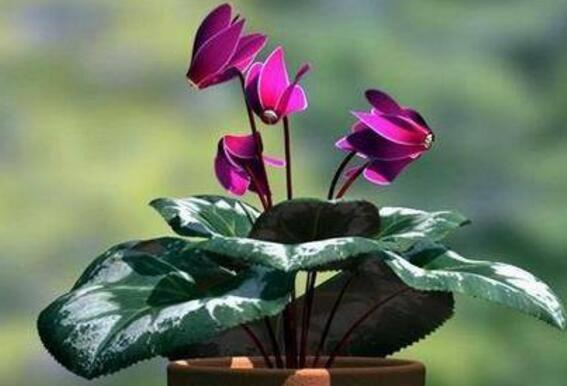
As an excellent choice for indoor growing, cyclamen not only has beautiful flowers but also a long blooming period, and it can be seen during major holidays, making it truly beloved. The benefits and effects of cyclamen have destined it to be widely popular, and its propagation methods receive much attention. It is understood that there are mainly three propagation methods for cyclamen: sowing, division, and tissue culture.
(1) Cyclamen Seed Propagation
When it comes to flower propagation methods, everyone will surely think of cuttings, because they are simple and easy to learn. However, the propagation methods for cyclamen do not include cuttings, but rather the more complex seed propagation. The specific steps are as follows:
1. Cyclamen Seeds
Cyclamen seeds can only be obtained after artificial pollination. The seeds generally mature in May and should be collected promptly. Cyclamen seeds are relatively large, with a thousand-grain weight of about 10 g, and a general germination rate of 85%-95%. To promote seed germination, there are the following three methods:
① Before sowing, seeds can be soaked to promote germination. Soak seeds in cold water for 24 h or in warm water at 30°C for 2-3 h, then wash off the sticky substance on the seed surface, wrap them in a wet cloth to promote germination, and keep them at 25°C for 1-2 d. Once the seeds show slight signs of sprouting, they can be taken out for sowing.
② Alternatively, wrap plump seeds in gauze, soak them in warm water at 24°C for 12-24 hours, rub the seed coat clean, and then sow. This method is simpler, but the germination results are somewhat poorer than the previous one.
③ In addition to the above treatment methods, before propagating cyclamen by sowing, growers can also first disinfect the cyclamen seeds with 75% alcohol, rinse with water, then place them successively in 1% mercuric chloride and 10% potassium dihydrogen phosphate solutions for disinfection, afterward rinse clean with water, and then soak them in warm water at 35-40°C for 24 hours before sowing.
2. Soil for Sowing
In the seed propagation method for cyclamen, soil is also crucial. The sowing soil should preferably be sandy loam rich in humus, and can only be used after being finely sieved. Specifically, you can choose 2 parts vermiculite, 2 parts peat soil, and 1 part fine sand, mix evenly, and then sow. You can also directly use sieved humus soil from under deciduous broadleaf forests.
3. Sowing Temperature
When sowing, the seed spacing should be 1-2 cm, and after sowing, cover with 0.5-0.7 cm of soil. After watering by immersion, place them in a dark place to germinate, keeping the temperature at 18°C and humidity at around 90%. To maintain humidity, you can wrap the plug tray with plastic film, and germination will occur in about 20 days. Seedlings emerge in 35-40 days, with an emergence rate of over 90%.
4. Transplanting Seedlings
When the seedling leaves have fully unfolded, the first transplanting can be carried out. For transplanting, ordinary flower pots can still be used, with the same potting soil as for sowing. The seedling spacing should be about 3 cm. After transplanting, immediately water thoroughly with a spray bottle. Afterward, just keep the seedling pot moist. When the seedlings grow 3 leaves and the small corms reach 5-6 mm in diameter, they should be promptly divided and potted. You can directly transplant single plants into small pots with a 9 cm diameter.
The potting soil is sieved and mixed as follows: 2 parts leaf mold, 2 parts garden soil, 5 parts fine yellow sand, and 1 part decomposed manure powder. When transplanting, keep as much of the small soil ball as possible and make it level with the soil surface. After transplanting, water thoroughly and place in a sunny spot indoors. After the seedlings recover and grow, water and fertilize promptly. Generally, they will bloom by the second winter.
(2) Stem Cutting Propagation
Stem cutting propagation, one of the propagation methods for cyclamen, is generally carried out from 1-15 months after flowering in spring or from late August to late September. Any corm with a diameter of more than 3 cm and more than two growth buds can be divided. The division principle is that each piece must have at least one growth bud. The cutting tool must be disinfected to prevent virus transmission. When cutting, use a knife to cut straight down to the root. Treat the cut surface with plant ash, let it dry, and then plant.
(3) Tissue Culture Propagation
For cyclamen tissue culture propagation, flower stamens, tubers, leaves, young stems, etc. can be used as explants, generally collected from one- or two-year-old young plants, among which tubers as explants most easily induce seedling formation. For tubers as explants, MS medium can be selected, with MS+3 mg/L 6-BA+1 mg/L NAA as the induction medium, 1/2 MS+0.3 mg/L NAA as the rooting medium, and MS+3 mg/L 6-BA+0.4 mg/L NAA as the subculture medium.
How to Propagate Cyclamen: Cyclamen Propagation Methods
Cyclamen is very beautiful, named for its meaning of "immortal guests arriving gracefully." Because the price is moderate, many people now grow cyclamen at home as a unique scenery line. However, many people do not know how to propagate cyclamen, let alone understand the specific propagation methods of cyclamen. Below, the editor will introduce how to propagate cyclamen and the propagation methods of cyclamen.How to Propagate CyclamenHow to Propagate Cyclamen
1. Carefully select seeds and carry out seed treatment. Choose plump, glossy brown seeds, soak them in water at about 30°C for 3-4 hours, and then sow. Compared with seeds not soaked, they bloom about 10 days earlier.
2. Cyclamen is a plant that likes moisture but fears waterlogging. Too much water is not conducive to its growth and development, and may even cause root rot and death. Therefore, just keep the soil moist every day, and the amount of water should not be too large.
3. Apply more fertilizer. Cyclamen is also a fertilizer-loving plant. First, start with the soil. Use fertile sandy loam rich in humus for the soil in the pot, replace the potting soil once a year, and apply 2‰ potassium dihydrogen phosphate once each in spring and autumn every year. Avoid applying high-nitrogen fertilizers. This can advance flowering by 15-20 days.Cyclamen Image
4. Cyclamen is not tolerant of high temperatures. Too high a temperature will cause it to enter a dormant state. Therefore, temperature has an extremely great influence on cyclamen. Under normal circumstances, cyclamen is suitable for growing at around 20°C during the day and around 10°C at night. During the seedling stage, the temperature can be slightly lower. In addition, slightly lower temperatures during flower bud differentiation and pedicel elongation are beneficial for flowering. In summer, cyclamen enters dormancy due to high temperatures. If low-temperature conditions are created, it can remain non-dormant, which is beneficial for flowering.
5. Cyclamen likes sunlight. Extending the light duration can promote earlier flowering. Therefore, cyclamen should be placed in a sunny place for care. 6. Hormone treatment: When the young buds of cyclamen appear, gently spray 1 mg/kg gibberellin onto the young buds, 1-3 times a day, which can advance flowering by more than 15 days.Cyclamen Propagation Methods
Cyclamen Propagation Methods
Cyclamen Propagation: Cultivation
1. Germination stage management substrate:
Requires peat and perlite with good air permeability mixed in a certain ratio, with a pH of 6 to 6.5, an EC value of less than 0.5, and moderate humidity. Avoid excessive moisture.Rose-Red Cyclamen Image
Temperature: 18°C.
Light: During the germination period (about 21 days), no light is needed; complete darkness. The air humidity required for seed germination is 95% (preferably with a germination chamber). Cover the plug tray with plastic film.
Covering: After sowing, cover the seeds with vermiculite or perlite, with a thickness just enough to cover the seeds.
2. Management after Germination
Relative humidity: Keep at around 85%. If necessary, spray to increase relative humidity.White Cyclamen Image
Light: When the external light intensity exceeds 35 Klux, it is recommended to use a shade net, or cover the seed plug tray with non-woven fabric to keep the seeds moist.
Fertilization: According to seedling growth, start fertilizing from the 5th week after sowing, with an N:P:K ratio of 1:1:1. Seedling leaves should be glossy. If they appear dark red, fertilization is needed.
Irrigation: Water temperature should be greater than 14°C, water from above.
Transplanting: Transplant in the 10th to 11th week after sowing. Super micro and mini types can be directly potted.Bright Red Cyclamen Image
Cyclamen Propagation: Cultivation
1. Timely repotting: Generally, dormant corms begin to sprout in mid-September, so repot immediately. Do not cover the corm with potting soil. When the newly repotted cyclamen corm is developing new roots, do not water too much to prevent corm rot. Keep the potting soil slightly dry.
2. Pay attention to ventilation and shading: During the growing period, always pay attention to indoor ventilation and shading. When the leaves become dense, increase the spacing between pots to avoid crowding that causes leaves to turn yellow and rot.
3. Strengthen fertilizer and water management: During the growth and development period of cyclamen, fertilize once every ten days, and gradually increase sunlight exposure so that the leaf stalks do not grow too long and affect the appearance.Pink Cyclamen Image
Cyclamen Propagation: Flowering Period
Cyclamen is a light-loving flower, and winter and spring are also its vigorous growth and flowering periods. To make flower buds abundant, give sufficient sunlight during the bud stage and place it in a sunny indoor spot. When cyclamen begins to bloom and continues to form flower buds, the room temperature should be kept at 15°C to 18°C, and must not be lower than 10°C. Too high a temperature shortens the flowering period; above 28°C, the leaves turn yellow. Never place the flower pot on a radiator.
Cyclamen Propagation: Repotting
The first repotting time is between Qingming and Guyu, when cyclamen has grown about 10 leaves. At this time, the outdoor temperature is 18°C-25°C, with a large temperature difference between day and night. After repotting, the nutrient supply area in the substrate can be increased in time, providing the necessary conditions for cyclamen's first vigorous growth period; the second repotting time is from after the Start of Autumn to before Frost's Descent, which is the last repotting. Repotting at this time not only timely increases the nutrient supply area in the substrate but also increases the water storage capacity for each watering, providing sufficient water and fertilizer resources for rapidly growing plants.Dreamy Cyclamen Image
Cyclamen Propagation: Care
Cyclamen likes a warm environment and is not tolerant of high temperatures or severe cold. The maximum temperature must not exceed 30°C, otherwise it will enter a dormant state. High temperatures of around 35°C easily cause rot and necrosis. In winter, it is best to keep it between 10-20°C. Below 5°C, growth is inhibited, leaves curl, and flowers open poorly with dull colors. In summer, place it in a moist, ventilated place, keep the potting soil somewhat dry, and let it fully dormant through the summer.
Cyclamen likes a cool, moist, and sunny environment. The suitable temperature for growth and flower bud differentiation is 15-20°C, with humidity of 70%-75%; in winter during the flowering period, the temperature must not be lower than 10°C. If the temperature is too low, the flower color becomes dull and the flowers easily fall off; if the summer temperature reaches 28-30°C, the plant goes dormant, and if it reaches above 35°C, the tuber is prone to rot.Purple Cyclamen Image
Summary: After reading this article, flower-loving friends, do you have a general understanding of cyclamen propagation? The above is the relevant introduction on how to propagate cyclamen and cyclamen propagation methods. We hope it can be helpful to you.
How to Propagate Cyclamen, Cyclamen Propagation Methods
Cyclamen propagation methods can be divided into two categories: sexual propagation (seed propagation) and asexual propagation (vegetative propagation). The latter includes tuber division propagation, tissue culture propagation, and other forms of vegetative propagation. Today we will introduce how to propagate cyclamen and cyclamen propagation methods.
How to Propagate Cyclamen, Cyclamen Propagation Methods:
Cyclamen seed propagation: Cyclamen seeds are relatively large, about 100 seeds per gram, with a general germination rate of 85%-95%. Seeds often germinate slowly and emerge unevenly. To promote seed germination, soak seeds before sowing to promote germination. Soak seeds in cold water for one day and night or in warm water at 30°C for 2-3 hours, then wash off the sticky substance on the seed surface, wrap them in a wet cloth to promote germination, keep the temperature at 25°C, and after 1-2 days, once the seeds show slight signs of sprouting, take them out for sowing. The time for seed propagation is generally in September-October. Cyclamen likes loose, fertile, well-drained sandy loam rich in humus. The sowing soil can be an equal mixture of leaf mold, loam, and river sand, or a mixture of 3 parts leaf mold, 1 part rice husk ash, and 1 part yellow mud.
When sowing, the seed spacing is 2 cm. Sow in shallow pots or shallow boxes, cover with 0.5-1 cm of soil, water by the immersion method, cover with glass to retain moisture, and preferably cover the glass with a shading material to ensure the seeds are in darkness. After sowing, place the seedling pot in an environment of 15°C-22°C. Seedlings can emerge gradually in about 28-40 days. After emergence, remove the shading material step by step so that the seedlings gradually receive light. When the seedlings have grown 2-3 true leaves, transplant them into small nutrient pots. The planting depth is 1/2-2/3 of the corm. After the root system is stable, fertilization can be carried out, with a nitrogen, phosphorus, and potassium ratio of 2:1:1; when the seedlings grow to 6-8 true leaves, a second transplanting can be carried out, planting them in pots one size larger.
Cyclamen tuber division propagation: Although cyclamen is a perennial bulbous flower, its tuber cannot naturally produce offset bulbs, so it cannot be propagated by dividing bulbs like ordinary bulbous flowers. In horticultural production, cyclamen is mostly cultivated as a one- or two-year-old plant. One- and two-year-old plants grow vigorously and bloom abundantly, while plants over 3 years old, although blooming more, produce smaller flowers, gradually decline in vitality, have difficulty overwintering through summer, and older tubers are prone to rot or poor sprouting after dormancy or even no sprouting at all, so they are mostly discarded and no longer cultivated.
However, such tubers can be treated by cutting to artificially promote tuber proliferation and propagate new individuals. Generally, in late August when the tuber is about to sprout, cut the tuber vertically from the top into several pieces, each piece should have a growth bud. Coat the cut surface with plant ash, let it dry slightly, and then plant separately in flower pots. With careful management, they will soon unfold leaves and bloom. However, this method has the following disadvantages: low propagation coefficient; prone to rot, difficult to manage; plants bloom less, plant shape is not beautiful, tubers are not round and neat, etc. It is relatively rarely used in practice.
Cyclamen tissue culture propagation: In recent years, rapid plant propagation technology has developed rapidly around the world and has formed an emerging industry, applied in numerous horticultural plant production areas. The rapid propagation of cyclamen has also been widely applied in production. Cyclamen rapid tissue culture propagation can use flower stamens, tubers, leaves, young stems, etc. as explants, generally collected from one- or two-year-old young plants, among which tubers as explants most easily induce seedling formation.
For tubers as explants, MS medium can be selected, with MS+3 mg/L 6-BA+1 mg/L NAA as the induction medium, 1/2 MS+0.3 mg/L NAA as the rooting medium, and MS+3 mg/L 6-BA+0.4 mg/L NAA as the subculture medium. Tissue culture has relatively high technical requirements. During propagation, the appropriate explant collection period and collection site should be determined, the best medium formula should be screened, and each step in the rapid propagation process should be strictly carried out according to operating procedures, strictly preventing the occurrence of diseased and weak seedlings.
Other Vegetative Propagation Methods for Cyclamen
In recent years, many studies and active attempts have been made internationally on the vegetative propagation of cyclamen, and many beneficial experiences have been obtained. Among them, the following methods are used more often.
(1) Use tuber segments to carry out tissue culture under sterile conditions to form regenerated plants. This method is essentially a combination of tuber division cutting and tissue culture sterile propagation technology.
(2) Use leaf buds with some tuber tissue for cuttings, which essentially belongs to tuber division cutting propagation.
(3) Cut off the upper part of the tuber in the original pot, then make vertical cuts to divide it, so that regenerated seedlings form. This is actually an improved method of the aforementioned tuber division propagation.
How to propagate cyclamen and cyclamen propagation methods are introduced here. Tissue culture propagation undoubtedly has strong advantages for the rapid promotion of new and superior varieties with good market prospects.