Potted rose cutting propagation method: learn to make your home flowers burst into bloom
The beauty of the rose needs no lengthy description; its blooms are beautiful and its scent is pleasant, making it an ideal plant for the vast number of flower lovers. But one pot of roses is really too monotonous, so how do you turn one pot into ten? This requires us to master the propagation methods of roses. Water culture, grafting, layering, division and so on can all propagate roses, but the most practical and convenient is cutting propagation. Let's take a look together.
1. Rose propagation methods: cuttings/layering/grafting
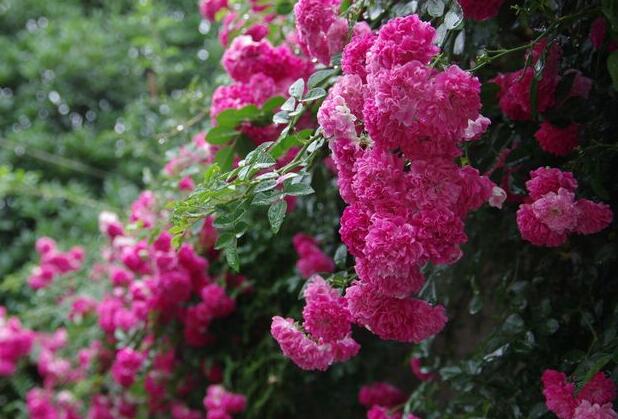
As a mature indoor plant, the rose has many propagation methods, mainly including cuttings, layering and grafting, among which cuttings are the most widely used. Next, let the editor teach you step by step how to master the rose cutting method. The specific operations are as follows:
1. Timing of rose cuttings
To achieve a high survival rate and good growth in propagation, attention must be paid to the cutting time. Spring (May) and autumn (October) are best, when the temperature is between 20-25°C, which is most suitable for cuttings.
2. Pot and soil selection
Before propagating roses by cuttings, we should first choose the pot and soil. For the pot, it is best to use a new shallow clay pot with a 20 cm diameter, as this has good air permeability and is easy for rooting. For the soil, use a growing medium made by mixing 20% humus garden soil, 40% horse manure crumbs and 40% river sand.
Editor's tip: If choosing pot and soil is troublesome for you, because roses have extremely strong vitality, you can go even simpler and directly use a transparent plastic box, then pot them up after the cuttings succeed.
3. Cut the next day
After the pot and soil are chosen, it is best not to start cutting directly. Flower lovers should use a spray bottle the day before to moisten the growing soil in the pot. Be careful not to spray too much; by the next day it will be just slightly moist, which is the most suitable time for cuttings.
4. Cutting selection
Whether the cutting succeeds or not depends more than half on the choice of cutting. When taking cuttings, flower lovers should choose the current year's semi-lignified, healthy and vigorous shoot tips as cuttings, use a very sharp small knife to cut 6-10 cm with a node, the cut should be smooth and neat, remove the lower leaves and keep only 3-4 small leaves at the top.
5. Before cutting
Before cutting, it is best to first buy 1 ampoule of vitamin B12 injection. After opening it, dip the cutting in the liquid, take it out and let it dry for a while, then it can be used for cutting.
6. Starting the cuttings
After the preparatory work above is done, the rest is easy. We directly insert the cuttings into the pot soil, with an insertion depth of 3-4 cm.
Cutting method: When cutting, first use chopsticks to poke a hole in the soil, then insert the cutting, press the soil firm with your hands so that the pot soil and the cutting are fully in contact, then water thoroughly once.
7. What to pay attention to after rose cuttings: water and light
After the rose cuttings are completed, 90% of the work is done. At this point we still need the following points:
① After inserting, it is best to cover the flower pot with a plastic bag and tie the bag opening firmly with a string. Open it when watering is needed, and tie it firmly again after watering.
② The pot with cuttings should be placed in a spot without direct sunlight. The cutting soil should be sprayed with water every day for 10 days. Except on rainy days, spray once on cloudy days, and twice when the climate is dry, but the amount of water sprayed each day should not be too much. After 10 days, still frequently pay attention to keeping the soil moist.
③ Within 4-5 weeks, shade is needed, and only after sprouting can they gradually receive some sunlight. Generally, rooting takes about 2 months, after which only normal care is needed.
8. Rose layering propagation
Although cutting propagation is the most widely used, precious varieties are harder to root from cuttings, so layering can be used, and they can bloom in the same year. When propagating by layering, also pay attention to pruning the main buds and carrying out artificial dwarfing. For seedlings used as cut flowers, choose varieties that can form mother branches for flower harvesting and have large, brightly colored flowers. In addition, roses can also be propagated by tissue culture, water culture, grafting, division and other methods, but none are very practical, so they will not be introduced one by one here.
How to grow Chinese roses? Potted cultivation methods and precautions for Chinese roses
The Chinese rose is called the king of flowers, also known as “Yueyuehong”, and belongs to the Rosaceae family. It is an evergreen or semi-evergreen low shrub that blooms in all four seasons, mostly red, or pink, occasionally white. It can be used as an ornamental plant and as a medicinal plant, and is also called Chinese rose. Its natural flowering period is from May to November, with large, fragrant flowers, widely used in horticultural cultivation and cut flowers. The main types of Chinese roses include cut-flower Chinese rose, edible rose, climbing Chinese rose, ground-cover Chinese rose and so on.
Growth habits
It has strong adaptability, is not tolerant of severe cold or high temperatures, and is drought tolerant. It is not strict about soil requirements, but the best is slightly acidic sandy loam rich in organic matter and with good drainage. The pot soil should be loose, the pot diameter appropriate, moisture moderate, fertilizer applied lightly and frequently, flowers picked and branches pruned, pests and diseases controlled, and the pot changed every year. It likes sunlight, but too much direct strong light is unfavorable to flower bud development and the petals easily scorch. It likes warmth; generally a temperature of 22-25°C is the most suitable temperature for flower growth, and high summer temperatures are unfavorable for flowering.
It needs sufficient sunshine, air circulation, good drainage and a wind-sheltered environment, and needs appropriate shading in midsummer. For most varieties, the most suitable temperature is 15-26°C during the day and 10-15°C at night. It is relatively cold tolerant, and enters dormancy when the winter temperature is below 5°C. If the summer high temperature continues above 30°C, most varieties bloom less, quality decreases, and they enter a semi-dormant state.
Generally, varieties can withstand a low temperature of -15°C. It requires fertile, loose, slightly acidic soil rich in organic matter, but has a relatively wide adaptability to soil. The relative air humidity is preferably 75%-80%, but slightly dry or slightly wet is also acceptable. It has the characteristic of continuous flowering. It needs to maintain air circulation and be free of pollution; if ventilation is poor, powdery mildew is likely to occur. Harmful gases in the air, such as sulfur dioxide, chlorine, fluorides and so on, are all toxic to Chinese roses.
Propagation techniques
Mostly cutting propagation is used, and division and layering propagation can also be used. Cuttings can be carried out all year round, but winter or autumn hardwood cuttings are preferable. For summer greenwood cuttings, attention must be paid to water management and temperature control. Otherwise, rooting is not easy. Winter cuttings are generally carried out in a greenhouse or plastic tunnel; if cutting in the open field, attention must be paid to adding moisture-retention measures. For those propagated by sowing, it is used for sexual hybrid breeding. For a few famous varieties that are difficult to root, grafting propagation is used, and the rootstock is preferably wild rose. Such as the yellow series varieties.
Management methods
Transplanting of Chinese roses is carried out between November and March of the following year. Pruning can be done at the same time as transplanting. First cut off dense branches and dead branches, then cut off old and weak branches, leaving 2-3 outward-growing buds so as to spread in all directions; appropriately shorten particularly strong branches to strengthen the growth of weak branches. In summer, when new branches grow too densely, thin them out. After each batch of flowers fades, promptly cut off the upper part of the branch connected to the faded flower so that it does not set seed and consume nutrients, and retain the full middle and lower branches to promote early new branch growth and blooming again. Chinese roses like, before flowering, a heavy application of base fertilizer and after flowering a topdressing of quick-acting nitrogen fertilizer to strengthen seedlings and force flowers. Chinese roses have strict water requirements and cannot be too wet or too dry; too dry causes withering, too wet damages roots and causes leaf drop.
1. Flowering period control
The Chinese rose is also called “Yueyuehong”, with a natural flowering period from May to November, blooming continuously. However, during the Olympics, flowering period control of Chinese roses is still very important. In particular, potted Chinese roses and cut-flower Chinese roses must have their flowering period well controlled in order to successfully complete the temporary flower display tasks at various venues and stadiums during the Olympics and the supply task of fresh cut flowers.
In actual work, analyze specific situations individually. For field-planted Chinese roses, according to their geographical location, while ensuring continuous flowering, let them bloom more and bloom well from August 8 to 24. The following methods are for reference: Around June 20, prune all faded flowers and part of the already fully bloomed flower branches of field-planted Chinese roses by 50%, cutting to the round bud position at the mature part in the middle of the flower branch; their flowering ornamental period is about August 1-15. Around June 30, prune all faded flowers and all flower branches after full bloom by the above method; their flowering ornamental period is about August 10-25. After June 30, prune faded flowers at any time to let them bloom naturally. For potted Chinese roses and cut-flower Chinese roses, calculate the date of flower use well, and about 45 days before flower use, carry out comprehensive branch pruning.
Fertilizer and water management: In the above pruning under various situations, scientific fertilizer and water management should be carried out in combination with plant growth. After the plant is pruned, when the new generation of buds does not sprout, spray 0.2% urea on the leaves once every 5 or 6 days, which can promote new bud sprouting; if the plant grows quickly and new branches grow rapidly beyond the planned range, controlling water supply can delay growth. During water control, after the branches and leaves wilt, timely spraying water and recovery within 1 hour is the critical line. Water is the carrier of various enzymes in the plant body. Insufficient water supply lowers enzyme activity and slows metabolism, thus slowing plant growth. If new branches bud later than planned, at this time spray 0.2% monopotassium phosphate on the leaves once every 5 or 6 days, and the flower buds will grow rapidly. The flowering period of Chinese roses consumes a large amount of water and internal nutrients, so the water supply must be sufficient.
2. Flowering conditions
① Sunshine must be long. The place where Chinese roses are planted must be both ventilated and able to receive more than half a day of sunlight. This is the primary condition for them to bloom profusely like brocade. If placed in a half-shade half-sun location or a shady place with insufficient light, at most they can only bloom in spring and autumn in a year. Therefore, families whose living conditions cannot meet the light requirements had best not grow Chinese roses and instead grow shade-loving flowers and plants.
② Prune frequently. Although the sunlight conditions are good, if they are not pruned for a long time, Chinese roses will not grow well either. The pruning method is: after December each year, when the Chinese rose leaves fall, carry out one pruning. The retained branches are about 15 cm high. The pruning position is about 1 cm above the outward-extending leaf bud, and at the same time remove side branches, diseased branches and concentric branches. After May, each time a flowering is finished, cut off 2/3 or 1/2 of that flowered branch, so there will be more chances of regenerated flower buds. If you want larger flowers, you can also remove part of the buds when there are many, which both concentrates nutrients and achieves the purpose of extending the flowering period and opening in batches.
③ Fertilize frequently and promptly. Generally, newly planted or transplanted potted Chinese roses can be cultivated with humus-rich, loose loess, preferably mixed with 1/4 rice husk ash or a little broad bean shell, bean cake or chicken and pigeon manure, so that the Chinese rose can continuously absorb various nutrients such as nitrogen, phosphorus and potassium from the soil. If an old potted Chinese rose needs repotting, base fertilizer can also be applied as above; if not repotting, you can scrape open 2-3 cm of the soil surface and pile in some fresh fish innards or chicken and pigeon manure, bean cake crumbs and so on as base fertilizer. This is best done in January-February when the Chinese rose is dormant. In this way, the fertilizer will gradually ferment into fertilizer liquid and seep into the roots with rain or watering for better results. After May is the peak growth season for Chinese roses. Every 10 days, apply 1 topdressing. You can use fully fermented fishy juice or vegetable leaf juice mixed with 3 parts fertilizer to 7 parts water and apply it. Stop fertilizing in November. If you can do as required above, you can make Chinese rose fresh flowers meet you every month. Chinese roses are naturally averse to heat; they grow best at 20-25°C; above 30°C growth becomes difficult. If the fertilization stage is handled well, it can overcome its weakness of fearing high temperatures in summer.
④ Repotting. Chinese roses do not necessarily need repotting or soil changing every year. If changing from a small pot to a large pot, it can be done in all four seasons.
Early spring management
In early spring, the roots of Chinese roses begin to extend in the soil. At this time, the most important care work is pruning. In warm regions, it is in late February; in colder northern regions, pruning work should be carried out in March-April. Pruning is roughly cutting off about 1/3 of the plant height, first removing weak branches, diseased branches and dead branches. The new branches sent out by the plant in 2011 are the most vigorous; choose such main branches and keep 2-3, at most 5. According to the plant's original growth situation, generally prune with branch shears at about 50 cm above the ground, at a position 1 cm above a strong bud. The so-called strong bud is a plump, already raised bud that has not yet sprouted. In order not to let buds grow into overly dense branches, choose and retain strong buds on the outer upper side of the plant. In addition, pruning should be carried out at a plump part of the branch. When pruning with shears, a “click” sound indicates a plump part. If the cut feels soft, cut further down to a hard place. The aging part at the branching node of the plant is rough and has a protruding swelling, with no strong buds at all in between, so it should also be cut off.
The middle part of 2-3 year old main branches is where new buds frequently appear, so when pruning, only leave 10-20 cm. Generally, if you want more flowers in the flowering period, carry out light pruning. If you want the flowers to bloom well in the flowering period and do not seek many flowers, carry out heavy pruning. In addition, for plants with poor growth, you should make up your mind to prune heavily, because such plants have poor root development; if the crown is too large, it easily causes insufficient nutrient supply. At the same time as pruning, it is best to carry out one high-concentration disinfection, which has a significant effect on preventing pests and diseases.
To make the pruned branches slant outward, supports (wooden sticks, etc.) can be used to fix them, making the tree shape balanced and beautiful and avoiding branches and leaves rubbing against each other in the wind. Branches sent out from the lower buds of slanted branches are more robust and bloom more profusely, so attention should be paid to protecting them.
After Awakening of Insects, insects successively wake from hibernation and begin activity. At this time, dissolve 10 ml of fenitrothion (insecticide) and 20 g of wettable sulfur powder used for treating powdery mildew in 10 L of water, and spray the plants with the fully dissolved concentrated solution. Because Chinese roses have not yet grown leaves at this time, there is no need to worry about phytotoxicity.
About 20 days after pruning, the buds begin to sprout. Among them, weak and small buds are often naturally eliminated during the sprouting process. To make the flowers bloom well, retain buds according to the thickness of the main branches: thick branches retain 3-4 buds, pencil-thick branches retain 1-2 buds, and all the rest are removed. In cold weather regions, sprouting is later, so bud removal can be postponed.
If base fertilizer was applied in December, no topdressing is needed in early spring. When buds sprout, scatter an appropriate amount of chemical fertilizer around the roots to promote bud growth. After buds sprout, if the surface is dry on sunny days, in order not to let the surface freeze, irrigate in the morning or before noon.
Over-summer management
Once the peak flowering period of potted Chinese roses passes, they enter the high-temperature and humid summer, and are mostly in a dormant or semi-dormant state. Strengthening summer management of potted Chinese roses and carrying out rejuvenation care can break the dormancy period and keep them blooming continuously throughout the summer. The main management measures are:
1. Shading and ventilation. Potted Chinese roses have limited soil, and in high-temperature weather the soil easily heats up and dries out, so Chinese roses must be shaded and cooled. It is best from 8 a.m. to 4 p.m. to place the potted flowers under trees in the yard or in a ventilated place under a trellis, so that the potted flowers receive scattered light and create suitable environmental conditions for Chinese roses to grow and bloom.
2. More fertilizer and water. Chinese roses bloom many times and need sufficient nutrients and water to ensure vigorous growth. Entering summer, their evaporation and consumption are both large and growth is rapid. During the flowering period, apply a light topdressing once every 10 days. You can also soak bean cake and poultry manure in water, and after sealed fermentation mix with water as topdressing, so that the plant has abundant flowers and leaves and breaks the summer dormancy state of Chinese roses. For watering, use sun-warmed water to reduce the temperature difference between pot soil and water. If too cold water is used, it will stimulate the root system and affect the normal development of the plant.
3. Spray more water. In summer, in addition to appropriate shading, more water should be sprayed. It is best to spray water once in the morning and once in the afternoon to create a humid environment and promote flower and leaf growth.
4. Branch thinning and pruning. After Chinese roses bloom, cut below the 3rd compound leaf under the flower to promote strong new branches and early budding and flowering. Weak short branches are pruned first and pruned high; robust branches are pruned later and pruned short, to promote the weak and suppress the strong, and promote neat flowering. The pruning length of long branches should not exceed one half, to avoid delayed axillary bud sprouting. In addition, each round should not retain too many flowers; potted Chinese roses are best with 3-5 flowers. If too many flowers are retained, nutrients are too dispersed, the flowers are small and the next round of flowers is affected.
5. Loosen soil and weed. While clearing weeds on the pot surface, you can use a fine iron wire rake to gently break the surface layer around the flower pot, enhancing the looseness and air permeability of the pot soil and promoting normal root growth.
6. Prevent and control pests and diseases. The place where flower pots are placed should frequently be sprayed with 15% quicklime water or carbendazim or potassium permanganate aqueous solution for sterilization. July-August, the rainy season with high temperatures, is a high-incidence period for leaf spot disease and powdery mildew. Spray with 0.3-0.5 degree Baumé lime sulfur mixture once a week, 2-3 times in total. In June-July, if longhorn beetle larvae are found causing damage, the branch tips should be cut off immediately. Other leaf-eating pests, once found, should immediately be controlled by spraying 800 times monocrotophos pesticide, which can kill eggs and larvae.
10 flower-growing tips that flower growers must know! Flowers fill the house with fragrance and overflow the yard
Nowadays, more and more friends like to grow some potted flowers at home. While greening and beautifying the environment, they can also adjust life and add some vitality to monotonous and dull work and life. However, although potted flowers are beautiful, they cannot be kept alive casually; certain flower-growing tips must be mastered. For friends who like growing flowers, they must all have their own flower-growing tips. Below, the editor introduces 10 flower-growing tips that flower growers must know. Let's take a look.
Image: Potted flowers
1. About watering flowers
1. Watering flowers with leftover tea:Using leftover tea to water flowers can both maintain soil moisture and add nutrients such as nitrogen to the plants. But it should be watered regularly and in moderation according to the humidity of the flower pot, and not just poured in whenever leftover tea is available.
2. Watering flowers with spoiled milk:After milk spoils, add water and use it to water flowers; it is beneficial to flower growth. But more water should be added to make it relatively dilute. Unfermented milk is not suitable for watering flowers, because it produces a large amount of heat during fermentation, which will “burn” the roots (root rot).
3. Watering flowers with cooled boiled water:Using cooled boiled water to water flowers can make flowers and trees have luxuriant leaves and brilliant blooms, and can promote earlier flowering. If used to water asparagus fern, it can make its branches and leaves develop horizontally, becoming short and dense.
4. Watering flowers with warm water:In winter, when the weather is cold and the water is cold, it is advisable to water flowers with warm water. It is best to place the water indoors and wait until it is close to room temperature before watering. If the water temperature can reach 35°C before watering, even better.
5. Watering flowers with rice washing water:Frequently using rice washing water to water flowers such as milan can make their branches and leaves luxuriant and flower colors bright.
2. Five fertilizing methods
1. Maifan stone fertilizer: sprinkle a layer of maifan stone granules in the flower pot, which can promote flower growth and extend the flowering period.
2. Crushed eggshell fertilizer: crush eggshells and bury them in the flower pot; this is a very good fertilizer and can make potted flowers grow luxuriantly with abundant leaves and bright flowers.
3. Cook a small amount of soybeans and set aside. For each pot of flowers, poke three holes, put in 3-5 cooked soybeans, 2-3 cm deep, without damaging the flower roots, and cover with soil as usual.
4. Roast dried and crush pig bones, fish bones and so on that are usually prepared for disposal, and apply them at the bottom or surface of the pot.
5. Use rice washing water to water flowers. Rice washing water contains trace elements such as nitrogen, phosphorus and potassium. It is both a compound fertilizer and a mild fertilizer, does not harm flower roots, and can be used at any time as long as the pot soil is not waterlogged.
Image: Potted flowers
3. Collecting organic fertilizer for potted flowers
Household flower growing should not frequently use chemical fertilizers. The main fertilizers needed for cultivating flowers, such as nitrogen, phosphorus and potassium, can all be collected in daily life. For example: moldy and inedible waste peanuts, beans, melon seeds and miscellaneous grains are all nitrogen-containing fertilizers. After fermentation as base fertilizer or soaking into a solution as topdressing, they can all promote vigorous growth of flowers and trees; fish bones, broken bones, chicken feathers, eggshells and people's cut nails and hair are all rich in phosphorus. Mix these wastes into old growing soil, add some water, put them in a plastic bag and place it in a corner. After a period of decomposition, they can become excellent organic fertilizer. If these wastes are soaked into a solution for topdressing, it can make household potted flowers have bright colors and abundant fruit. In addition, fermented rice washing water, water changed from growing bean sprouts, plant ash water, as well as rainwater and waste water from fish tanks all contain certain amounts of nitrogen, phosphorus and potassium. As long as they are used in appropriate amounts, they will promote the growth and development of flowers and trees.
4. Fruit peels can neutralize alkaline pot soil
Some flowers from the south are not easy to survive or bloom when potted in the north. This is because the pot soil is too alkaline. There are many ways to neutralize alkaline soil. This method is to soak the peeled apple peels and apple cores in cold water, and frequently use this water to water the flower pot, which can gradually reduce the alkalinity of the pot soil.
5. Disease prevention for flowers
In early spring, various flowers will enter a vigorous growth season. At this time, spray 1-3 times of 1% Bordeaux mixture on the leaf surface and leaf back to prevent diseases. The preparation method of 1% Bordeaux mixture is: 1 g of copper sulfate, crushed and dissolved with 50 ml of hot water; then 1 g of quicklime, slaked with a few drops of water, then add 50 ml of water, filter out the residue; pour both solutions into the same container at the same time and stir evenly, finally forming a sky-blue transparent Bordeaux mixture.
Image: Potted flowers
6. Six methods to eliminate insects and ants in flower pots
1. When small flying insects appear in the flower pot, use three or four cotton swabs (cotton sticks), fully dipped in dichlorvos, to the extent that they do not drip, then insert the handle ends into the pot soil around the plant, and the flying insects can be eliminated.
2. Laundry detergent: dissolve one tablespoon of laundry detergent in 4 L of water, and spray the flower leaves every two weeks, which can thoroughly eliminate whiteflies and bacteria.
3. Milk: mix 4 cups of flour and half a cup of milk into 20 L of water and stir, filter with gauze and spray on flower leaves, which can kill mites and their eggs.
4. Beer: pour beer into a shallow dish placed under the flower pot soil; snails that crawl in will drown.
5. Garlic: mash one garlic bulb, mix with one tablespoon of pepper powder into half a liter of water, and after one hour, spray it on flower leaves, which can prevent rat invasion.
6. When ants appear in the flower pot, soak cigarette butts and cut tobacco in hot water for one or two days. When the water turns dark brown, sprinkle part of the water on flower stems and leaves, and after diluting the rest, pour it into the flower pot, and the ants can be eliminated.
7. Three methods for preserving fresh flowers
1. For roses, scorch the cut end with fire, then insert into a bottle. For autumn chrysanthemums, apply a little menthol crystal to the cut end. For chrysanthemums, in the clean water for keeping chrysanthemums, add a trace amount of urea or soil extract (the solution obtained by stirring fertile mud with water and filtering), which can make bottled chrysanthemums last up to 30 days before withering, more than 10 days longer than with ordinary clean water. For white orchids, wrap them with a wet cloth at night and uncover them during the day, which can delay the withering time by 2-3 days.
2. When going on a long trip, take out the bottled fresh flowers and store them in the fruit and vegetable box of the refrigerator, which can keep them from withering for a long time. After returning, take them out and put them in a vase, and they will again be lifelike.
3. Dissolve aspirin in water, which can extend the flowering time of bottled fresh flowers.
Image: Potted flowers
8. Adjust flowering time
Put flower seeds, plant bulbs or branches used for cuttings into a plastic bag, then place them in the refrigerator compartment. Take them out to plant at the appropriate time, and the flowering time can be adjusted at will.
9. Method to revive frozen potted flowers
During cold spring weather, potted flowers outdoors will freeze stiff. In this situation, quickly wrap the potted flowers together with the pot in three layers of waste newspaper with strong water absorption. When wrapping, be careful not to damage the branches and leaves of the potted flowers, and avoid direct sunlight. Leave it like this for one day, so that the temperature of the potted flowers gradually rises. After this treatment, the frozen potted flowers can revive.
10. Method to eradicate weeds
Weeds have very strong reproductive capacity. Weeds in the yard have just been pulled out, and within a few days they have grown everywhere again. In this situation, do not casually pour out the salt water usually used for pickling duck eggs or pickles. In the season when weeds flourish, splash the salt water on the weeds, and three or four times can stop weed growth. In addition, water used to boil potatoes can also remove weeds in the yard or on pathways. Also, using bleaching powder water to remove weeds is very effective. The method is: sprinkle water on the ground where weeds are to be removed, making the soil thoroughly wet, and after 24 hours, water again with bleaching powder water.
[Editor's conclusion]Doing a good job in the care of potted flowers is the key to ensuring that flowers fill the house and fragrance overflows. The above has introduced 10 flower-growing tips that flower growers must know, hoping to help everyone!