How Does Lily of the Valley Reproduce? Detailed Guide to Division and Seeding Methods
Lily of the valley is a fairly common flower in people's daily lives, with extremely high medicinal value. As for how lily of the valley reproduces, it can generally be divided into two methods: division propagation and seed propagation, among which seed propagation is more common. As for what the reproduction methods of lily of the valley are specifically like, there is a detailed introduction below for everyone to take a look at.
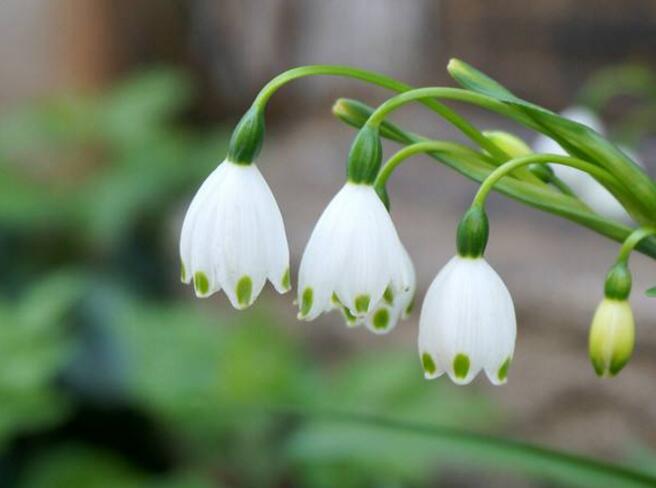
I. How Does Lily of the Valley Reproduce / Division / Seeding
As for how lily of the valley reproduces, it can generally be divided into two propagation methods: division and seeding. As long as you grasp the key points, the survival rate of these two propagation methods is still quite high. Do you want to know how these propagation methods specifically need to be carried out? Let's continue reading below.
II. Propagation Methods of Lily of the Valley
1. Seed Propagation
Seed propagation is the most common method of propagating lily of the valley, and it is also the one many people choose. The survival rate of using this method for propagation is still quite high. Lily of the valley generally has its fruit mature in autumn, and at this time we can take it down for seed propagation.
Notes: Lily of the valley does not have very high requirements for soil; ordinary soil can keep it alive. However, after sowing, remember to keep the soil moist and provide shade, because lily of the valley is a plant that relatively prefers shade. Generally, after sowing is completed, it will sprout in the spring of the following year.
2. Division Propagation
Division propagation of lily of the valley is generally carried out by dividing the small bulbs on the rhizome. It is generally best to choose spring and autumn for division, as the climate in these two seasons is more suitable; lily of the valley grows, so the survival rate will also be greatly improved.
Notes: When dividing, first store these divided rhizomes at a temperature of 3-5° for about 14-20 days before planting. Wait until it grows 4-5 young shoots, then care for it. For specific care methods, you can refer to the article on lily of the valley cultivation methods.
Cultivation Methods of Lily of the Valley
We may not be very familiar with lily of the valley, but it has certain ornamental value, and in some Western countries it is called the national flower. Today we will talk about what cultivation methods there are for lily of the valley?
Lily of the valley is a perennial herbaceous plant with rhizomes underground. It belongs to the genus Convallaria in the Liliaceae family, also known as Cao Yu Ling and Jun Ying Cao. The leaves of lily of the valley are different from many other flowers that have many leaves; lily of the valley only has two leaves in its lifetime, though occasionally it may have three leaves. The small flowers that seem shy and drooping look especially like little bells and have great ornamental value. Moreover, lily of the valley is the national flower of Finland. In France, lily of the valley is a symbol of purity and happiness!
I. Ecological Habits
Lily of the valley is relatively cold-tolerant, but dislikes dryness and heat. It likes semi-shaded, cool and moist environments. If lily of the valley is kept in a high-temperature state for a long time, the plant's leaves will turn yellow and wither early. As long as lily of the valley is in a cool environment, its rhizomes will reproduce rapidly, so shade and moist, fertile soil are important conditions for planting lily of the valley.
II. Propagation Methods
Lily of the valley is usually propagated mainly by division, and can also be propagated by seed. The best time for division propagation is in spring and autumn. On the rhizome of lily of the valley there are young buds of varying sizes. Cut off each terminal bud together with its rhizome and cultivate it. Seed propagation can be carried out in autumn; simply sow the seeds from fully ripe berries.
III. Cultivation Management
Because lily of the valley is naturally robust, management is relatively extensive. After sprouting, regularly applying some cake fertilizer can promote lush flowering of lily of the valley. Note that fertilization should stop after the flower scape emerges. After the flowers fade, fertilizer can be applied once or twice more to promote rhizome sprouting. When watering lily of the valley, replenish water according to temperature and soil moisture.
Although the flowers of lily of the valley bloom very beautifully and have certain ornamental value, lily of the valley is toxic. Lily of the valley occasionally has orange-red fruits, and all parts are toxic, especially the leaves; even the water in which fresh flowers are kept can be toxic. So everyone must pay attention when cultivating it.
The above are the cultivation methods of lily of the valley provided to you by Huayu Network, for reference by flower-loving friends. If you need cultivation methods for other flowers, please log in to the Huayu website for detailed consultation!!!
How to Propagate and Cultivate Lily of the Valley, Methods for Propagating and Cultivating Lily of the Valley
Lily of the valley is short in stature, elegant and fresh, and pleasantly fragrant. It is an excellent potted ornamental plant, usually used in flower beds and flower borders, and can also be used as ground cover. Its leaves are often used as cut flower material. There are varieties such as creamy white, pink, and variegated leaves. In early autumn, the red berries are delicate and charming, very attractive. So how do you propagate and cultivate lily of the valley? Below is an introduction to the methods for propagating and cultivating lily of the valley.
How to Propagate and Cultivate Lily of the Valley, Methods for Propagating and Cultivating Lily of the Valley
1. Propagation
Lily of the valley is usually propagated mainly by division, and can also be propagated by seed. The best time for division propagation is in spring and autumn. On the rhizome of lily of the valley there are young buds of varying sizes. Cut off each terminal bud together with its rhizome and cultivate it.
Seed propagation can be carried out in autumn; simply sow the seeds from fully ripe berries.
2. Soil Cultivation
(1) Site selection: Choose shady hillsides, forest areas with relatively thick humus, and grassland. Make strips along contour lines or across the hill, with a strip width of 1.5 m, spacing between strips of 2 m, and row-hole spacing of 50x20 cm. Dig holes, break up the soil, compact it, and shape it into a mound.
(2) Planting: Deeply plowed, fertile soil is best. It needs to be moved to a new site for replanting every 3-4 years, or rotated with other flowers. The planting row spacing is 25-30 cm, with 2-3 buds per clump, covering with soil 5-6 cm deep, and watering thoroughly after planting.
3. Pot Cultivation
In November, choose plump and large rhizome buds, store them at 3°C-5°C for 14-21 days, then take them out and plant them in pots, with 4-5 buds per pot.
Notes on Planting Lily of the Valley
1. Wild species in their native habitats often grow in groups and are rarely attacked by pests or diseases.
2. Greenhouse cultivation is prone to pest and disease infestation. Commonly seen are fungal diseases such as stem rot, anthracnose, and leaf spot.
3. Regularly use copper-based fungicides for prevention and control, and strictly prohibit collecting seeds from diseased plants for propagation. Once diseased plants are found, they must be immediately destroyed and removed to prevent spread.
4. If brown spot disease occurs, spray with 75% chlorothalonil wettable powder at 700 times dilution.