Is Cymbidium ensifolium easy to propagate? Division propagation has a high survival rate
Cymbidium ensifolium is a relatively common plant in people's lives, and it is also a variety that many plant lovers must keep at home, generally used as a decorative flower. Because this plant is extremely popular, many people want to grow one at home. As for whether Cymbidium ensifolium is easy to propagate? In fact, once you have mastered the method, it is still very easy to propagate. Below are the propagation methods for Cymbidium ensifolium, which you can refer to.
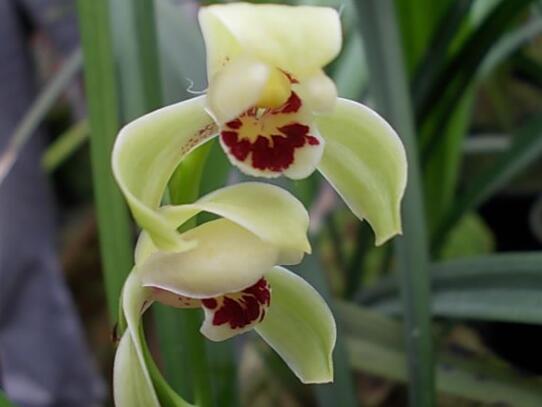
I. Is Cymbidium ensifolium easy to propagate? Find the right method and propagation is simple
As for the question of whether Cymbidium ensifolium is easy to propagate, it actually depends on whether you know the method. If you master the simplest method, it is still very easy. The commonly used propagation method for Cymbidium ensifolium is division propagation. The specific method of this propagation technique and the points to note are explained in detail below. Let's continue reading.
II. Propagation methods of Cymbidium ensifolium / division propagation
1. Division time
Among the propagation methods of Cymbidium ensifolium, division propagation is the most common one. Generally, when choosing division propagation for Cymbidium ensifolium, it is best to do it in spring and autumn, as these two seasons are most favorable for the growth of Cymbidium ensifolium. And Cymbidium ensifolium can undergo division propagation once every three years.
2. Plant selection
Plant selection is a relatively important part of the propagation process of Cymbidium ensifolium. When selecting plants, be sure to choose plants that grow robustly and have densely clustered pseudobulbs, because this will give a higher survival rate. Conversely, the survival rate will not be too high. Everyone should remember this point.
3. Propagation method
First, place some broken tiles over the hole at the bottom of the pot, then spread coarse gravel, then place some coarser granular soil and a small amount of fine soil on top, and finally put the selected soil into the pot for planting. Finally, note that after division, each cluster should retain at least 5 connected pseudobulbs.
4. Watering method
Before dividing Cymbidium ensifolium, it is best to water less. After successful division, just water thoroughly once. After watering, remember to move the divided Cymbidium ensifolium to a cool indoor place for 10-15 days. During this period, be sure to keep the soil moist, and water promptly if there is any drying out. After this period, you can reduce the amount of watering and return to normal care.
Household cultivation methods for Cymbidium sinense and propagation methods for Cymbidium sinense
Cymbidium sinense is a strongly fragrant flower and an excellent ornamental potted plant in the home. Many people grow it. Therefore, it is still necessary to learn about Cymbidium sinense from multiple aspects. So, how do you cultivate Cymbidium sinense? How do you propagate it? Below, we introduce the relevant knowledge about the cultivation and propagation of Cymbidium sinense.
Household cultivation methods for Cymbidium sinense
1. The commonly used substrate for potted Cymbidium sinense is decomposed bark chunks, peat soil and leaf mold. When watering, pay attention to cleanliness and avoid directly spraying with tap water. In midsummer, water once a day, and in winter, water once every 4-5 days. Room temperature should not be too high, otherwise it is prone to disease in spring. During the growing season, fertilize once a month. In autumn, prevent drought, and in winter the potting soil should not be too wet. In August-September, take out larger clumps of Cymbidium sinense from the pot and divide them into 3-4 pseudobulb clusters per pot for planting.
2. After buying bare-root Cymbidium sinense seedlings, first soak them in clean water until the shriveled fleshy roots are plump and no longer wrinkled. Then wash the roots, cut off the decayed roots, and air-dry until the roots turn whitish and slightly soft. Then they can be planted with Cymbidium sinense mud or waste mushroom substrate or coal stove ash plus leaf mold. Potting soil can also be taken from mountain areas under trees or from cracks between rocks, digging up soil that has weathered for many years, then mixing in river sand to improve air and water permeability and ensure it does not compact. The culture soil all needs to be disinfected, either by sun exposure for three or four days, or by heating in a pot for disinfection. When potting, avoid deep planting, and it is best to let 2/3 of the pseudobulb be exposed above the soil surface. After planting Cymbidium sinense, do not water immediately. Place it in a cool, shaded place for two days, then water thoroughly. Plant about 10 plants per pot.
3. "Air" is the lifeblood of orchids. Both the aboveground and underground parts need ventilation. Place a 3 cm thick layer of charcoal or sand and stones at the bottom of the pot. Keep the potting soil loose, do not water too much, and it is better to spray more water on the leaves and ground to increase air humidity. From May to October, pay attention to shading and avoid direct sunlight, but it can receive more morning light. Especially during the flower bud differentiation period, that is, six or seven months before Cymbidium sinense blooms, place it on a windowsill or balcony to receive sunlight to promote flower bud differentiation. After Cymbidium sinense grows new leaves, apply a diluted liquid fertilizer mainly containing phosphorus and potassium once a month, and apply it once more after the flowers fade. Remember: if the leaves of Cymbidium sinense appear yellow and thin, it is due to lack of fertilizer. If the leaves appear dark green and the leaf tips scorch, it is due to too much fertilizer.
Propagation methods for Cymbidium sinense
(1) Division propagation.
This method is simple and reliable to operate, and after division it also blooms quickly, while preserving the original characteristics of the variety. It is a propagation method that divides the pseudobulbs of clustered orchids into single ones or groups of 2-3 and plants them independently to achieve the purpose of multiplication. Division propagation of orchids is best carried out during the dormant period, that is, before new buds emerge from the soil and before new roots grow, or during the dormant period after flowering. The separated orchid plants should be inspected, and rotten roots and dead leaves cut off. For disinfection, a 800-1000 times solution of 70% thiophanate-methyl can be used to soak the roots of the orchid plants for 10-15 min. After soaking, let them dry slightly, and then they can be replanted.
Although division propagation is simple and easy to carry out and can maintain the inherent characteristics of the variety, allowing many precious varieties to be preserved, after all, the propagation coefficient of division is small, and it is difficult to meet the needs of large-scale production and the market. Therefore, we must explore more scientific and more advanced propagation methods. Tissue culture propagation of orchids is a more advanced propagation method that can meet the needs of production and the market.
(2) Tissue culture.
Tissue culture is an advanced science and technology developed on the basis of cell theory and the theory of plant cell totipotency. At present, it is being continuously promoted in forest tree propagation. According to relevant statistical data analysis, tissue culture propagation of herbaceous plants is easier than that of woody plants, and the success rate is also higher. Orchid tissue culture propagation is an advanced method of propagating orchids using advanced equipment and modern science and technology.
Orchids propagated through tissue culture have strong resistance, fewer pests and diseases, and a high survival rate, and can be produced in batches. Over the past 20 years, the Chinese Academy of Sciences, Beijing, Kunming, the South China Botanical Garden, the Shanghai Landscape Institute, the Sichuan Academy of Agricultural Sciences and some other domestic research institutions have carried out this work, achieving progress to varying degrees and obtaining mericlonal asexual seedlings of Cymbidium goeringii, Cymbidium ensifolium, Cymbidium sinense and others. For tropical orchids in Taiwan, China, automated control, factory production, rapid propagation through tissue culture and new variety breeding are all on a certain scale.
The above is the relevant knowledge introduced to you about the cultivation and propagation of Cymbidium sinense. Is everyone clear now? For more home knowledge, please stay tuned.
September! The most suitable month for flower propagation. Sowing, cuttings, grafting, division and layering are all worth trying~
September! The most suitable month for flower propagation. Sowing, cuttings, grafting, division and layering are all worth trying~
September is coming soon, and it is a very lovable month. For flower lovers, this season, neither cold nor hot and very suitable for flower growth, is even more a good time for sowing, cuttings, grafting, division and layering. Now let's get moving together with Huahua!
Sowing
Flowers that can be sown in autumn include: hollyhock, carnation, tall catchfly, dwarf catchfly, pansy, snapdragon, petunia, daisy, corn poppy, pot marigold, black-eyed Susan, iris, verbena, and others.
In addition, greenhouse flowers such as cyclamen, primrose, globeflower, cineraria, wax begonia, gerbera, and calceolaria can also be sown at this time, but they need to overwinter in a plastic tunnel.
Taking petunia as an example, Huahua's specific operation method is as follows:
1. Thoroughly mix peat soil, leaf mold and perlite in a 1:1:1 ratio, then pour it into a seedling tray, pressing it slightly firm while pouring.
2. Mix carbendazim with water at 800 times to make a carbendazim solution. First use the carbendazim solution to moisten the soil in the seedling tray, then pour water into the outer seedling box to soak the seedling tray, and let it soak for a day and a night. After soaking, let the potting soil dry for 2-3 hours.
3. The suitable temperature for sowing is about 20-25 degrees. Before sowing, water the potting soil once with clean water to ensure the carbendazim does not harm the seeds. Petunia seeds are very small, so you can use a spoon or a toothpick (dipped in water) to scoop (pick up) one seed and place it on the soil surface. Note that one seed per pot is enough!
4. Inject some clean water into the bottom of the large seedling box, with the water level reaching about half a centimeter at the bottom of the small seedling tray.
5. Cover with a lid or plastic film and place it in a place with diffused light and ventilation. Add water when it runs out. After 7-10 days they will germinate. After germination, gradually expose them to sunlight.
Cuttings
Woody flowers that can be propagated by cuttings in autumn include: purple magnolia, spiraea, pomegranate, rose of Sharon, crape myrtle, hydrangea, fig, oleander, serissa, gardenia, Japanese aralia, Chaenomeles speciosa, peony, and others.
Some herbaceous flowers can also be propagated by cuttings, such as scarlet sage, globe amaranth, marigold, and others.
Taking hydrangea as an example, Huahua's specific operation method is as follows:
1. Prepare materials.
Choose healthy and relatively strong branches. The medium can be finer vermiculite, fine seedling peat, and so on. Try to use a utility knife or similar, and do not use scissors, because the wound made by scissors is a crushed wound, different from the cut made by a knife.
2. Cut diagonally about one inch, that is, about three to five centimeters, below the node.
3. Cut flat above the node, keeping the bud.
4. Cut off about two-thirds or one-half of the leaf. This depends on leaf size: leave less for large leaves and more for small leaves.
5. Before cuttings, sterilize the potting soil once with potassium permanganate or carbendazim. Then water the medium thoroughly so it absorbs enough water. Insert the cutting into the potting soil, with the entire part below the node inserted. Finally, place the pot in a tray filled with water and mist frequently to keep it moist. (Remember, do not place it under strong sunlight.)
6. At the current temperature, roots will form in about twenty days, and after about one month they can be pulled out and potted.
Grafting
Flowers and trees that can be grafted in autumn include: using peony root sections as rootstock to graft excellent peony varieties; using cactus as rootstock to graft excellent Christmas cactus; using Euphorbia tirucalli as rootstock to graft crown of thorns, and others.
Taking Huahua's example of using a current-year peach seedling as the rootstock and a green plum branch as the scion, the specific operation method is as follows:
1. The mother plant should be selected as one that blooms abundantly and has a robust tree form, and plump, well-growing buds should be cut from it.
2. Use the three-cut bud removal method to cut a shield shape of about one centimeter around the selected bud, with the lower part slightly longer than the upper part.
3. Use a fingernail to peel out the graft bud from the outside inward first. After removing the bud, it can be placed in water to prevent water loss.
4. At a smooth place 10 to 15 centimeters from the base of the rootstock, use a knife to cut a T shape, slightly longer than the graft bud, and use the back of the knife or a fingernail to lift the bark.
5. Insert the graft bud and wrap it with plastic film.
Layering
Ornamental flowers and trees that can be propagated by layering include: Chaenomeles speciosa, weigela, hydrangea, gardenia, oleander, winter jasmine, forsythia, osmanthus, purple magnolia, jasmine, Michelia figo, camellia, Chloranthus spicatus, French holly, snowball viburnum, Chinese snowball, spiraea, and others.
Taking gardenia as a specific example, Huahua's operation method is as follows:
1. Select a branch you like. It can be an extra part that needs to be cut off, or a healthy, well-growing curved branch.
2. Use a sharp small knife to make a ring cut in the bark on the branch, then remove the ring of bark. The width should be 1-2 cm.
3. Make a beverage bottle into a funnel shape, cut it open in the middle, put it around the ringed area, and tie it securely with metal wire.
4. Put culture soil and other water-retaining materials into the beverage bottle, and wrap the top and bottom with transparent film, trying to ensure no water leaks and no soil is exposed. After that, add a little water every few days to maintain humidity, and wait patiently. Generally, roots will form in 2-3 months.
5. After the root system is well developed, cut off the branch and plant it directly! 6. After successful air layering, cut it off and pot it.
The advantages of air layering propagation compared with cutting propagation are:
1 It can directly propagate thicker branches.
2 It has a high safety factor. Even if rooting is unsuccessful, the branch will not die.
Division
Plants that can be divided in autumn include: Cymbidium goeringii, Cymbidium faberi, Cymbidium ensifolium, peony, tree peony, Aglaonema modestum, black-eyed Susan, snake plant, Syngonium podophyllum, sword fern, nandina, Aspidistra elatior, and others.
In addition, hyacinth, tulip, freesia, calla lily, lycoris and others can also have their bulblets divided and planted at this time.
Taking peace lily as an example, Huahua's specific operation method is as follows:
1. A peace lily grown for two years is already very robust and has produced many offshoots, almost too many for one pot. At this time, division can be used to solve the problem!
2. Turn it upside down. Take out the whole plant together with roots and potting soil. If it is not easy to remove, water it a little first, then use your thumb to push outward from the drainage hole at the bottom of the pot, and the whole pot can be taken out with soil.
2. Separate the culture soil from the root system, do not damage the roots, especially the fine roots.
3. Divide into as many plants as needed for however many pots you want. Try to choose one pot with a strong plant and a young plant to increase the survival rate.
4. Put culture soil in the pot and plant the divided peace lily into it. In the first few days, do not place it in direct sunlight. After the root system recovers, let the flower enjoy the sunlight.
Dear readers~ What other impressive September cultivation experiences do you have? Hurry and submit them or leave a comment to tell Huahua