How Do Lilies Reproduce? Among Four Methods, Seed Sowing Has a High Survival Rate
The lily is one of China's famous flowers, with beautiful flower shapes, elegant blooms and rich colors, and it is grown in pots at home by many flower lovers. But is a single pot of lilies too monotonous? It is time to propagate a few pots and grow them together, so how do lilies reproduce? According to research, lily propagation methods are divided into sexual and asexual, among which seed sowing has a high survival rate. Let's learn about it together.
I. How Do Lilies Reproduce, Sexual/Asexual
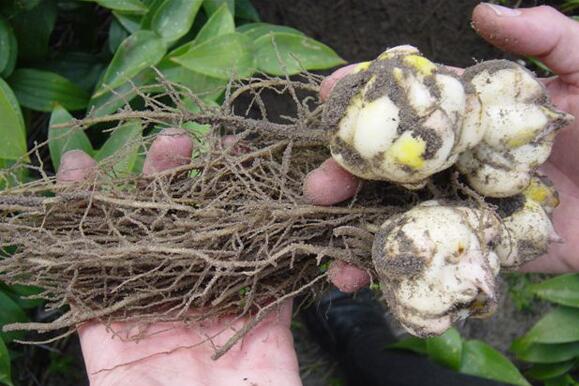
As a flower with extremely high ornamental value, the lily sells in large volumes on the international flower market, so for our own sake, and to promote this national flower, vigorous propagation of lilies is imperative. As far as the editor knows, there are two categories of lily propagation methods: sexual and asexual. As for how to carry them out specifically, let's continue reading below.
(1) Sexual Propagation of Lilies, Sowing
If there are seeds, they can be sown and propagated, so one of the lily propagation methods is sowing, which belongs to sexual propagation and is mainly used in breeding. It is worth mentioning that seed sowing has a high survival rate, but lilies grown from seed need more than 3 years to bloom, so this method is not suitable for use at home. The specific operation is as follows:
① Time: In autumn, after the lilies bloom and bear fruit, collect the seeds and store them until sowing the following spring. ② Method: After sowing in spring, they sprout in about 20-30 days, and after that, during the seedling stage, appropriate shading is needed. After autumn arrives, the lily seeds in the soil have formed small bulbs, and at this point they can be dug out and planted separately.
(2) Asexual Propagation of Lilies, Scales/Bulblets/Bulbils
1. Scale Propagation
One of the lily propagation methods, belonging to asexual propagation. Specific operation: In autumn, dig out the lily bulbs, take well-grown, healthy scales, soak them in a special solution for 30 minutes, then dry them in the shade. Then insert the scales into a flower pot filled with river sand (base facing down), leaving about half exposed, and keep the soil moist. At around 20°C, after about 20 days, several small bulbs will form at the lower part of the scales.
2. Bulblet Propagation
This is an asexual propagation method, also carried out in autumn. Specific method: When harvesting lilies in September-October, separate the small bulblets growing on the outer edge of the old bulb and store them in sand indoors to overwinter. The following spring, take out the small bulblets and plant them in pots. Then cultivate them according to lily growing methods, and in September-October of the 3rd year, the lilies will grow into large plants.
3. Bulbil Propagation
It is also called propagation by separating bulbils, and it is suitable for lilies. Specific operation: After the bulbils mature in summer, we harvest them and mix them with moist fine sand, storing them in a cool, ventilated environment. By September-October, take out the bulbils and sow them in a seedbed, with a row spacing of 12-15cm and a depth of 3-4cm.
How Do Oriental Lilies Reproduce? Four Propagation Methods for Oriental Lilies/High Seed Sowing Survival Rate
As a beautiful flower, the Oriental lily is one you have probably heard of. It is the queen among lilies, with rich colors, and is deeply loved by flower lovers. In daily life, many people grow Oriental lilies, which also leads to them being propagated in large numbers, so how do Oriental lilies reproduce? Below are four propagation methods for Oriental lilies selected by the editor. Follow the editor to learn about them.
I. How Do Oriental Lilies Reproduce, Sexual/Asexual
As a flower with excellent ornamental value, the Oriental lily sells in large volumes on the international flower market, so vigorous propagation of it is imperative. As for how Oriental lilies reproduce, as far as the editor knows, it can be divided into 2 major categories: sexual (seed sowing) and asexual (bulb division, scale cuttings and tissue culture). As for how to carry them out specifically, let's continue reading below.
II. Four Propagation Methods for Oriental Lilies
(1) Seed Sowing Propagation of Oriental Lilies
After Oriental lilies bloom, seeds are left behind, and if there are seeds, they can be sown and propagated, so one of the Oriental lily propagation methods is sowing, which belongs to sexual propagation and is mainly used in breeding. It is worth mentioning that seed sowing of Oriental lilies has a high survival rate, but everyone should note: Oriental lilies grown from seed need more than 3 years to bloom, so this method is not suitable for use at home. The specific operation is as follows:
① Time: In summer, after the Oriental lilies bloom and bear fruit, collect the seeds and store them until sowing the following spring or autumn.
② Method: Sow in spring/autumn, cover with 0.5-1 cm of soil after sowing, and they sprout in about 20—30 days, after which appropriate shading is needed during the seedling stage. After autumn arrives, the Oriental lily seeds in the soil have formed small bulbs, and at this point they can be dug out and planted separately.
(2) Bulb Division Propagation of Oriental Lilies
① Time: One of the asexual propagation methods for Oriental lilies, it is generally carried out in autumn, with action taken the following spring.
② Method: Many new scales will grow on the underground bulbs of Oriental lilies or on stem nodes near the ground. In September-October, separate the small bulbs and store them in sand indoors to overwinter. The following spring, take out the small bulbs and plant them in pots, then cultivate them according to Oriental lily growing methods, and in September-October of the 3rd year, the Oriental lilies will grow into large plants.
(3) Scale Cuttings of Oriental Lilies
① Time: One of the Oriental lily propagation methods, belonging to asexual propagation, generally carried out in autumn.
② Method: In autumn, dig out the Oriental lily bulbs and take well-grown, healthy scales as cuttings. Then insert the scales into a flower pot filled with river sand (base facing down), with the insertion depth such that the tip is slightly exposed. After 2—4 months, most scales can take root and sprout leaves, growing small bulbs, at which point they can be transplanted into pots or planted in open ground.
(4) Tissue Culture of Oriental Lilies
In addition to the above methods, Oriental lilies can also be propagated by tissue culture. Method: Use different parts of the Oriental lily, such as filaments, styles, ovaries, and axillary buds at the base of scales, to culture test-tube plantlets through tissue culture, then transplant them into a seedbed and care for them until they grow, providing bulbs for production. This method has high requirements, and ordinary flower lovers need not consider it.
How Do Easter Lilies Reproduce? Propagation Methods for Easter Lilies/Sowing/Bulb Division/Scales
The Easter lily is a flower plant with high ornamental value, and many people in various regions of our country are growing it. As more and more people grow it in various places, questions about its propagation have also attracted people's attention. Regarding how Easter lilies reproduce, and what propagation methods Easter lilies have, the editor below will introduce them to everyone.
I. How Do Easter Lilies Reproduce, Sowing/Bulb Division/Scales
Speaking of how Easter lilies reproduce, it can actually mainly be divided into seed sowing, bulb division and scale propagation, among which seed sowing is a relatively commonly used method. However, although the other two are used by relatively fewer people, as long as they are operated properly, the survival rate is equally high. Below there are detailed explanations of three propagation methods. Let's take a look.
II. Propagation Methods for Easter Lilies
1. Substrate Selection, Good Drainage
First, no matter which propagation method we use, we first need to choose a substrate. Generally, it is best to choose loose, fertile humus soil with slight acidity as the substrate. This kind of soil has good drainage and is rich in nutrients, allowing the plant to grow more robustly. It is best not to choose calcareous or alkaline soil, as it will grow poorly in such soil.
2. Substrate Disinfection, Sun Exposure or Stir-Frying
After choosing the substrate for Easter lilies, we also need to disinfect it to prevent pests and diseases in it from infecting the plant. When disinfecting, we can break it up, then spread it flat in the sun for exposure, or put it in a pot and turn on high heat to stir-fry it. In this way, even if there are pests and diseases in it, they will be killed by the high temperature.
Seed Sowing Propagation
Seed Germination Promotion: After disinfecting the substrate, we also need to promote germination of the seeds. We can soak the Easter lily seeds in warm water for 12-24 hours, and when the seeds begin to absorb water and swell, take them out and sow them. This allows the seeds to sprout more quickly.
Sowing Method: Before propagating Easter lilies by sowing, we first need to apply an appropriate amount of base fertilizer in the potting soil, then evenly scatter the seeds on the soil surface. After scattering, cover them with 1-2cm of soil and then water. When watering, it is best not to water directly with a watering can, because Easter lily seeds are relatively small and are easily washed away this way. When watering, we can place the flower pot in water and let the water slowly soak up from below.
Bulb Division Propagation
During the growth of Easter lily bulbs, new bulbs will gradually form on the stem axis. Generally, after one year of cultivation, each bulb can produce 1-3 or more small bulbs. We can harvest the small bulbs in autumn and store them in sand until the following spring for planting, or plant them in deep soil in autumn of the same year.
Scale Propagation
When propagating Easter lilies by scales, we first need to dry mature, robust bulbs in the shade, peel off the scales from the base, and then carry out cuttings in April, with the insertion depth such that the tip is slightly exposed. Generally, after spring cuttings, 2-4 months later, most scales take root and sprout leaves, and small bulbs grow at the base of the scales, at which point they can be transplanted. Propagation by scales until flowering generally requires 3-4 years of cultivation.