When to sow Mimosa pudica? Propagation method for sowing in March and flowering in July
Mimosa pudica, a very peculiar plant, is like a shy young maiden who lowers her head bashfully and folds up her leaves when she sees her sweetheart, and such a sight is naturally endearing. How to grow Mimosa pudica? Just pay attention to water and fertilizer. So how do you propagate Mimosa pudica? In daily life, the propagation method for Mimosa pudica is mainly sowing, so when should Mimosa pudica be sown? Let us find out together.
I. Propagation method of Mimosa pudica, mainly sowing
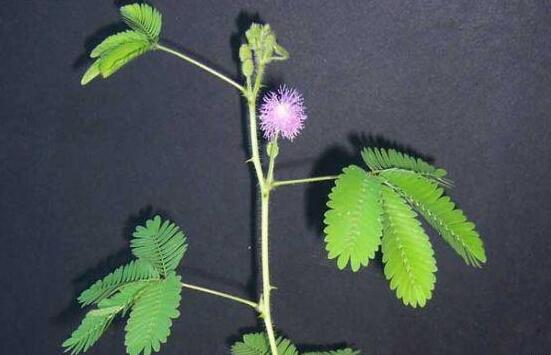
In flower propagation, we most commonly use cuttings, division and so on, and sowing is rarely used. But among the propagation methods for Mimosa pudica, in order to avoid damaging the roots when transplanting, there is only one that can be used by the majority of flower lovers, and that is propagation by sowing. As for how to sow Mimosa pudica and when to sow it, let us continue reading below.
II. How to propagate Mimosa pudica by sowing
1. When to sow Mimosa pudica, March-April
How to propagate Mimosa pudica by sowing is what many flower lovers want to know, and before that, we must first know when to sow Mimosa pudica, because only when the timing is right can the sown Mimosa pudica survive. According to the actual experience of the majority of flower lovers, Mimosa pudica can be sown in both spring and autumn, but it is best to sow in late March to early April, so that you can see Mimosa pudica bloom in July of that same year.
2. Seed selection, mature and plump
As for the seeds used for sowing Mimosa pudica, everyone should also pay attention and not choose them casually, but should select seeds that are mature, plump, large, full and colored.
Note: Mimosa pudica seeds have a short germination storage life, so before sowing, they should be mixed with fine sand and stored indoors in a cool place until sown the following spring.
3. Sowing method for Mimosa pudica
①Potting soil
When sowing Mimosa pudica, you can choose to sow directly in a small pot, or use a shallow pot to grow seedlings for separate planting. As for the soil, the sowing soil should be mixed and prepared with leaf mold, garden soil and fine yellow sand in a ratio of 2:3:5. Then put the soil into the pot, spread it flat and press it firm, sprinkle it thoroughly with water using a watering can, and sow immediately once the water has completely seeped through.
②Sowing
Sow the prepared Mimosa pudica seeds directly in small pots. In order to increase the survival rate, generally prepare several pots, sowing 1 to 2 seeds per pot. If using a shallow pot to grow seedlings, sow by dibbling at a spacing of 2 cm-2 cm.
③Germination in 7-10 days
After sowing, cover with soil 3-5 cm, preferably covering the Mimosa pudica seeds. Then cover the flower pot with plastic film to retain moisture, and move it to a place with diffused light at a room temperature of about 20°C. After that, water whenever the soil looks dry, and in about 7-10 days, if they survive, the Mimosa pudica seeds will basically have germinated and emerged as seedlings.
④Management after sowing
After completing the sowing above, the propagation of Mimosa pudica by sowing is basically finished, but the most crucial part also comes, and that is the care and management after sowing.
First is light: after the Mimosa pudica seedlings emerge, remove the plastic film and let them gradually receive sunlight. When the seedlings grow to 3 cm tall, separate and transplant them. After the seedlings are potted and watered thoroughly, first place them in a semi-shady spot, and after they recover, move them to a place with plenty of sunlight.
Next is water and fertilizer: in mid-April in the south or early May in the north, you can move the seedling pots outdoors to grow, and water promptly to keep the potting soil moist at all times. When the seedlings grow to 4 leaves, begin applying liquid fertilizer: apply a diluted decomposed liquid fertilizer once every 7-10 days. After the Mimosa pudica seedlings grow larger, they can be repotted once more: 15-20 cm is enough.
How to plant Mimosa pudica seeds and when to plant Mimosa pudica
Mimosa pudica is a plant introduced into our country from abroad, and it is now very common on the market. Mimosa pudica is a plant that combines ornamental and medicinal value, and many people now like to grow it. However, before planting it, most people are probably still quite concerned about its planting techniques.
How to plant Mimosa pudica seeds
1. First, put an appropriate amount of soil into the sowing container, generally 7 to 8 parts full is enough, keeping the soil loose.
2. Then water thoroughly, scatter the seeds, and sprinkle a thin layer of soil over the seeds; it does not need to be too thick, just enough that the seeds cannot be seen.
3. After that, keep the soil moist, provide appropriate shading, and maintain the temperature at 15°C to 20°C; seedlings will emerge in about 15 to 20 days.
4. After the Mimosa pudica seeds sprout, keep the soil alternately dry and wet, and gradually increase the light. When the plant grows 5 to 6 true leaves, it can be transplanted and set in place. Choose a flower pot with a diameter of 15 cm and loose, fertile soil. After that, be careful to maintain sufficient light.
When to plant Mimosa pudica
Mimosa pudica can be planted in both spring and autumn. Before planting, the seeds should be soaked in warm water at 35-40°C for one day; the potting soil should be mixed and prepared with leaf mold, garden soil and fine yellow sand. Add an appropriate amount of culture soil to the potting soil, press the surface of the potting soil flat, then sprinkle water thoroughly with a watering can, and sow once the water has all seeped down. Its germination rate after sowing is still quite high. When sowing, the suitable temperature for germination is between 15°C and 20°C, and germination generally takes 12 to 15 days. After germination, the suitable temperature for growth is between 15°C and 25°C.
What to do if Mimosa pudica wilts
1. Seed selection for Mimosa pudica. When selecting seeds, choose seeds free of pests and diseases; healthy seeds can greatly reduce the occurrence of wilting.
2. Pruning of Mimosa pudica. Next, pay attention to pruning diseased leaves. When withered branches and fallen leaves appear on Mimosa pudica, cut them off promptly and gather them for cleaning and destruction. Potted Mimosa pudica in particular is more prone to wilting due to improper care, so daily management needs to be strengthened.
3. Soil for Mimosa pudica. The soil chosen should be fertile loam with good drainage. Do not water too much, to prevent wilting and yellowing caused by water accumulation in the pot. During the fertilization and cultivation of Mimosa pudica, attention should be paid to applying more compound organic fertilizer containing nitrogen, phosphorus and potassium, as this can help Mimosa pudica grow healthily and improve its resistance and survival ability. As for the planting distance of Mimosa pudica, the distance between potted Mimosa pudica plants should not be too close; good density conditions are conducive to ventilation and light transmission for the plants and reduce leaf surface humidity, thereby reducing the occurrence of diseases.
What to do if Mimosa pudica does not bloom
When growing Mimosa pudica, it sometimes fails to bloom. The main reason for this may be inappropriate light. In addition, it may be due to insufficient nutrients. Because the plant does not have enough fertilizer, it is not able to bloom.
1. First, when growing Mimosa pudica, give it suitable light. According to the growth habits of Mimosa pudica, it needs a short-day environment to bloom. Therefore, the duration of sunlight can be adjusted artificially, with an 8-hour short-day treatment.
2. Second is to have suitable nutrients. In order to prevent Mimosa pudica from failing to bloom due to insufficient nutrients, during cultivation you must meet the growth needs of Mimosa pudica, and be careful not to apply too much fertilizer, so as to avoid excessive vegetative growth of the plant.
The planting technique for Mimosa pudica seeds is actually quite simple. First, do a good job of seed selection, and then choose a suitable time to plant. During the planting process, management of soil, water and fertilizer needs to be strengthened. Only when every step is done properly will Mimosa pudica grow well.
Propagation methods of Mimosa pudica and cultivation tips for Mimosa pudica
Because Mimosa pudica is a plant with strong vitality, it is regarded as a weed in quite a few countries. But many people still want to grow Mimosa pudica, so today let us share the propagation methods of Mimosa pudica and the cultivation tips for Mimosa pudica.
Basic information about Mimosa pudica:
Mimosa pudica is a perennial herb or subshrub of the Fabaceae family. Because its leaves react to heat and light and close immediately when touched by external force, it is named Mimosa pudica. It is native to the tropical regions of South America, likes warmth and humidity, and has no strict requirements for soil. The flowers are pink and shaped like pom-poms, delightful and charming. After flowering, it bears pods, and the fruit is flat and round. The leaves are pinnately compound, alternate, and arranged in a palmate pattern. The flowers, leaves and pods of Mimosa pudica all have good ornamental value, and it is relatively easy to keep alive, suitable as a potted flower for balconies and indoors, and can also be planted in courtyards and other places. Mimosa pudica is different from ordinary plants: when touched by the outside world, its leaf stalks droop and its leaflets close. This action is interpreted by people as "shyness," hence it is called Mimosa pudica, Zhixiu cao, and Pa Chou cao.
Propagation methods of Mimosa pudica:
Propagate by sowing seeds. It can be sown in both spring and autumn. Before sowing, the seeds can be soaked in warm water at 35°C for 24 hours, sown in shallow pots by dibbling, covered with soil 1-2 cm, watered by the soaking-pot method, kept moist, and under conditions of 15-20°C, seedlings emerge after 7-10 days. When the seedlings are 5 cm tall, pot them. When collecting seeds, select robust mother plants, strengthen management, and during the fruiting period collect as they ripen, because the pods will split open automatically when mature.
The pods are flat, 1.2-2 cm long and about 0.4 cm wide, with bristles on the edges, 3-4 pod segments, each pod segment containing 1 seed, and the segments fall off when mature. The flowering period is September.
Cultivation tips for Mimosa pudica:
1. Soil: Mimosa pudica has strong adaptability and no strict requirements for soil. It grows well in moist, fertile soil. Sow it in a culture soil prepared by sieving and mixing 2 parts leaf mold, 3 parts garden soil and 5 parts fine yellow sand.
2. Watering: Mimosa pudica likes moisture. During the summer growing period, water once a day.
3. Sunlight: Mimosa pudica likes sufficient light and is slightly tolerant of semi-shade.
4. Temperature: As a potted ornamental flower, Mimosa pudica should be moved indoors to a sunny spot in winter, and maintaining a room temperature of 10-12°C is enough for it to overwinter safely.
5. Fertilization: Mimosa pudica does not need much fertilizer during the growing period; applying diluted liquid fertilizer 2-3 times is enough. Do not let it grow excessively, because Mimosa pudica is mainly grown as an interesting foliage flower, and smaller is better.