Geranium propagation methods include cuttings, seed sowing, and tissue culture.
Geranium is a highly ornamental plant, and it can be seen in many gardens in our country; its blooming period is also its most beautiful moment. Of course, wanting it to produce beautiful flowers has a lot to do with the propagation process. Regarding how geraniums are propagated, and what propagation methods geraniums have, is recorded in detail below. Let us take a look.
1. How geraniums are propagated / cuttings / sowing / tissue culture
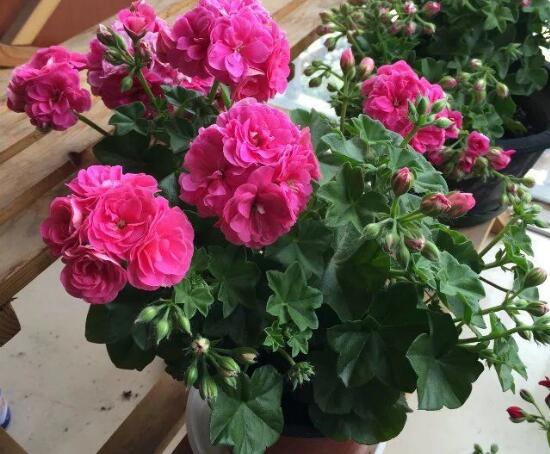
How geraniums are propagated can roughly be divided into three methods: cutting propagation, seed propagation, and tissue culture. Among them, cutting propagation is the most common, and the survival rate is also extremely high. As for how the three methods are specifically carried out, let us continue reading below.
2. Geranium propagation methods
Cutting propagation
1. Cutting time
Among geranium propagation methods, cuttings are a relatively commonly used one. Geraniums differ from ordinary plants in that summer is their semi-dormant period, so this time is not suitable for cuttings. Apart from summer, cuttings can be taken at other times, and among these, spring and autumn are the best two seasons for doing so.
2. Selecting branches
When selecting branches for geranium cuttings, it is best to choose relatively robust branches, as this will help their survival. Generally, we can select a branch with three leaf nodes and cut it at a spot about 4mm from the upper leaf node.
3. Environment selection
For half a month after the cuttings are completed, it is best to place the geraniums in a place without direct sunlight. After their callus tissue has formed, they can be moved to a place with ample light, but they should not be placed there too long; a proper balance must be maintained.
4. Watering method
Regarding watering geraniums, the first time you can choose to water more, and afterward water a little less in normal times. Generally, just use a spray bottle to spray some water. This is because frequently watering too much may cause the roots and stems to rot, so everyone must remember this point.
Seed propagation
The time point chosen for seed propagation is the same as for cutting propagation, and it is best to do it in spring and autumn. The main thing to remember is to control the environmental temperature well; generally 20-25° is most favorable for its growth. Geranium seeds are not very large, so when covering with soil, it does not need to be too deep. Generally, after sowing is completed, they can germinate within 2-5 days.
Tissue culture
Among geranium propagation methods, tissue culture is a relatively rare one. Generally, MS medium is used, and then indoleacetic acid and kinetin are added to cause the plant to produce callus tissue and adventitious buds. This propagation method provides a new pathway for the improved seed breeding and iterative breeding of new varieties of geraniums.
How geraniums are propagated: sowing and cutting propagation methods
How geraniums are propagated 1. Seed propagation methodFirst prepare geranium seeds and soil. When the weather is cool, sowing can be done. It is recommended to first dry the geranium seeds in the shade, then sow the geranium seeds directly on the soil. After the seeds are sown, cover the seed surface with a thin layer of soil. Generally, the temperature is controlled at around 20°C, and in about 7-10 days the geranium seeds can germinate.
After geranium seeds germinate, the soil needs to be kept slightly moist. When the seedlings grow to 5-7 cm, they can be planted into 10 cm flower pots. Generally, by the spring of the following year they can bloom.
2. Cutting propagation methodThe best time for geranium cuttings is generally spring and autumn, that is, April-May or August-September are better.
Geranium branches are generally taken only from mother plants that bloom consistently, bloom frequently, and are free of pests and diseases. Generally, the tender shoot tips and the tender stems below on the mother plant can all be used as cuttings; of course, the top branches are better. Cut off the selected branches. The cut branches are generally first soaked in 100 mg/kg indolebutyric acid for 5-10 seconds, then dried in the shade.
After the geranium branches are dried in the shade, insert the branches into a sand bed substrate and water thoroughly, then cover with a small arched shed and place in a ventilated environment. If there is strong light, shade is needed. Keep the environmental temperature at 15-20°C. Generally, geranium cuttings will root in 2—3 weeks. When the geranium roots grow to 3-4 cm, transplanting can be considered.
Geranium sowing and cutting propagation methods
Geranium is a relatively common flowering ornamental plant nowadays. In the West, geranium is a very good flower for decorating windowsills. Now many flower enthusiasts also grow geraniums in pots, and when they bloom they are fragrant. Friends who like geraniums will certainly be curious about how geraniums are actually propagated. Geraniums are commonly propagated by two methods, sowing and cutting. The editor will introduce these two propagation methods of geraniums in detail for you.
Geranium
1. Sowing and cultivation
The sowing substrate uses peat soil, vermiculite, and perlite mixed at 8:1:1. Before sowing, water the substrate thoroughly first, then evenly sow the seeds into a seedling tray and cover with vermiculite to a thickness of about 3 times the diameter of the seeds. Disinfect the sowing box with chlorothalonil, set up an arched shed, and cover with plastic film. A temperature of 20°C to 23°C is suitable, and humidity should be kept above 95%. When germination is uniform after about a week, uncover the plastic film. Because the seedling substrate has few nutrients, spray foliar fertilizer once every 10 days; a compound fertilizer with relatively high phosphorus and potassium content can be chosen. At the same time, keep the room ventilated and pay attention to observing whether any diseases occur.
In sowing and cultivation, when the seedlings grow to 4 to 6 leaves and the cuttings in cutting cultivation have rooted, they can be moved into nutrient pots or flower pots for cultivation. The potting soil should preferably be sandy loam with good water permeability, and an appropriate amount of base fertilizer should be applied at the same time. According to the growth of flower buds, additional fertilizer can also be applied appropriately. Geraniums have a large fertilizer requirement in spring and autumn; they enter dormancy in July and August, when fertilization can be stopped. In addition, geraniums grow vigorously, so they should be pruned every year to promote a fuller flower shape.
2. Cutting cultivation
Select a plant with good growth, and cut off the top 5 to 7 cm with a small knife. The cut should have a 45-degree slant. Peel off the large leaves at the base, leaving 1 to 2 leaves at the top. If the top leaves are large, 1/3 to 1/2 can be cut off to reduce water evaporation. Because the base of geraniums is mostly fleshy and has a lot of water, cuttings taken immediately are prone to rotting, so they should be placed in a cool place and allowed to dry before cutting. The substrate commonly uses sand, sandy loam, or perlite. Before inserting, water the substrate thoroughly, then insert, and after watering to close the gaps around the cuttings, disinfect with chlorothalonil. The cutting temperature is 15°C to 18°C, and rooting can occur in about one month.