How to sow and propagate cornflowers? Sow in September, flowers bloom after 70 days
I believe many people have seen cornflowers. With beautiful flower shapes and rich colors, they are a flower deeply loved by gardening enthusiasts. The methods for growing cornflowers are very simple, and worth knowing with just a little understanding, but do you know the propagation methods of cornflowers? Compared with other flowers, cornflowers do not root well from cuttings and are suited to propagation by sowing, so how do you sow cornflowers? Below, the editor will clear up your confusion.
1. How to sow cornflowers: choosing the right time is very important
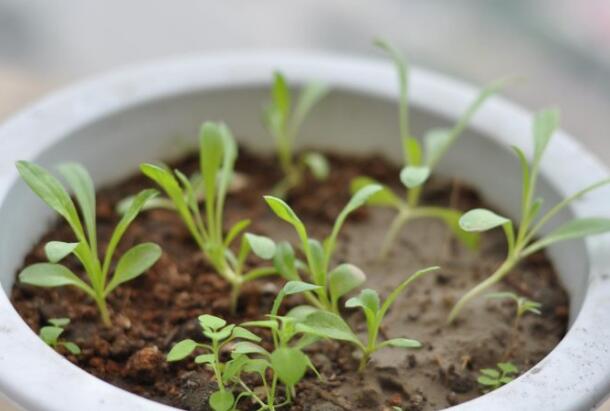
In daily life, because cornflowers are beautiful in appearance and simple to cultivate, many gardening enthusiasts keep one or two pots at home. Cornflowers have several propagation methods, but sowing is best; the others are not suitable for us. As for how to sow cornflowers, first is the choice of time, then attention must also be paid to soil and watering. Let's continue reading for the details.
2. Sowing and propagation methods for cornflowers
1. Sowing time for cornflowers
As for the sowing time for cornflowers, there are generally two choices: 1 is spring sowing, that is, March to April; 2 is autumn sowing, generally in September to October. If you are not in a hurry, it is best to choose autumn sowing, in mid-to-late September.
2. Choosing potting soil
For how to sow cornflowers, soil is also very key. According to their growth habits, you should choose fertile, loose soil. Some gardening enthusiasts also use soil dug from green belts, and after sowing the plants grow very strong too~
3. Sowing
In the prepared potting soil, scatter an appropriate amount of cornflower seeds; the seeds should be healthy and plump. If you want to get a head start over other gardening enthusiasts from the very beginning, you should place the fluffy side of the seeds facing up. Of course, if you cannot tell, there is no other way; just lay them flat horizontally.
Note: Regarding sowing, many gardening enthusiasts want to ask how many cornflower seeds can be planted in one pot? For this, the editor suggests two seeds in a pot with a diameter of 25cm, and for larger pots just adjust up or down according to this ratio.
4. Covering the seeds
After sowing the cornflower seeds, scatter a thin layer of soil (just enough that the seeds are no longer visible), and press lightly, taking care not to press too hard, otherwise the seeds will have difficulty emerging from the soil.
5. Watering
For how to sow cornflowers, after completing the above steps, you can water them. It is best to water thoroughly in one go, until water flows out from the hole at the bottom of the pot; afterward, for daily watering, just keep the potting soil moist.
Watering amount: Regarding the amount of water after sowing, this is what many beginners want to ask. For this, the editor's suggestion is that while they are still seedlings they should be watered more, once every 1 to 2 days; once they have grown larger and sturdier, you can water whenever you think of it!
6. Fertilizing
After completing the above steps, the sowing and propagation of cornflowers is basically finished. Then, after the plants survive transplanting, apply an appropriate amount of fertilizer every 10 days or half a month, and stop fertilizing in March of the following year to wait for flowering.
3. How long after sowing do cornflowers bloom? 70 to 85 days
Many gardening enthusiasts ask about this question. According to the editor, when autumn-sown at 18 to 25°C, cornflowers basically germinate and emerge 10 to 13 days after sowing. True leaves appear in about 15 days. Overall, how long after sowing do cornflowers bloom? It takes about 70 to 85 days.
Sowing propagation and operation methods for cornflowers
Cornflowers are excellent cut flower material and are also often used in flower beds and flower borders, and gardening enthusiasts can also grow them in pots at home. Symbolizing happiness, cornflowers are a flower variety that many gardening enthusiasts like very much. Because cornflowers do not live long, they are generally propagated mainly by sowing.
Cornflower
1. Sowing propagation:
Not tolerant of transplanting, so a soil ball should be kept when planting out. Base fertilizer should be applied before planting. Water appropriately during the growing period to prevent root rot; topdressing with liquid fertilizer once a month can promote growth. Its stems are slender and weak, so pinch off the growing tips during the seedling stage to encourage more side branches and dwarf the plant.
Cultivation key points:
Can be sown in spring or autumn, with autumn sowing preferred. Sow in mid-to-late September in a prepared seedling bed, cover with soil just until the seeds are no longer visible, press lightly, cover with grass, water thoroughly, and keep the soil moist often; remove the grass cover after germination. When the seedlings have 6-7 small leaves, they can be transplanted or planted out, with a plant spacing of about 30cm. After the plants survive, apply diluted decomposed human manure water at 5 times water once every 10 days or half a month, and stop fertilizing in March of the following year to wait for flowering. If grown in pots, the potting soil should be loose and fertile; it is best to use a mixed soil of garden soil, leaf mold, plant ash, etc. When the seedlings have 6-7 leaves, carry out the first transplanting; for subsequent growth, change to a three-tube pot as needed, because cornflowers have a taproot system and large seedlings do not tolerate transplanting. In winter they can be continuously buried in soil to overwinter, taken out in early March, and fertilized frequently, stopping fertilization when flower buds appear. Suitable germination temperature: 15-20°C. Sowing period: spring-autumn. Suitable growing temperature: 15-25°C. Flowering period: spring-summer. Seedling raising: choose loose, fertile soil as a bed, cover with about 0.2cm of soil, and germination takes about 8-15 days. Cultivation: transplant when the seedlings have grown to 6-7 true leaves, and for pot culture plant one plant per 13-17cm pot. After the seedlings survive planting out, pinch once to encourage more branching and more flowers; conversely, if there is too much branching, some side buds should be removed when necessary to obtain larger flowers. Because of the taproot, it is best to sow directly, overwinter in the open with cover in autumn sowing, and bloom in early summer; if overwintered in a cold frame it can bloom in late spring, and spring sowing should be done as early as possible. It blooms in June.
2. Sowing method:
1. Seedling raising: choose loose, fertile soil as a bed, and cover with about 0.2cm of soil.
2. Cultivation: transplant when the seedlings have grown to 6-7 true leaves, and for pot culture plant one plant per 13-17cm pot. After the seedlings survive planting out, pinch once to encourage more branching and more flowers; conversely, if there is too much branching, some side buds should be removed when necessary to obtain larger flowers. Because of the taproot, it is best to sow directly, overwinter in the open with cover in autumn sowing, and bloom in early summer; if overwintered in a cold frame it can bloom in late spring, and spring sowing should be done as early as possible. It blooms in June.
3. Soil: prefers loose, fertile sandy loam with good drainage. The growing soil should be made as well-drained and well-aerated as possible; if the soil is rather clayey, mix in 30-40% tree fern fiber or perlite to improve it.
4. Watering: in principle, watering once a day is already enough, but in drier summer weather, water once in the morning and once in the evening to keep the potting soil moist and lower the temperature of the pot, but avoid waterlogging.
5. Fertilizing: cornflowers like plenty of fertilizer, and during the growing period a diluted three-element liquid fertilizer should be applied once a month. If the leaves are too luxuriant, reduce the proportion of nitrogen fertilizer; before flowering, apply more phosphorus and potassium fertilizer to obtain larger flowers with beautiful colors.
6. Flowering period management: cornflowers branch naturally; with many side branches the flowers are smaller, so when necessary some side buds can be removed, leaving only the smaller branches, to obtain larger flowers. Cornflowers are long-day plants; in winter the daylight hours are shorter, and if a plant light is used at night for supplementary lighting, flowering can be brought forward.
How to grow cornflowers: cornflower propagation methods
Cornflower, also known as blue cornflower, cuilan, and lychee chrysanthemum, is an annual or biennial herbaceous plant of the genus Centaurea in the Asteraceae family. It has extremely high ornamental value. Tall varieties have upright plants and long flower stalks, suitable for cut flowers, and can also be used as flower border material. Dwarf varieties are only 20cm tall and can be used for flower beds, edging lawns, or potted flower display. Let's take a look below at how to grow cornflowers!
Growth habits of cornflowers
The homeland of the cornflower is Europe. It was originally a wild flower, and after many years of cultivation by people, its "wild" nature has diminished, the flowers have become larger, and the colors have increased, with varieties in purple, blue, light red, white, etc., among which purple and blue are the most precious. In Germany it can be found everywhere on hillsides, in fields, by the water, along roadsides, and around houses, and it is regarded as the national flower of Germany. It has strong adaptability, likes full sunlight, and does not tolerate shade and dampness. It must be planted in a sunny, well-drained place, otherwise it often dies from shade and dampness. It is relatively cold-hardy, likes coolness, and dislikes heat. It likes fertile, loose, well-drained sandy soil.
Propagation methods for cornflowers
Cornflower seeds are generally sown in spring and autumn, with autumn being better, roughly from mid-August to mid-to-late September. When planting, sow the seeds in an open-ground seedling bed, press lightly, then water an appropriate amount, cover with grass, and they can germinate quickly; after sprouting, remove the grass on top. When the leaves have grown to 6-7, they can be transplanted; they can be planted out in November, and afterward apply diluted decomposed human manure water at 1:5 once every 10 days or half a month, until February to March of the following year. Pot sowing requires fertile, loose soil; it is recommended to add a mixed soil such as leaf mold.
Growing methods for cornflowers
1. Planting out: after cornflower seedlings survive planting out, pinch once to encourage more branching and more flowers; conversely, if there is too much branching, some side buds should be removed when necessary to obtain larger flowers. Because of the taproot, it is best to sow directly, overwinter in the open with cover in autumn sowing, and bloom in early summer; if overwintered in a cold frame it can bloom in late spring, and spring sowing should be done as early as possible. It blooms in June.
2. Potting soil: the potting soil for cornflowers should be loose and fertile; choose fertile sandy soil with good looseness and drainage. It is best to use a mixed soil of garden soil, leaf mold, plant ash, etc., and it is best to maintain good ventilation to facilitate drainage. If the soil is rather clayey, mix in 30-40% tree fern fiber or perlite into the soil.
3. Temperature: cornflowers are strongly cold-hardy and can be planted in the open in East China; in North China they need cover to overwinter. When grown for cut flowers, greenhouses are usually used to force flowering: sow in August, plant out in September, and flowers can be produced in February of the following year. In warm areas inside the passes, sowing is generally done in August to September, overwintering in the open with cover, planting out in early spring of the following year, and blooming in early summer. In Northeast China, spring sowing is done in greenhouses.
4. Watering: cornflowers do not tolerate shade and dampness. Generally, watering once a day is enough to meet their needs, but in hot, dry summer weather, water once in the morning and once in the evening to meet water needs and also cool the soil. Be careful not to water too much and cause accumulation in the pot.
5. Fertilizing: cornflowers like plenty of fertilizer and need fertile soil. During the growing period, apply a diluted three-element liquid fertilizer once a month. If the leaves are too luxuriant, reduce the proportion of nitrogen fertilizer; before flowering, apply more phosphorus and potassium fertilizer to obtain larger flowers with beautiful colors.
Notes on cornflowers
1. Cornflowers are robust, relatively cold-hardy, like sunlight, and require fertile, loose, well-drained soil.
2. Base fertilizer should be applied before planting out cornflowers. Because cornflowers have a taproot system and do not tolerate transplanting, a larger soil ball must be kept when transplanting.
3. Cornflower stems are slender and weak and tend to lodge, so the planting distance should not be too close; prevent overly dense growth and poor ventilation that cause lodging.
4. During the seedling stage, cornflowers need to be topped and pinched to encourage more branching and dwarf the plant, so that there are more flowers and the plant shape is also graceful.
5. During the growing period, topdress cornflowers with liquid fertilizer once every 20 days, but note that too much nitrogen fertilizer should not be applied; appropriately apply more phosphorus and potassium fertilizer to make the stems firm and the flower colors vivid.
6. Water cornflowers appropriately, not too much, and be sure to drain promptly during the rainy season, otherwise it will cause root rot and affect the normal growth of the plant.