How Does Saffron Crocus Reproduce? A Detailed Guide to the Two Methods: Division of Corms and Sowing Seeds
Saffron crocus is a plant with outstanding ornamental value. As for how saffron crocus reproduces, it can roughly be divided into two methods: division of corms and sowing seeds. The survival rates of both methods are relatively high. As for what the reproduction methods of saffron crocus specifically involve, let us walk you through them below.
I. How Saffron Crocus Reproduces / Division of Corms / Sowing Seeds
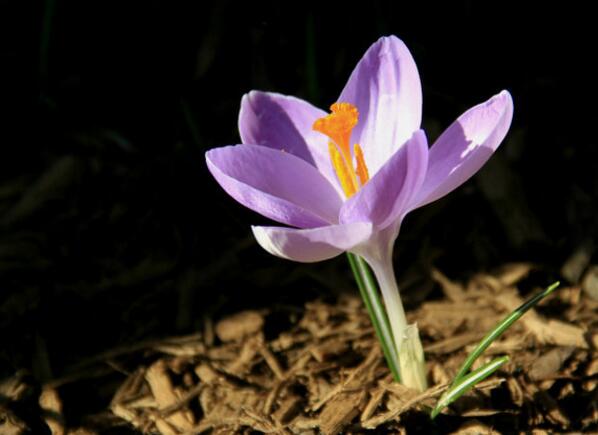
The reproduction of saffron crocus can be divided into division of corms and sowing seeds, of which division of corms is the more common one. So how is saffron crocus best reproduced? In fact, neither method is absolutely better or worse than the other; as long as the method is used correctly, the plant can survive.
II. Reproduction Methods of Saffron Crocus
Division of Corms
1. Time for Division of Corms
Winter and spring are the growing seasons of saffron crocus. Generally, division of corms is best carried out in August-September. The earlier the corms are divided, the more favorable it is for the growth of saffron crocus, so be sure to pay attention to this point.
2. Selecting Corms
After saffron crocus blooms in spring, promptly remove the spent flowers to avoid excessive nutrient consumption, and it is best to apply 1-2 rounds of fertilizer, which can effectively promote bulb growth, after which normal care continues. When summer comes and saffron crocus enters its dormant period, take out the corms, dry them in the shade and store them.
3. Storing Corms
To store the corms, first cut off the remaining leaves at the top, remove the remnants of the mother corm, then move them indoors, grade them by size, and place them on indoor flat baskets. There is no need to bury them in soil; place the corms with the bud tips pointing up, laid flat in the basket, with a slight gap between the corms.
4. Indoor Division of Offsets
In autumn, judge by the appearance of the corms: those that have grown offsets can be divided by simply pulling them apart by hand and planting them in a pot.
5. Care After Division of Corms
After saffron crocus has completed reproduction by division of corms, appropriately increase the indoor humidity so that the soil stays moist, which better promotes the sprouting of the corms. Besides humidity, also control the indoor temperature well; the most suitable temperature for saffron crocus growth is between 15-18°C, and keeping the indoor temperature in this range can effectively promote flowering.
Reproduction by Sowing Seeds
Since saffron crocus itself does not easily set seed, seeds can only be obtained through artificial pollination. Once the seeds are ripe, sow them in a pot. When sowing, remember not to sow too densely; sparser is better, because saffron crocus needs to grow corms, and generally it cannot be dug up within 2 years. From sowing the seeds to the plant flowering often takes 3~4 years.
Division of Corms and Reproduction by Sowing Seeds in Saffron Crocus
Saffron crocus is a garden variety of Hibiscus rosa-sinensis and has a certain ornamental value, with a flowering period throughout the year. Because saffron crocus has relatively strong branching ability, it tolerates pruning, and it also adapts to a fairly wide range of soils. Friends who like to propagate saffron crocus themselves can choose to reproduce it by division of corms and by sowing seeds.
Saffron Crocus
I. Division of Corms
Propagate with corms: in early to mid-May, before the aboveground parts of saffron crocus have completely died back, dig up the corms, separate them by size, and store them in a ventilated, dry place. Plant them in early to mid-September. Before planting, soak the corms in a diluted benlate solution, and at the same time treat the soil with anbaimu, which is fairly effective at eliminating soil nematodes and preventing the spread of pests and diseases. Corms planted early first take root and then sprout, emerge early, and this benefits plant growth and development; corms planted late first sprout and then take root, emerge late, and the seedlings grow poorly. The size of the corm is closely related to whether it flowers. Corms weighing less than 8 grams generally do not flower, and the number of flowers increases as corm weight increases. The number of leaf clusters, the number of leaves and leaf size are also related to corm size. Therefore, saffron crocus planting corms must be selected and planted by grade. Generally they are divided into four grades for planting: above 25 grams, 16-25 grams, 8-18 grams, and below 8 grams, to facilitate management. Soaking the planting corms in 5% limewater for 20 minutes before sowing can prevent rot of the terminal bud; soaking the corms for 20 minutes in a mixture of 25% carbendazim 500-fold solution with dicofol or 40% dimethoate 3000-fold solution, then planting immediately, can prevent rot disease and Rhizoglyphus robini. Before planting, remove the lateral buds on the corms: corms below 16 grams keep 1 terminal bud, those of 16-25 grams keep 2 terminal buds, and those above 25 grams keep 3 terminal buds, and plant them in level beds. The yield of saffron crocus has a certain relationship with planting density and depth. If planted too shallowly, the number of new corms is large, individuals are small, and few corms can flower; if planted too deeply (for example, 10 cm deep), although the new corms are somewhat larger, the number of corms that flower also decreases. For this reason, the planting density and depth of saffron crocus should be determined according to corm size, and they should be planted separately. Corms below 8 grams are planted with a row spacing of 9-12 cm, a plant spacing of 3 cm, and a depth of 3-4.5 cm; corms of 8-25 grams are best planted with a row spacing of 12 cm, a plant spacing of 6-9 cm, and a depth of 6 cm; corms above 25 grams are best planted with a row spacing of 12-15 cm, a plant spacing of 9-12 cm, and a depth of 6 cm. When planting, open furrows according to the above depths and plant, place the corms at the above densities with the main bud pointing up, press lightly into the soil, and cover with soil and level it. The seeding rate is about 10500 kg per hectare.
II. Reproduction by Sowing Seeds
Since saffron crocus does not easily set seed, seeds can only be obtained through artificial pollination. Once the seeds are ripe, sow them as they are collected in an open-field seedbed or in a pot. The sowing density of the seeds must not be too high; sparser is better, because the plant needs to grow corms, and generally it cannot be dug up within 2 years. From sowing the seeds to the plant flowering often takes 3~4 years.
Reproduction Methods of Saffron (Saffron Crocus)
Division of Corms in Saffron
Time for Division of Corms
The growing season of saffron is in winter and spring. There are two varieties, one flowering in autumn and one flowering in spring. Division of corms is usually carried out in August-September. The earlier the corms are divided, the more favorable it is for strong seedlings.
Selecting Corms
After flowering in spring, the spent flowers should be removed immediately to avoid nutrient consumption, and 1 to 2 applications of a compound fertilizer solution mainly of phosphorus and potassium should be given to promote strong bulb growth, while normal care continues. By summer, when the aboveground parts turn yellow and wither, take out the corms, dry them in the shade and store them.
Storing Corms
Cut off the remaining leaves level with the top, remove the remnants of the mother corm, then immediately move them indoors, grade them by size, and place them on indoor flat baskets. There is no need to bury them in soil; place the corms with the bud tips pointing up, laid flat in the basket, with a slight gap between the corms.
Indoor Pot Division of Offsets
In autumn, judge by the appearance of the corms: those that have grown offsets can be divided. Simply pull them apart by hand and plant them in a pot.
Care After Division of Corms
After division of corms, appropriately increase the indoor air humidity and keep the soil moist. This promotes the sprouting of the corms.
After mid-August, temperatures drop, and cooling measures are generally not needed. The suitable temperature for saffron is 15~18°C. Controlling the indoor temperature well after division of corms can promote flowering.
Reproduction by Sowing Seeds in Saffron
Saffron does not easily set seed and needs artificial pollination to obtain seeds. So if you want to use the sowing method for reproduction, you can buy seeds at a flower shop.
In spring and autumn, sow the seeds directly in a pot, with 5~10 cm between seeds; sparser is better. This is because the plant grows corms, and within 2 years the pot cannot be changed or the soil loosened.
From sowing the seeds to the plant flowering takes 3~4 years. During this period, just water and fertilize appropriately.