How to propagate daffodils? Four propagation methods, offset bulb propagation with a 100% survival rate
The daffodil grows in autumn and blooms in winter. It is an extremely special and beautiful flower that is deeply loved by gardening enthusiasts. However, the daffodil's blooming period is very short, no matter how long we enjoy it, and after it blooms it takes more than 2 years to bloom again, so mastering the propagation methods of daffodils becomes very important. So how do you propagate daffodils? Here are 4 common methods, let's take a look together!
I. How to propagate daffodils, the four major methods
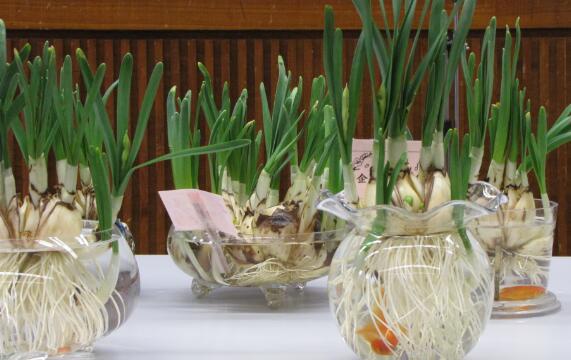
The daffodil, just hearing its name feels fresh and refined, and looking at its appearance, it feels even more elegant and graceful. Keeping it at home not only beautifies the home environment but also improves people's mood. As for how to propagate daffodils, there are 4 commonly used methods: offset bulb propagation, offset bud propagation, twin-scale propagation, and tissue culture. Let's continue reading for the specific operations.
II. Propagation methods of daffodils
(1) Offset bulb propagation, 100% survival rate
The most commonly used daffodil propagation method. As long as it is done properly, the survival rate is as high as 100%. Next we will introduce the specific operation:
First, everyone needs to know what an offset bulb is. Simply put, it is a small bulb growing on both outer sides of the daffodil's bulb, with its base connected to the mother plant.
Second, separate the offset bulbs. It is understood that they easily detach from the mother plant on their own. Generally speaking, detachment occurs in autumn, because autumn is the growing season for daffodils.
Finally, plant the offset bulbs separately, following the daffodil cultivation methods, and basically by the next year a new bulb is produced.
(2) Offset bud propagation, very special
This method is rarely used among daffodil propagation methods because it is very special, but as long as offset bud propagation is used, the survival rate is basically also 100%. The specific operation is as follows:
1. As above, we need to know what an offset bud is. It is understood that it refers to buds wrapped inside the bulb. It is said that only when root scoring is carried out do they detach from the mother plant together with the dug-out broken scales.
2. Select white buds from the detached offset buds, then in autumn, the growing season of daffodils, scatter them on the seedbed, and new bulbs can be produced the following year.
(3) Twin-scale propagation, survival rate 80%-100%
One of the daffodil propagation methods, developed only in recent years. It can be carried out in all four seasons, but April to September is best. This method has a survival rate of 80%-100%. The specific operation is as follows:
1. What is twin-scale propagation
It is understood that inside the daffodil bulb there are many offset buds, some clearly visible and some hidden. But the basic rule is two scales to one bud, and the method of using a bulb plate with two scales as propagation material is called twin-scale propagation.
2. Starting propagation
① Selection of propagation material
Place the daffodil bulb at 4-10°C and store it for 4-8 weeks. Then at room temperature cut the treated bulb plate into small pieces, so that each piece has two scales, and cut off the upper end of the scales, leaving 2 cm as propagation material.
② Small bulbs grow in 2-3 months
After completing the above steps, gardeners use a plastic bag to hold vermiculite with 50% moisture, then put the prepared propagation material into the bag, seal the bag opening, and place it in a dark place at 20-28°C. After 2-3 months small bulbs can grow, with a bulbing rate of 80-90%.
(4) Tissue culture
This is also one of the daffodil propagation methods, but it has higher requirements and is highly specialized, so it is not suitable for home operation. The specific operation is as follows:
Use MS medium, add 30 grams of sucrose and 5 grams of activated charcoal per liter, and use the shoot tip as the explant. After inoculation, small protrusions appear in 10 days, and after 20 days they become small bulbs. After 1 month, transfer to a medium containing NAA 0.1 mg 1/2MS. After 6-8 weeks, roots and leaves are produced. Finally transplant to the field, with a survival rate as high as 100%.
Summary: If you grow daffodils, then besides knowing how to care for daffodils, you should also master several common suitable propagation methods. After all, potting a few more daffodils also looks very nice. That is all for the daffodil propagation methods. I hope it can help everyone.
How to propagate daffodils, daffodil propagation methods
The daffodil is also known as the Fairy of the Waves. It belongs to the genus Narcissus in the Amaryllidaceae family. Unlike many flowers, it has the characteristics of growing in autumn, blooming in winter, and going dormant in summer. So, how do you propagate daffodils, and what are the daffodil propagation methods? Below I will introduce them in detail for everyone.
Daffodil propagation methods
1. Offset bulb propagation: This is the most commonly used method. Offset bulbs grow on both outer sides of the bulb, connected to the mother bulb only at the base, and easily detach from the mother plant on their own. In autumn, separate them from the mother bulb and plant them separately, and new bulbs are produced the following year.
2. Offset bud propagation: Offset buds are buds wrapped inside the bulb. Only when bulb scoring is carried out do they detach from the mother plant together with the dug-out broken scales. Pick out the white buds and scatter them on the seedbed in autumn, and new bulbs are produced the following year.
3. Twin-scale propagation: Using a bulb plate with two scales as propagation material is called twin-scale propagation. The method is to first place the bulb at a low temperature of 4C-10C for 4-8 weeks, then at room temperature cut the bulb plate into small pieces so that each piece has two scales, and cut off the upper end of the scales leaving 2 cm as propagation material. Then use a plastic bag to hold vermiculite with 50% moisture or sand with 6% moisture, put the propagation material into the bag, seal the bag opening, and place it in a dark place at a temperature of 20C-28C. After 2-3 months small bulbs can grow, with a bulbing rate of 80%-90%. This method can be carried out in all four seasons, but April to September is best. After transplanting, the survival rate of the generated small bulbs can reach 80%-100%.
4. Tissue culture: Use MS medium, add 30 grams of sucrose and 5 grams of activated charcoal per liter, use the shoot tip as the explant, and a stem plate with twin scales 5X10 mm can also be used as the explant, pH 5-pH 7, cultured at 25C. After inoculation, small protrusions appear in 10 days, and after 20 days they become small bulbs. After 1 month, transfer to a medium containing NAA 0.1 mg 1/2MS. After 6-8 weeks, roots and leaves are produced. Transplanting to the field can achieve 100% survival.
The above is the article on how to propagate daffodils and daffodil propagation methods. During the growth period, daffodils need sufficient water. The root crown part should be immersed in water, and above the bulb plate the soil should be kept moist. During the stem and leaf growth period, relatively high atmospheric humidity is needed. In the plum rain season, pay attention to drainage. Three-year-old bulbs should use flow irrigation, that is, water is introduced from one end and flows out from the other, so that the water around the planting beds keeps flowing continuously.
Daffodil planting, daffodil cultivation methods, daffodil propagation methods
The daffodil is different from other plants. Its leaves are slender, with white petals and yellow pollen. Placing it in the living room not only reflects the owner's elegant taste but also beautifies your home life. The daffodil cultivation methods are actually very simple. As long as you understand the daffodil cultivation methods, its survival rate is also quite high. Let's take a look at the daffodil cultivation methods together!
Daffodil cultivation method one: Water culture
Water culture is the most convenient and also the most common of the daffodil cultivation methods. Before planting, you only need to remove the old roots and old stems of the daffodil, then place it in a bottle filled with water. It is worth noting that when using water culture to grow daffodils, you should change the water for it every day and place it in a cool place. Wait until it blooms, then place it in a place with sufficient sunlight.
Daffodil cultivation method two: Paddy field cultivation
Paddy field cultivation is one of the daffodil cultivation methods. The key point of paddy field cultivation is to choose soft soil, then irrigate the land so that the soil below matures, and add a little fertilizer to increase the nutrient content of the land and reduce the harm of pests and diseases. After that, plant the daffodils in the paddy field.
Daffodil cultivation method three: Sand culture
Sand culture is also one of the daffodil cultivation methods. The key point of using sand culture lies in the choice of sand. To grow daffodils, you should choose fine sand and a pot with good breathability. After planting the daffodils in the sand pot, water them in time. Do not place them under the scorching sun, so as to avoid a state of water deficiency.
Daffodil cultivation method four: Soil culture
Among the daffodil cultivation methods, many people also like to use soil culture, and the key point of using soil culture lies in the choice of soil. We should choose soft, pest-free humus soil. As with water culture, before planting we should first remove the old stems from its roots before planting, then water an appropriate amount and place it in a cool place.
Daffodil propagation methods
There are many daffodil propagation methods, such as offset bulb propagation, offset bud propagation, twin-scale propagation, etc. The growth cycle of daffodils is different from other plants. Summer is its dormant period, while autumn and winter are the growing period of daffodils. During the growing period of daffodils, we should give it enough sunlight and water, and also apply an appropriate amount of fertilizer, so that its nutrients keep up and its growth speed naturally becomes faster.
Summary:
These are the common daffodil cultivation methods. Once you know the daffodil cultivation methods, you will not encounter so many problems when growing them in the future. If you also like daffodils, then first learn about the daffodil cultivation methods, and then plant such a beautiful pot of flowers in your own home!
[Related links]:
⊙ Carnation benefits and effects ⊙ What to do when spider plant leaves turn yellow ⊙ How to grow white magnolia ⊙ Blue Enchantress price
⊙ Can cactus fruit be eaten ⊙ How often to water a cactus ball ⊙ Flower language of balloon flower ⊙ How to grow wintersweet
⊙ What white roses represent ⊙ Benefits and effects of rosemary ⊙ Is night-blooming jasmine toxic ⊙ Flower language of calla lily