Roses have 5 propagation methods, and the survival rate of cuttings can reach 100%
Keeping a pot of roses at home is the choice of many people in big cities. It not only beautifies the indoor environment but is also very pleasing to the eye. Seeing it when you get up in the morning will make your mood happy all day long. But over time it is inevitably monotonous, so it is necessary to grow and propagate a few more pots of roses with different flower colors. So how do you propagate roses? Below, the editor will introduce 5 rose propagation methods.
I. How to propagate roses: cuttings are the most commonly used
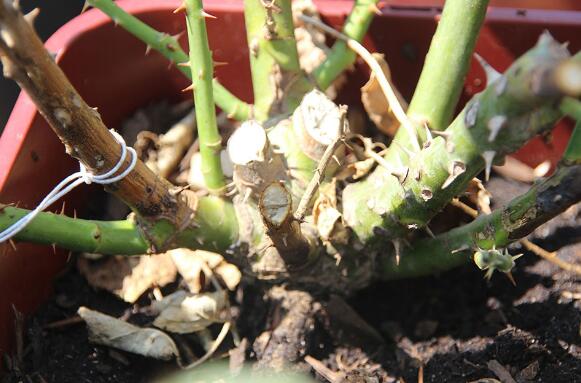
The rose originated in China and has now become a world-famous flower. Many countries even use it as their national flower. For many years, roses have been a subject of breeding by experts, so many propagation methods have emerged. How to propagate roses: generally speaking, there are 5 propagation methods: cuttings, grafting, sowing, layering and division.
II. The 5 propagation methods for roses
(1) Cutting propagation
There are many propagation methods for roses, but the most commonly used and most convenient is still cuttings. Rose cutting propagation is divided into two types, namely hardwood cuttings and softwood cuttings. The specific operations are as follows:
① Hardwood cuttings
If using hardwood cuttings, the time should be chosen in February-March before the plant sprouts; for the cuttings, choose 2-year-old robust, plump, full-budded, pest- and disease-free branches, and cut them into 15 cm lengths. Then coat the lower end of the cuttings with mud slurry and insert them into the cutting bed.
② Softwood cuttings
If using softwood cuttings, the time should be chosen between July-August; for the cuttings, select young branches of the current year, then insert the cuttings into the cutting bed. Generally speaking, after cutting according to the above method, roots can form in about 1 month, and then they can be transplanted and cared for in time.
Selection of the cutting bed
Whether using hardwood cuttings or softwood cuttings, the cutting bed is extremely critical. In the rose planting methods, we introduced that it likes loose soil with good permeability and drainage. Therefore, the cutting substrate that flower lovers can choose should be: sandy soil with good permeability, perlite, vermiculite and carbonized rice hulls, etc.
Note: To prevent rose cuttings from becoming diseased, before cutting, flower lovers should spray the soil with 500-800 times dilution of potassium permanganate and thiophanate-methyl for disinfection, then cover it with plastic film for 3-4 days.
Management after cutting
After completing the above steps, rose cutting propagation is basically finished, but post-cutting management is also extremely important, as this can ensure a 100% survival rate. First, the temperature should be kept at 18-28°C; second is light. During cutting, shade should be provided, and after 10-15 days the cuttings can gradually receive sunlight. Finally, there is watering. Everyone should spray less but spray frequently.
(2) Grafting propagation
In addition to cuttings, grafting is also a commonly used propagation method for roses. The rootstock generally used is rose or Baiyutang. Grafting propagation is also divided into two types, bud grafting and branch grafting. The specific operations are as follows:
① Bud grafting: every 5-9 days, select plump buds from a good rose variety and cut them off, then graft 1-2 buds onto Baiyutang or rose rootstock; ② Branch grafting: every spring, branches of a good rose variety can be grafted onto rose or Baiyutang rootstock.
(3) Seed propagation
This is a rarely seen rose propagation method. Put the seeds collected in autumn into a plastic bag filled with moist sandy soil, and place it in an environment where it freezes at night and thaws during the day. After one month, gradually raise the temperature to about 20°C. After the seeds crack and germinate, they can be sown. When the seedlings grow 3-5 small leaves, transplant them separately.
(4) Layering propagation
Another rose propagation method. It is generally done in June-August. Select robust branches of the current year, bend them into the soil, scrape the buried part and insert a clod of soil into the wound, bury it in the soil, fix it with a bamboo fork or tree branch, let the branch tip remain exposed above the ground, and keep the soil moist. Roots can form in 2-3 months, and the following spring it can be separated from the mother plant and planted separately.
(5) Division method
Every year in November-December, after the rose leaves fall, you can dig out robust new plants growing beside the mother plant from a large clump, with 2-3 stems per clump, and plant them separately with roots. After planting, cut the stems back at 20-25 cm above the soil surface. After 2-3 years of cultivation, they can form clumps and bloom.
That is all the editor has to introduce about rose propagation methods. I believe that after reading the whole article, everyone can find a propagation method suitable for themselves. If you want one pot to become ten pots, and let roses of various colors bloom all over the house, that scene is wonderful just thinking about it. So what are you waiting for? Go try it quickly!
Rose cutting methods, rose cutting propagation techniques
Cut the cuttings into 10-15CM shapes with a slanted bottom and flat top, using about three nodes as one section, and be careful to smooth the wound with a sharp blade
Before cutting, if necessary, you can add auxin-type drugs to soak the base of the stem, then insert it into the substrate, and after the roots are about 2-3 cm long, it can be transplanted
Flower name: RoseAliases: rose flower, wandering flower, assassin, heart-piercing rose, thorny rose flowerFamily and genus: Rosaceae, RosaRose cuttings should not be allowed to sprout quickly, because the branches have no external source of nutrients. Sprouting will consume the nutrients inside the branches, and then there will be no nutrients left for rooting. Use healthy and strong branches for cuttings; a good beginning is half the success. Therefore, branches with pests or diseases should be avoided, while thick leaves that are fully developed should contain sufficient nutrients and are more likely to succeed when cutting.
Selecting branches for cuttingsSoftwood cuttings with heelThat is, in early spring select newly sprouted branches, cut them off at the stem base with a little wood using a sharp knife, treat them with growth hormone, and insert them into a cutting bed or small pot.Semi-hardwood cuttingsThis method is done in June-September. Select branches from roses whose flowers have just faded, cut off the flower stalk, smooth the lower part, take 2-3 nodes as one section, remove the lower leaf, then cut off most of the remaining leaves, treat with growth stimulant, and insert into a bed with the same conditions as the above method.Hardwood water cutting methodSelect semi-hardwood or hardwood branches with 1-2 leaves, smooth the base with a sharp knife, insert them into a water container, with the branches immersed 1/2 in water, and place them in a place at 15°C-20°C where they can receive sunlight, so that they grow roots. During root promotion, the water in the container should be changed once every 2-3 days. When the epidermis of the new roots on the branches turns light yellow or light brown, they can be taken out and carefully planted into nutrient bags for cultivation.Key points for rose cuttings:
(1) Choose plump, disease-free branches: Use healthy and strong branches for cuttings. "A good beginning is half the success." Therefore, branches with pests or diseases should be avoided, while thick leaves that are fully developed should contain sufficient nutrients and are more likely to succeed when cutting.
(2) Prevent pest and disease invasion: In the cutting medium, potting soil, or cutting environment, disease invasion should be avoided. Black mold disease, branch blight, etc. are all very likely to occur during cutting, so the appropriate use of fungicides is very necessary.
(3) Water management: Because after rose cuttings are cut, they can no longer obtain water supplementation from the mother plant, so sufficient water must be given to avoid wilting. Generally, timed and measured water supply and facilities such as a simple greenhouse are needed for commercial production. Water control must pay attention to the humidity in the medium and the air humidity, following the principle of maintaining a thin film of moisture on the leaf surface without making it wet.
(4) Use rooting agents to promote rooting: IBA at 1000-2000 ppm can help rose cuttings root. It must be noted that when the concentration is too high, it will instead make it difficult for the axillary buds of the cuttings to sprout. Therefore, only an appropriate concentration can make the cuttings root well. In addition to the above points, which are essential methods and procedures for rose cutting propagation, there are other precautions.
(5) Other precautions: The middle nodes of cut flowers are more suitable as cuttings. Cuttings with 3 nodes and 3 leaves grow faster than single-node cuttings but cost more. The cutting medium can be prepared with peat soil plus perlite. To promote axillary bud sprouting of cuttings, nutrient agents containing BA can be added or cold low-temperature treatment can be used to break axillary bud dormancy. Cuttings in summer can become seedlings in about one month, while in winter it takes about 50-60 days to become seedlings. Spring cuttings tend to grow axillary buds first and then root, thus affecting their survival rate. Using a heated bed can promote faster rooting of winter cuttings and increase propagation speed. Pretreatment with sucrose can improve the survival rate and seedling quality. Trace elements Fe, Mn, and Zn also help the survival of cuttings.
At present, the domestic rose planting area is about 236 hectares. Farmers must renew planting every 3-4 years, and some farmers have switched to dense planting. In addition, considering the need for potted flowers, it is initially estimated that about 6 million seedlings are needed each year. Cutting propagation provides fast and good rose seedlings, which not only benefits flower farmers' production but also reduces production costs. I personally do not recommend using sowing to propagate roses on a large scale, because sown seedlings germinate and grow relatively slowly, the cycle is longer, and reversion and degeneration phenomena are likely to occur, which will reduce overall quality. Therefore, except for breeding needs (because sowing can induce variation), asexual propagation methods are generally not used.
Through the detailed introduction in this article, I hope everyone can gain something! Thank you for your support and attention to the Succulent Flower Garden!
How to propagate Aeonium, Aeonium propagation methods / sowing propagation has a high survival rate
Aeonium is an ornamental flowering plant with high ornamental value, and many people in our country cultivate it. As more people cultivate it, people are also more concerned about issues related to its propagation. So how do you propagate Aeonium? What are the propagation methods for Aeonium? Below, the editor will take everyone to learn about it.
I. How to propagate Aeonium
Regarding how to propagate Aeonium, it is actually mainly based on sowing propagation and cutting propagation. These two are relatively commonly used propagation methods for Aeonium, and their survival rates are also relatively high. As for the operation methods of the two propagation methods, they are introduced in detail below. Let us take a look.
II. Propagation methods for Aeonium
Sowing propagation
1. Seed germination promotion
Before sowing and propagating Aeonium, pretreatment is very important. We need to promote germination of the seeds. Generally, the seeds can be soaked in hot water for 1-2 days. After the seeds begin to absorb water and swell, take them out and sow them. This can increase the germination rate of the seeds.
2. Sowing method
Among the propagation methods for Aeonium, sowing propagation is a relatively commonly used method. When sowing, we need to evenly scatter the seeds in the potting soil, then cover them with about 1-2 cm of soil, and then water. Remember to water thoroughly at one time. After about one week, the seeds can germinate.
Cutting propagation
1. Cutting selection
Before cutting, we need to first select the cuttings, that is, the branches of Aeonium. Generally, we can choose relatively robust branches, so the survival rate will be relatively high. If you choose branches that look very frail, then the cutting can basically be declared a failure, so choosing cuttings is still very important.
2. Cutting method
Among the propagation methods for Aeonium, cutting propagation is one of the easier ones to operate. Before cutting, we can use chopsticks to poke a hole in the soil about the same thickness as the cutting, then insert the cutting into it and water. When watering, the amount should be appropriate. Remember not to cause water accumulation, otherwise root rot is very likely to occur. After everyone completes the cutting according to this method, roots can form in about 20 days.