How to Propagate Beaucarnea recurvata (Elephant's Foot)? A Detailed Guide to Two Methods: Sowing and Cuttings
Beaucarnea recurvata (Elephant's Foot) is a highly ornamental plant, beloved by many for its appearance that closely resembles a wine bottle. To keep it growing healthily, besides mastering how to care for Beaucarnea recurvata, its propagation methods are also very important. How to propagate Beaucarnea recurvata can roughly be divided into two types: sowing and cuttings. So what exactly are the propagation methods for Beaucarnea recurvata? Below, the editor takes everyone through a look.
I. How to Propagate Beaucarnea recurvata / Sowing and Cuttings
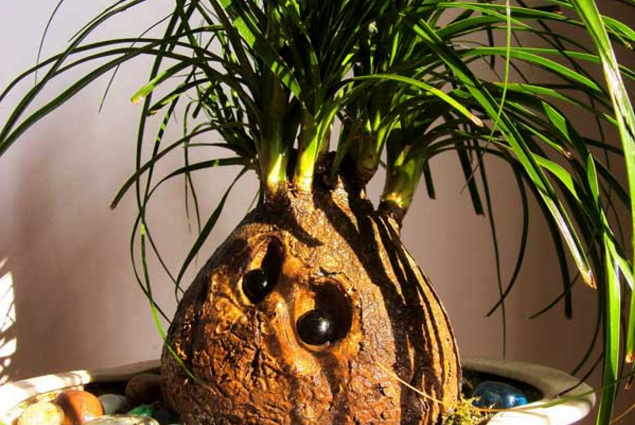
The growing environment of Beaucarnea recurvata plays a big role in its propagation. Generally, an ambient temperature of 16 - 28°C is the optimal environment; in such a high-quality environment, Beaucarnea recurvata will thrive. Now let's get to the point: how to propagate Beaucarnea recurvata can roughly be divided into two major categories, one is the sowing propagation method, and the other is the cutting propagation method. Regarding these two propagation methods for Beaucarnea recurvata, below the editor gives everyone a detailed introduction.
II. Propagation Methods for Beaucarnea recurvata / Details Matter
(1) Sowing
Seed selection: Among the propagation methods for Beaucarnea recurvata, sowing is a very important step. Whether the seeds are chosen well or poorly will directly determine how robust the Beaucarnea recurvata will be later on. It is best to choose new seeds from each year; the shorter the storage time, the better, because the newer the seeds, the relatively higher the germination rate of Beaucarnea recurvata will be. Also, when selecting seeds, be sure to check whether they have pests or diseases.
Sowing method: When sowing, first use a tool to place them on the surface of the substrate, with a covering thickness generally of about 1cm. Then place the flowerpot in water, letting the water reach half the height of the pot so that the water slowly soaks in. Larger seeds can be placed directly into the substrate and covered, with a thickness generally 2-3 times that of the seed; then you can water, but do not water too much, just moisten the substrate. When watering, it is best to use a spray bottle rather than pouring water directly, otherwise it may wash the seeds up.
(2) Cuttings
Temperature management: The temperature for Beaucarnea recurvata cuttings is best controlled at 20-30°C, because if the temperature is too low, it will cause the cuttings to root slowly, and if the temperature is too high, it is easy for Beaucarnea recurvata to develop pathogenic infections; the higher the temperature, the easier the infection, so controlling temperature is very important.
Light management: The vast majority of plants cannot do without sunlight. Beaucarnea recurvata cuttings need to carry out photosynthesis, which can produce nutrients for the plant to let it take root and sprout. Of course, the light cannot be too strong either, as this is not conducive to propagation; it is best to shade about two-thirds of the sunlight for the optimal state.
Humidity and moisture: In addition to the above two points, Beaucarnea recurvata cuttings must also ensure air humidity, with 75%-85% being optimal. Of course, all of this is based on after rooting, because if there is no rooting, the cuttings cannot absorb water to maintain the internal growth balance. Therefore, we need to use misting to reduce water evaporation.
Sowing Propagation of Beaucarnea recurvata
Sowing propagation of Beaucarnea recurvata is generally done in late autumn, early spring, or winter. After sowing, germination occurs in about 20-25 days. When the seedlings are 4-5 cm tall, they are potted. The seedlings grow slowly and can be enjoyed for viewing in the second year. After sowing Beaucarnea recurvata, when encountering a cold wave with low temperatures, you can wrap the flowerpot with plastic film to help keep it warm and moist. After the seedlings emerge, promptly uncover the film, and let the seedlings receive sunlight before 9:30 every morning, or after 3:30 in the afternoon; otherwise, the Beaucarnea recurvata seedlings will grow very weak and spindly.
Cutting Propagation of Beaucarnea recurvata
1. Cutting substrate
For potted Beaucarnea recurvata, a mix of 2 parts leaf mold, 1 part garden soil, 1 part river sand, and a small amount of plant ash can be used as the substrate. For home cuttings, due to limited conditions, it is difficult to obtain an ideal cutting substrate. Do not use sea sand or river sand from saline-alkali areas; they are not suitable for the growth of Beaucarnea recurvata.
2. Cutting time
Beaucarnea recurvata cuttings are often taken in late spring and early autumn using current-year branches for softwood cuttings, or in early spring using last year's branches for hardwood cuttings.
3. Cutting selection
When performing hardwood cuttings of Beaucarnea recurvata, after temperatures rise in early spring, select robust branches from the previous year as cuttings. After cutting off the Beaucarnea recurvata branches, choose the sturdy parts and cut them into sections 5~15 cm long, each section carrying more than 3 leaf nodes. Each cutting usually retains 3-4 nodes, and the cutting method is the same as for softwood cuttings.
When cutting the cuttings, note that the upper cut should be made horizontally about 1 cm above the topmost leaf node, and the lower cut should be made at an angle about 0.5 cm below the bottommost leaf node. Both the upper and lower cuts should be smooth, and the knife should be sharp.
4. Cutting techniques
After using side branches for cuttings, it is quite slow to form a bottle-shaped trunk. You can cut off the part of a Beaucarnea recurvata whose stem shape is not upright, bury the stem for propagation, and let it grow into a new plant. At the same time, be sure to disinfect the wound to prevent rot. After cutting off the cuttings and letting them dry slightly, insert them into a sand bed and increase air humidity. After insertion, they can take root in about 15-20 days.
Propagation Methods for Beaucarnea recurvata: Propagation and Care Management of Beaucarnea recurvata
Beaucarnea recurvata has become a popular indoor foliage plant with a distinctive shape in recent years. The most ornamental parts are the large, weathered-looking "wine bottle" belly of the Beaucarnea recurvata and its graceful, slender leaves, perfectly combining ruggedness and softness. So what are the propagation methods for Beaucarnea recurvata, and how do you propagate Beaucarnea recurvata? Below, the editor introduces the propagation methods for Beaucarnea recurvata and how to propagate Beaucarnea recurvata.
Propagation Methods for Beaucarnea recurvata
Propagation of Beaucarnea recurvata generally has two methods: sowing and cuttings. Because Beaucarnea recurvata blooms very late, it is not easy to collect seeds, so self-collected seeds are rarely used for propagation. However, Beaucarnea recurvata is mostly propagated by sowing; seed set has not yet been seen in China, and Beaucarnea recurvata seeds are mostly imported from the place of origin. In addition, Beaucarnea recurvata grown for many years sometimes produces small buds at the base of the stem, and the buds can also be divided and cut for propagation.
Sowing Propagation of Beaucarnea recurvata
Sowing propagation of Beaucarnea recurvata is generally done in late autumn, early spring, or winter. After sowing, germination occurs in about 20-25 days. When the seedlings are 4-5 cm tall, they are potted. The seedlings grow slowly and can be enjoyed for viewing in the second year. After sowing Beaucarnea recurvata, when encountering a cold wave with low temperatures, you can wrap the flowerpot with plastic film to help keep it warm and moist. After the seedlings emerge, promptly uncover the film, and let the seedlings receive sunlight before 9:30 every morning, or after 3:30 in the afternoon; otherwise, the Beaucarnea recurvata seedlings will grow very weak and spindly.
After most Beaucarnea recurvata seeds have emerged, appropriate thinning is needed. Pull out the diseased and unhealthy Beaucarnea recurvata seedlings so that the remaining seedlings have a certain amount of space between each other. When most of the seedlings have grown 3 or more leaves, they can be transplanted.
Cutting Propagation of Beaucarnea recurvata
Beaucarnea recurvata sometimes also sprouts side branches and can be propagated by cuttings, but unlike other Agavaceae plants, Beaucarnea recurvata does not produce many suckers at the root crown, only a few side branches. Beaucarnea recurvata cuttings are often taken in late spring and early autumn using current-year branches for softwood cuttings, or in early spring using last year's branches for hardwood cuttings. When performing softwood cuttings, during the period of vigorous growth of Beaucarnea recurvata from late spring to early autumn, select robust current-year Beaucarnea recurvata branches as cuttings. After cutting off the branches, choose the sturdy parts and cut them into sections 5~15 cm long, each section carrying more than 3 leaf nodes.
For cutting propagation of Beaucarnea recurvata, be sure to disinfect the wound to prevent rot. After cutting off the cuttings and letting them dry slightly, insert them into a sand bed and increase air humidity. After insertion, they can take root in about 15-20 days. After using side branches for cuttings, it is quite slow to form a bottle-shaped trunk. You can cut off the part of a Beaucarnea recurvata whose stem shape is not upright, bury the stem for propagation, and let it grow into a new plant.
When cutting the cuttings, note that the upper cut should be made horizontally about 1 cm above the topmost leaf node, and the lower cut should be made at an angle about 0.5 cm below the bottommost leaf node. Both the upper and lower cuts should be smooth, and the knife should be sharp. When performing hardwood cuttings of Beaucarnea recurvata, after temperatures rise in early spring, select robust branches from the previous year as cuttings. Each cutting usually retains 3~4 nodes, and the cutting method is the same as for softwood cuttings.
Propagation and Care Management of Beaucarnea recurvata
When sowing Beaucarnea recurvata, sow the seeds in a substrate mixed with leaf mold and river sand, and keep it moist, but not too wet, otherwise it is prone to rot. Beaucarnea recurvata can germinate after 2-3 months at a temperature of 20-25°C in a semi-shaded environment. During the growth of young Beaucarnea recurvata, fertilizer and water management should be strengthened, applying dilute liquid fertilizer frequently and lightly, and increasing potassium fertilizer, so as to help the stem of Beaucarnea recurvata expand and become plump. The cutting substrate for Beaucarnea recurvata uses materials such as nutrient soil, river sand, or peat soil for cuttings. For home cuttings, due to limited conditions, it is difficult to obtain an ideal cutting substrate. Do not use sea sand or river sand from saline-alkali areas; they are not suitable for the growth of Beaucarnea recurvata.