How to transplant snake plant? Detailed explanation of division and cutting propagation methods
Snake plant, also called mother-in-law's tongue, is a plant I believe everyone has heard of. It is a plant of great help to family life, not only purifying the air at home but also absorbing harmful substances and harmful gases in the room, so many people are keen to grow it. So how do you transplant a snake plant? It can roughly be divided into two methods: division and cutting. As for what the propagation methods of snake plant are specifically like, follow along below.
1. How to transplant snake plant: pot breathability is very important
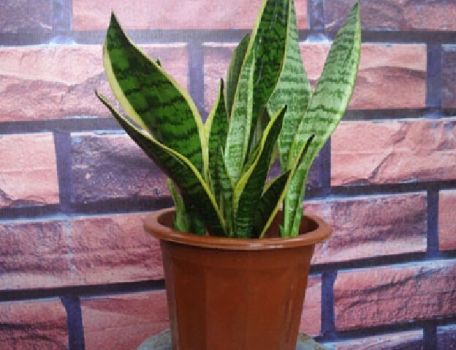
1. Choice of pot and soil
Regarding how to transplant snake plant, there are many choices for soil and pots. As for soil requirements, generally a sandy loam with good drainage or a soil mixed with leaf mold and sand is fine; for the pot, clay, plastic, ceramic and other materials are all fine. For the pot's appearance, it is generally recommended to choose a tall-footed one, which helps the snake plant's plant shape look attractive, though of course this varies from person to person.
Note: When looking for soil, it is best to do so in autumn and winter, because most insects have already stopped activity in these seasons, which can avoid being bitten by poisonous insects and harmed.
2. Transplanting method: red pine needles as a bottom layer
Before transplanting the snake plant, it is best to first place a layer of red pine needles at the bottom of the pot. This can effectively ensure breathability and prevent the snake plant from developing root rot. Take some humus soil and mix it with charcoal ash, then transplant the snake plant into the new pot, and prepare some stones, wash them clean and place them on top. This can prevent pests from invading the soil and is both attractive and practical.
Note: Use pine needles that have been thoroughly decomposed over a long period. Thoroughly decomposed pine needles contain trace elements needed for plant growth and are very suitable for growing flowers. Paying attention to this point will be of great help in growing snake plants.
2. Snake plant propagation methods: division and cutting
The propagation methods of snake plant are relatively simple compared with other plants and can be roughly divided into two types: division and cutting. Of course, this is only the broad classification; there are still many points to note within them. What are they specifically? Let's continue reading below.
1. Division
Among snake plant propagation methods, division can be said to be the most common way, and this method is almost suitable for all varieties of snake plant. Specific method: first take the whole plant out of the pot, remove the old growing medium, expose the rhizome, then cut it along its direction into multiple plants, with 2-3 plants per pot. This method can raise seedlings all year round, but spring and summer are best, and it can be done in spring together with repotting.
Note: When potting, sprinkle some fine sand at the plant's roots to help it survive. The potting soil is best chosen as a loose, fertile, well-aerated sandy growing medium. It should also have a section of rhizome and a sucker, and they can be potted and planted separately.
2. Cutting
Among snake plant propagation methods, cutting is relatively less common than division. This method is only for snake plant varieties whose leaves have no golden-yellow edging or silver veins. Generally, mature snake plant leaves are cut crosswise into small sections of about 8 cm, left to dry in the shade for 1-2 days, then inserted upright into clean river sand, inserted 3-4 cm deep.
Note: After cutting is completed, place the snake plant in a place with scattered light and relatively good air circulation, which is more conducive to the snake plant's growth.
How to propagate golden-edged snake plant: propagation methods for golden-edged snake plant (cutting/division)
As a variety of snake plant, the golden-edged snake plant has many uses. It not only looks good but can also purify air and protect against radiation, and can even be used medicinally to treat illness. It is a plant deeply loved by flower growers. As more and more people grow golden-edged snake plant, many people want to know its propagation methods so they can get a few more pots. So how do you propagate golden-edged snake plant? Today, let me solve this problem for everyone.
1. How to propagate golden-edged snake plant: cutting/division
As a beginner grower, knowing the cultivation methods of golden-edged snake plant is enough, but if you are experienced, you should also master its propagation methods. This can not only enrich yourself but also add to the fun of growing it. As for how to propagate golden-edged snake plant, there are mainly two methods: division and cutting. Next, the focus will be on introducing the leaf-cutting method for golden-edged snake plant.
2. Two propagation methods for golden-edged snake plant
(1) How to take cuttings of golden-edged snake plant
In indoor propagation, the method commonly used by flower growers is cutting. Most plants use stem cuttings, while succulents use leaf cuttings. Golden-edged snake plant is an exception, however: although it is not a succulent, leaf cuttings are also commonly used when propagating it. Next, I will present the leaf-cutting method for golden-edged snake plant.
Leaf cuttings of golden-edged snake plant
1. Selection of cuttings
To do leaf cuttings, naturally you must choose leaves. First, flower growers take the golden-edged snake plant out of the pot, clean off the soil, and then cut off the small outer leaves. Choose 2-3 leaves about 15 cm long as cuttings.
Cutting treatment: After the cuttings are selected, corresponding treatment is also needed. Because the leaves of golden-edged snake plant are rather thick, in order to avoid the plant being infected by pathogens, flower growers should apply plant ash or stove ash to the cut surface of the leaves.
2. Starting leaf cuttings
Wipe the cuttings clean, then trim the upper part flat, then invert the leaf and insert it downward with the leaf sheath into the newly prepared potting soil. The insertion depth is 3-5 cm, then keep the room temperature between 18-22°C, water moderately, and place the plant in a cool environment. After about half a year, the golden-edged snake plant will sprout and produce leaves, and the leaves that grow out will all retain the golden edge.
3. Notes
In the leaf cuttings above, everyone must pay attention: the leaf must be inserted upside down, so that the newly sprouted snake plant has a golden edge. Conversely, if inserted right side up, the newly sprouted snake plant will not have a golden edge. This is also one of the reasons why the golden edge disappears from many flower growers' golden-edged snake plants.
(2) Division propagation of golden-edged snake plant
Besides cutting, the propagation method for golden-edged snake plant can also use division, and this method is generally done together with repotting. Specific operation: when repotting the golden-edged snake plant, separate the new and old plants, and plant the old roots and old plants in another pot or in the ground. In this way, you can easily obtain multiple pots of golden-edged snake plant.
Overall, propagating golden-edged snake plant is not difficult; both cutting and division can succeed. However, when doing leaf cuttings, in order not to let the golden edge disappear, everyone must pay attention to inserting upside down! Of course, methods are fixed while people are flexible; everyone can choose a method to propagate according to the actual situation. That is all for the propagation methods of golden-edged snake plant. I hope it can help everyone.
How to propagate snake plant: cutting, division and sowing methods
How to propagate snake plant: it can be done by division, sowing and cutting. None of the three propagation methods is difficult to carry out. Below are the steps for snake plant cutting, sowing and division propagation methods, organized separately.
How to propagate snake plant 1. Cutting propagation methodCutting of Yucca gloriosa can be done in spring or early summer. First, flower growers only need to dig up the stem of the snake plant, peel off the leaves, cut the stem into 10 cm lengths. Thick stems can be cut lengthwise into 2-4 pieces, placed flat in a furrow with the lengthwise cut facing down, and covered with 5 cm of soil.
Maintain humidity, and after cutting, the snake plant can sprout in about 20-30 days.
2. Division propagation methodSnake plant division can be done in spring from February to March. As long as the root tiller buds of the snake plant emerge above the ground, they can be divided and planted. When dividing and planting, it is best for each bud to carry some fleshy roots. First dig a hole and apply fertilizer, then bury the separated tiller buds in it. Do not bury the soil too deep; just slightly cover the top.
You can also cut off the part of the stem end with clustered leaves, with a section of stem 9-12 cm long, remove part of the leaves, leaving about 7 leaves, and bury it in a hole 12-15 cm deep, then water after burying.
3. Sowing propagation methodSeed propagation of snake plant can only be achieved through artificial pollination. Artificial pollination is best done in May. About 70 days after pollination, the seeds mature. Sow in late September of the same year, seedlings emerge after one month, and the emergence rate is about 40% or more.