What to Do When Umbrella Plant Leaves Turn Yellow and Dry? Causes and Solutions
The umbrella plant (Cyperus alternifolius) is a fairly common plant in people's daily lives, with good ornamental value, and it can be grown both in pots and planted on a large scale. However, no matter how ornamental a plant is, yellowing leaves will affect its overall aesthetic appeal. So what should you do when umbrella plant leaves turn yellow? How do you solve the problem of umbrella plant leaves turning yellow and drying up? Let's take a look below.
I. What to Do When Umbrella Plant Leaves Turn Yellow - Find the Cause
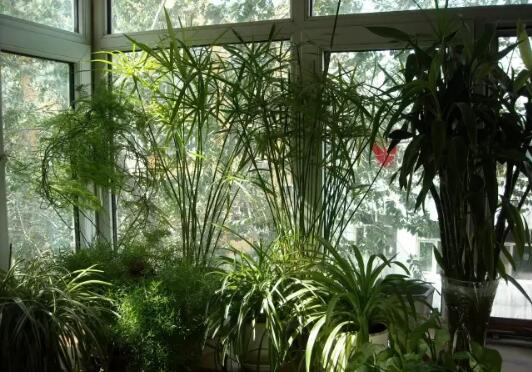
If you want to know what to do when umbrella plant leaves turn yellow, first we need to find the cause. Only by knowing what is causing it can we deal with it in a targeted way. Things like too much light, improper fertilizing and watering are all causes of this phenomenon. As for the specific solutions, they are introduced below. Let's take a look.
II. Causes of Umbrella Plant Leaves Turning Yellow and Drying Up, with Solutions
1. Improper Fertilizing - Dilute Before Applying
Fertilizer is one of the main nutrients in the umbrella plant's growth process. If we fertilize too little or the fertilizer concentration is too high, it will cause the umbrella plant's leaves to turn yellow. If we fertilize too little, it will turn yellow and wither due to insufficient nutrients; if the fertilizer concentration is too high, it will burn the plant and cause yellowing.
Solution: The umbrella plant has a very high demand for fertilizer during its growth process. Only after using fertilizer will its growth visibly improve. Spring and summer are its peak growing seasons, and we should fertilize frequently. However, when fertilizing, the fertilizer concentration must not be too high. It must be diluted with water before application. If the concentration is too high, it can easily burn the plant.
2. Too Little Watering - Keep Soil Moist / Avoid Waterlogging
The umbrella plant prefers a warm and humid environment. When we cultivate it, especially after it enters its growing period, its demand for water is very high. If we always forget to water it, causing the plant to lack water, it will cause the umbrella plant's leaves to turn yellow.
Solution: If the problem is caused by too little watering, we don't need to immediately pour in a lot of water. We should do it gradually. If we water too much at once, it can easily cause root rot in the plant. Generally, when the weather is relatively dry, watering once every 3-5 days is sufficient.
3. Too Much Light - Provide Shade in Summer
The umbrella plant is a light-loving plant. If the light is relatively suitable in spring and autumn, we can keep it outdoors to receive full-day sunlight. However, it is quite afraid of strong light, so after entering summer, it still needs to be shaded. Otherwise, if the light is too strong, it can easily scorch the plant and cause the umbrella plant's leaves to turn yellow.
Solution: If the umbrella plant's leaves turn yellow due to too much light, we should promptly move it indoors to a semi-shaded spot for cultivation. After cultivating it this way for a period, the plant's leaves will gradually turn green again.
4. Pest and Disease Infestation - Deal with It Promptly
In the process of cultivating the umbrella plant, if we don't cultivate it properly, it is very easy for problems like pests and diseases to appear. These kinds of problems are extremely harmful to the plant. Not only will they cause the umbrella plant's leaves to turn yellow, but in severe cases, they will also cause the plant to wither and die.
Solution: If this problem is caused by pests and diseases, we must deal with it promptly, because the longer it drags on, the greater the harm to the plant. As for the specific treatment methods, I introduced them in the article on pest and disease prevention and control for the umbrella plant. You can take a look.
5. Environmental Adjustment - A Normal Phenomenon
If our umbrella plant is a mature plant bought from outside, then it is very easy for leaf yellowing to occur right after bringing it home. This is a normal phenomenon, because it reflects the plant not being adapted to the environment and needs a period of adjustment. Generally, with normal care, it will gradually turn green again.
What to Do When Umbrella Plant Leaves Turn Yellow - Analysis of Yellowing Causes
The umbrella plant (Cyperus alternifolius), also known as the umbrella papyrus, windmill grass, etc., is a perennial herbaceous plant of the genus Cyperus in the family Cyperaceae. It is suitable for keeping at home as a potted ornamental or for use as cut foliage in floral arrangements. However, friends who keep umbrella papyrus will find during the cultivation process that the umbrella papyrus develops yellowing leaves and withered yellow leaf tips. So what should you do when umbrella plant leaves turn yellow?
What to Do When Umbrella Plant Leaves Turn Yellow - I. Potting Soil Too Dry
The umbrella papyrus likes moisture and fears dryness. During the growing period, it should be watered in a timely manner, and dehydration must be avoided. Insufficient water will cause the leaves to curl, the leaf tips to scorch yellow, and the plant to look dull and listless, thus affecting growth and ornamental value.
What to Do When Umbrella Plant Leaves Turn Yellow - II. Too Much Light
The umbrella papyrus likes partial shade. Strong sunlight can easily cause the leaf tips to scorch and wither. From May to September, it should be placed in a semi-shaded spot.
What to Do When Umbrella Plant Leaves Turn Yellow - III. Air Too Dry
The umbrella papyrus likes relatively high air humidity. If the air humidity is too low, the leaf tips will often wither, turn yellow, and scorch. Especially during high temperatures in summer, water should be sprayed frequently on the plant's branches and leaves and the surrounding environment to increase humidity.
What to Do When Umbrella Plant Leaves Turn Yellow - IV. Low Temperature
The umbrella papyrus is not cold-tolerant. It stops growing below 12°C. In winter, it should be moved indoors and kept above 5°C. Otherwise, it is prone to frost damage that causes the leaves to wither and scorch.
How to Grow the Umbrella Plant (Umbrella Papyrus)
How to Grow the Umbrella Papyrus
Basic Information on the Umbrella Papyrus:
Scientific name: Cyperus alternifolius. Other names: umbrella plant, umbrella bamboo, water palm bamboo, water bamboo, windmill grass, Badashanren grass.
Family and genus: Cyperaceae, Cyperus.
A perennial evergreen herbaceous plant, reaching up to 1 m in height. The roots are densely grown and slender, dark brown. The stems are clustered, triangular in cross-section, and unbranched. The leaves are reduced to sheath-like forms wrapping around the base of the stems. The involucral bracts are leaf-like, about 20 in number, long and narrow, linear-lanceolate, clustered at the top of the stems in an umbrella-like arrangement, with distinct parallel veins. It blooms in July, with compound umbel inflorescences growing in the leaf axils; the spikelets are flat and gathered into head-like clusters; the flowers are yellow-green or pale purple. The achenes are triangular.
The umbrella papyrus is verdant all year round, elegant and upright. From the top of each stem grow slender and unusual bracts, like opened umbrellas; or like small coconut palms with dancing shadows, full of whimsy and free from vulgarity, with a distinct southern charm that gives people a fresh and refreshing feeling. If it can be planted in a porcelain pot with rockery stones as a water-grown bonsai, its grace and charm will be even better.
[Cultivated Varieties of Umbrella Papyrus]
(1) Slender umbrella plant (cv. gracilis): also called dwarf water bamboo. The plant type is relatively short and small, about 30 cm in height.
(2) Variegated umbrella plant (cv. Variegatus): also called variegated windmill grass, silver-line water bamboo. The leaves have white longitudinal stripes.
[Propagation of Umbrella Papyrus] Division, sowing, cuttings.
1) Division: carried out in spring together with repotting. Divide a densely grown large plant that fills the pot into several clumps, each with a portion of stems and roots. Trim off tangled old roots, then plant them separately.
(2) Sowing: carried out from April to May. The suitable germination temperature is 12-18°C, and seedlings emerge about 10 days after sowing. When the seedlings are 5-10 cm tall, they can be potted. Because the seeds are very small, it is not easy to collect seeds.
(3) Cuttings: carried out from April to June. Cut off a stem, keeping about 3 cm at the top and removing the lower part; also leave 2-3 cm of the bracts growing at the top of the stem and cut off the portion above that, then insert into a moist substrate, with the insertion depth such that the base of part of the bracts is inserted into the substrate. After insertion, under conditions of keeping the substrate moist and a temperature of 20-25°C, roots will form after 1 month, and small plantlets will grow out from the base of the bracts.
[Key Points for Cultivating Umbrella Papyrus]
(1) Temperature: Prefers warmth. The most suitable temperature for growth is 20-25°C. Not cold-tolerant. Below 16°C, growth slows; below 12°C, it enters dormancy. The minimum temperature for overwintering is 5°C. Below 5°C, the stems and leaves tend to turn yellow, and even the above-ground parts may die. If the above-ground parts die, all the dead stems and leaves can be cut off, and the plant placed indoors in a sunny spot with the potting soil kept semi-moist. In spring, it will sprout and grow again, and quickly form an ideal plant shape.
(2) Light: Likes light. But avoid direct strong sunlight. Too intense light will cause the leaf tips to scorch and wither. From May to September, shading should be provided, blocking 50% of the sunlight. It is tolerant of partial shade and can grow well under conditions with ample diffused light. At other times, it needs ample sunlight.
(3) Watering: Avoid drought; likes moisture. During the growing season, dehydration must be avoided. Insufficient water will cause the leaves to curl, and even the tips to wither and yellow, and the plant to look dull and listless, thus affecting growth and ornamental value. Watering should follow the principle of "better wet than dry," providing sufficient water to keep the potting soil moist and not dry. Alternatively, use a pot without drainage holes at the bottom, so that after watering, the water is not easily lost, thereby keeping the potting soil moist, and even if water accumulates, it will not affect the plant's growth.
It can be cultivated using the hydroponic method, that is, after removing the plant from the pot, wash off the soil from the roots, cut off old roots and aged stems, and place it in a transparent vase or other water-holding container, or place it in a watertight narcissus basin or porcelain dish, covering the roots with coarse river sand, white stones, Yuhua stones, or small pebbles to keep the plant upright. Normally, you only need to add water when the water level decreases to maintain a certain water level. During high temperatures in summer, the water is prone to spoilage, so attention should be paid to changing the water.
(4) Environmental Humidity: Likes a humid environment. Air that is too dry will also cause the leaf tips to scorch and wither. During the growing period, especially when it is sunny and the air is dry, water should be sprayed frequently on the branches and leaves and the surroundings to increase the relative air humidity.
(5) Fertilizing: Because it grows relatively fast, during the growing period, apply fertilizer 1-2 times per month. The topdressing should be mainly nitrogen fertilizer, but it should not be applied too much; otherwise, the stems will grow leggy and make the plant too tall, causing a loss of proportion that is unfavorable for ornamental value. When the plant grows too vigorously, nitrogen fertilizer application should be suspended. Generally, nitrogen fertilizer only needs to be appropriately supplemented when the leaf color turns yellow and the plant's growth is weak. After autumn begins, stop applying nitrogen fertilizer and apply phosphorus and potassium fertilizer 1-2 times to help the plant overwinter safely.
(6) Pruning: Strong sprouting ability. During the growing period, the plant will continuously produce tender shoots shaped like bamboo shoots from the root area, and unfold new leaves. When the plant is too dense, the old stems with yellowing stems and leaves can be thinned out to facilitate ventilation and light penetration inside the plant. When growing in water, if the stems can be pruned according to their height, density, and posture, maintaining an appearance with uneven heights and an elegant reclining arrangement, then the plant's spirit and elegance can be displayed even better.
(7) Repotting: After 1-2 years of pot cultivation, the potting soil will become compacted and the potted plant's root system will become tangled, so repotting should be carried out. It is not strict about soil requirements, but likes fertile clay soil rich in humus and with strong water retention. The substrate can be prepared from materials such as leaf mold, garden soil, and pond mud.
(8) Pest and Disease Control: There are leaf blight and red spider mite and other pest and disease problems.
[Common Problems in Cultivating Umbrella Papyrus]
Common Problem Cause
Leaves yellowing and withering ① Low temperature; ② Too intense light; ⑤ Potting soil too dry
Plant stops growing, bracts turn dull and listless Usually caused by excessive tangled roots
Leaf tips scorched and withered ① Too intense light; ② Potting soil too dry; ⑤ Air too dry; ④ Temperature too high or too low
Branches and leaves too tall and thick, stems and leaves dark green Usually caused by excessive application of nitrogen fertilizer