Four Reasons for Yellowing Leaves on Bird's Nest Fern and How to Handle Them
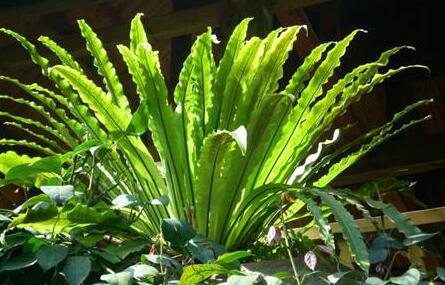
The bird's nest fern (Asplenium nidus) has six main uses, one of the most important being its foliage. Its leaves can reach 75 cm in length, which is why many plant lovers consider it one of the plants with the greatest foliage value. However, improper care can also cause the leaves to turn yellow, and then its ornamental value drops significantly. So what should you do if the bird's nest fern's leaves turn yellow? Let's look at the causes and solutions compiled by our editor.
What to Do When Bird's Nest Fern Leaves Turn Yellow
1. Overwatering
Cause: The bird's nest fern likes a humid environment, so watering is unavoidable when growing it. However, if you water too frequently or use too much water, the soil will stay overly wet for a long time. The lack of air in the soil prevents the roots from breathing, causing them to rot and leading to yellowing.
Solution: Watering should be done reasonably according to how dry or moist the soil is. So how often should you water a bird's nest fern? During the growing season, water once every 3-5 days; in summer, water once every 2-3 days; in winter, watering should be stopped. Do not water blindly and frequently.
2. Too Little Nitrogen Fertilizer
Cause: Nitrogen is a main component of chlorophyll in the leaves. If the nitrogen in the soil is used up and nitrogen fertilizer is rarely applied normally, the bird's nest fern's leaves will lack nutrients, becoming thin, weak and yellow.
Solution: How do you deal with yellowing bird's nest fern leaves caused by a lack of nitrogen fertilizer? Repot promptly and change the soil, replacing it with relatively fertile new potting soil, then increase the amount of nitrogen fertilizer applied. Each fertilization should mainly use a dilute liquid fertilizer to avoid the soil running short of nitrogen again.
3. Sunburn
Cause: Many plant lovers probably know that the bird's nest fern is not very tolerant of strong light. In spring and autumn it can be grown in the sun, but if it is left in the sun to bake in summer, its glossy leaves will quickly turn yellow from lack of water. This is a phenomenon that can also occur in many plants.
Solution: First move the bird's nest fern back to a cool place, cut off the leaves that have already turned yellow and scorched, then spray a moderate amount of water. After that, strengthen care and management. In summer it must not be placed directly in the sun; shade measures should be taken as much as possible, such as building a shade shed.
4. Improper Temperature
Cause: In winter, if the temperature is too low and we do not keep the bird's nest fern warm, its leaves will be frostbitten. One of the symptoms is yellowing, and they will also drop early. In summer, if the temperature exceeds above 30 degrees, its leaves may also turn yellow, because it easily enters a state of stalled growth.
Solution: If the yellowing is caused by temperature, the solution is naturally to control the temperature. In winter, keep the temperature above 5 degrees; in summer, keep the temperature below 30 degrees. The more commonly used methods are to cover it with an insulating film in winter, and in summer to spray water to cool it down or move it to a cool place.
What to Do When Bird's Nest Fern Leaves Turn Yellow
Causes of Yellowing Bird's Nest Fern Leaves - Insufficient or Excessive Water
Insufficient water will cause the bird's nest fern's leaves to turn yellow, because when the potting soil lacks water or the air is relatively dry, the leaves tend to curl at the edges and gradually turn yellow. Excessive water, on the other hand, causes waterlogging in the potting soil, which also leads to yellowing leaves and even root rot.
When watering the bird's nest fern, note that you generally need to keep the potting soil moist and maintain relatively high air humidity. During the growing season it should be watered thoroughly. In summer, water should also be sprayed on the leaves in time. When temperatures are low in winter, it is best to spray more and water less. However, in the rainy season, avoid watering, and in winter also avoid excessive water causing root rot and yellow leaves.
Causes of Yellowing Bird's Nest Fern Leaves - Insufficient Light
Insufficient light also easily causes the bird's nest fern's leaves to turn yellow, because if the bird's nest fern is kept indoors for a long time, it will be unable to get enough light and its leaves will turn yellow. However, light must not be too strong either, as that will also make its leaves turn yellow. So when growing it, place it in a bright spot indoors, and do not keep it hidden for long periods. In summer, shading is needed.
Causes of Yellowing Bird's Nest Fern Leaves - Improper Fertilization
When the bird's nest fern plant lacks fertilizer, or when fertilizer is applied too many times, yellowing leaves will occur. So when growing bird's nest fern in a pot, you need to fertilize reasonably during its growing period and ensure a balance of all elements, but stop fertilizing during high temperatures in summer and low temperatures in winter.
Causes of Yellowing Bird's Nest Fern Leaves - Improper Temperature
Improper temperature, for example when the temperature is too low in winter, will frostbite the bird's nest fern plant and cause yellow leaves. In addition, if strong sunlight persists for a long time and causes the temperature to be too high, yellowing leaves will also occur.
So during the growing period you need to maintain a suitable temperature, between 15°C and 28°C. When the temperature is above or below this range, measures need to be taken.
Causes of Yellowing Bird's Nest Fern Leaves - Potting Soil Needs Changing
If the soil the bird's nest fern grows in is not changed for a long time and it is not repotted for a long time, the soil will gradually compact and become impermeable, easily making its leaves turn yellow.
So the bird's nest fern needs to be repotted once every two years. When repotting, you can remove the old soil and trim the roots and yellow leaves a little.
Causes of Yellowing Bird's Nest Fern Leaves - Pests and Diseases
When the bird's nest fern suffers from nematode damage or anthracnose damage, its leaves will turn yellow or develop diseased spots. If it is nematode disease, you can use carbofuran granules to kill the insects; if it is anthracnose, you can use
75% chlorothalonil wettable powder for spraying treatment.
What to Do and How to Handle Yellowing Bird's Nest Fern Leaves
The bird's nest fern often grows epiphytically on tree trunks or rocks under the forest canopy in rainforests or monsoon forests. The clustered bird's nest shape can catch large amounts of dead branches and fallen leaves, bird droppings and rainwater. These materials turn into humus, which can serve as its own nutrients and at the same time provide conditions for other tropical epiphytes, such as orchids and other tropical epiphytic ferns, to establish themselves. Its ecological habits are a preference for high temperatures and humidity, and intolerance of strong light. If handled improperly during cultivation, the bird's nest fern's leaves will turn yellow.
Causes and Solutions for Yellowing Bird's Nest Fern Leaves 1. Yellowing Bird's Nest Fern Leaves: Insufficient or Excessive WaterInsufficient water will cause the bird's nest fern's leaves to turn yellow, because when the potting soil lacks water or the air is relatively dry, the leaves tend to curl at the edges and gradually turn yellow. Excessive water, on the other hand, causes waterlogging in the potting soil, which also leads to yellowing leaves and even root rot.
When watering the bird's nest fern, note that you generally need to keep the potting soil moist and maintain relatively high air humidity. During the growing season it should be watered thoroughly. In summer, water should also be sprayed on the leaves in time. When temperatures are low in winter, it is best to spray more and water less. However, in the rainy season, avoid watering, and in winter also avoid excessive water causing root rot and yellow leaves.
Solution: Potted bird's nest fern requires not only moist potting soil but also relatively high air humidity. During the growing season, water thoroughly, especially in summer: besides regularly soaking the growing medium, you must also rinse the leaf surface 2 to 3 times a day, and at the same time sprinkle water on the surrounding ground to increase humidity, maintaining relatively high air humidity in the local environment, which can also increase the light on the leaf surface. When the temperature is relatively low in winter, it is better to keep the potting soil moist; you can spray more and water less, so as to avoid root rot caused by excessive water in the potting soil under low-temperature conditions. During the plum rain season, water as little as possible.
2. Yellowing Bird's Nest Fern Leaves: Insufficient LightInsufficient light also easily causes the bird's nest fern's leaves to turn yellow, because if the bird's nest fern is kept indoors for a long time, it will be unable to get enough light and its leaves will turn yellow. However, light must not be too strong either, as that will also make its leaves turn yellow. So when growing it, place it in a bright spot indoors, and do not keep it hidden for long periods. In summer, shading is needed.
Solution:In summer, provide shade, or place it in dappled shade under a large tree, avoiding direct strong sunlight. This is good for growth and makes the leaves glossy. Indoors, place it in a bright spot and do not keep it in a dark place for long periods. In winter, move it into a greenhouse and keep the temperature above 16°C so it continues to grow, but the minimum temperature must not be below 5°C.
3. Yellowing Bird's Nest Fern Leaves: Improper FertilizationWhen the bird's nest fern plant lacks fertilizer, or when fertilizer is applied too many times, yellowing leaves will occur. So when growing bird's nest fern in a pot, you need to fertilize reasonably during its growing period and ensure a balance of all elements, but stop fertilizing during high temperatures in summer and low temperatures in winter.
Solution:For potted bird's nest fern, during its vigorous growing season it is advisable to apply a dilute fertilizer balanced in nitrogen, phosphorus and potassium once every half month, which can encourage it to keep producing large numbers of new leaves. When the summer temperature is above 32°C, or the winter greenhouse temperature is below 10°C, all forms of topdressing should be stopped.
4. Yellowing Bird's Nest Fern Leaves: Improper TemperatureImproper temperature, for example when the temperature is too low in winter, will frostbite the bird's nest fern plant and cause yellow leaves. In addition, if strong sunlight persists for a long time and causes the temperature to be too high, yellowing leaves will also occur.
So during the growing period you need to maintain a suitable temperature, between 15°C——28°C. When the temperature is above or below this range, measures need to be taken.
Solution:Its optimum growing temperature is 16°C to 27°C, of which March to October is 22°C to 27°C, and October to March of the following year is 16°C to 22°C. In summer, when the temperature exceeds above 30°C, measures such as building a shade frame and providing surroundings must be taken.
5. Yellowing Bird's Nest Fern Leaves: Potting Soil Needs ChangingIf the soil the bird's nest fern grows in is not changed for a long time and it is not repotted for a long time, the soil will gradually compact and become impermeable, easily making its leaves turn yellow.
So the bird's nest fern needs to be repotted once every two years. When repotting, you can remove the old soil and trim the roots and yellow leaves a little.
Solution:The potting medium can be mainly leaf mold or peat soil, vermiculite, etc., mixed with a small amount of river sand, or it can be made by mixing fern roots, crushed bark, moss or crushed brick particles with a small amount of humus soil. For potted bird's nest fern, repot once every 2 years: take it out of the pot, shake off the old soil, cut off some of the residual roots and withered yellow leaves, and plant the separated offsets separately.
6. Yellowing Bird's Nest Fern Leaves: Pests and DiseasesWhen the bird's nest fern suffers from nematode damage or anthracnose damage, its leaves will turn yellow or develop diseased spots. If it is nematode disease, you can use carbofuran granules to kill the insects; if it is anthracnose, you can use
75% chlorothalonil wettable powder for spraying treatment.
Solution:For nematode damage, you can sprinkle fosthiazate or carbofuran granules on the surface of the potting soil, which gives a fairly good insecticidal effect. In addition, you should also promptly control pests such as the short-horned grasshopper and snails that gnaw on the leaves. For anthracnose, in the early stage of the disease, you can use 75% chlorothalonil wettable powder at 600 times dilution, or 70% thiophanate-methyl wettable powder.