Growing flowers cultivates pleasure, and also cultivates skill. Keeping a Chinese lantern plant at home is the choice of many flower lovers, but during the growing process, for certain reasons, their Chinese lantern plants will show various signs of discomfort, such as leaves dropping. So what should be done when the leaves of the Chinese lantern drop? Regarding this, the editor has summarized 5 causes and attached solutions. Let's take a look together.
I. When Chinese lantern leaves drop, find the cause
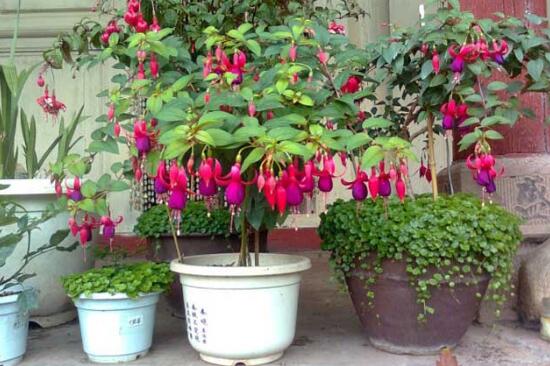
As a common ornamental flower, the Chinese lantern is not difficult to grow, but because there are many beginners, they simply do not grow it according to the methods, and as a result they grow the Chinese lantern leaves right off! Although the beauty of the Chinese lantern lies in its flowers, losing leaves will also affect the plant's health, and ultimately it will still ruin the overall appearance. To solve this problem, the editor has brought 5 causes of Chinese lantern leaf drop. Let's continue reading below.
II. Causes of Chinese lantern leaf drop and solutions
1. Moving the flower pot
When it comes to the causes of Chinese lantern leaf drop, everyone should first consider whether it is caused by moving the flower pot. Because when growing flowers indoors, it is not suitable to move the pot frequently, especially during the Chinese lantern's flowering period. Moving the pot frequently will accelerate the time for the flowers to wither and cause the leaves to drop.
Solution: After placing the Chinese lantern in a suitable spot, do not change its position often. When leaf drop is discovered, take the Chinese lantern out of the pot, rinse the soil off with clean water, then change the soil and replant it. Be careful not to damage the roots and rootlets.
2. Unsuitable temperature
During the growth process of the Chinese lantern, it also has requirements for temperature, and it most likes to grow within 15-25°C. Once the temperature is not controlled well, being above 30°C or below 5°C, the Chinese lantern will grow uncomfortably, thereby showing symptoms of leaf drop.
Solution: When Chinese lantern leaf drop is discovered, check whether there is a temperature problem. If so, adjust the temperature immediately. Place it in a spot at 15-25°C, with good ventilation and good light (not strong), and before long the Chinese lantern will recover its health.
3. Improper lighting
The growth of the Chinese lantern cannot be separated from light. Although it fears strong light, it also cannot remain in a dark place for a long time, otherwise it will drop leaves. If the light is too strong and the Chinese lantern is scorched, symptoms of leaf drop will also appear.
Solution: When light is insufficient, simply move the plant to a place with ample but not strong light; when light is too strong, move the Chinese lantern to a shaded place, and the light intensity can be controlled with a shade net.
Note: If Chinese lantern leaf drop is caused by strong light, after moving it to a shaded place, do not water or spray immediately. You must wait until it naturally cools to indoor temperature before spraying and watering.
4. Improper watering
Water is key to the growth of the Chinese lantern, but once there is too much watering or a lack of water, the plant will react uncomfortably, such as Chinese lantern leaf drop. The solutions are as follows:
① When there is too much watering, stop watering and move the potted plant outside to get sun (the light must not be too strong). Wait until the water has mostly evaporated, then start normal watering again; if the situation is serious and root rot has appeared, you also need to take the Chinese lantern out of the pot, then cut off the rotten roots, change the potting soil, and replant.
② When there is too little watering, water should be replenished, but the frequency must also be controlled well, following the watering principle of “water when dry, stop when wet”. In addition, water less in winter or on cloudy and rainy days;
5. Too little fertilizing
The Chinese lantern likes fertilizer. It not only needs fertile soil, but also needs us to fertilize it during growth. Once too little fertilizer is applied, causing the plant to lack nutrients, it will cause leaves to drop. Solution: Fertilize appropriately. During the growing season, apply cake fertilizer water or dilute liquid fertilizer once every 7-10 days.
The causes of Chinese lantern leaf drop are, generally speaking, the above 5 points. After reading the content above, when you encounter leaf drop again, you should know what to do! In fact, leaf drop is caused by one reason, but it is often caused by multiple factors, so when you encounter this situation, you must make a correct diagnosis, so that you can prescribe the right remedy.
What to do when Chinese lantern leaves curl, pay attention to 4 points and do not fear curled leaves / water and fertilizer are key
Flower lovers should be familiar with the Chinese lantern. It is also called the Chinese lantern, and it is a very beautiful flower. In life, because of the beauty of the Chinese lantern, many flower lovers keep it at home to decorate the environment. But as we grow it, we will find that its leaves curl very easily. So what should be done when Chinese lantern leaves curl? Regarding this, the editor has summarized 4 causes and attached solutions. Let's take a look together.
I. When Chinese lantern leaves curl, find the cause
As a common indoor potted plant, the Chinese lantern is not difficult to grow, but because there are many beginners, they easily grow the plant's leaves curled. So what should be done when Chinese lantern leaves curl? Regarding this, the editor found 4 causes: too strong light, too low temperature, too little watering, and excessive fertilizing. Now follow the editor to look at the solutions.
II. Causes of Chinese lantern leaf curling and solutions
1. Too strong light
When growing indoors, many flower lovers know that the Chinese lantern likes light, so they often let it go outside to get sun. Under normal circumstances, there is no problem doing this, but doing so in summer is not good! Because under strong light, the Chinese lantern is easily scorched, thereby causing a series of problems, such as Chinese lantern leaves curling, Chinese lantern leaves turning yellow, Chinese lantern leaves dropping, and so on.
Solution: If leaf curling is caused by too strong light, you should move the Chinese lantern to a cool place, do not water immediately, wait a while, then give it an appropriate amount of water, just keeping the potting soil moist. After a week, place it in a spot with diffused light, and after careful care for a period of time, the Chinese lantern leaves will recover.
2. Too low temperature
When growing the Chinese lantern indoors, flower lovers must pay attention to temperature! Because the most suitable temperature for the Chinese lantern is 15-25°C. Once the temperature exceeds 30°C, it will scorch the leaves and cause yellowing; when it is below 5°C, it will cause freezing of the Chinese lantern's roots, so the plant cannot absorb sufficient nutrients, causing the leaves to curl.
Solution: If Chinese lantern leaf curling is caused by too low temperature, you should adjust the temperature immediately. You can use an air conditioner to control the indoor temperature at 10°C, and it can overwinter safely, and the leaves will also recover their health.
3. Too little watering
The Chinese lantern likes a moist environment and needs sufficient water during growth. Once there is too little watering, causing a lack of water, the plant will be unable to grow normally, thereby causing problems such as curled leaves, affecting the Chinese lantern's flowering yield and ornamental value, and may even cause the Chinese lantern to wither and die.
Solution: When lacking water, of course you need to replenish it, but do not replenish too much at once. Specifically, follow the Chinese lantern's watering method. Simply put: follow the principle of “water when dry, stop when wet”. In spring and autumn, water once every 2-5 days; in summer, water once every morning and evening; in winter, water once every 10 days. Do not water too much each time, just keep the soil moist.
4. Excessive fertilizing
Besides the above points, the cause of Chinese lantern leaf curling may also be excessive fertilizing. The Chinese lantern likes fertilizer, and sufficient nutrients can let it bloom continuously, but no matter how much it likes it, there is a limit. Once too much fertilizer is applied, it will cause fertilizer damage, making the leaves lack nutrients, causing curling, yellowing, and so on, and may even cause the death of the whole plant.
Solution: If you find that too much fertilizer was applied, flower lovers need to irrigate the roots with clean water so that the fertilizer flows out from below the pot; or directly change to fresh soil and replant. Afterward, master the Chinese lantern's fertilizing method and fertilize once every 7-10 days during the growing season.
How to grow the small peony (hibiscus)
How to grow the small peony (hibiscus). Hibiscus is also called small peony. Scientific name: Hibiscusrosa-sinensis. Other names: big red flower, zhujin peony, zhujin, fojin, riji, flower-on-flower, small peony. Family and genus: Malvaceae, Hibiscus. Evergreen shrub, can reach up to 6 m when planted in the ground, generally 1-1.5 m in pots. Stems upright and much branched. Leaves alternate, broadly ovate to narrowly ovate, 7-10 cm long, with 3 main veins, apex abruptly pointed or gradually pointed, leaf margin with coarse serrations or incisions, base nearly entire. When the temperature is suitable, it can bloom all year round. Flowers are large, solitary in the leaf axils on the upper part of the branches, funnel-shaped, stamens and stigma extending beyond the corolla, with double-petaled and single-petaled types, in colors such as red, yellow, pink, white, and compound colors. There are many cultivars, often divided by color into red series, pink series, orange series, yellow series, and white series. As long as the environment is suitable and there is strong sunlight, it can bloom all year round. Hibiscus is a famous flower in our country, with a long history of cultivation, and people abroad also greatly love this flower. There are many horticultural cultivars, and currently there are more than 3,000 cultivars worldwide, among which those bred in Hawaii account for the vast majority. Because it likes strong sunlight, it is more suitable for cultivation when living in a single-story house with a spacious courtyard or a relatively large apartment balcony; if the home is small and light is insufficient, it is best to choose shade-tolerant cultivars. Hibiscus flowers are full and abundant, and the flower colors are delicate and rich, so it has the laudatory titles of "China's rose" and "small peony"; although a single flower opens in the morning and falls in the evening, because there are many flowers, it is still as clustered as brocade every day, and the flowering period is extremely long, so the ancients praised it as "the fojang freshly spits out beauty in all four seasons." In the heat of midsummer, in the midst of severe heat, red and green set each other off and compete in displaying their beauty, and it is a major flower for viewing flowers in summer. [Ornamental value] In spring, summer, and autumn, it opens bright and eye-catching large flowers. The flower colors include vermilion, orange-yellow, and light purple. Double-petaled types resemble peonies, single-petaled types resemble hollyhocks, and the leaves resemble mulberry leaves. [Habits] (1) Likes sufficient light, warmth, and humidity; below 5°C it drops leaves, and at 0°C it is easily frozen to death. (2) It is not strict about soil requirements.[Hibiscus varieties and common flowers of the same genus]
(1) Variegated hibiscus (CV. Cooperi): also called flower mulberry, brocade-leaf hibiscus, spotted-leaf big red flower, spotted-leaf hibiscus. The leaves have white, pink, red, and yellow-green markings. The flowers are red, single or double, and relatively small. (2) Fringed hibiscus (schizopetalus): also called hanging-bell hibiscus, hanging-lamp flower, cupped flower basket, windbell hibiscus flower, split-petal hibiscus, Chinese lantern, hanging-basket flower. The flower quantity is less than that of hibiscus. The flowers are solitary in the leaf axils, the pedicels are slender and drooping, the corolla is red to orange-red, the petals are fringed and split, rolled back, and the staminal column is slender and extends beyond the corolla.[Hibiscus propagation] Cuttage, grafting, layering. Cuttage propagation is the main method.
(1) Cuttage: can be carried out in spring, summer, and autumn. Spring cuttage can be carried out when repotting and pruning. Select the middle section of a robust one-year-old branch, cut it into cuttings 10-15 cm long, keep 2-3 leaves on top, and cut off 1/3 of each leaf to reduce water transpiration; insert 1/2-2/3 of the cutting into the substrate, water it, then use plastic film to retain moisture, use a shade net for shading, and maintain a temperature of 18-25°C and 80% relative air humidity. After about 20 days it can take root, with a survival rate of 60%-90%. For cultivars that are difficult to root, growth hormones can be used to increase the survival rate and promote earlier rooting. For cuttage in the plum rain season, cut robust, semi-lignified current-year branches 10 cm long as cuttings. After inserting them, under semi-shade, moist conditions, and a temperature of 18-21°C, they can take root after 20-25 days. Autumn cuttage is the same as spring cuttage. (2) Grafting: mainly used for cultivars that are difficult to root by cuttage, usually carried out in spring and autumn. The rootstock uses a single-petaled, vigorous-growing type, using the branch grafting method or bud grafting method. Those grafted in spring can bloom in the same year. (3) Layering: cultivars that are difficult to root by cuttage can also be propagated by layering.[Key points for growing and caring for hibiscus]
(1) Temperature: likes warmth, and the most suitable growth temperature is 20-30°C. It is not cold-tolerant. When the temperature drops to 12°C, growth stagnates; below 6°C, the tender shoots suffer cold damage and leaves drop, and in serious cases only bare stems remain, but in spring they can still sprout and grow. The overwintering temperature should not be lower than 8°C. However, the overwintering temperature should also not be too high. Maintaining 12-15°C is best. If it is higher than 15°C, the plant will be affected in the next year's growth and flowering because it cannot get sufficient dormancy. It can tolerate high temperatures, and under high temperatures above 30°C it still blooms abundantly. (2) Light: a strongly positive plant, likes an environment with sufficient sunlight. Not shade-tolerant. It is best to give it more than 8 hours of sunlight every day. Although it can also grow with half-day sunlight, growth and flowering become worse, flower buds easily drop, and even if it blooms, the flowers are somewhat small and the flower color is dull rather than bright. In northern regions, the midday sunlight is strong, so it is best to shade 30%-40% of the light at noon and around it to prevent scorching. After long rain in summer clears up, it is best to move the plant to a slightly shaded place for a period of time. After moving indoors in winter, it is also necessary to choose a place with sufficient sunlight. If the light is dim, it will cause all the leaves to drop. (3) Watering: likes moist soil and is not drought-tolerant. During the growth period, especially in summer when growth and flowering are vigorous, a sufficient water supply must be ensured. When the potting soil is dry, the leaves curl, and may even turn yellow and wither and drop, the flower buds wither, and the flowers drop early, and it also affects later growth and flowering. It also dislikes waterlogging, and during the plum rain season, water accumulation in the pot must be prevented. Watering during the growth period should grasp the principle of "do not water until dry, and when watering, water thoroughly." If the potting soil is too wet, it is easy for the roots to lack oxygen, causing leaf drop, bud drop, and flower drop, and causing the flowers to wilt and wither early. In winter, watering needs to be controlled, keeping the potting soil slightly dry. Especially for plants that have lost all their leaves due to cold damage, even more attention should be paid to restricting water. (4) Environmental humidity: likes a humid environment. On hot, clear summer days, water should often be sprayed on the leaf surface and the surrounding ground to increase humidity and lower temperature, which is beneficial to the plant's growth and flowering. When the air is too dry, the leaves curl, tender leaves scorch, and flowers drop early. (5) Fertilizing: tolerant of fertilizer. Because the plant's growth and flowering amount are both large, its demand for fertilizer is relatively high. In addition to applying sufficient base fertilizer, fertilizer should also be continuously applied as a top dressing during the growth period to supplement nutrients. After sprouting in spring, apply a nitrogen-based fertilizer once every half month to promote vigorous growth of branches and leaves; after budding, apply a fertilizer combining nitrogen, phosphorus, and potassium once every 10 days to meet the nutrient needs of branch and leaf growth and abundant flowering, and to promote more flowers, larger flowers, and bright flower colors. After the beginning of autumn, stop applying nitrogen fertilizer and apply only phosphorus and potassium fertilizer to improve cold resistance. In winter, stop fertilizing when the temperature drops to 10-13°C. Avoid applying raw fertilizer and concentrated fertilizer, otherwise in a short period the leaves and flower buds will all drop, and the plant may even die. When fertilizing, nitrogen fertilizer should not be too much, so as to avoid excessive growth of branches and leaves and reduce budding and flowering. (6) Pruning: tolerant of pruning. Newly propagated young seedlings should be pinched more to promote branching and form a lush, full plant shape. Every spring, pruning should be carried out together with repotting. In addition to cutting off overly dense, thin and weak branches, parallel branches, and crossing branches, one-year-old branches should also be heavily cut back, leaving only about 1/3 of the branch length, which can promote new branches and increase and improve the quantity and quality of flowering. During the vigorous growth period, overly dense branches should be cut off at any time to facilitate good ventilation and light transmission inside the plant. (7) Repotting: repot once every spring. It likes loose, fertile, slightly acidic soil rich in organic matter, and is not tolerant of barrenness or salinity and alkalinity. The substrate can be prepared from materials such as leaf mold, peat soil, garden soil, and coarse sand, and a small amount of organic fertilizer can be mixed in as base fertilizer. (8) Pest and disease control: there are leaf spot disease, anthracnose, sooty mold, gray mold, root and stem rot, and damage from pests such as aphids, scale insects, red spiders, and stinging caterpillars. [Key cultivation points] (1) Cuttage can be carried out at any time from April to September. Cut one-year-old branches into 10 cm sections, insert them into sandy soil, spray water every day to keep them moist, they will root in 1 month, and after another month they can be transplanted into pots. (2) The flower pot diameter should be a barrel pot of more than 20 cm, and the potting soil should use garden soil. (3) Water when the potting soil becomes dry. (4) In spring and summer, apply fertilizer liquid mainly based on nitrogen fertilizer; in autumn, apply fertilizer liquid mainly based on phosphorus fertilizer, once every half month. (5) In winter, potted flowers should be placed indoors in a sheltered place. The potting soil only needs to be slightly moist. (6) Change the pot once every year, within April to May, and prune branches when changing the pot.[Common problems in growing and caring for hibiscus]
Common problems Causes. Leaf drop (1) Low temperature; (2) Potting soil too dry or too wet; (3) Application of concentrated fertilizer or raw fertilizer; (4) Light too weak. Bud drop, flower drop • (1) Potting soil too dry or too wet; (2) Air too dry; (3) Application of concentrated fertilizer or raw fertilizer; (4) Too shady. Branches and leaves grow excessively but do not bloom Usually caused by applying too much nitrogen fertilizer. Flowers become smaller, flower color dull Caused by light being too weak