How to grow fuchsia? Cultivation methods and summer semi-shade care tips
Fuchsia, as its name suggests, is a flower that looks like a lantern. It looks delicate and beautiful, and comes in rich colors. Seen from afar, it is truly gorgeous! In daily life, many flower lovers choose to grow a pot of fuchsia. So how do you grow fuchsia? Below are the fuchsia cultivation methods and care tips carefully compiled by the editor. They are very detailed, and anyone who wants to grow it should definitely take a look~
I. How to grow fuchsia: understand its habits
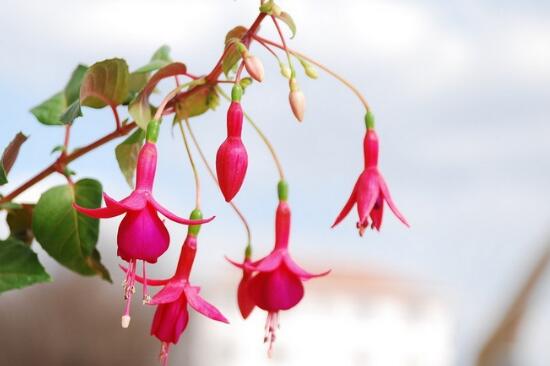
Fuchsia likes cool, humid environments, and also needs plenty of light during growth, but it dislikes strong light. In winter it can take full sun, while in summer it should be properly shaded. As for soil, it requires loose, breathable soil with good drainage. So how do you grow fuchsia? Actually, it is very simple: just meet its growth habits. For specific requirements, let us continue reading below.
II. Fuchsia cultivation methods and care tips
1. Soil: loose and fertile
How do you grow potted fuchsia? First, you should choose the soil. Although buying potted plants from a flower shop or online comes with existing potting soil, that soil is not good. If you want fuchsia to grow well, it is best to choose new soil.
Soil selection: according to the growth habits of fuchsia, its cultivation medium is suitable for loose, fertile sandy loam with good air permeability and drainage.
2. Light: semi-shade in summer
Light is the key to plant growth, and in fuchsia cultivation methods, it also plays a vital role. Fuchsia likes light and needs sufficient light during growth, so when grown indoors, keep it in diffused light in spring and autumn, semi-shade in summer, and full sun in winter.
Note: Fuchsia needs sufficient light. Once light is insufficient, the plant is prone to leggy growth, and the number of flowers will be greatly reduced. In addition, fuchsia dislikes strong light. Once exposed to direct strong light, its leaves will curl. So when growing it indoors, everyone should place fuchsia in a balcony, windowsill, or other place with good light.
3. Temperature: 15-25°C
How do you grow fuchsia? Temperature is also a part that cannot be ignored. Fuchsia likes a cool environment, and its most suitable growth temperature is 15-25°C. If flower lovers want fuchsia to bloom, it is best to maintain this room temperature.
Note: Fuchsia dislikes high temperatures. When the temperature exceeds 30°C, the plant will enter a semi-dormant state. Fuchsia is also not cold-tolerant. Once the winter temperature is below 5°C, frost damage is likely to occur, so for safe overwintering, everyone should keep the winter room temperature above 10°C.
4. Watering: water when dry, stop when wet
Water is the source of plant life, so in fuchsia cultivation methods, watering is very important. Fuchsia likes humid environments. During the growing season, we should keep the potting soil moist and adhere to the watering principle of “water when dry, stop when wet.” In winter and the rainy season, water once every 2-3 days; in autumn and on sunny days, water once a day.
Note: When temperatures are high in summer, fuchsia is in a semi-dormant state. At this time, water must be controlled to prevent leaf drop and root rot. In addition, during the flowering period of fuchsia, never let the potting soil become too dry or too wet, otherwise it is very likely to cause bud drop, flower drop, or leaf drop.
5. Fertilizing: once every 7-10 days
How do you grow fuchsia? After watering, let us look at fertilizing. It is understood that fuchsia grows quickly and can also bloom continuously, so sufficient nutrients are needed during cultivation. During the growing season, apply cake fertilizer water or dilute liquid fertilizer to fuchsia once every 7-10 days.
Note: Apply sufficient organic fertilizer before planting. In the early growth stage, control nitrogen fertilizer to prevent leggy growth. During the flowering period of fuchsia, it is better to increase the application of phosphorus and potassium fertilizer.
6. Pruning
During the growth of fuchsia, proper pruning is very important to maintain its ornamental value. At the appropriate time, prune off all thin, weak branches and withered yellow branches, and shorten all remaining branches. The remaining length depends on the ornamental effect, and the whole plant should be coordinated.
7. Soil replacement
In a suitable environment, fuchsia will grow very quickly, so the soil needs to be fertile. However, as the plant continuously absorbs nutrients, the potting soil for fuchsia will gradually become poor, so during the process of growing fuchsia, flower lovers should replace its soil once a year to replenish nutrients.
How to grow fuchsia: fuchsia cultivation methods and care tips
Fuchsia gives people a graceful and festive feeling. Its flowers are like hanging colorful lanterns and can be used for potted ornamental display. Fuchsia is mainly used for decoration in guest rooms, on flower stands, and on desks. Placed in a bottle of clean water, it can be enjoyed and can also root and propagate. Many people do not know how to grow fuchsia. Below, we introduce the fuchsia cultivation methods and care tips.
Fuchsia cultivation methods
Fuchsia almost does not produce seeds and often relies on cuttings to propagate. Fuchsia is mainly propagated by cuttings. Generally, cuttings are taken in January, February, and October. The suitable temperature for cuttings is 15-20°C, and rooting takes about 20 days. Cut 5-8 cm long, well-developed top shoots as cuttings. At 20°C, softwood cuttings root about two weeks after insertion. After rooting, pot them promptly, otherwise the roots easily rot. Cuttings are often used for propagation, and it can be done all year round, with faster rooting in spring and autumn. The best cuttings are tender top shoots, 7-8 cm long. Insert them into a sand bed and keep it moist. They root about 10 days after insertion, and by September they can be potted.
1. Fuchsia's temperature requirements: In winter it requires warmth, humidity, sufficient sunlight, and air circulation; in summer it requires dry, cool, and semi-shade conditions. It dislikes severe heat, stuffiness, rain, and sun exposure. The suitable growth temperature for fuchsia is 10-25°C. The winter temperature should not be lower than 5°C. When the summer temperature reaches 30°C, growth becomes extremely slow, and at 35°C a large number wither and die.
2. Watering and fertilizing fuchsia: When watering fuchsia in spring and autumn, grasp the principle of watering when dry and stopping when wet, so as to keep the potting soil moist. In midsummer, the potting soil should be on the dry side, and spraying water should raise the relative air humidity to above 60%. In winter it must be slightly moist to promote new shoot growth. In spring and autumn, apply dilute liquid fertilizer once every 10 to 15 days, and once a week during the bud stage. For new plants cultivated in the first year and that spring, fertilize normally in summer to continue blooming; for perennial old plants, stop fertilizing because they are in the dormant period.
3. Key points for fuchsia care: First, place the fuchsia plant in a shaded, ventilated, cool, and rain-sheltered place; spray water on the leaves multiple times a day and sprinkle water on the ground to lower the temperature and increase air humidity. Second, for perennial old plants, withhold water and stop fertilizing so they can smoothly pass through the dormant period. The plant should be moved indoors before Frost's Descent and moved outdoors after Qingming. The room temperature should be kept above 5°C. In cold waves and snowy, windy weather, when freezing occurs outdoors, it is best to move it back indoors.
4. Repotting and soil replacement for fuchsia. Fuchsia grows quickly and requires sufficient nutrients, so the potting soil should be humus-rich sandy loam. It should also be mixed with 20%-30% fully decomposed livestock manure. During the peak growing season when it is developing, apply liquid fertilizer as a top dressing. In the first 3 years, repot and replace the soil every spring to replenish nutrients. After planting, with good management, it can bloom the next year. Because the branches and leaves are lush, pinch the tops promptly to maintain appropriate plant height and shape. Since the flowers hang down and bloom, the branches should be spaced appropriately.
Care tips for growing fuchsia
1. When the summer temperature exceeds 38°C, metabolism slows down, and the growth of fuchsia enters a stagnant state. At this time, leaf drop and root rot often occur. If effective measures are not taken, the whole plant may die.
2. In winter, the minimum greenhouse temperature should be kept at 10°C. At a low temperature of 5°C, it is susceptible to frost damage. The suitable growth room temperature is 10-25°C, and relatively high air humidity is required.
The above is the relevant content on fuchsia cultivation methods and care tips. We hope it is helpful to everyone. Everyone is welcome to continue following us to learn more about flower care.
Fuchsia cultivation methods and care tips
Fuchsia is also called ling'er flower, upside-down golden bell, hanging-bell begonia, etc. It is a perennial herbaceous flower of the genus Fuchsia in the family Onagraceae. There are many varieties, and the main flower colors include three varieties: red, purple, and white. Although delicate and beautiful, it cannot withstand the scorching sun of hot summer, so care must be taken during cultivation. Below let us take a look at the fuchsia cultivation methods and care tips!
Fuchsia growth habits
Fuchsia is a horticultural hybrid artificially bred from Central American material. It likes cool, humid climatic environments. The suitable growth temperature is 10-25°C. In winter it requires sufficient sunlight, and in summer it needs a semi-shade environment. When the summer temperature exceeds 38°C, metabolism slows down, and growth enters a stagnant state. At this time, leaf drop and root rot often occur. If effective measures are not taken, the whole plant may die.
Fuchsia propagation methods
1. Cutting propagation: Softwood cuttings are often taken in late spring and early autumn using branches of the current year, or hardwood cuttings are taken in early spring using branches from the previous year. For the nutrient soil, river sand, peat soil, and other materials used for cuttings, medium-coarse river sand can also be used, but it must be rinsed several times with clean water before use. Do not use sea sand or river sand from saline-alkali areas, because they are not suitable for the growth of flowers and plants.
2. Layering propagation: Select robust branches, and from about 15-30 cm below the top shoot, peel off a ring of bark. The width of the wound after peeling should be about 1 cm, and the depth should be just enough to remove the outer skin. Cut a piece of film 10-20 cm long and 5-8 cm wide, place some moistened garden soil on it, and wrap and bind the girdled part as if wrapping a wound. Tie the upper and lower ends of the film tightly, with the middle bulging. Rooting occurs after about four to six weeks. After rooting, cut off the branch together with the root system, and it becomes a new plant.
Fuchsia transplanting methods
1. When potting small seedlings or repotting large plants that have been grown for several years, first place a 2-3 cm thick layer of coarse-grained substrate at the bottom of the pot as a drainage layer. On top of it, spread a layer of fully decomposed organic fertilizer as base fertilizer, about 1-2 cm thick. Then cover it with a thin layer of substrate, about 1-2 cm thick. After that, place the plant in, so as to separate the fertilizer from the root system and avoid burning the roots.
2. The substrate used for potting can be one of the following: vegetable garden soil: cinder = 3:1, or garden soil: medium-coarse river sand: sawdust (mushroom residue) = 4:1:2, or one of paddy soil, pond mud, or leaf mold. After potting, water thoroughly once and keep it in a shaded environment for one week. When transplanting small seedlings, first dig the planting hole, spread a layer of organic fertilizer at the bottom of the planting hole as base fertilizer, about 4-6 cm thick, then cover it with a layer of soil and place the seedling in, so as to separate the fertilizer from the root system and avoid burning the roots.
Fuchsia cultivation methods
1. Soil: Fuchsia likes loose, well-drained sandy loam.
2. Water: In winter and the rainy season, water fuchsia once every 2-3 days; in autumn and on sunny days, water once a day. In summer, when it is in a semi-dormant state, control water to prevent leaf drop and root rot.
3. Sunlight: Fuchsia likes an environment with sufficient sunlight. Insufficient sunlight easily causes leggy growth and reduces flowering.
4. Fertilizer: Before planting fuchsia, apply sufficient organic fertilizer. In the early growth stage, control nitrogen fertilizer to prevent leggy growth. During the flowering period, increase the application of phosphorus and potassium fertilizer.
5. Temperature: The suitable growth temperature for fuchsia is 15-25°C. In summer it fears hot, high temperatures. When the temperature exceeds 30°C, it will enter a semi-dormant state. In winter it must not be lower than 5°C.