How to grow Daphne odora 'Aureomarginata'? Growing methods and precautions, avoid strong light
Daphne odora 'Aureomarginata' is a traditional famous flower of China, and it is also extremely well known worldwide, with its presence seen in many regions around the world. However, growing it well is not easy, and there are many points to pay attention to. How to grow Daphne odora 'Aureomarginata'? What are the growing methods and precautions for Daphne odora 'Aureomarginata'? Below, the editor takes everyone through it.
I. How to grow Daphne odora 'Aureomarginata', understand its habits
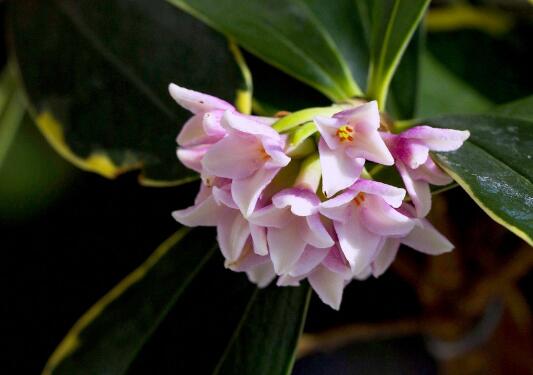
To know how to grow Daphne odora 'Aureomarginata', we first need to understand its growth habits. This plant likes semi-shade, but in spring and winter it should still be placed in an environment with sunlight. In addition, when we grow it, watering, fertilizing and other aspects also require particular care. The specific details are below, let's take a look.
II. Growing methods and precautions for Daphne odora 'Aureomarginata'
1. Soil, drainage must be good
When growing Daphne odora 'Aureomarginata', we first need to choose the soil, which is the step of laying a good foundation. Generally, it is best to choose fertile, loose, humus-rich acidic leaf mold soil. This kind of soil has relatively good drainage and aeration, which is more conducive to its growth, and soil with good drainage is also less likely to cause water accumulation.
2. Fertilizing, fertilize once every 10 days during the growing period
Fertilizer is one of the main nutrients in the growth process of Daphne odora 'Aureomarginata', especially after it enters the growing period, when its demand for fertilizer is very large, and it basically needs fertilizing once every 10 days. However, when fertilizing, there is one thing to remember: the fertilizer must be diluted before application so that the plant can absorb it. If the fertilizer concentration is too high, it is very easy to burn the plant.
3. Watering, control the amount of watering / avoid water accumulation
The root system of Daphne odora 'Aureomarginata' is fleshy, so when we water it normally, we must control the amount of watering, and remember not to water too much, otherwise water accumulation can easily cause root rot. If too much water is accidentally given, the excess water must be removed in time.
4. Light, grow in a place with scattered sunlight / avoid strong light
Among the growing methods and precautions for Daphne odora 'Aureomarginata', light is also a point that requires relatively more attention. It prefers semi-shade, but it cannot lack light during growth, so in spring and autumn, when the light is relatively suitable, we can place it outdoors in a place with scattered sunlight. When the light becomes relatively strong in summer, we need to shade it to avoid sunburning the plant.
5. Pruning, promptly pinch off growing tips and cut back the top
This plant, Daphne odora 'Aureomarginata', has strong sprouting ability and is also relatively tolerant of pruning, so in order to maintain its plant shape, we need to promptly pinch off growing tips and cut back the top. Also, after its flowering period ends, we should prune off spent flowers, dead leaves and some dead branches, so as to enhance the plant's light transmittance.
6. Pests and diseases, prevention and control must be timely
In the process of growing Daphne odora 'Aureomarginata', if we are not careful, pests and diseases can easily take advantage of the opportunity. Such problems are extremely harmful to the plant, so we must deal with them in time, because the longer it drags on, the harder it is to prevent and control, and the greater the harm to the plant. The specific prevention and control methods have been introduced in detail by the editor in the article on pest and disease control of Daphne odora 'Aureomarginata', which everyone can read about.
Growing methods and precautions for Daphne odora 'Aureomarginata'
Daphne odora 'Aureomarginata' is a world-famous flower, elegant in beauty and full of vitality, loved by people from ancient times to the present, and is a classic potted flower. So today the editor of Huinong Network will teach everyone three simple tricks to easily grow Daphne odora 'Aureomarginata' well and say goodbye to yellow leaves!
Daphne odora 'Aureomarginata' is a common classic potted flower in horticulture. It is a traditional famous flower of China and also a world-famous flower. Daphne odora 'Aureomarginata' is famous worldwide for its four excellences: color, fragrance, posture and charm. Daphne odora 'Aureomarginata' is a variety of daphne and symbolizes good fortune. It is deeply loved by people. So how should Daphne odora 'Aureomarginata' be grown? Today the editor of Huinong Network will talk to everyone about the growing methods for Daphne odora 'Aureomarginata'.
Growing methods for Daphne odora 'Aureomarginata':
1. Soil requirements of Daphne odora 'Aureomarginata':
When potting Daphne odora 'Aureomarginata', loose and fertile acidic soil should be chosen. It can be prepared with mountain soil or garden soil: peat soil: leaf mold soil = 1:1:1, and a small amount of base fertilizer added.
2. Light requirements of Daphne odora 'Aureomarginata':
Daphne odora 'Aureomarginata' likes sufficient sunlight, but dislikes exposure to scorching sun. In winter, spring and late autumn, it should be placed in a place with sufficient sunlight, and in summer it should be shaded or kept in a bright and ventilated place.
3. Water requirements of Daphne odora 'Aureomarginata':
The roots of Daphne odora 'Aureomarginata' are fleshy, so during normal care and management special attention must be paid to controlling watering. If watered too much and the potting soil remains too wet for a long time, root rot is easily caused. After rain, the accumulated water in the pot must be poured out in time. After Frost's Descent, the water content of the potting soil should be controlled at around 45% for it to overwinter safely.
4. Temperature requirements of Daphne odora 'Aureomarginata':
Daphne odora 'Aureomarginata' dislikes high temperature and heat, and stops growing when the temperature exceeds 25°C, so attention should be paid to cooling in summer. It is not cold-tolerant, and in winter it should be moved indoors and placed in a place with sufficient sunlight; keeping the room temperature above 5°C allows it to overwinter safely.
5. Fertilizer and water requirements of Daphne odora 'Aureomarginata':
Daphne relatively likes fertilizer, but fertilization should be stopped in the hot summer to avoid fertilizer damage. In early spring, sufficient base fertilizer should be applied together with repotting; during the vigorous growth period in spring, apply liquid fertilizer once every 10 days, mainly nitrogen fertilizer and potassium fertilizer in spring, mainly phosphorus fertilizer after autumn, and after flower buds form, potassium dihydrogen phosphate can be sprayed on the leaves every week.
6. Common pests of Daphne odora 'Aureomarginata':
The main pests harming Daphne odora 'Aureomarginata' are aphids and scale insects, which mostly appear in dry and hot climates and should be controlled early. The main disease is mosaic disease caused by a virus; infected plants show colored spots and deformities on the leaf surface, poor flowering and stunted growth, and once discovered they should be dug out roots and all and burned with fire.
7. Pruning of Daphne odora 'Aureomarginata':
Daphne odora 'Aureomarginata' is tolerant of pruning. After flowering, shaping and pruning should be carried out: shorten the branches that have flowered, cut off leggy and overlapping branches, and also cut off crossing branches and overly dense branches, so as to strengthen the internal ventilation of the plant and maintain a beautiful plant shape. When new buds sprout, overly dense branches should be pruned off to strengthen the internal air permeability of the plant.
Precautions and common problems in growing Daphne odora 'Aureomarginata'
1. Soil tending alkaline: Daphne odora 'Aureomarginata' likes slightly acidic soil, so during growing attention should be paid to the problem of soil tending alkaline, and ferrous sulfate can be applied regularly to improve the soil pH.
2. Excessive sunlight: In summer, Daphne odora 'Aureomarginata' should avoid direct strong light and can be kept in a place with scattered light; excessive sunlight easily causes leaf scorch.
3. Temperature too low: Daphne odora 'Aureomarginata' is not tolerant of freezing, and in winter it should be kept at least above 0°C, otherwise frost damage is likely to occur. In winter, attention should be paid to keeping it warm and giving it sufficient light.
Daphne odora 'Aureomarginata' is a classic potted flower that combines ornamental value and medicinal value. The above are the growing methods and precautions for Daphne odora 'Aureomarginata'. Flower lovers can save it!
Summer growing methods for Daphne odora 'Aureomarginata'
1. Summer watering
In summer, the potting soil of Daphne odora 'Aureomarginata' should be kept dry, and water should also be sprayed on the leaves of Daphne odora 'Aureomarginata' to lower the temperature. In addition, because summer rainfall is relatively heavy, water accumulation is easy to leave behind, so drainage treatment should be strengthened in time. Otherwise, once water accumulates in the pot, Daphne odora 'Aureomarginata' will show rotting.
2. Summer pruning
Summer pruning of Daphne odora 'Aureomarginata' is done by pinching off the tops so that it can grow more branches and leaves, which can maintain the growth of Daphne odora 'Aureomarginata' and also maintain its plant shape.
3. Shading and cooling
In order to achieve a cooling effect, we need to increase the humidity in the air, so we need to spray water on the plant leaves every day, and at the same time place the plant in a cool and ventilated place to avoid strong light exposure.
4. Summer fertilizing
Daphne odora 'Aureomarginata' likes fertilizer very much, but it does not like heavy fertilizer, so some thin fertilizer needs to be applied, but it cannot be fertilized too much; it is enough as long as the nutrition is sufficient.