How to grow Anthurium? Master the cultivation methods and precautions, avoid direct sunlight
Anthurium is a plant native to the tropical regions of South America, later introduced to our country, and today it can be seen in many areas of our country. There are also many people in our country who grow it, but if you want to grow it well, there are many things to pay attention to. About how to grow Anthurium? What are the cultivation methods and precautions for Anthurium? Let's take a look below.
1. How to grow Anthurium, understand its habits
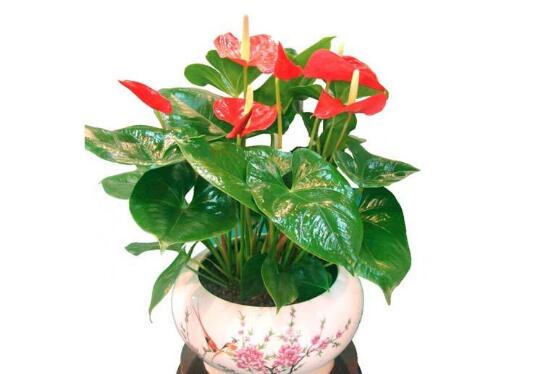
If you want to know how to grow Anthurium, first we need to understand its growth habits. This plant prefers high temperatures and must be kept above 22°C to grow well. In addition, watering, fertilizing, and lighting are also points to pay attention to when growing it. The specific cultivation methods are below, let's continue reading.
2. Cultivation methods and precautions for Anthurium
1. Soil, leaf mold
When growing Anthurium, the choice of soil is a very important point. Only when it grows in suitable soil can it grow better. Anthurium prefers loose, fertile leaf mold with good drainage, so that it can better absorb nutrients and is less prone to water accumulation during growth.
2. Flower pot, peat pot or black plastic pot
Anthurium has fleshy roots and is relatively sensitive to light, so when growing it we should choose flower pots with low light transmittance and many drainage holes at the bottom. Generally, peat pots, black plastic pots, etc. are better. However, it is best not to choose plastic pots with light colors, and it is also best not to use glass flower pots.
3. Temperature, 22°C-28°C
During the growth of Anthurium, it is very important to let it grow at a comfortable ambient temperature. This plant must be kept above 22°C to grow well, but when the temperature exceeds 30°C it is prone to leaf rot, so when growing it, it is best to keep the temperature between 22°C-28°C.
4. Water, alternate dry and wet, avoid water accumulation
Water is an essential nutrient for plants during growth, but the amount and frequency of watering for Anthurium are quite particular. When watering, it is best to keep the potting soil alternately dry and wet, and never let water accumulate, otherwise it can easily cause root rot.
5. Fertilizing, apply dilute fertilizer / once a month during the growing season
During the growth of Anthurium, the demand for fertilizer is very high, especially after entering the growing season. It basically needs to be fertilized once a month so that it can have enough nutrients to grow strong. However, when fertilizing, there is one thing we must remember: the fertilizer must be diluted first before application, otherwise it can easily burn the plant, and if the fertilizer is too concentrated the plant cannot absorb it either.
6. Light, avoid direct sunlight
Anthurium is a plant that should avoid direct sunlight and prefers a shady environment, but during cultivation it cannot lack light, so it is best to place it in a spot with scattered sunlight. In summer, when the light is too strong, we also need to provide shade, and it is best to move it indoors to a semi-shaded place to grow, so as to avoid sunburning the plant.
7. Pests and diseases, prevent and treat promptly without delay
During the process of growing Anthurium, if we are not careful enough, pests and diseases can easily take advantage of the situation. But if such problems appear, we should not panic; timely prevention and treatment is enough. It is best not to delay, because the longer it is delayed, the harder it is to control. The specific treatment methods are introduced in detail in the article on pest and disease control for Anthurium, and everyone can take a look.
How to grow Anthurium, Anthurium cultivation methods
Anthurium is also called red anthurium or flamingo flower, and it is a perennial herbaceous plant belonging to the genus Anthurium in the Araceae family. Pink anthurium is more difficult to cultivate than red anthurium, and it originates from the tropical rainforest regions of South America. Its characteristics are that it likes warmth and fears cold, likes moisture and fears drought, and likes shade and moisture while avoiding exposure to the sun. Today I mainly bring everyone information about how Anthurium is and detailed cultivation methods for Anthurium.
[Growth habits of Anthurium]
It likes high temperatures and also likes humid environments, avoids direct sunlight, and requires careful cultivation. It can only grow well above 22 degrees, and above 30 degrees it is prone to leaf rot. The potting soil should also be kept alternately dry and wet; being in a waterlogged state for a long time makes root rot easy. Therefore, it is best to choose fertile, loose culture soil for cultivation, generally a mix mainly of leaf mold is best, and during the growing season liquid fertilizer should be applied once a month. The overwintering temperature should be above 10 degrees, and watering should also be well controlled.
[Cultivation methods for Anthurium]
It likes warmth and moisture, so it needs to be misted on the leaf surface every day. Maintaining humidity is beneficial to leaf growth. Poor drainage or overly wet potting soil easily causes root rot, and during the vigorous growth period attention should be paid to maintaining sufficient moisture in the potting soil. Watering should alternate dry and wet; after one watering, wait until the surface of the potting soil looks dry before watering again. It likes slightly acidic water, and can be watered with slightly acidic water at pH 4-4.5 or with rainwater, and 0.1%-0.5% ferrous sulfate can also be applied regularly. To increase air humidity, water can often be sprayed on the leaves and around the pot, but do not spray water onto the flowers. After autumn, as the weather turns cooler, watering should be gradually reduced, and after bringing it indoors until before taking it out in early spring, watering should be controlled to keep the potting soil on the dry side. The ideal relative humidity for growing Anthurium is 80%-85%, and when transplanting seedlings it should be kept at 85%-90%.
It likes relatively high temperatures, with an optimum growing temperature of 20 to 30 degrees, and the overwintering temperature should not be lower than 10 degrees. Anthurium is usually cultivated in protected areas (greenhouses, plastic tunnels, shade houses). Generally speaking, in winter the night temperature should be maintained at 19°C and the day temperature at 25°C; in summer the night temperature should be maintained at 24°C and the day temperature at 30°C. In summer under the greenhouse shade net, the temperature must not exceed 35°C. If the temperature is too high, ventilation should be strengthened. When a cold wave comes and the temperature is below 15°C, cold protection measures should be taken.
When potting, the culture soil is best as loam rich in humus, loose and well-drained. It is suitable to use 2 parts leaf mold or peat soil and 1 part perlite or coarse sand to make the culture soil, or use leaf mold (or 1 part peat soil, 1 part garden soil, moss) and 1 part charcoal plus a small amount of superphosphate or bone meal to make the culture soil. It is suitable to place it on moist gravel to increase humidity. The potting soil should have good drainage, and strong light should be avoided; in summer place it on a north windowsill, and in other seasons place it on a south windowsill. When roots grow out, cover them with moss. When potting or repotting, first fill the lower 1/4-1/3 depth of the pot with granular broken bricks and other materials as a drainage layer. Repot about once every 2-3 years, generally in early spring in combination with division propagation; when repotting, remove the old soil and replace it with new culture soil.
Cultivation methods for Anthurium
Anthurium [Scientific name] Anthurium scherzerianum [English name] Common Anthurium [Aliases] Anthurium, flamingo flower [Family name] Araceae.[Morphological characteristics] Perennial evergreen herb. Leaves leathery, clustered, oblong-lanceolate, apex acute, base rounded. Spadix orange-red, spirally curled, spathe broadly ovate, with a short point, bright red. Flowering period February-July, and if temperature and humidity are suitable it can bloom all year round. [Varieties] There are about 200 or more species in the same genus, among which about 20 or more have ornamental value. Common ones include: large-leaved anthurium; crystal anthurium; sword-leaved anthurium. [Cultivation] Propagation: division or cutting propagation, and also seed propagation. Cultivation: it likes high temperatures and humid environments, avoids direct sunlight, and requires relatively careful cultivation. It can only grow well above 22, and above 30 it is prone to leaf rot. The potting soil should alternate dry and wet; being in a waterlogged state for a long time easily causes root rot. Therefore, it is best to cultivate it in fertile, loose culture soil. Generally, a culture soil mixed with leaf mold, tree fern fragments, charcoal fragments, etc. is best. During the growing season, liquid fertilizer should be applied once a month. The overwintering temperature should be above 10, and watering should be controlled.
[Pest and disease control] Common pests and diseases include: common diseases include: For specific control methods, see the pest and disease control section in “Flower Hospital”.