How to sow evening primrose? Detailed explanation of propagation methods and cutting techniques
Evening primrose is a plant with extremely high medicinal value, and it has good curative effects on many ailments, so many people want to grow one at home. Regarding how to sow evening primrose, how many propagation methods are there for evening primrose? Below, the editor will walk you through it.
1. How to sow evening primrose / soil disinfection
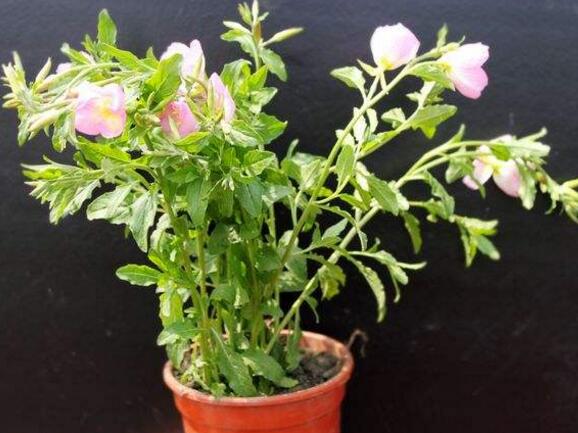
1. Sowing time
When propagating evening primrose by sowing, the choice of sowing time is quite particular. The environments best suited for evening primrose growth are spring and autumn, so when sowing it is best to choose these two seasons, as this will be more favorable for the growth of evening primrose.
2. Soil selection
When sowing evening primrose, the first step is to select the soil. Evening primrose does not have very high soil requirements; generally, loose soil with good drainage is sufficient. And after selecting the soil, there is one more thing to note: disinfect the soil to prevent it from carrying pathogens.
3. Treating the seeds
Regarding how to sow evening primrose, seed treatment is a fairly key step. Evening primrose seeds are not sown directly; before sowing, it is best to soak the seeds in warm water for 3-9 hours, so the seeds will swell by absorbing water. Sowing at this point will greatly increase the seed germination rate.
4. Sowing method
Before sowing, you can directly scatter the seeds on the soil surface, then cover them with about 1 cm of soil, then place the flower pot in water, with the water depth controlled between one-half and two-thirds of the pot's height, and let the water slowly seep up.
2. Propagation methods of evening primrose / cuttings
The propagation methods of evening primrose can be divided into two types: propagation by sowing and propagation by cuttings. Above, the editor introduced the sowing propagation method; next, the editor will walk you through the cutting propagation method and the points to note.
1. Preliminary preparation
When selecting cuttings for evening primrose, it is best to choose relatively thick and robust cuttings in good condition, as this will give a higher survival rate. For the soil, we can choose humus soil with good drainage, and the preliminary preparation work is basically complete.
2. Cutting method
When taking cuttings of evening primrose, it is best to keep the ambient temperature between 18-25°C, which is also the most suitable temperature for evening primrose growth. When cutting, remember to insert the cuttings into the soil at an angle, then water them; be sure to water thoroughly, then just wait quietly for sprouting.
Regarding how to sow evening primrose, after reading the detailed introduction above, I believe everyone already knows the method. In fact, as long as you follow the above methods when propagating evening primrose, the survival rate is still quite high. That is all the editor has to introduce about evening primrose propagation methods, and I hope this article can bring some help to your propagation process.
Sowing and cutting management of evening primrose
Many friends are very familiar with the effects of evening primrose, and some flower lovers grow it in pots at home or plant it in courtyards. However, evening primrose is an annual to biennial plant with a relatively short lifespan, so we can propagate it to grow more. Evening primrose is usually propagated by two methods: sowing and cuttings.
Evening primrose
1. Sowing:Autumn sowing is often carried out after mid-to-late September: disinfect the substrate used for sowing. The best method is to put it in a pot and heat it by stirring until hot, so any pests and diseases are killed by the heat. Soak the seeds in warm hot water (temperature similar to face-washing water) for 3-10 hours, until the seeds absorb water and swell. For very common seeds that germinate easily, this step can be skipped. For tiny seeds that are difficult to pick up by hand or with other tools, you can moisten one end of a toothpick with water, stick the seeds one by one onto the surface of the substrate, cover with 1 cm of substrate, then place the sowing pot into water, with the water depth at 1/2-2/3 of the pot height, and let the water slowly soak up. For larger seeds that can be picked up by hand or with other tools, place the seeds directly into the substrate and sow them in spots at a spacing of 3 x 3 cm. After sowing, cover with substrate to a thickness of 2-3 times the seed size. After sowing, you can use a sprayer or a fine-holed watering can to wet the sowing substrate; afterward, when the pot soil is slightly dry, water again, still taking care that the watering force is not too strong, so as not to wash the seeds up; management after sowing: after autumn sowing, when cold waves and low temperatures occur, you can wrap the flower pot with plastic film to help keep it warm and moist; after the seedlings emerge, promptly uncover the film, and let the seedlings receive sunlight before 9:30 every morning or after 3:30 in the afternoon, otherwise the seedlings will grow very weak; after most of the seeds have emerged, appropriate thinning is needed: pull out the diseased and unhealthy seedlings so that the remaining seedlings have a certain amount of space between them; when most of the seedlings have grown 3 or more leaves, they can be transplanted into pots.
2. Cutting propagation:The branches used for cuttings are called cuttings. Usually, in combination with pinching, the thick, pest-free and disease-free tips that are pinched off are used as cuttings, directly using the tips for cutting. After cutting, the following management points should be noted:
1. Temperature: The optimum temperature for rooting of cuttings is 18°C-25°C. Below 18°C, rooting of cuttings is difficult and slow; above 25°C, the cut end of the cuttings is easily infected by pathogens and rots, and the higher the temperature, the greater the proportion of rot. When low temperatures occur after cutting, the main measure for keeping warm is to wrap the flower pot or container used for cutting with film; when the temperature is too high after cutting, the main measure for cooling is to shade the cuttings, blocking out 50-80% of sunlight, and at the same time mist the cuttings 3-5 times per day; on sunny days with higher temperatures, mist more often, while on cloudy and rainy days with lower temperatures and higher humidity, mist less often or not at all.
2. Humidity: After cutting, the relative air humidity must be maintained at 75-85%. Humidity can be increased by misting the cuttings 1-3 times per day; on sunny days, the higher the temperature, the more frequent the misting, while on cloudy and rainy days, the lower the temperature, the less frequent the misting or no misting. But excessive misting makes the cuttings prone to infection by pathogens and rot, because many kinds of pathogens exist in water.
3. Light: Cutting propagation cannot do without sunlight, but the stronger the light, the higher the temperature inside the cuttings, the more vigorous the transpiration of the cuttings, and the more water consumed, which is not conducive to the survival of the cuttings. Therefore, after cutting, 50-80% of sunlight must be blocked out; after the root system grows, gradually remove the shading net: on sunny days, remove the shading net at 4:00 every afternoon, and cover the shading net again before 9:00 the next morning.
Complete collection of evening primrose flower meanings and evening primrose propagation methods
Evening primrose is fragrant and beautiful, and is usually cultivated for ornamental purposes. Evening primrose blooms in the evening and withers at dawn, so appreciating it is not a simple matter. So what are the flower meanings of evening primrose? How do you propagate it? Next, let's look with Xiao Qi at the flower meanings of evening primrose and the propagation methods of evening primrose.
1. What are the flower meanings of evening primrose?
The flower meanings of evening primrose: silent love, an unrestrained heart
There is a saying that when a woman gives evening primrose to a man, it represents 'silent love'; there is also a common saying that evening primrose represents an unyielding heart and a free heart; some also say that the flower meaning of evening primrose is the magic of a 'beauty after bathing'.
Evening primrose is also known as Daixiao grass, mountain sesame, and wild sesame, and is a plant in the genus Oenothera of the evening primrose family. It has strong adaptability, is tolerant of acid and drought, and does not have strict soil requirements; it can generally grow in neutral, slightly alkaline, or slightly acidic soil, and in loose soil with good drainage. In soil that is too wet, its roots are prone to disease. In the north it is an annual plant, and south of the Huai River it is a biennial plant. It is the most important nutritional medicine discovered this century. It can treat many diseases, regulate lipid substances in the blood, and has significant curative effects on conditions such as coronary artery infarction, atherosclerosis, and cerebral thrombosis caused by high cholesterol and high blood lipids.
2. Propagation methods of evening primrose
1. Propagation by sowing: Evening primrose can be sown in both spring and autumn; the autumn sowing period is from mid-October to before the ground freezes. In the north, sowing is done in spring; in areas south of the Huai River, seedlings are raised by sowing in autumn or spring. When sowing, the soil should be raked fine and level, the seeds scattered on the bed surface, lightly raked with a rake, and covered with a thin layer of soil; the seeds are small, so the soil must not be too thick, otherwise it will affect seed germination and growth. After sowing the seeds, the soil should be kept moist. About 10-15 days after sowing, the seeds will germinate into seedlings.
2. Cutting propagation: Evening primrose cuttings usually use thick, pest-free and disease-free tips as cuttings. The optimum temperature for rooting of cuttings is 18°C-25°C. Below 18°C, rooting of cuttings is difficult and slow; above 25°C, the cut end of the cuttings is easily infected by pathogens and rots. After cutting, the relative air humidity must be maintained at 75-85%. Humidity can be increased by misting the cuttings 1-3 times per day; on sunny days, the higher the temperature, the more frequent the misting, while on cloudy and rainy days, the lower the temperature, the less frequent the misting or no misting. But excessive misting makes the cuttings prone to infection by pathogens and rot.
The above isevening primrose flower meaningsand an introduction to evening primrose propagation methods. Are the silent love and unrestrained heart of evening primrose the same as yours? I hope the above content is helpful to everyone.