What to do when the leaves of the Chinese lantern plant wilt? Add light and fertilizer in time and lower the temperature
As a common flowering plant, the Chinese lantern plant is not difficult to grow. It only needs a moderate amount of water and fertilizer and care under diffused light, and it will produce beautiful flowers. But during the growing process, many flower lovers still run into problems, causing the leaves of the Chinese lantern plant to wilt and affecting the plant's ornamental value. So what should you do when the leaves of the Chinese lantern plant wilt? Today we will solve this problem for everyone.
1. When the leaves of the Chinese lantern plant wilt, find the cause
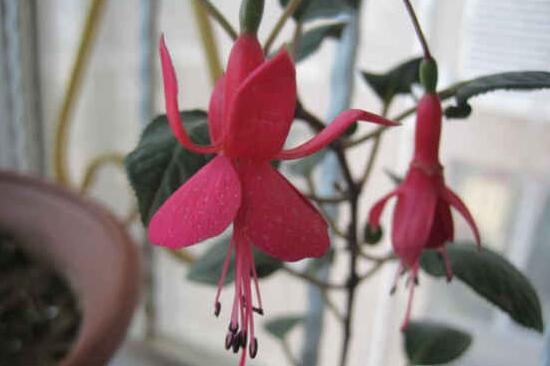
The beauty of the Chinese lantern plant is 9 parts in the flowers and 1 part in the leaves. Even so, problems with the leaves will also affect its flowering. In daily life, many flower lovers find that as they grow their Chinese lantern plant, the leaves wilt. What is going on? For this, we have summarized 4 causes: too little light, insufficient fertilizer, too high a temperature, and a growing environment that is too poor. For the specific solutions, let us continue reading below.
2. Causes of wilted leaves on the Chinese lantern plant and solutions
1. Insufficient light
Although the Chinese lantern plant can grow in a semi-shaded environment, it cannot do so for long, because its growth needs more sufficient light. Once light is insufficient, photosynthesis in the leaves of the Chinese lantern plant is blocked, so it lacks nutrients and the leaves wilt.
Solution: When light is lacking, it naturally needs supplemental light. After discovering that the leaves of the Chinese lantern plant have wilted, flower lovers should place it in a bright place, such as a balcony or windowsill. If conditions are limited, a fluorescent lamp can be used for supplemental lighting.
2. Insufficient nutrients
The growth of the Chinese lantern plant requires sufficient nutrients, and besides photosynthesis, the source of nutrients is fertilization. Once too little fertilizer is applied, causing a lack of nutrients, the leaves of the Chinese lantern plant will also wilt.
Solution: Supplement fertilizer and water in time, but fertilizer should not be applied too much or too little. For this, flower lovers can refer to the fertilization method for the Chinese lantern plant. As long as fertilizer is applied in the right amount, the leaves of the Chinese lantern plant will return to health.
3. Temperature too high
The Chinese lantern plant likes a cool environment. In the hot summer, its leaves wilt very easily. The reason is that the Chinese lantern plant is a plant that fears high temperatures. If the air humidity is not enough, or the temperature is too high, its leaves will wilt.
Solution: Help the Chinese lantern plant cool down by moving the potted plant to a cool, ventilated place, such as a north-facing windowsill at home, and at the same time spray a small amount of water on the leaves and soil. After careful care for a period of time, the leaves of the Chinese lantern plant will return to health.
4. Environment too poor
Although the Chinese lantern plant has strong adaptability, if the growing environment is too poor, such as being hit by strong winds or washed by rain during the rainy season, it will develop various problems, such as wilted leaves or damage by pests and diseases.
Solution: Move the Chinese lantern plant to a ventilated indoor place with diffused light, avoiding wind and rain. If it is damaged by pests and diseases, spray pesticide in time for control. For the specific pesticide to use, refer to pest and disease control for the Chinese lantern plant.
How to grow the Chinese lantern plant, and its cultivation and propagation methods
The environment that the Chinese lantern plant likes is sandy soil with relatively good drainage. It likes a cool and moist environment, so in summer, attention should be paid to shading, while in winter, sufficient sunlight must be ensured. If in summer the temperature exceeds 38 degrees, the metabolism of the Chinese lantern plant will slow down, and its growth will also stagnate. At this time, leaf drop and root rot will occur. If it is not cared for in time, it will cause the whole plant to die. Before planting, there must also be enough organic fertilizer. For water needs, in winter or on rainy days, water every 2 to 3 days; in autumn or on sunny days, water every day; while in summer the Chinese lantern plant is in a semi-dormant period, so water must be controlled to prevent leaf drop and root rot.
Care points for the Chinese lantern plant 1. Temperature requirements of the Chinese lantern plantIn winter it requires warmth and moisture, sufficient sunlight, and air circulation; in summer it requires a dry, cool, and semi-shaded condition. It avoids severe heat and stuffiness as well as rain and sun exposure. The suitable growth temperature for the Chinese lantern plant is 10--25°C. In winter the temperature should not be lower than 5°C. When the summer temperature reaches 30°C, growth becomes extremely slow, and at 35°C large numbers wither and die.
2. Watering and fertilizing the Chinese lantern plantWhen watering the Chinese lantern plant in spring and autumn, grasp the principle of watering when dry and stopping when wet, so as to keep the potting soil moist. In midsummer the potting soil should be on the dry side, and spraying water should raise the relative air humidity to above 60%. In winter it must be slightly moist to promote new shoot growth. In spring and autumn, apply a dilute liquid fertilizer once every 10 to 15 days, and once a week during the bud stage. For new plants cultivated in the first year and that spring, fertilizer should still be applied normally in summer to keep them flowering continuously; perennial old plants are in a dormant period, so stop fertilizing.
3. Key care points for the Chinese lantern plantFirst, place the Chinese lantern plant in a shaded, ventilated, cool, and rain-sheltered spot; spray water on the leaves and sprinkle water on the ground multiple times a day to lower the temperature and increase air humidity. Second, for perennial old plants, restrict water and stop fertilizing so they can pass through the dormant period smoothly. The plant should be brought indoors before Frost's Descent and taken out after Qingming. The indoor temperature should be kept above 5°C. In cold waves and windy and snowy weather, when freezing occurs outdoors, it is best to move it back indoors.
4. Repotting and changing soil for the Chinese lantern plant. The Chinese lantern plant grows quicklyIt requires sufficient nutrients, so the potting soil should be sandy loam rich in humus. It should also be mixed with 20%-30% fully decomposed livestock manure. During the peak growing season when it is developing, additional liquid fertilizer should also be applied. In the first 3 years, repot and change the soil every spring to replenish nutrients. After planting, with good management it can bloom in the second year. Because the branches and leaves are lush, pinch the tops in time to maintain an appropriate plant height and shape. Since the flowers hang down, the branches should be spaced appropriately.
5. Pest controlHow to grow the Chinese lantern plant: pest and disease control is very important. When cultivated indoors, if ventilation is poor, the young stems and leaves are easily harmed by aphids and whiteflies. When this occurs, omethoate 200x solution can be sprayed for control.
Growing points for the Chinese lantern plant: avoid heat and provide shadeIn summer, if the temperature exceeds 30°C, avoid strong direct sunlight. During the day, the potted plant can be moved to a cool, ventilated place under the balcony, and after sunset moved back onto the balcony (best placed under a shade shed or in tree shade). Move the potted plant from the south-facing balcony to the north-facing balcony in advance to avoid sunlight. Place the potted plant in a larger bamboo basket or cardboard box, and pack soft potting soil around it to prevent the flowerpot from being directly scorched by sunlight.
Increasing and lowering temperaturePut half a brick or a whole brick into a container, pour clean water into the container (the water should be higher than the brick surface), then place the potted plant on the brick, which can lower the temperature for a long time. Move the potted plant to a ventilated, light-avoiding place downstairs, dig a small soil pit in the ground, bury the potted plant in the soil, and wait until autumn to place the potted plant indoors. Once the potted plant has been heated by the scorching sun, before it has dissipated the heat, never water the leaves or the flowerpot, to prevent uneven cold and heat and accidental damage. During the period of preventing heat and lowering temperature, because light is reduced, watering should be controlled. Do not water too much or too often; just keep the potting soil moist.
Preventing rain exposureSummer is a rainy season. Before it rains, place the potted plant in a rain-sheltered spot. If a thunderstorm comes and there is no time to move the flowerpot, promptly pour out the accumulated water in the pot. If the pot is still too wet at this time, burnt charcoal fragments can be sprinkled on the surface of the potting soil to evaporate part of the excess water. If the water in the potting soil cannot evaporate for a long time and the potting soil is too wet, it can also easily lead to leaf drop and root rot, causing the whole plant to die.
Propagation methods for the Chinese lantern plant 1. Cutting method for the Chinese lantern plantThis can be done throughout the year except during the summer dormant period. Spring cuttings are best, with a high and fast rooting and survival rate. How to grow the Chinese lantern plant: choose vigorous young top shoots, 7-8 cm long, with 2-3 nodes, cut off the basal leaves, insert them into a sand bed, and spray frequently to keep them moist. They can root in about 10 days, and after 1 month they can be potted.
2. Seed sowing method for the Chinese lantern plantIt can be done in spring and autumn. In autumn, at a temperature of 15-20°C, it can germinate in 15 days. How to grow the Chinese lantern plant: seedlings sown in spring will only bloom in the second year.
How many times a year does the Christmas kalanchoe bloom (when does it bloom)? Watering and fertilizing tips for the Christmas kalanchoe
The Christmas kalanchoe is loved by people mainly because it is very beautiful when it blooms. But many people also often find that the flowers do not bloom well due to improper care. So when growing the Christmas kalanchoe, what do we need to do to ensure its growth and good flowering?
How many times a year does the Christmas kalanchoe bloom (when does it bloom)
The Christmas kalanchoe blooms once a year. It can bloom in December. The Christmas kalanchoe is a perennial succulent herb, with woody stems, many branches, and new branches that are soft and often drooping. Its leaves are opposite, long ovate, slightly fleshy, and the flowers are pale red, tubular, with 4 slightly separated petals at the tip. Its appearance closely resembles a small lantern, hence the name Christmas kalanchoe.
Watering and fertilizing tips for the Christmas kalanchoe
1. Watering method. The Christmas kalanchoe is a succulent plant, containing relatively much water in its body. It is drought-tolerant and fears waterlogging. Especially in high-rise urban areas, where the air is relatively dry, it can also grow very well. It does not need frequent watering; water once every 2-3 days, and the potting soil is better on the dry side. If the temperature of the potting soil is too high, ventilate and cool it appropriately to avoid root rot. When watering, grasp one principle: “water when dry, and water thoroughly when watering.” For indoor care in winter, watering should be increased and fertilizing stopped. In spring and autumn, water about once every 3 days when the potting soil is dry; in summer, reduce watering to once every 5-7 days. If it is kept on an open-air balcony, pay attention to rain protection and avoid rain exposure.
2. Fertilizing method. The Christmas kalanchoe prefers fertilizer. Generally, half a month after planting or division, a nitrogen-based liquid fertilizer can be applied two or three times to promote good stem and leaf growth, and after flowering apply it once more to help it recover vigor. In summer no fertilizer is needed; at other times only a nitrogen-phosphorus-potassium compound fertilizer can be applied. When fertilizing, never splash it on the leaves, to avoid leaf rot. If it splashes on the leaves, rinse it off with water immediately.
Cultivation techniques for the Christmas kalanchoe
1. Soil: Although the Christmas kalanchoe is not very choosy about soil, it easily rots roots in heavy clay, while it grows best in loose, fertile, slightly acidic sandy loam. For home pot cultivation, it is best to mix leaf mold and garden topsoil in equal amounts, then add 5% to 8% sand as the growing medium. When planting, add a little bone meal or nitrogen-phosphorus-potassium compound fertilizer as a base fertilizer.
2. Temperature: The most suitable growing temperature for the Christmas kalanchoe is 15°C to 25°C, and growth slows above 30°C. That is to say, in summer the Christmas kalanchoe basically does not grow. Below 10°C growth stalls, below 8°C the leaf color turns red and the flowering period is delayed, and below 0°C it is easily frozen to death. Therefore, when growing it, attention must also be paid to temperature control.
3. Light: The Christmas kalanchoe is not strict about light and can grow well under full sun, half sun, and diffused light conditions. The Christmas kalanchoe likes a sunny, ample-light environment. Except for slight shading at noon in midsummer, at other times it should be placed in a sunny spot. It needs at least 5 hours of direct light every day to grow robustly.
Notes on growing the Christmas kalanchoe in summer
1. Cooling. Summer heat is hard to bear; even people sweat profusely, let alone plants. The Christmas kalanchoe is not heat-tolerant. When the temperature exceeds 30°C, the plant will enter a wilted state. At this time, if it is not grown properly, in mild cases it will drop leaves, and in severe cases it may die. So the first task in summer is cooling.
2. Shading. In summer, light has a great effect on temperature. In particular, too strong light at noon will cause the temperature around the plant to become too high and may even scorch the leaves. In summer the plant itself already grows slowly. If the leaves are scorched, it is difficult for them to recover after the weather turns cool. Therefore, shading must be done in time.
3. Ventilation. The best growing temperature for the Christmas kalanchoe is 15-25°C, but summer temperatures are often too high, affecting plant growth. In summer, windows at home may often be closed and the air conditioner may be on. Although the indoor temperature is lowered, the air quality is not necessarily very good. Therefore, it is acceptable for the Christmas kalanchoe to be in air conditioning, but try to place it in a well-ventilated place.
The Christmas kalanchoe generally blooms in winter, once every year. When it blooms it is very beautiful, like little pink lanterns. To grow the Christmas kalanchoe well, the techniques for fertilizer and water must be mastered. Only by doing this work well can the Christmas kalanchoe grow well.