How to prune the Chinese lantern flower? A detailed guide to pinching, thinning and shortening methods
As a beautiful flowering plant, the Chinese lantern flower is kept in many gardeners' homes, but few people can truly grow it to perfection! The root cause is improper pruning, because for the Chinese lantern flower, appropriate pruning is what produces more branches and more flowers, and the plant shape will also look better! So how do you prune the Chinese lantern flower? Today the editor brings you a few pruning tips.
I. How to prune the Chinese lantern flower, timing/methods
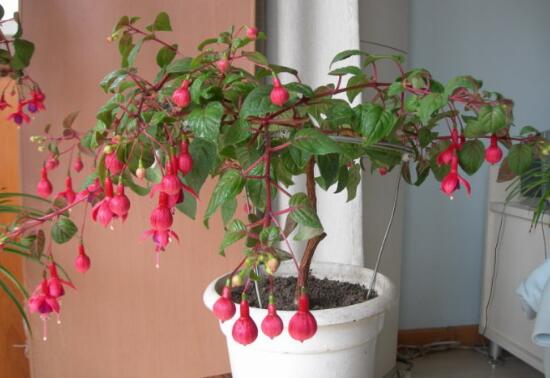
Pruning is a skilled job, especially for beginners, who usually fear cutting the Chinese lantern flower badly or making it ugly, and so dare not prune it, so mastering the pruning methods for the Chinese lantern flower is very important. However, pruning the Chinese lantern flower cannot be done at just any time, so how to prune the Chinese lantern flower requires gardeners to use the right pruning methods at the right time.
II. Pruning methods for the Chinese lantern flower
(1) Pruning time
The Chinese lantern flower is evergreen all year round, so generally it can be pruned at any time, and it will not bleed continuously. But special situations call for special treatment, and the pruning that does not affect the growth of the Chinese lantern flower is what we need to learn.
(2) Pruning methods
1. Pinching
How do you prune the Chinese lantern flower? First is pinching, generally done in the spring and autumn growing seasons, which can promote more branching and more flowers in the Chinese lantern flower. The specific cuts are as follows:
Pinching at the seedling stage: when the Chinese lantern flower seedling grows to 8-10 cm, cut off the top branch that bears buds, which can prevent it from shooting up tall and thus promote the sprouting of side branches.
Pinching during the growing season: when the new branches grow 8-10 leaves, carry out the second pinching, keep 5-6 of the side branches, then cut off all the excess buds, taking care to keep the cuts smooth.
2. Thinning branches
Besides pinching, you should also thin the branches of the Chinese lantern flower: cut off the branches that grow densely and cross each other, to avoid the branches affecting each other's growth, and also to increase the plant's light penetration, letting more branches enjoy full sunlight, which helps the Chinese lantern flower produce more flowers.
3. Shortening branches
When the Chinese lantern flower is grown indoors, because the light exposure differs by position, each branch absorbs a different amount of nutrients, so some branches grow longer while others grow shorter, affecting the overall appearance of the Chinese lantern flower. Therefore, after the autumn turns cool, the overly long branches should be cut short, which can promote more robust growth of new branches.
(3) Handy pruning tips for the Chinese lantern flower
1. Pruning during the flowering period
During the flowering period of the Chinese lantern flower, its flowering branches keep elongating, and when the flowering branches reach a certain length, gardeners can pinch off the tips, so that the new branches that grow can continue to flower. In addition, when the Chinese lantern flower is blooming, you should also cut off the small branches and leaves in the center of the plant at any time, to avoid consuming nutrients and to help ventilation and light penetration.
2. Pruning after flowering
After July, the flowering period of the Chinese lantern flower ends, and this is midsummer, when the temperature will exceed 30°C and the plant enters a semi-dormant state. If the leaves of the Chinese lantern flower curl at this time, pruning is needed to reduce nutrient consumption, which helps it safely through the summer. If flower buds sprout at this time, they should also be removed promptly.
Overall, the cultivation methods for the Chinese lantern flower are not difficult; the difficulty lies in making it look good, especially pruning, which directly determines the plant's overall shape. So, in order for the Chinese lantern flower to produce more flowers and to look beautiful, everyone should learn the pruning methods for the Chinese lantern flower and try them by hand, and I believe you will succeed~
Kalanchoe cultivation techniques: pruning, thinning branches and cultivation precautions
Kalanchoe is not only auspicious in meaning but also an indoor potted flowering variety with extremely high ornamental value. Today, the editor of Huinong Network will talk with you about common problems in the kalanchoe cultivation process and kalanchoe cultivation techniques and precautions.
How many plants of kalanchoe are good to grow in one pot?
When cultivating kalanchoe, we generally consider how many plants to put in one flowerpot. In fact, there really is no fixed answer to this question. What we need to consider is only the size of the flowerpot and personal preference.
Generally, for a relatively small ordinary flowerpot, growing one kalanchoe plant is enough. Kalanchoe itself can branch, and generally planting one kalanchoe in a flowerpot will let it branch into many, which will also look fuller and give a good plant shape.
If you change to a somewhat larger pot, or a flowerpot of another shape, you can plant several, as long as it meets your personal needs.
Kalanchoe cultivation precautions
Generally only one kalanchoe plant is put in one flowerpot, because basically when we choose a flowerpot we generally do not choose too large a one. The root system of kalanchoe is not very developed, so the flowerpot does not need to be too large or too deep, just a small one, and of course then you cannot grow too many plants.
Pay attention to the shape of the flowerpot, and place the plants appropriately according to your own preference, so as to achieve a full plant shape and good flowering.
Kalanchoe cultivation and pruning
Pinching
When kalanchoe grows to four or five cm, with about five or six leaves, pinching can be carried out to promote the sprouting of side buds.
Before pinching
After pinching
Pruning spent flowers
After kalanchoe finishes flowering, the spent flowers should be pruned off promptly, as only this helps the next round of flower buds to form.
Thinning branches
When the branches grow too densely, the ventilation conditions are too poor, which leads to the occurrence of pests and diseases, and the branches also grow weaker, so at this time we must remove the weak and keep the strong, preserving the robust branches for flowering.
Method of operation: From the base of the kalanchoe main stem, cut off the overly dense fine branches, weak branches and diseased branches, keeping only 3-5 robust main branches, which can prevent kalanchoe from only growing branches without forming flower buds, ensuring the branches are moderately dense, well-balanced and sturdy, with abundant flower buds.
The above is the kalanchoe cultivation techniques and precautions compiled for you by the editor of Huinong Network, and we hope it is helpful for your kalanchoe cultivation.
Pruning methods for potted plants and bonsai (positioning pruning, shortening pruning, thinning pruning) explained in detail
In terms of shaping, both pruning and wiring are meant to change the bending form of the branches and trunk and the space they occupy, thereby achieving the goal of shaping the tree. In terms of maintenance and management, pruning is meant to preserve and maintain the landscape of a tree that has already been shaped. According to the order of shaping, it can be divided into positioning pruning, shortening pruning, thinning pruning, and so on.
1. Positioning pruning
Positioning pruning (final pruning) refers to the first pruning in bonsai shaping, determining which branches at different positions to keep and cutting off the excess branches. For tree stumps dug from the wild, after they are cultivated and survive, many branches sprout, and most of them must be cut off, keeping the skeleton branches needed for shaping; this is called positioning pruning. After positioning pruning, the number of branches, their positions and the mutual distances between branches are determined, which directly affects the formal beauty of the tree bonsai. So before pruning, you must carefully conceive and consider the form of the tree shaping; as the saying goes, "the idea comes before the brush," and at the same time you must "have a well-thought-out plan" before you can make the cuts. This is because the selection of branches depends on the establishment of the tree landscape form. The branches kept should be robust in growth, coordinated in thickness from top to bottom, and should avoid being parallel, symmetrical or overlapping as much as possible, achieving an orderly density, spreading up and down and left and right around the main trunk, and possessing a sense of movement.
2. Shortening pruning
Shortening pruning (short cutting) is a pruning method that shortens branches, and it is also an important measure for shaping trees and maintaining the tree landscape. In terms of shaping, shortening pruning makes the tree dwarfed and the branches full, with controlled thickness from top to bottom and varied bends, so shaping should pay attention to three points:
1) The thickness transition ratio between the cut branch and the upper section of the branch is suitable;
2) When shortening, keep the direction and angle of the bud eyes well, so as to adjust the new branches to reasonably occupy spatial positions;
3) The shortened branch sections should be short rather than long: the first section of branch is longer than the second, and the second section of branch is longer than the third. In terms of maintaining the tree landscape, for the vast majority of shaped leafy tree bonsai, the leggy branches produced each year during the growing season need shortening pruning to maintain a beautiful posture.
4) Shaped pine and cypress bonsai mainly rely on bud pinching and tip pinching to control overlong branches and maintain their original appearance.
5) For the shortening pruning of flower-viewing and fruit-viewing bonsai, different pruning methods should be adopted according to their different growth habits. For example, crape myrtle, pomegranate, crabapple and so on flower and fruit on the new branches drawn in the current year, so they can be shortened during the dormant period but should not be shortened during the growing season. Early-spring bloomers such as winter jasmine, plum blossom and ornamental peach should be pruned after flowering, which can promote the formation of flower and fruit branches the following year.
Leafy tree bonsai can be shortened twice, in early summer and early autumn, and heavily pruned during the dormant period to remove all kinds of undesirable branches. Firethorn and Chinese holly flower and fruit abundantly on short branches, so besides heavy pruning during the dormant period, the long branches of the current year can also be shortened in late spring and early summer, with frequent light fertilizing and increased light to promote the growth of short branches in summer and autumn and increase the amount of flowers and fruit. Heavy pruning during the dormant period must appropriately retain short branches to ensure the flowers and fruit of the following year.
3. Thinning pruning
Thinning pruning maintains the tree landscape and can increase ventilation and light, reduce the occurrence of pests and diseases, concentrate nutrients, and promote luxuriant branches and leaves and abundant flowers and fruit.
The timing of thinning differs according to whether it is heavy or light pruning. During the growing season, when branches and leaves are luxuriant, light pruning can be done at any time, but heavy pruning is not advisable. For tree species with strong sprouting ability, such as Japanese bush cherry and elm, heavy pruning can be carried out, avoiding the plum rain season. After pruning, watering should be reduced, light fertilizer applied frequently, and light increased. Generally, the thinning amount at the upper part of the tree can be greater and at the lower part smaller, because the lower branches are harder to grow. The main objects of thinning are all kinds of undesirable branches, as well as overly dense branch crowns; where the upper and lower branch crowns are equally important, try to leave the lower and cut the upper, so that the volume of the upper branch crown is smaller than that of the lower branch crown. After thinning, the growth of the tree crown is suppressed and many new branches will sprout, which should be cut off promptly. Pruning methods also include bud removal, tip pinching, leaf removal and other measures:
1) Bud removal: for tree species with strong budding ability in tree bonsai, during the growing season buds sprout both abundantly and quickly, so all unnecessary buds must be removed promptly and tirelessly, including root buds, trunk buds and axillary buds. At the same time, pay attention to keeping the direction, position and density of the buds, so as to avoid the sprouting of forked branches, opposite branches and overlapping branches that affect the beauty of the tree shape.
2) Tip pinching: that is, removing the tender tips of new shoots during the growing period of the tree, inhibiting the new shoots from growing too long, promoting the growth of side branches, and shortening the branch sections, so as to maintain the beauty of the tree's posture. The timing of tip pinching differs because different tree species have different sprouting periods. For leafy tree bonsai, tip pinching can be done when the new leaves have unfolded 2-4 of them. For flower and fruit bonsai, it should be handled flexibly according to the different flowering and fruiting periods. Tip pinching can stimulate the growth of side branches and increase the amount of flowering.
3) Leaf removal: appropriate leaf removal can make the leaves smaller and raise the ornamental value of the bonsai. Some people call this method "taking off the clothes and changing into brocade." Generally speaking, the new leaves that a tree sprouts in spring are the most attractive; as the season advances, with the summer sun exposure, the leaves that were originally glossy and brightly colored slowly become stiff and aged, and through leaf removal treatment they can once again send out fresh tender new leaves, adding another best ornamental effect. Some old stumps, with iron-like branches and twisted trunks, towering and unyielding, while the new leaves are like jade, so green they seem to drip, give a scene full of vitality in spring. The timing of leaf removal varies with tree species; leafy trees can have their leaves removed in early summer or early autumn. Evergreen trees should not have their leaves removed. During leaf removal, water should be appropriately withheld, and the potting soil should not be too moist; in addition, well-rotted cake fertilizer water should be applied frequently, and ventilation and light should be strengthened, to promote the sprouting of new leaves.
Pruning method
The end face of the cut should avoid the large face as much as possible and be cut at a 45-degree angle to the branch, with the leaf bud kept on the upper side of the slanted cut. During the growing season, you can prune close to the leaf bud, which helps the wound heal. Outside the growing season, you can prune above the leaf bud.
Pruning time
1. Miscellaneous wood bonsai can be pruned all year round; pine and cypress should be pruned during the dormant season.
2. The plum rain season has a lot of rain and high air humidity, and trees grow vigorously, so you should prune little, or not prune heavily; a large amount of branches and leaves being cut off will affect normal growth and in severe cases lead to death.
3. Near the end of autumn, heavy pruning and drastic pruning must not be done; after heavy and drastic pruning, new buds sprout one after another, and when a cold snap comes it will freeze the tender buds to death. (The best time for heavy pruning and drastic pruning is January-February, when trees are in the dormant period; but some cold-intolerant tree species should not be pruned in winter, because the wounds are harder to heal and easily leave scars.)
4. Generally speaking, trees with strong growth vigor and vigorous growth can be pruned more, while those growing thin and weak should be pruned less. According to the needs of tree shaping, it is usually necessary to cut off the messy crossing branches, overlapping branches, parallel branches, whorled branches, opposite branches, thin and weak branches, diseased branches and so on. The remaining branches have concentrated nutrients and can grow robustly.
For bonsai pruning, the key of the year lies in winter.
As the saying goes, "winter pruning makes a tree vigorous"; at this time most of the tree's nutrients have been transferred from the branch tips and leaves to the main branches and roots for storage, so pruning causes the least nutrient loss to the tree and lighter damage to the tree body. Also, because there are no leaves, it is easy to observe and analyze the crown structure and predict the crown form after the new shoots grow, which is good for shaping. Therefore, winter pruning is an important pruning period for bonsai, and its main content and task is the crown shaping of the bonsai.